
BuddhistCatholicContemplativeEvangelicalGeneral ChristianHinduJewishLatter-day SaintMuslimNew VisionsProgressive Christian
Beliefs
- Buddhist
- Catholic
- Contemplative
- Evangelical
- General Christian
- Hindu
- Jewish
- Latter-day Saint
- More Voices
- Muslim
- New Visions
- Pagan
- Progressive Christian
Topics
- Religion News
- Food and Religion
- Sports and Religion
- Religious Art
- Religious Music and Entertainment
- Religious Events
- History and Religion
- Style and Religion
- Politics and Religion
- Women in Religion
- Recreation Outdoors and Religion
- Business Finance and Religion
- Careers Workplace and Religion
- Education and Religion
- Family Parenting and Religion
- Health Fitness and Religion
- Home and Religion
- Relationships and Religion
- Technology and Religion
- Travel and Religion
Columnists
- Buddhist Columnists
- Business Finance and Religion Columnists
- Careers Workplace and Religion Columnists
- Catholic Columnists
- Contemplative Columnists
- Education and Religion Columnists
- Evangelists Columnists
- Family Parenting and Religion Columnists
- General Christian Columnists
- Health Fitness and Religion Columnists
- Hindu Columnists
- History and Religion Columnists
- Home and Religion Columnists
- Jewish Columnists
- More Voices Columnists
- Latter Day Columnists
- Muslim Columnists
- New Visions Columnists
- Nonreligious Columnists
- Pagan Columnists
- Politics and Religion Columnists
- Progressive Columnists
- Recreation Outdoors and Religion Columnists
- Relationships and Religion Columnists
- Religion News Columnists
- Religious Art Columnists
- Religious Events Columnists
- Religious Music and Entertainment Columnists
- Sports and Religion Columnists
- Style and Religion Columnists
- Technology and Religion Columnists
- Travel and Religion Columnists
- Women in Religion Columnists
Resource Library
- 2026 Calendar
- Library of World Religions
- The 100 Most Holy Places on Earth
- Patheos Answers
- Podcasts
- Videos
- Faith Leaders Database
- Anglican Episcopalian
- Bahai
- Baptist
- Buddhism
- Christianity
- Confucianism
- Eastern Orthodoxy
- Hinduism
- Holiness and Pentecostal
- ISKCON
- Islam
- Judaism
- Lutheran
- Methodist
- The Church of Jesus Christ of Latter-day Saints
- New Age
- Paganism
- Presbytarian and Reformed
- Protestantism
- Religion Behind the Scenes
- Roman Catholic
- Scientology
- Shia Islam
- Sikhism
- Sufism
- Sunni Islam
- Taoism
- Zen
- See all religions
Research Tools
 Ad-Free & Subscriber Log-In Subscription Support
Ad-Free & Subscriber Log-In Subscription Support
Follow Patheos 

- Trending:
- Forgiveness
- |
- Marriage
- |
- Consciousness
- |
- Death Penalty
- |
- Election
- |
- Halloween
 Good Letters
-
Contributors
- Home
- Catholic
- Franz Wright: Solving the Problems of Poetry
Franz Wright: Solving the Problems of Poetry
Last updated on: July 13, 2015 at 11:52 am by Morgan Meis
Franz Wright: Solving the Problems of Poetry 2015-07-13T11:52:15-07:00 Morgan Meis
Patheos Explore the world's faith through different perspectives on religion and spirituality! Patheos has the views of the prevalent religions and spiritualities of the world.
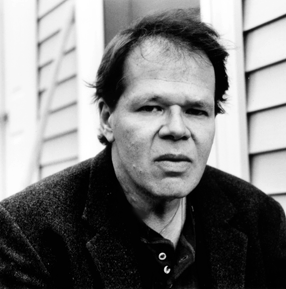
Maybe all poets are unhinged. There is historical evidence for this going back to ancient days. The Roman poet Catullus opened one infamous poem (known as “Catullus16”) with the line, “Pedicabo ego vos et irrumabo.” It’s among the more, shall we say, forthright responses to critics a poet has ever penned (“I will sodomize you and face-fuck you”).
Such behavior among the poets continues to this day. Franz Wright—who died in May—was known to take a Catullan stance where critics were concerned. He once threatened to thrash William Logan, the critic who was unkind about Wright’s poems in a review for The New Criterion.
Franz Wright struggled with alcohol and drugs his entire difficult life, so the bad behavior had its source. But I also think that, in Wright’s case, the personal suffering that led to his outlandish behavior is related to problems at the heart of modern poetry.
For quite a long time now, poets have been asking themselves whether poetry needs a strong sense of meter, or some other formal stricture, in order to really be poetry. The tendency in English-language poetry since the nineteenth century (with notable exceptions) has been to discard meter and move toward some form of the famous (or infamous, depending on your point of view) vers libre (free verse).
T.S. Eliot was of the opinion, for instance, that Modernist poetry could be defined by its lack of traditional meter and form. But Eliot also argued that there is no such thing as free verse in the strict sense of the term. That’s because all poetry, especially good poetry, has some internal sense of rhythm and, therefore, structure.
The question, then, is not whether poetry has rhythm and structure, but where it is getting it. Is it from some externally imposed set of rules (this or that number of stresses, this or that rhyme scheme) or from something less clearly defined, like the patterns of everyday speech or the voices in the poet’s head? Where, poet friend, do you get your meter?
Perhaps the defining struggle for American poets of the twentieth and now twenty-first centuries is answering that question. In answering the question, these poets are essentially being asked to generate both the content and the form of their art with each poem. This can be lonely and alienating work. It can make you crazy.
The great American poet James Wright, for instance, was working in a poetic milieu in which he was expected to trust his own ear. He was expected to come up with his own poetic forms. Maybe that’s why so many of his poems stress the idea of loneliness and despair, even amongst the beauty of nature and the world.
Throughout his career, James Wright moved further in the direction of free verse, developing a style that was sometimes called “chatty” and “conversational.” Here are a few lines from “Outside Fargo, North Dakota”:
The door slams back, a man with a flashlight
Calls me good evening.
I nod as I write down good evening, lonely
And sick for home.
James Wright was always lonely and sick for home, at least in his poetry. That’s probably why, when he found out that his young son had a poetic gift, he wrote to him, “I’ll be damned. You’re a poet. Welcome to hell.”
That son was Franz Wright. Wright’s life was, indeed, a life of poetry mixed with a lot of hell.
Franz Wright was still struggling with his addictions up until the day he died. He was given to fits of rage and to acts of incredible self-destructiveness. Like his father, he could be a monster.
Through it all, Franz Wright took poetry extremely seriously, knowing its demands were extraordinary. Wright wanted to solve the big problems of poetry. He wanted to find his own rhythm and structure. But he also wanted his poetry to say something authentic about what it means to be alive.
That’s an approach Franz Wright also inherited from his father.
Stanley Kunitz once said something to James Wright that came to define Wright’s method: “You’ve got to get down into the pit of the self, the real pit, and then you have to find your own way to climb up out of it. And it can’t be anybody else’s way. It has to be yours.”
Franz Wright heard that message. Perhaps all too clearly. You could say it wrecked his life. But it also gave him an answer to those questions of form and content that continue to vex contemporary poetry.
Descending into the pit of the self, Wright came back out again with the sense that he’d come into contact with God. He became a Catholic. He started listening to the silence within himself and to the poetical rhythms of prayer.
Wright could be poetically terse, as in “The Reader” (from the collection God’s Silence):
The mask was gone now, burned away
(from inside)
by God’s gaze
There was no
I, there
was no he—
finally
there was no text, only
what the words stood for;
and then
what all things stand for.
The structure for this poem, it strikes me, comes from contemplative prayer. It is the kind of prayer that drifts into silence, which is also what the poem is about.
But Franz Wright could chat, too. This is from “Goodbye” (from Kindertotenwald):
Each day I woke as it started to get dark and the pain came. Month after month of this—who knows when I got well, the way you do, whether you like it or not. With dawn now, risen from the rampage of sleep, I am walking in the Lincoln woods. A single bird is loudly singing. And I walk where I always have, as though from tall room to room in a more or less infinite house where the owner’s not home but is watching me somehow, observing my behavior, from behind the two-way mirror of appearances, I suppose, and listening, somewhat critically, to what I am thinking.
I don’t know if being able to write like that was worth the suffering. Trying to solve the problems of poetry cost Franz Wright everything. But we are surely the beneficiaries.
Morgan Meis is the critic-at-large for The Smart Set (thesmartset.com). He has a PhD in Philosophy and has written for n+1, The Believer, Harper’s Magazine, and The Virginia Quarterly Review. He won the Whiting Award in 2013. Morgan is also an editor at 3 Quarks Daily, and a winner of a Creative Capital | Warhol Foundation Arts Writers grant. A book of Morgan’s selected essays can be found here. He can be reached at [email protected]
Previous Post

June 23, 2015
Ray Bradbury Lives Forever
Next Post
June 25, 2015 Smoke Break
Browse Our Archives
Select a Category A. G. Harmon Alissa Wilkinson Allison Backous Art Authors Brad Fruhauff Bradford Winters Bryan Bliss Caroline Langston Chad Thomas Johnston Chris Hoke Christiana N. Peterson Culture D.G. Myers D.L. Mayfield Daniel Bowman Jr. David Griffith Elizabeth Duffy Faith Film Greg Wolfe Guest Contributor Interview Jan Vallone Jeffrey Overstreet Jessica Eddings-Roeser Jessica Mesman Griffith Kelly Foster Lindsey Crittenden Morgan Meis music Natalie Vestin Nick Olson Peggy Rosenthal Personal Reflection Poetry Friday Reflection Relationships Review Richard Chess Richard Cole Sara Zarr Shannon Huffman Polson Sonya Bilocerkowycz Tania Runyan Tony Woodlief Topical Categories Uncategorized Vic Sizemore Writing
Select a Month October 2018 September 2018 August 2018 July 2018 June 2018 May 2018 April 2018 March 2018 February 2018 January 2018 December 2017 November 2017 October 2017 September 2017 August 2017 July 2017 June 2017 May 2017 April 2017 March 2017 February 2017 January 2017 December 2016 November 2016 October 2016 September 2016 August 2016 July 2016 June 2016 May 2016 April 2016 March 2016 February 2016 January 2016 December 2015 November 2015 October 2015 September 2015 August 2015 July 2015 June 2015 May 2015 April 2015 March 2015 February 2015 January 2015 December 2014 November 2014 October 2014 September 2014 August 2014 July 2014 June 2014 May 2014 April 2014 March 2014 February 2014 January 2014 December 2013 November 2013 October 2013 September 2013 August 2013 July 2013 June 2013 May 2013 April 2013 March 2013 February 2013 January 2013 December 2012 November 2012 October 2012 September 2012 August 2012 July 2012 June 2012 May 2012 February 2008
Follow Us!
TAKE THE
Religious Wisdom Quiz
You have wearied the Lord with your words by saying all who do evil are good in his sight, or by asking where is the God of what?
Select your answer to see how you score.
Justice Truth Judgment Righteousness
Related posts from Good Letters

Morning in a Forgotten Neighborhood


On Writing Odes: Taking Time to Celebrate

Poetry Friday: "The Burned Butterfly"
TRENDING AT PATHEOS Catholic

Rejecting Doom: Christian Hope And Human Action
Christianity is a religion of hope. We are to have hope and...

It’s What Comes From Within Which Matters
One of the most difficult things for us to understand is why...

Why I Choose the Eucharist Over the Sermon
Choose the Eucharist, Not the Sermon What are we supposed to get...

5 Design Elements Found in Spiritually Rooted Homes
Putting Spirituality Into Home Decor Our homes are more than our living...

Credo: A Story of God Told with the...
About 10 years ago, I began to imagine a personal "Credo" that...

The Anatomy of Divine Revelation in Catholic Thought
The claim that God has made Himself known to human beings is...
view all Catholic blogs
Ad-Free & Subscriber Log-In Subscription Support
- About Us
- 2026 Calendar
- Videos
- Podcasts
- Library of World Religions
- Faith In Media Tracker
- Advertise With Us
- Write for Us
- Privacy Policy
- Terms of Service
- Do Not Sell My Data
- Contact Us
- Radiant Digital
- Manage Newsletter Subscriptions
- Unsubscribe From Notifications
- Sitemap
Copyright 2008-2026, Patheos. All rights reserved.
Subscription Support Ad-Free & Subscriber Log-In
Follow Patheos