
BuddhistCatholicContemplativeEvangelicalGeneral ChristianHinduJewishLatter-day SaintMuslimNew VisionsProgressive Christian
Beliefs
- Buddhist
- Catholic
- Contemplative
- Evangelical
- General Christian
- Hindu
- Jewish
- Latter-day Saint
- More Voices
- Muslim
- New Visions
- Pagan
- Progressive Christian
Topics
- Religion News
- Food and Religion
- Sports and Religion
- Religious Art
- Religious Music and Entertainment
- Religious Events
- History and Religion
- Style and Religion
- Politics and Religion
- Women in Religion
- Recreation Outdoors and Religion
- Business Finance and Religion
- Careers Workplace and Religion
- Education and Religion
- Family Parenting and Religion
- Health Fitness and Religion
- Home and Religion
- Relationships and Religion
- Technology and Religion
- Travel and Religion
Columnists
- Buddhist Columnists
- Business Finance and Religion Columnists
- Careers Workplace and Religion Columnists
- Catholic Columnists
- Contemplative Columnists
- Education and Religion Columnists
- Evangelists Columnists
- Family Parenting and Religion Columnists
- General Christian Columnists
- Health Fitness and Religion Columnists
- Hindu Columnists
- History and Religion Columnists
- Home and Religion Columnists
- Jewish Columnists
- More Voices Columnists
- Latter Day Columnists
- Muslim Columnists
- New Visions Columnists
- Nonreligious Columnists
- Pagan Columnists
- Politics and Religion Columnists
- Progressive Columnists
- Recreation Outdoors and Religion Columnists
- Relationships and Religion Columnists
- Religion News Columnists
- Religious Art Columnists
- Religious Events Columnists
- Religious Music and Entertainment Columnists
- Sports and Religion Columnists
- Style and Religion Columnists
- Technology and Religion Columnists
- Travel and Religion Columnists
- Women in Religion Columnists
Resource Library
- 2026 Calendar
- Library of World Religions
- The 100 Most Holy Places on Earth
- Patheos Answers
- Podcasts
- Videos
- Faith Leaders Database
- Anglican Episcopalian
- Bahai
- Baptist
- Buddhism
- Christianity
- Confucianism
- Eastern Orthodoxy
- Hinduism
- Holiness and Pentecostal
- ISKCON
- Islam
- Judaism
- Lutheran
- Methodist
- The Church of Jesus Christ of Latter-day Saints
- New Age
- Paganism
- Presbytarian and Reformed
- Protestantism
- Religion Behind the Scenes
- Roman Catholic
- Scientology
- Shia Islam
- Sikhism
- Sufism
- Sunni Islam
- Taoism
- Zen
- See all religions
Research Tools
 Ad-Free & Subscriber Log-In Subscription Support
Ad-Free & Subscriber Log-In Subscription Support
Follow Patheos 

- Trending:
- Forgiveness
- |
- Marriage
- |
- Consciousness
- |
- Death Penalty
- |
- Election
- |
- Halloween
 Good Letters
-
Contributors
- Home
- Catholic
- Sugar, Sugar, Part 2: May 8, 2015
Sugar, Sugar, Part 2: May 8, 2015
Last updated on: May 8, 2015 at 1:08 am by Sara Zarr
Sugar, Sugar, Part 2: May 8, 2015 2015-05-04T12:55:51-07:00 Sara Zarr
Patheos Explore the world's faith through different perspectives on religion and spirituality! Patheos has the views of the prevalent religions and spiritualities of the world.
Continued from yesterday.
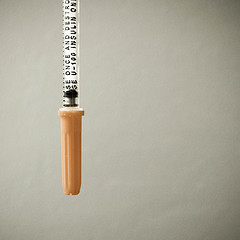 When the editors of Good Letters first asked if they could rerun my 2011 post on my sugar addiction, which was posted yesterday, I couldn’t even bring myself to read the old post before saying no. I felt too weird and vulnerable about what I’d written and preferred that it stay buried in the archives. So I wrote other stuff, until I found myself coming back around to this topic in my life. Addictions don’t tend to go away. They are either active or in remission, rarely cured.
A new twist for me: Weeks after I wrote that original post, I had some medical tests done and got a new diagnosis and learned that in fact I’m a type one diabetic, not type two as originally pegged. Type one is an autoimmune disease and typically has an onset in childhood or adolescence, but it can also hit people much later in life, as it did me. Once properly diagnosed, I got some basic training on how to calculate and inject insulin and was on my way.
I remember leaving the doctor’s office that day with my insulin prescription. At the same time, my doctor warned me not to change the good eating and exercise habits I’d cultivated when I’d thought lifestyle changes were my only hope. “Oh no, no, of course not,” I said while thinking: holy moly now I can eat pasta, and I just want to go home and fall into a pan of mac and cheese and watch twelve hours of Netflix. I had been so “good” and so careful, a poster girl for the benefits of paleo eating and boot camp workouts.
Which type of diabetes I have is neither here nor there when it comes to my eating disorder, but having boxes of insulin sitting in my fridge does change my relationship with it. Now if I binge, I can stick a needle in myself to mitigate the long-term consequences of high blood sugar that I wrote about in my original post.
Insulin, in a strange way, became grace for me. I can be imperfect. I can give in to my compulsive eating and sedentary wormholes and still come up with a blood sugar number good enough to allow me to stand righteous before my doctor at the next checkup.
However, the rest of the consequences of my eating disorder are still in play. The self-hatred, the depression, the body anxiety, the fear of being discovered, the isolation, the way addictions and compulsions inevitably and indefinitely delay the living of life—insulin doesn’t help any of that.
Moreover,insulin introduces the new fear of getting hit by a dangerously low blood sugar in the night if I’ve been off in calculating how much to take. I could actually die in my sleep if I make an extreme error; it’s not an uncommon way for diabetics to go.
I was thinking I’d draw some further spiritual metaphor here about how grace is great but—though saved from ultimate destruction—we still suffer other consequences of our sin, and that seems like it should compel us toward change.
But that’s not where my mind is. It’s back to my father and his drinking and my ever-deepening understanding of how torturous it must have been for him to watch himself lose everything to this substance while surrounded by others who seemed to be able to enjoy it without repercussions.
Every time I see someone casually leave a half-eaten cookie or piece of pizza around, I boggle at how they can do that, how they can carry on a conversation as if a delicious carb delivery system isn’t sitting there, available.
Maybe that’s how my dad felt about friends who could stop at one or two drinks. Maybe the various suggestions by those who loved him about how to not be an alcoholic made him feel angry and misunderstood. I get that, too. (“If it’s agave, it’s okay!” “Go paleo again!” “Be vegan.”“Everything in moderation. Except kale.”)
Drinking is social.It’s pleasurable. It allows you to check out or feel a sense of belonging or laugh or cry. I could say the same about certain kinds of foods, and being one of the people for whom it’s an all-or-nothing game really sucks. It feels unfair and impossible to negotiate when you’re living in a world that is constantly giving you cues to partake of the thing that gives you the biggest high and at the same time causes you the most misery.
Where I used to resent my father so much for not being able to choose a life over a drink, now I think it’s miraculous that anyone ever gets and stays clean and sober from whatever they are seeking to be clean and sober of—booze or drugs or food or sex, or the more innocent-looking highs of pride and self-righteousness.
There’s a tenet in the Alcoholics Anonymous literature that says, “We’re no better or worse than anyone else.” I like that a lot, and it seems in line with the message of the Christian gospel. I think my dad struggled with believing the “no worse than” part of it, while I might resist the “no better than” aspect. For a long time, I truly believed I was better than he was.
Now, as much as I hate my addictions and diseases, I sometimes find myself thanking God for them in part because they relieve me of this delusion—about my dad or anyone else.
I still feel weird and vulnerable. I considered pulling the plug on this post as well as the old one, and in fact never writing about anything personal again other than in fiction.
But for me, increasing the chance that my addictions will spend more time in remission than in being active means talking about them. To paraphrase I Corinthians 12: It’s more fun to be weird and vulnerable together than alone.
Sara Zarr is the author of five novels for young adults, most recently The Lucy Variations, which the New York Times called “an elegant novel.” Her sixth, a collaborative novel with Tara Altebrando, came out December 2013. She’s a National Book Award finalist and two-time Utah Book Award winner. Her books have been variously named to annual best books lists of the American Library Association, Kirkus, Publisher’s Weekly, School Library Journal, the Guardian, the International Reading Association, the New York Public Library and Los Angeles Public Library, and have been translated into many languages. In 2010, she served as a judge for the National Book Award. In fall 2014, she received a MacDowell Colony Fellowship. She currently lives in Salt Lake City, Utah, with her husband, and online at www.sarazarr.com.
Photo above credited to Jill Brown and used under a Creative Commons license.
Previous Post

May 7, 2015
Sugar, Sugar, Part 1: June 10, 2011
Next Post
May 11, 2015 Finding God in Updike Country
Browse Our Archives
Select a Category A. G. Harmon Alissa Wilkinson Allison Backous Art Authors Brad Fruhauff Bradford Winters Bryan Bliss Caroline Langston Chad Thomas Johnston Chris Hoke Christiana N. Peterson Culture D.G. Myers D.L. Mayfield Daniel Bowman Jr. David Griffith Elizabeth Duffy Faith Film Greg Wolfe Guest Contributor Interview Jan Vallone Jeffrey Overstreet Jessica Eddings-Roeser Jessica Mesman Griffith Kelly Foster Lindsey Crittenden Morgan Meis music Natalie Vestin Nick Olson Peggy Rosenthal Personal Reflection Poetry Friday Reflection Relationships Review Richard Chess Richard Cole Sara Zarr Shannon Huffman Polson Sonya Bilocerkowycz Tania Runyan Tony Woodlief Topical Categories Uncategorized Vic Sizemore Writing
Select a Month October 2018 September 2018 August 2018 July 2018 June 2018 May 2018 April 2018 March 2018 February 2018 January 2018 December 2017 November 2017 October 2017 September 2017 August 2017 July 2017 June 2017 May 2017 April 2017 March 2017 February 2017 January 2017 December 2016 November 2016 October 2016 September 2016 August 2016 July 2016 June 2016 May 2016 April 2016 March 2016 February 2016 January 2016 December 2015 November 2015 October 2015 September 2015 August 2015 July 2015 June 2015 May 2015 April 2015 March 2015 February 2015 January 2015 December 2014 November 2014 October 2014 September 2014 August 2014 July 2014 June 2014 May 2014 April 2014 March 2014 February 2014 January 2014 December 2013 November 2013 October 2013 September 2013 August 2013 July 2013 June 2013 May 2013 April 2013 March 2013 February 2013 January 2013 December 2012 November 2012 October 2012 September 2012 August 2012 July 2012 June 2012 May 2012 February 2008
Follow Us!
TAKE THE
Religious Wisdom Quiz
We made a deceptive treaty with Israel by pretending to come from a distant land with moldy bread and worn-out wineskins. Who are we?
Select your answer to see how you score.
The Amorites The Canaanites The Gibeonites The Hivites
Related posts from Good Letters

Morning in a Forgotten Neighborhood



TRENDING AT PATHEOS Catholic

Rejecting Doom: Christian Hope And Human Action
Christianity is a religion of hope. We are to have hope and...

It’s What Comes From Within Which Matters
One of the most difficult things for us to understand is why...

Why I Choose the Eucharist Over the Sermon
Choose the Eucharist, Not the Sermon What are we supposed to get...

5 Design Elements Found in Spiritually Rooted Homes
Putting Spirituality Into Home Decor Our homes are more than our living...

Credo: A Story of God Told with the...
About 10 years ago, I began to imagine a personal "Credo" that...

The Anatomy of Divine Revelation in Catholic Thought
The claim that God has made Himself known to human beings is...
view all Catholic blogs
Ad-Free & Subscriber Log-In Subscription Support
- About Us
- 2026 Calendar
- Videos
- Podcasts
- Library of World Religions
- Faith In Media Tracker
- Advertise With Us
- Write for Us
- Privacy Policy
- Terms of Service
- Do Not Sell My Data
- Contact Us
- Radiant Digital
- Manage Newsletter Subscriptions
- Unsubscribe From Notifications
- Sitemap
Copyright 2008-2026, Patheos. All rights reserved.
Subscription Support Ad-Free & Subscriber Log-In
Follow Patheos