
BuddhistCatholicContemplativeEvangelicalGeneral ChristianHinduJewishLatter-day SaintMuslimNew VisionsProgressive Christian
Beliefs
- Buddhist
- Catholic
- Contemplative
- Evangelical
- General Christian
- Hindu
- Jewish
- Latter-day Saint
- More Voices
- Muslim
- New Visions
- Pagan
- Progressive Christian
Topics
- Religion News
- Food and Religion
- Sports and Religion
- Religious Art
- Religious Music and Entertainment
- Religious Events
- History and Religion
- Style and Religion
- Politics and Religion
- Women in Religion
- Recreation Outdoors and Religion
- Business Finance and Religion
- Careers Workplace and Religion
- Education and Religion
- Family Parenting and Religion
- Health Fitness and Religion
- Home and Religion
- Relationships and Religion
- Technology and Religion
- Travel and Religion
Columnists
- Buddhist Columnists
- Business Finance and Religion Columnists
- Careers Workplace and Religion Columnists
- Catholic Columnists
- Contemplative Columnists
- Education and Religion Columnists
- Evangelists Columnists
- Family Parenting and Religion Columnists
- General Christian Columnists
- Health Fitness and Religion Columnists
- Hindu Columnists
- History and Religion Columnists
- Home and Religion Columnists
- Jewish Columnists
- More Voices Columnists
- Latter Day Columnists
- Muslim Columnists
- New Visions Columnists
- Nonreligious Columnists
- Pagan Columnists
- Politics and Religion Columnists
- Progressive Columnists
- Recreation Outdoors and Religion Columnists
- Relationships and Religion Columnists
- Religion News Columnists
- Religious Art Columnists
- Religious Events Columnists
- Religious Music and Entertainment Columnists
- Sports and Religion Columnists
- Style and Religion Columnists
- Technology and Religion Columnists
- Travel and Religion Columnists
- Women in Religion Columnists
Resource Library
- 2026 Calendar
- Library of World Religions
- The 100 Most Holy Places on Earth
- Patheos Answers
- Podcasts
- Videos
- Faith Leaders Database
- Anglican Episcopalian
- Bahai
- Baptist
- Buddhism
- Christianity
- Confucianism
- Eastern Orthodoxy
- Hinduism
- Holiness and Pentecostal
- ISKCON
- Islam
- Judaism
- Lutheran
- Methodist
- The Church of Jesus Christ of Latter-day Saints
- New Age
- Paganism
- Presbytarian and Reformed
- Protestantism
- Religion Behind the Scenes
- Roman Catholic
- Scientology
- Shia Islam
- Sikhism
- Sufism
- Sunni Islam
- Taoism
- Zen
- See all religions
Research Tools
 Ad-Free & Subscriber Log-In Subscription Support
Ad-Free & Subscriber Log-In Subscription Support
Follow Patheos 

- Trending:
- Forgiveness
- |
- Marriage
- |
- Consciousness
- |
- Death Penalty
- |
- Election
- |
- Halloween
 Good Letters
-
Contributors
- Home
- Catholic
- Sugar, Sugar, Part 1: June 10, 2011
Sugar, Sugar, Part 1: June 10, 2011
Last updated on: May 7, 2015 at 1:54 am by Sara Zarr
Sugar, Sugar, Part 1: June 10, 2011 2015-05-04T11:53:03-07:00 Sara Zarr
Patheos Explore the world's faith through different perspectives on religion and spirituality! Patheos has the views of the prevalent religions and spiritualities of the world.
 I’ve written before about my father’s alcoholism. From my adolescence until his death, I spent a lot of time and energy being angry with him, and letting myself be hurt by him. At the core of my anger and hurt was the belief that he was consciously and willingly choosing alcohol over everything else—our family, his work, his passion for life and music. Dignity, peace, joy. Me.
Instead, he chose getting drunk, getting sick, losing everything good. I couldn’t understand this, or forgive it. At his death, our relationship was virtually non-existent. Watching him struggling for breath in the end, and looking so ravaged at a relatively young age, some part of me kept thinking, perplexed, You chose this.
I have an eating disorder. My struggles with it now are much less intense than they were, but the disorder isn’t vanquished. Years ago, in my efforts to figure out my behavior, I read up on the idea of sugar addiction, and decided that the word “addiction” aptly described my behavior with sugar throughout my life.
As a remedy to compulsive eating, binges, terrible mood swings, and depression, I cut out sugar and everything that acted like sugar in my body. I kept this up for six months.
During that time, I felt fantastic. My moods were steady, my sleep was good, binges were infrequent, and I noticed that I could experience joy in a way I previously had not. The low-to-mid-grade depression I’d always had seemed cured. From the way my body and brain chemistry responded, I knew that sugar addiction was a real thing and not just a term to justify poor self-control.
Then, I fell off the wagon.
I distinctly remember the pattern of my thinking: I can have this one thing. I bet I’m cured of my addiction, and this little visit with sugar won’t affect me. Everyone else eats sugar without a problem. I just need self-control. I have a right to this.
Just this little bit. This time will be different.
(It’s called denial, and there’s a reason it’s so popular.)
It didn’t occur to me to connect my behavior with my father’s until I was diagnosed with diabetes, after his death.
What happens in my body when my blood sugar is high as the result of eating too much carbohydrate in any form is not good. Over time, it would cause my pancreatic cells to die and perhaps lead to kidney disease, eye disease, nerve disease, and heart disease.
These things would ultimately take life away. Maybe not all at once (though they could, in the case of stroke, for example), but they would slowly rob me of my ability to work, travel, be independent, be present for loved ones, feel good.
Chronically high blood sugar is a slow suicide, as my father’s drinking was. And binging on sugar or carbs, or even eating a controlled amount that for other people would be moderate, raises my blood sugar to unacceptable levels.
Do I do it anyway?
Yes. Sometimes, I do.
Are there people who love me? Who I love? Many.
People who need me or would miss me? Some.
Are there still things I want to accomplish? Yes.
Do I have a chance of accomplishing them if I stay healthy? A pretty good chance.
And yet, there are moments I would trade all of these things for a pan of homemade mac and cheese, a few fresh crumb donuts with a maple old-fashioned chaser and a loaf of the warm artichoke bread you can get at that little store in Pescadero, California.
I’d sell my birthright. Maybe not for “pottage,” as Esau did, because it’s not so tasty if modern recipes are any guide. But for a sublime lasagna? Yes.
There are days I understand Nick Cage’s character in Leaving Las Vegas, the guy who holes up in a seedy Vegas motel with the express intent of drinking himself to death. I can see a moment—maybe in my late sixties, maybe later—when I say, Okay, I’m tired of fighting, let’s do this.
For me it would be Reno, which is more my speed, and I’d live out my remaining days at the Circus Circus buffet, maybe, not testing my blood sugar, not taking my meds or insulin, assuming I need insulin by then.
In this fantasy, there’s never a thought about where my husband might be, or my friends and family and colleagues. No possessions or home or career. Only me and whatever it is I somehow still think the bliss of uncontrolled, private eating can give me that nothing else can.
Waffles and pancakes every morning. Whole pizzas every night. Room service warm brownie sundaes before bed. Tubs of popcorn and giant Cokes and pound-bags of M&Ms at the movies. In between: big, soft grocery store cookies, sleeves of Fig Newtons, bags of chips.
Until my organs shut down and I drift to heaven’s gate on an eternal sugar high.
Even as I type this, here’s one thing happening in my brain: Hey, that sounds like a pretty good idea, actually. Do I really have to wait thirty-five years?
That I can even imagine myself choosing that fantasy over all of the good things I have tells me something I couldn’t or wouldn’t see before: I have judged my father harshly.
His disease was alcoholism. My disease is diabetes. Both of our bodies telling us in very clear ways: stay away from this substance or you will surely die. And both of us, like Adam and Eve faced with the forbidden fruit, hearing a whispering voice that says, You have a right to this.
I can’t explain or defend why I still sometimes choose this un-life over the birthright of life given me as a child of God, any more than my father could explain it.
I do understand, though. And that understanding has given me compassion, and maybe someday that compassion will lead me to forgive us both.
To be continued tomorrow.
Originally published in Good Letters on June 10, 2011.
Sara Zarr is the author of five novels for young adults, most recently The Lucy Variations, which the New York Times called “an elegant novel.” Her sixth, a collaborative novel with Tara Altebrando, came out December 2013. She’s a National Book Award finalist and two-time Utah Book Award winner. Her books have been variously named to annual best books lists of the American Library Association, Kirkus, Publisher’s Weekly, School Library Journal, the Guardian, the International Reading Association, the New York Public Library and Los Angeles Public Library, and have been translated into many languages. In 2010, she served as a judge for the National Book Award. In fall 2014, she received a MacDowell Colony Fellowship. She currently lives in Salt Lake City, Utah, with her husband, and online at www.sarazarr.com.
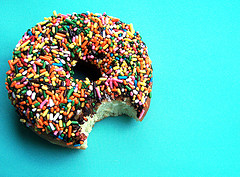
Photo above credited to Sofia Smith and used under a Creative Commons license.
Previous Post

May 6, 2015
My Rainbow Connection, Disconnected
Next Post
May 8, 2015 Sugar, Sugar, Part 2: May 8, 2015
Browse Our Archives
Select a Category A. G. Harmon Alissa Wilkinson Allison Backous Art Authors Brad Fruhauff Bradford Winters Bryan Bliss Caroline Langston Chad Thomas Johnston Chris Hoke Christiana N. Peterson Culture D.G. Myers D.L. Mayfield Daniel Bowman Jr. David Griffith Elizabeth Duffy Faith Film Greg Wolfe Guest Contributor Interview Jan Vallone Jeffrey Overstreet Jessica Eddings-Roeser Jessica Mesman Griffith Kelly Foster Lindsey Crittenden Morgan Meis music Natalie Vestin Nick Olson Peggy Rosenthal Personal Reflection Poetry Friday Reflection Relationships Review Richard Chess Richard Cole Sara Zarr Shannon Huffman Polson Sonya Bilocerkowycz Tania Runyan Tony Woodlief Topical Categories Uncategorized Vic Sizemore Writing
Select a Month October 2018 September 2018 August 2018 July 2018 June 2018 May 2018 April 2018 March 2018 February 2018 January 2018 December 2017 November 2017 October 2017 September 2017 August 2017 July 2017 June 2017 May 2017 April 2017 March 2017 February 2017 January 2017 December 2016 November 2016 October 2016 September 2016 August 2016 July 2016 June 2016 May 2016 April 2016 March 2016 February 2016 January 2016 December 2015 November 2015 October 2015 September 2015 August 2015 July 2015 June 2015 May 2015 April 2015 March 2015 February 2015 January 2015 December 2014 November 2014 October 2014 September 2014 August 2014 July 2014 June 2014 May 2014 April 2014 March 2014 February 2014 January 2014 December 2013 November 2013 October 2013 September 2013 August 2013 July 2013 June 2013 May 2013 April 2013 March 2013 February 2013 January 2013 December 2012 November 2012 October 2012 September 2012 August 2012 July 2012 June 2012 May 2012 February 2008
Follow Us!
TAKE THE
Religious Wisdom Quiz
The night of the Passover what did Israel have to do so their firstborn wouldn't die?
Select your answer to see how you score.
Go to Sleep Change Clothes Take a Bath Put blood around the door of their homes
Related posts from Good Letters

Morning in a Forgotten Neighborhood



TRENDING AT PATHEOS Catholic

Rejecting Doom: Christian Hope And Human Action
Christianity is a religion of hope. We are to have hope and...

It’s What Comes From Within Which Matters
One of the most difficult things for us to understand is why...

Why I Choose the Eucharist Over the Sermon
Choose the Eucharist, Not the Sermon What are we supposed to get...

5 Design Elements Found in Spiritually Rooted Homes
Putting Spirituality Into Home Decor Our homes are more than our living...

Credo: A Story of God Told with the...
About 10 years ago, I began to imagine a personal "Credo" that...

The Anatomy of Divine Revelation in Catholic Thought
The claim that God has made Himself known to human beings is...
view all Catholic blogs
Ad-Free & Subscriber Log-In Subscription Support
- About Us
- 2026 Calendar
- Videos
- Podcasts
- Library of World Religions
- Faith In Media Tracker
- Advertise With Us
- Write for Us
- Privacy Policy
- Terms of Service
- Do Not Sell My Data
- Contact Us
- Radiant Digital
- Manage Newsletter Subscriptions
- Unsubscribe From Notifications
- Sitemap
Copyright 2008-2026, Patheos. All rights reserved.
Subscription Support Ad-Free & Subscriber Log-In
Follow Patheos