
BuddhistCatholicContemplativeEvangelicalGeneral ChristianHinduJewishLatter-day SaintMuslimNew VisionsProgressive Christian
Beliefs
- Buddhist
- Catholic
- Contemplative
- Evangelical
- General Christian
- Hindu
- Jewish
- Latter-day Saint
- More Voices
- Muslim
- New Visions
- Pagan
- Progressive Christian
Topics
- Religion News
- Food and Religion
- Sports and Religion
- Religious Art
- Religious Music and Entertainment
- Religious Events
- History and Religion
- Style and Religion
- Politics and Religion
- Women in Religion
- Recreation Outdoors and Religion
- Business Finance and Religion
- Careers Workplace and Religion
- Education and Religion
- Family Parenting and Religion
- Health Fitness and Religion
- Home and Religion
- Relationships and Religion
- Technology and Religion
- Travel and Religion
Columnists
- Buddhist Columnists
- Business Finance and Religion Columnists
- Careers Workplace and Religion Columnists
- Catholic Columnists
- Contemplative Columnists
- Education and Religion Columnists
- Evangelists Columnists
- Family Parenting and Religion Columnists
- General Christian Columnists
- Health Fitness and Religion Columnists
- Hindu Columnists
- History and Religion Columnists
- Home and Religion Columnists
- Jewish Columnists
- More Voices Columnists
- Latter Day Columnists
- Muslim Columnists
- New Visions Columnists
- Nonreligious Columnists
- Pagan Columnists
- Politics and Religion Columnists
- Progressive Columnists
- Recreation Outdoors and Religion Columnists
- Relationships and Religion Columnists
- Religion News Columnists
- Religious Art Columnists
- Religious Events Columnists
- Religious Music and Entertainment Columnists
- Sports and Religion Columnists
- Style and Religion Columnists
- Technology and Religion Columnists
- Travel and Religion Columnists
- Women in Religion Columnists
Resource Library
- 2026 Calendar
- Library of World Religions
- The 100 Most Holy Places on Earth
- Patheos Answers
- Podcasts
- Videos
- Faith Leaders Database
- Anglican Episcopalian
- Bahai
- Baptist
- Buddhism
- Christianity
- Confucianism
- Eastern Orthodoxy
- Hinduism
- Holiness and Pentecostal
- ISKCON
- Islam
- Judaism
- Lutheran
- Methodist
- The Church of Jesus Christ of Latter-day Saints
- New Age
- Paganism
- Presbytarian and Reformed
- Protestantism
- Religion Behind the Scenes
- Roman Catholic
- Scientology
- Shia Islam
- Sikhism
- Sufism
- Sunni Islam
- Taoism
- Zen
- See all religions
Research Tools
 Ad-Free & Subscriber Log-In Subscription Support
Ad-Free & Subscriber Log-In Subscription Support
Follow Patheos 

- Trending:
- Forgiveness
- |
- Marriage
- |
- Consciousness
- |
- Death Penalty
- |
- Election
- |
- Halloween
 Good Letters
-
Contributors
- Home
- Catholic
- Make It Old: A Wedding Anniversary Epithalamion
Make It Old: A Wedding Anniversary Epithalamion
Last updated on: April 29, 2015 at 5:44 pm by Richard Chess
Make It Old: A Wedding Anniversary Epithalamion 2015-04-29T17:44:08-07:00 Richard Chess
Patheos Explore the world's faith through different perspectives on religion and spirituality! Patheos has the views of the prevalent religions and spiritualities of the world.
 In the beginning was a wedding. The ceremony began with light. The ceremony included the separation of water from water, and it included the formation of land followed by the breaking apart of continents. The sound was terrible, and it was heard beyond the sky and in the perfect garden, the expensive venue chosen for the wedding ceremony and reception.
The ceremony began before there was a brain, a human brain, before there were two human brains, even before there was a serpent brain. But there was an alphabet, and there was intelligence, and intelligence arranged the letters to form a world.
(Even now, some nights you can see, in the bride’s eye, in the subtle shading of her cheek, signs that deep inside her letters are moving, meeting each other, touching, deciding to marry or drift apart: m-a-r-r-i-a-g-e, m-i-r-a-g-e, r-a-g-e, a-g-e . . .)
Crawling and swarming, the guests arrived in search of their names. The guests circled in water; the guests were leaves of trees that turned into wings of songbirds and birds of prey.
After every goodness, just before the creation of rest, they arrived, the penultimate act of creation: groom, bride.
Thus, the ceremony was designed.
God made it that way. God, whose DNA was all over the linen light and in the water, in fruit and grasses, so that a forensic detective, later, would have no trouble identifying the judge who sentenced groom and bride first to imprisonment in unlikely Eden, then tossed them, with hardly enough clothing to cover them and not a dime in their pockets, into the unforgiving world. Henceforth, every woman and man, clinging to each other, is to trudge away from Eden.
But created of Eden’s soil and bone, what did they know about it, marriage, the first bride and groom? They didn’t know until they knew. They didn’t know anything; then they discovered blame. He blamed her. She blamed it. And who did God blame? Did God blame God’s self for ignoring the counsel of angels who advised against creating woman and man?
Blame: a natural enough place for a true marriage to begin.
Deep in the night before your wedding, a howl frightened you. It has its own door, the animal, a rubber flap that swings open and slaps shut after the dog steps through. The animal goes and comes as it pleases. Heading into the woods beyond its house. Bears in those woods, coyotes.
The night before the wedding, a howl wrenched you, you and your beloved, from bed, but it was too dark to enter the woods, and maybe it was pointless, the pet already dead, so what could you do? Terrified, you pulled up two chairs and, facing each other, you and your beloved, you began to sing, because the book said that was a tradition, The Song of Songs to each other.
Oh, give me of the kisses of your mouth,
For your love is more delightful than wine.
Your ointments yield a sweet fragrance,
Your name is like finest oil—
Therefore maidens love you.
Draw me after you, let us run!
(Is the dog alive?)
You have captured my heart,
My own, my bride,
You have captured my heart
With one glance of your eyes,
With one coil of your necklace.
How sweet is your love,
My own, my bride!
How much more delightful than wine,
Your ointments more fragrant
Than any spice!
The Song of Songs: the first bride, the first groom, for them it was a song without words, without a tune, without singers, the song of love that was created before male and female were crafted, before life into them was blown.
Because you are contrary, because you came to life and lost your hair too soon in the Age of Aquarius, you refused the laws of secularism, assimilation, and embraced the manual of tradition, The New Jewish Wedding Book, a book for a generation of Jews whose motto is make it old.
Thus, the kittel, the wedding gown/burial shroud you donned; thus the ketubah, the signing, in the presence of witnesses, the marriage contract; thus the bedeken, the veiling by the groom of the bride; thus the huppah, the wedding canopy, and the sheva brachot, seven blessings, and yihud, the moments of privacy, immediately following the ceremony, a guard outside the door, for the newlyweds to sip each other’s wine; thus the badhen, the jester at the reception. And for your guests, whose lives are Macys, Moog synthesizers, McDonalds; and for your guests, citizens of United Secular America: a program to explain the strange performance.
You and your bride, born into the long shadow of Eden, born into love sung by ancestors, born into the sound of tumbling Temple stones translated into broken glass echoing all the way from 70 CE Jerusalem to 1933 Berlin, from early twentieth century New York to late twentieth century Asheville.
You added the sound of your own shattered glass to the soundtrack of your people.
Breaking the glass: a moment followed by a kiss, a cheer, a song: siman tov u’mazal tov, good sign and good luck.
Breaking the self, your precious, single self*,* reinforced and defended for decades (you married at 36): the work of marriage.
Twenty-five years now. A beautiful bride, a strong, wise wife, and the shards to show for love, for life.
Richard Chess is the author of three books of poetry, Tekiah, Chair in the Desert, and Third Temple. Poems of his have appeared in Telling and Remembering: A Century of American Jewish Poetry, Bearing the Mystery: Twenty Years of IMAGE, and Best Spiritual Writing 2005. He is the Roy Carroll Professor of Honors Arts and Sciences at the University of North Carolina at Asheville. He is also the director of UNC Asheville’s Center for Jewish Studies.
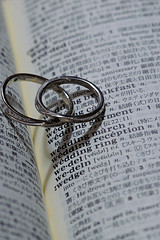
Photo above is credited to Hideyuki Kamon and used under a Creative Commons license.
Previous Post

April 15, 2015
Writing This Post Was on My Bucket List
Next Post
April 17, 2015 Jesus Through Poets' Eyes
Browse Our Archives
Select a Category A. G. Harmon Alissa Wilkinson Allison Backous Art Authors Brad Fruhauff Bradford Winters Bryan Bliss Caroline Langston Chad Thomas Johnston Chris Hoke Christiana N. Peterson Culture D.G. Myers D.L. Mayfield Daniel Bowman Jr. David Griffith Elizabeth Duffy Faith Film Greg Wolfe Guest Contributor Interview Jan Vallone Jeffrey Overstreet Jessica Eddings-Roeser Jessica Mesman Griffith Kelly Foster Lindsey Crittenden Morgan Meis music Natalie Vestin Nick Olson Peggy Rosenthal Personal Reflection Poetry Friday Reflection Relationships Review Richard Chess Richard Cole Sara Zarr Shannon Huffman Polson Sonya Bilocerkowycz Tania Runyan Tony Woodlief Topical Categories Uncategorized Vic Sizemore Writing
Select a Month October 2018 September 2018 August 2018 July 2018 June 2018 May 2018 April 2018 March 2018 February 2018 January 2018 December 2017 November 2017 October 2017 September 2017 August 2017 July 2017 June 2017 May 2017 April 2017 March 2017 February 2017 January 2017 December 2016 November 2016 October 2016 September 2016 August 2016 July 2016 June 2016 May 2016 April 2016 March 2016 February 2016 January 2016 December 2015 November 2015 October 2015 September 2015 August 2015 July 2015 June 2015 May 2015 April 2015 March 2015 February 2015 January 2015 December 2014 November 2014 October 2014 September 2014 August 2014 July 2014 June 2014 May 2014 April 2014 March 2014 February 2014 January 2014 December 2013 November 2013 October 2013 September 2013 August 2013 July 2013 June 2013 May 2013 April 2013 March 2013 February 2013 January 2013 December 2012 November 2012 October 2012 September 2012 August 2012 July 2012 June 2012 May 2012 February 2008
Follow Us!
TAKE THE
Religious Wisdom Quiz
Which Christian principle is highlighted in the parable of the Good Samaritan?
Select your answer to see how you score.
Only help friends Ignore strangers Compassion for all Seek praise
Related posts from Good Letters


The Stars of the Earth Cry Out


Leonard Cohen’s Holy and Broken Hallelujah
TRENDING AT PATHEOS Catholic

Rejecting Doom: Christian Hope And Human Action
Christianity is a religion of hope. We are to have hope and...

It’s What Comes From Within Which Matters
One of the most difficult things for us to understand is why...

Why I Choose the Eucharist Over the Sermon
Choose the Eucharist, Not the Sermon What are we supposed to get...

5 Design Elements Found in Spiritually Rooted Homes
Putting Spirituality Into Home Decor Our homes are more than our living...

Credo: A Story of God Told with the...
About 10 years ago, I began to imagine a personal "Credo" that...

The Anatomy of Divine Revelation in Catholic Thought
The claim that God has made Himself known to human beings is...
view all Catholic blogs
Ad-Free & Subscriber Log-In Subscription Support
- About Us
- 2026 Calendar
- Videos
- Podcasts
- Library of World Religions
- Faith In Media Tracker
- Advertise With Us
- Write for Us
- Privacy Policy
- Terms of Service
- Do Not Sell My Data
- Contact Us
- Radiant Digital
- Manage Newsletter Subscriptions
- Unsubscribe From Notifications
- Sitemap
Copyright 2008-2026, Patheos. All rights reserved.
Subscription Support Ad-Free & Subscriber Log-In
Follow Patheos