
BuddhistCatholicContemplativeEvangelicalGeneral ChristianHinduJewishLatter-day SaintMuslimNew VisionsProgressive Christian
Beliefs
- Buddhist
- Catholic
- Contemplative
- Evangelical
- General Christian
- Hindu
- Jewish
- Latter-day Saint
- More Voices
- Muslim
- New Visions
- Pagan
- Progressive Christian
Topics
- Religion News
- Food and Religion
- Sports and Religion
- Religious Art
- Religious Music and Entertainment
- Religious Events
- History and Religion
- Style and Religion
- Politics and Religion
- Women in Religion
- Recreation Outdoors and Religion
- Business Finance and Religion
- Careers Workplace and Religion
- Education and Religion
- Family Parenting and Religion
- Health Fitness and Religion
- Home and Religion
- Relationships and Religion
- Technology and Religion
- Travel and Religion
Columnists
- Buddhist Columnists
- Business Finance and Religion Columnists
- Careers Workplace and Religion Columnists
- Catholic Columnists
- Contemplative Columnists
- Education and Religion Columnists
- Evangelists Columnists
- Family Parenting and Religion Columnists
- General Christian Columnists
- Health Fitness and Religion Columnists
- Hindu Columnists
- History and Religion Columnists
- Home and Religion Columnists
- Jewish Columnists
- More Voices Columnists
- Latter Day Columnists
- Muslim Columnists
- New Visions Columnists
- Nonreligious Columnists
- Pagan Columnists
- Politics and Religion Columnists
- Progressive Columnists
- Recreation Outdoors and Religion Columnists
- Relationships and Religion Columnists
- Religion News Columnists
- Religious Art Columnists
- Religious Events Columnists
- Religious Music and Entertainment Columnists
- Sports and Religion Columnists
- Style and Religion Columnists
- Technology and Religion Columnists
- Travel and Religion Columnists
- Women in Religion Columnists
Resource Library
- 2026 Calendar
- Library of World Religions
- The 100 Most Holy Places on Earth
- Patheos Answers
- Podcasts
- Videos
- Faith Leaders Database
- Anglican Episcopalian
- Bahai
- Baptist
- Buddhism
- Christianity
- Confucianism
- Eastern Orthodoxy
- Hinduism
- Holiness and Pentecostal
- ISKCON
- Islam
- Judaism
- Lutheran
- Methodist
- The Church of Jesus Christ of Latter-day Saints
- New Age
- Paganism
- Presbytarian and Reformed
- Protestantism
- Religion Behind the Scenes
- Roman Catholic
- Scientology
- Shia Islam
- Sikhism
- Sufism
- Sunni Islam
- Taoism
- Zen
- See all religions
Research Tools
 Ad-Free & Subscriber Log-In Subscription Support
Ad-Free & Subscriber Log-In Subscription Support
Follow Patheos 

- Trending:
- Forgiveness
- |
- Marriage
- |
- Consciousness
- |
- Death Penalty
- |
- Election
- |
- Halloween
 Good Letters
-
Contributors
- Home
- Catholic
- Fever
Fever
Last updated on: July 21, 2015 at 4:29 pm by Guest Contributor
Fever 2015-07-21T16:29:03-07:00 Guest Contributor
Patheos Explore the world's faith through different perspectives on religion and spirituality! Patheos has the views of the prevalent religions and spiritualities of the world.
By Dyana Herron
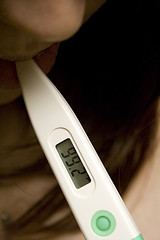 When well, it’s easy to forget how utterly miserable it feels to have a fever.
In fact, the moment the fever breaks, already the memory recedes—we may feel exhausted, wiped out, laid low, but also relieved, no longer at war with our own body. Even if we try to remember, can intellectually recall and describe what it is like, the immediate feeling is gone, and so is our most intimate experiential knowledge.
It is like trying to describe falling in love or the taste of lasagna, while neither loving nor eating.
Children pick up fevers as often and as casually as they pick up anything that has fallen to the floor that will fit inside their mouths. Their soft, new little bodies are susceptible to invasion, to viruses and germs that need to be burned away, smoked out by the immune system, while their anxious parents rock them all night, or dip them in a cool bath.
But as we grow older and develop our sturdy shells of immunity, fever is something we forget about.
Until we have one. And we remember.
This happened to me last week. On Thursday I received a vaccine with no expected side effects, then Friday morning—BAM—something was wrong. I headed to work, thinking that being out in the world would relieve my lethargy and achiness, but by five-o-clock I was home on the sofa huddled under a quilt, asking David to pick up some sherbet.
I was miserable. Besides the physical distress, I was unhappy to have even one evening hijacked by illness. I had things to do, important things. Our move to Philadelphia, now under four weeks away, has filled our calendar with urgent tasks. There are boxes to be packed, résumés to be emailed, apartment managers to be called, local haunts to be visited one last time, friends to be seen.
And yet I found myself immobilized on the sofa, drifting in and out of sleep. I felt like crying, but it would hurt too much to do so. I was angry that my body had become my enemy, that it was no longer helping me, that it had shown itself to be other than me, when I thought we were a team, inseparable.
That, of course, is the lie that we all believe, that a fever (or any illness, many much more grievous than a simple fever) suddenly and rudely uncovers. We, what we think of as “we,” as “ourselves,” are very much separable from our bodies. We are not our bodies—or at least not merely our bodies. And one day we and our bodies will permanently part ways.
Sylvia Plath wrote a poem called “Fever 103°” just a few months before she and her body parted ways. She describes the experience of having this dangerously high fever through a string of harrowing metaphors that revolve around the concept of purity. Of heat as a purifying force. And therefore of the body as what must be conquered to achieve purity:
The sin. The sin.
Darling, all night
I have been flickering, off, on, off, on.
The sheets grow heavy as a lecher’s kiss.
Three days. Three nights.
Lemon water, chicken
Water, water make me retch.
I am too pure for you or anyone.
Your body
Hurts me as the world hurts God.
One can imagine Plath burning from the inside, turning electric, flickering, a foe of water. During my own fever, I stumbled to the kitchen to get a glass of water, but because I came upon it first, picked up a ripe plum that had been in our kitchen for a week. Suddenly I could think of nothing but this plum, heavy as it was with its own water, and when I bit into it, I had never needed to eat anything more than this, so cold and sweet.
Later, lying down again, I looked toward the window. Without my glasses, the branches and leaves outside were moving brightly but fuzzily in the sun, and I felt as though I were looking through a kaleidoscope. As if I were seeing patterns of light and color that were more beautiful than what I could otherwise see. As if, sure, I were a little closer to seeing as God might see.
Not “as the world hurts God,” but “as the world pleases God.”
Later in Plath’s poem she levitates (“I think I am going up / I think I may rise”), whereas I eventually came down from my fever, back to my muscles doing what I asked without complaint, back to plums being okay but nothing special, back to trees outside being normal trees, holding no epiphanies.
For now, my body and I are reconciled. We have resolved our quarrel. But like lovers just after an intense fight, we move tentatively around one another, aware that there is distance we could have, that it is possible we could break apart.
Originally published in Good Letters on July 5, 2011.
Dyana Herron is a writer and teacher originally from Cleveland, TN, who currently lives in Seattle. She is a graduate of SPU’s MFA Program in Creative Writing.
Photo above credited to Pyxopotamus and used under a Creative Commons license.
Previous Post

April 22, 2015
For the Love of Money
Next Post
April 24, 2015 The Soul of the Law
Browse Our Archives
Select a Category A. G. Harmon Alissa Wilkinson Allison Backous Art Authors Brad Fruhauff Bradford Winters Bryan Bliss Caroline Langston Chad Thomas Johnston Chris Hoke Christiana N. Peterson Culture D.G. Myers D.L. Mayfield Daniel Bowman Jr. David Griffith Elizabeth Duffy Faith Film Greg Wolfe Guest Contributor Interview Jan Vallone Jeffrey Overstreet Jessica Eddings-Roeser Jessica Mesman Griffith Kelly Foster Lindsey Crittenden Morgan Meis music Natalie Vestin Nick Olson Peggy Rosenthal Personal Reflection Poetry Friday Reflection Relationships Review Richard Chess Richard Cole Sara Zarr Shannon Huffman Polson Sonya Bilocerkowycz Tania Runyan Tony Woodlief Topical Categories Uncategorized Vic Sizemore Writing
Select a Month October 2018 September 2018 August 2018 July 2018 June 2018 May 2018 April 2018 March 2018 February 2018 January 2018 December 2017 November 2017 October 2017 September 2017 August 2017 July 2017 June 2017 May 2017 April 2017 March 2017 February 2017 January 2017 December 2016 November 2016 October 2016 September 2016 August 2016 July 2016 June 2016 May 2016 April 2016 March 2016 February 2016 January 2016 December 2015 November 2015 October 2015 September 2015 August 2015 July 2015 June 2015 May 2015 April 2015 March 2015 February 2015 January 2015 December 2014 November 2014 October 2014 September 2014 August 2014 July 2014 June 2014 May 2014 April 2014 March 2014 February 2014 January 2014 December 2013 November 2013 October 2013 September 2013 August 2013 July 2013 June 2013 May 2013 April 2013 March 2013 February 2013 January 2013 December 2012 November 2012 October 2012 September 2012 August 2012 July 2012 June 2012 May 2012 February 2008
Follow Us!
TAKE THE
Religious Wisdom Quiz
Who said, "Come and see"?
Select your answer to see how you score.
Philip John the Baptist Paul Peter
Related posts from Good Letters


Morning in a Forgotten Neighborhood


TRENDING AT PATHEOS Catholic

Rejecting Doom: Christian Hope And Human Action
Christianity is a religion of hope. We are to have hope and...

It’s What Comes From Within Which Matters
One of the most difficult things for us to understand is why...

Why I Choose the Eucharist Over the Sermon
Choose the Eucharist, Not the Sermon What are we supposed to get...

5 Design Elements Found in Spiritually Rooted Homes
Putting Spirituality Into Home Decor Our homes are more than our living...

Credo: A Story of God Told with the...
About 10 years ago, I began to imagine a personal "Credo" that...

The Anatomy of Divine Revelation in Catholic Thought
The claim that God has made Himself known to human beings is...
view all Catholic blogs
Ad-Free & Subscriber Log-In Subscription Support
- About Us
- 2026 Calendar
- Videos
- Podcasts
- Library of World Religions
- Faith In Media Tracker
- Advertise With Us
- Write for Us
- Privacy Policy
- Terms of Service
- Do Not Sell My Data
- Contact Us
- Radiant Digital
- Manage Newsletter Subscriptions
- Unsubscribe From Notifications
- Sitemap
Copyright 2008-2026, Patheos. All rights reserved.
Subscription Support Ad-Free & Subscriber Log-In
Follow Patheos