
BuddhistCatholicContemplativeEvangelicalGeneral ChristianHinduJewishLatter-day SaintMuslimNew VisionsProgressive Christian
Beliefs
- Buddhist
- Catholic
- Contemplative
- Evangelical
- General Christian
- Hindu
- Jewish
- Latter-day Saint
- More Voices
- Muslim
- New Visions
- Pagan
- Progressive Christian
Topics
- Religion News
- Food and Religion
- Sports and Religion
- Religious Art
- Religious Music and Entertainment
- Religious Events
- History and Religion
- Style and Religion
- Politics and Religion
- Women in Religion
- Recreation Outdoors and Religion
- Business Finance and Religion
- Careers Workplace and Religion
- Education and Religion
- Family Parenting and Religion
- Health Fitness and Religion
- Home and Religion
- Relationships and Religion
- Technology and Religion
- Travel and Religion
Columnists
- Buddhist Columnists
- Business Finance and Religion Columnists
- Careers Workplace and Religion Columnists
- Catholic Columnists
- Contemplative Columnists
- Education and Religion Columnists
- Evangelists Columnists
- Family Parenting and Religion Columnists
- General Christian Columnists
- Health Fitness and Religion Columnists
- Hindu Columnists
- History and Religion Columnists
- Home and Religion Columnists
- Jewish Columnists
- More Voices Columnists
- Latter Day Columnists
- Muslim Columnists
- New Visions Columnists
- Nonreligious Columnists
- Pagan Columnists
- Politics and Religion Columnists
- Progressive Columnists
- Recreation Outdoors and Religion Columnists
- Relationships and Religion Columnists
- Religion News Columnists
- Religious Art Columnists
- Religious Events Columnists
- Religious Music and Entertainment Columnists
- Sports and Religion Columnists
- Style and Religion Columnists
- Technology and Religion Columnists
- Travel and Religion Columnists
- Women in Religion Columnists
Resource Library
- 2026 Calendar
- Library of World Religions
- The 100 Most Holy Places on Earth
- Patheos Answers
- Podcasts
- Videos
- Faith Leaders Database
- Anglican Episcopalian
- Bahai
- Baptist
- Buddhism
- Christianity
- Confucianism
- Eastern Orthodoxy
- Hinduism
- Holiness and Pentecostal
- ISKCON
- Islam
- Judaism
- Lutheran
- Methodist
- The Church of Jesus Christ of Latter-day Saints
- New Age
- Paganism
- Presbytarian and Reformed
- Protestantism
- Religion Behind the Scenes
- Roman Catholic
- Scientology
- Shia Islam
- Sikhism
- Sufism
- Sunni Islam
- Taoism
- Zen
- See all religions
Research Tools
 Ad-Free & Subscriber Log-In Subscription Support
Ad-Free & Subscriber Log-In Subscription Support
Follow Patheos 

- Trending:
- Forgiveness
- |
- Marriage
- |
- Consciousness
- |
- Death Penalty
- |
- Election
- |
- Halloween
 Good Letters
-
Contributors
- Home
- Catholic
- The Tenth Leper
The Tenth Leper
Last updated on: February 23, 2015 at 1:18 am by Guest Contributor
The Tenth Leper 2015-02-18T11:26:16-07:00 Guest Contributor
Patheos Explore the world's faith through different perspectives on religion and spirituality! Patheos has the views of the prevalent religions and spiritualities of the world.
 Guest post by Kelly Foster
If you grow up in the South, you learn to write thank-you notes. You write thank-you notes for kind gifts. You write thank-you notes for kind words. You write thank-you notes for kind thank-you notes people send to you.
It’s a vicious circle of gratitude, but I suppose there are worse circles to be caught up in, and plenty that don’t provide one with an excuse to keep a ready supply of handmade stationery in reserve. So it goes.
When I don’t write thank-you notes promptly enough, I am plagued by an intense sense of guilt and personal failing. In my perpetual self-absorption, I imagine the people to whom I intend to send the notes anxiously walking to their mailboxes every afternoon only to sulk back dejected when yet again, I have failed to deliver my postmarked symbol of the gratitude to which they are rightfully due.
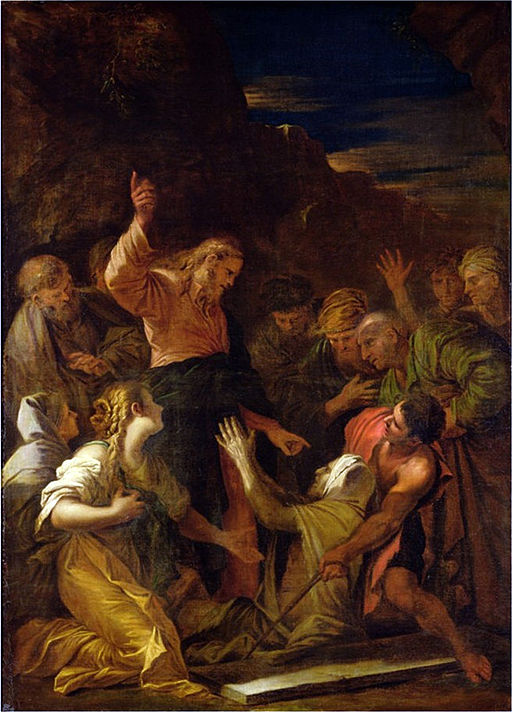
I think of thank-you notes when I find myself meditating on Jesus and the ten gospel lepers of Luke 17. If you are unfamiliar with their story, here it is:
On the way to Jerusalem, he was passing along between Samaria and Galilee. And as he entered a village, he was met by ten lepers who stood at a distance and lifted up their voices, saying, “Jesus, Master, have mercy on us.” When he saw them, he said to them, “Go show yourselves to the priests.” And as they went they were cleansed. Then one of them, when he saw that he was healed, turned back, praising God with a loud voice; and he fell on his face at Jesus’s feet, giving him thanks. Now he was a Samaritan. Then Jesus answered, “Were not ten cleansed? Where are the nine? Was no one found to return and give praise to God except this foreigner?” And he said to him, “Rise and go your way. Your faith has made you well.”
What strikes me is how often in my lifelong encounters with this narrative, I have reduced it to the absurdity of a mere lapse in etiquette. The nine lepers had bad manners. Their thank-you notes were not merely late, but non-existent.
Lesson learned? You should always thank God promptly just like you thanked Miss Sue for bringing you lemon bars when you were sick last week and had to stay home from school. Lesson learned? Good manners are essential when dealing with the Almighty.
Well, is that really it?
I don’t think so.
The more I think about that tenth gospel leper, the more I think that the difference between him and all the other healed lepers was not that he was necessarily any more grateful than they were, but that the faith he displayed in Jesus, the self-same faith Christ lauds, was a faith undergirded by a belief not just that Jesus was able to heal him, but that he had wanted to.
I imagine his faith presuming that Jesus healed not because he was bound to, but because he delighted to. And I believe that openness of faith, as much as his mended body, was what laid him flat at the feet of Christ. He saw in that moment that the very heart of the universe was bent to him not in obligation, but in delight, and that the heart of the universe itself was set on healing not only him, but all the broken world who stood beside him.
As for the nine, I can only imagine that they didn’t see things this way. Maybe they were just afraid to. I can’t always blame them. What had they learned about the way the world worked up until that point? They looked down and saw new flesh where there had previously been decay, and they scampered away, hell for leather, just praying that whoever it was who had just made them clean didn’t just as surprisingly decide to turn again and render them.
I think of the story of another leper asking healing of Jesus, found in the first chapter of Mark. He writes, “And a leper came to him, imploring him, and kneeling, said to him, ‘If you will, you can make me clean.’ Moved with pity, he stretched out his hand and touched him and said to him, ‘I will; be clean.’”
I believe that the distinction between the tenth leper and the nine was his vision. He saw that Christ, in pity and in delight, willed that he be made clean. He willed good, not harm. That’s what he willed. The heart of Christ towards him, in pleasure or in pain, was good.
“I will,” Christ says. “Be made clean.”
It takes faith to absorb the kindness of God, not merely intellectual assent to Christ’s divinity or power. If we perceive the faith of the gospel leper in this way, it also ceases to be a story about politeness and becomes a story about hope, not necessarily in better circumstances, but hope in the nature of God.
As I ponder my Lenten disciplines and the infinitude of ways in which I am small and mean and trapped and isolated and hungry, it helps me to remember that Christ extends the invitations to all beloved lepers.
“I will,” he says, even to me. “Be made clean.”
This post was originally published on February 29, 2012.
A former regular contributor to “Good Letters,” Kelly Foster Lundquist was the 2012-13 Milton Fellow. She graduated with the first cohort of the Seattle Pacific Master of Fine Arts in Creative Writing in 2007. Her work has appeared in Image. She lives in Minnesota with her family and teaches English at North Hennepin Community College.
Painting above by Jean-Marie Melchior Doze (1864), used under Wikimedia Commons, accessible through public domain.

Previous Post

February 20, 2015
Back to the Drawing Board
Next Post
February 24, 2015 Science and Faith: an Evolving Conversation
Browse Our Archives
Select a Category A. G. Harmon Alissa Wilkinson Allison Backous Art Authors Brad Fruhauff Bradford Winters Bryan Bliss Caroline Langston Chad Thomas Johnston Chris Hoke Christiana N. Peterson Culture D.G. Myers D.L. Mayfield Daniel Bowman Jr. David Griffith Elizabeth Duffy Faith Film Greg Wolfe Guest Contributor Interview Jan Vallone Jeffrey Overstreet Jessica Eddings-Roeser Jessica Mesman Griffith Kelly Foster Lindsey Crittenden Morgan Meis music Natalie Vestin Nick Olson Peggy Rosenthal Personal Reflection Poetry Friday Reflection Relationships Review Richard Chess Richard Cole Sara Zarr Shannon Huffman Polson Sonya Bilocerkowycz Tania Runyan Tony Woodlief Topical Categories Uncategorized Vic Sizemore Writing
Select a Month October 2018 September 2018 August 2018 July 2018 June 2018 May 2018 April 2018 March 2018 February 2018 January 2018 December 2017 November 2017 October 2017 September 2017 August 2017 July 2017 June 2017 May 2017 April 2017 March 2017 February 2017 January 2017 December 2016 November 2016 October 2016 September 2016 August 2016 July 2016 June 2016 May 2016 April 2016 March 2016 February 2016 January 2016 December 2015 November 2015 October 2015 September 2015 August 2015 July 2015 June 2015 May 2015 April 2015 March 2015 February 2015 January 2015 December 2014 November 2014 October 2014 September 2014 August 2014 July 2014 June 2014 May 2014 April 2014 March 2014 February 2014 January 2014 December 2013 November 2013 October 2013 September 2013 August 2013 July 2013 June 2013 May 2013 April 2013 March 2013 February 2013 January 2013 December 2012 November 2012 October 2012 September 2012 August 2012 July 2012 June 2012 May 2012 February 2008
Follow Us!
TAKE THE
Religious Wisdom Quiz
What caused the sailors to throw Jonah overboard?
Select your answer to see how you score.
A violent storm A mutiny A prophecy A vision
Related posts from Good Letters

Poetry Friday: "The Burned Butterfly"

The Stars of the Earth Cry Out


TRENDING AT PATHEOS Catholic

The Parable Of The Sower And The Word...
One of Christ’s most famous parables is that of the sower who...

Rejecting Doom: Christian Hope And Human Action
Christianity is a religion of hope. We are to have hope and...

Why I Choose the Eucharist Over the Sermon
Choose the Eucharist, Not the Sermon What are we supposed to get...

5 Design Elements Found in Spiritually Rooted Homes
Putting Spirituality Into Home Decor Our homes are more than our living...

Credo: A Story of God Told with the...
About 10 years ago, I began to imagine a personal "Credo" that...

The Anatomy of Divine Revelation in Catholic Thought
The claim that God has made Himself known to human beings is...
view all Catholic blogs
Ad-Free & Subscriber Log-In Subscription Support
- About Us
- 2026 Calendar
- Videos
- Podcasts
- Library of World Religions
- Faith In Media Tracker
- Advertise With Us
- Write for Us
- Privacy Policy
- Terms of Service
- Do Not Sell My Data
- Contact Us
- Radiant Digital
- Manage Newsletter Subscriptions
- Unsubscribe From Notifications
- Sitemap
Copyright 2008-2026, Patheos. All rights reserved.
Subscription Support Ad-Free & Subscriber Log-In
Follow Patheos