
BuddhistCatholicContemplativeEvangelicalGeneral ChristianHinduJewishLatter-day SaintMuslimNew VisionsProgressive Christian
Beliefs
- Buddhist
- Catholic
- Contemplative
- Evangelical
- General Christian
- Hindu
- Jewish
- Latter-day Saint
- More Voices
- Muslim
- New Visions
- Pagan
- Progressive Christian
Topics
- Religion News
- Food and Religion
- Sports and Religion
- Religious Art
- Religious Music and Entertainment
- Religious Events
- History and Religion
- Style and Religion
- Politics and Religion
- Women in Religion
- Recreation Outdoors and Religion
- Business Finance and Religion
- Careers Workplace and Religion
- Education and Religion
- Family Parenting and Religion
- Health Fitness and Religion
- Home and Religion
- Relationships and Religion
- Technology and Religion
- Travel and Religion
Columnists
- Buddhist Columnists
- Business Finance and Religion Columnists
- Careers Workplace and Religion Columnists
- Catholic Columnists
- Contemplative Columnists
- Education and Religion Columnists
- Evangelists Columnists
- Family Parenting and Religion Columnists
- General Christian Columnists
- Health Fitness and Religion Columnists
- Hindu Columnists
- History and Religion Columnists
- Home and Religion Columnists
- Jewish Columnists
- More Voices Columnists
- Latter Day Columnists
- Muslim Columnists
- New Visions Columnists
- Nonreligious Columnists
- Pagan Columnists
- Politics and Religion Columnists
- Progressive Columnists
- Recreation Outdoors and Religion Columnists
- Relationships and Religion Columnists
- Religion News Columnists
- Religious Art Columnists
- Religious Events Columnists
- Religious Music and Entertainment Columnists
- Sports and Religion Columnists
- Style and Religion Columnists
- Technology and Religion Columnists
- Travel and Religion Columnists
- Women in Religion Columnists
Resource Library
- 2026 Calendar
- Library of World Religions
- The 100 Most Holy Places on Earth
- Patheos Answers
- Podcasts
- Videos
- Faith Leaders Database
- Anglican Episcopalian
- Bahai
- Baptist
- Buddhism
- Christianity
- Confucianism
- Eastern Orthodoxy
- Hinduism
- Holiness and Pentecostal
- ISKCON
- Islam
- Judaism
- Lutheran
- Methodist
- The Church of Jesus Christ of Latter-day Saints
- New Age
- Paganism
- Presbytarian and Reformed
- Protestantism
- Religion Behind the Scenes
- Roman Catholic
- Scientology
- Shia Islam
- Sikhism
- Sufism
- Sunni Islam
- Taoism
- Zen
- See all religions
Research Tools
 Ad-Free & Subscriber Log-In Subscription Support
Ad-Free & Subscriber Log-In Subscription Support
Follow Patheos 

- Trending:
- Forgiveness
- |
- Marriage
- |
- Consciousness
- |
- Death Penalty
- |
- Election
- |
- Halloween
 Good Letters
-
Contributors
- Home
- Catholic
- Mama and The Help
Mama and The Help
Last updated on: February 27, 2015 at 1:55 am by Caroline Langston
Mama and The Help 2015-02-25T12:13:44-07:00 Caroline Langston
Patheos Explore the world's faith through different perspectives on religion and spirituality! Patheos has the views of the prevalent religions and spiritualities of the world.
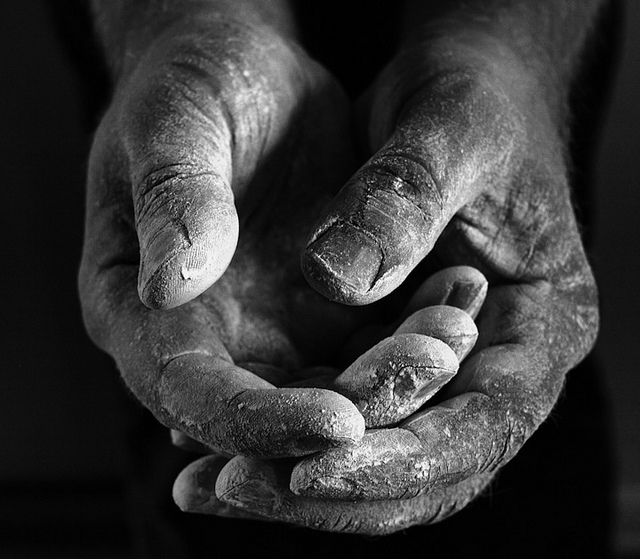 In memory of my mother
“How come we don’t have a maid?” I asked my mother. It was the summer of 1973 and I was five.
Across the street at the neighbor’s, Lula wore men’s white cotton socks with sandals and came outside to greet the mailman every afternoon. She was slow moving and wide, with skin the color of wood varnish.
“Come and let me love on you,” she’d say, but Mama always stiffened a bit, as though she were not quite comfortable.
We were in the utility room. Mama hauled a pile of tangled wet sheets out of the washing machine, then dumped them into a plastic laundry basket on the floor. The corners of the basket were split and bit my skin when I stuck my fingers inside them.
“Maids steal,” Mama said, lifting the basket over her head and tramping down the hall.
I wanted to know if she could balance it on top of her head like the African women in the National Geographic, but when I asked, Mama smacked her lips and acted like she didn’t know what she was talking about.
I followed her through the family room where the television, always on, was blasting The Days of Our Lives (“Like sands through the hourglass,” some man named McDonald Carey always said at the beginning of the show) and out the back door into the yard. The screen door flapped shut, trapping the cold breeze from the Fedders air conditioner inside the house.
Mama dropped the laundry basket into the grass under the clothesline that was strung back and forth between two metal fans that looked like television antennas. One time not long after she and Daddy had gotten married, she told me, when they were still living in Monticello, they had a maid who stole Daddy’s medical fraternity pin right out of the jewelry box on the bedroom dresser.
I asked what a fraternity was, and Mama explained that while sometimes it just meant a group that men joined in order to socialize, in this case it meant a special club for men who were going to be dentists, that you had to be asked to join. You couldn’t just volunteer, she said, lifting a yellow and orange striped sheet from the pile in the basket. She flapped it open and pinned one end to the line with a wooden clothespin, the grabbed another clothespin out of the basket to clamp down the other side.
The sun was high in the sky and the air was filled with the hot smell of cut grass. The maid’s name was Francine. That fraternity pin was eighteen karat gold, Mama said, and was trimmed with real pearls. What was a maid going to do with a thing like that?
She hauled another sheet out of the basket, one that was printed with giant pink and yellow daisies, then asked me in a completely different tone, like the way she would talk to somebody at the store: “Would you hand me a clothespin, please ma’am?”
I grabbed a clothespin from the basket and held it out to her. I noticed that all of the sheets in the basket were either striped or flowered or had swirls on them that Mama called paisley, and seeing them there, all jumbled together, I wished that we had sheets like the ones in detergent commercials on TV, snowy layers of just plain white, the kind that babies crawled around in.
I flopped on my back in the grass and closed my eyes, but I could still feel the sun sting through my eyelids.
Mama’s voice moved back and forth as she continued to hang the sheets. Another time, she said, they had a maid who had shown up for work one day with a cut lip and two black eyes because her boyfriend had beaten her up the night before.
That was when the children were small, she said. Because I was the youngest, my mother never referred to me as one of “the children.”
She told my Daddy had made the maid a cold pack, then took her down to the colored hospital and talked to Dr. Washington himself.
Both of them were worried sick, she said. She added, “That one’s name was Opal.”
After Integration and all, she said, maids were too much trouble. Even in this country club town with all these crazy people.
The sun flared behind my eyelids. Francine, Opal, Lula—names that sounded like the birthstones you could get at the drugstore. Mine was August, something called peridot, but I wanted to be May, which was emerald. Emerald was cool, like the way Lula’s hands always felt when she said, “Let me love on you,” and put them around my shoulders.
I sat up and opened my eyes; the sun poured into them and I squinted. I saw that the entire clothesline was hung with sheets, stretched from end to end, hanging down almost to the ground, their hems curling and their middles puffing out slightly in the hot air, all of the designs and colors running together.
They were not a jumble anymore, but a magic tent, a wild castle. I scrambled up from the grass and walked down through the cool waving aisles, running the palms of my hands down the wet cotton. It was a place for princesses or fairies.
I came out and Mama was lifting the plastic laundry basket to carry it back inside. I saw that her face and neck were red and her gray hair, which she had fixed in a puff at the beauty parlor every Saturday morning, was drooping and coming out of its curl. My own neck and arms were sweaty under my T-shirt, which was damp and stuck to my skin.
“I don’t see as we even need a maid,” she said, looking at me once before she started off across the grass. Those eyes. “Haven’t I done enough?”
A native of Yazoo City, Mississippi, Caroline Langston is a convert to the Eastern Orthodox Church. She is a widely published writer and essayist, a winner of the Pushcart Prize, and a commentator for NPR’s “All Things Considered.”
The photo above is credited to Magnus Branden, used under the Creative Commons License.
Previous Post

February 26, 2015
The Courage of Men
Next Post
March 2, 2015 Exercises for Lent
Browse Our Archives
Select a Category A. G. Harmon Alissa Wilkinson Allison Backous Art Authors Brad Fruhauff Bradford Winters Bryan Bliss Caroline Langston Chad Thomas Johnston Chris Hoke Christiana N. Peterson Culture D.G. Myers D.L. Mayfield Daniel Bowman Jr. David Griffith Elizabeth Duffy Faith Film Greg Wolfe Guest Contributor Interview Jan Vallone Jeffrey Overstreet Jessica Eddings-Roeser Jessica Mesman Griffith Kelly Foster Lindsey Crittenden Morgan Meis music Natalie Vestin Nick Olson Peggy Rosenthal Personal Reflection Poetry Friday Reflection Relationships Review Richard Chess Richard Cole Sara Zarr Shannon Huffman Polson Sonya Bilocerkowycz Tania Runyan Tony Woodlief Topical Categories Uncategorized Vic Sizemore Writing
Select a Month October 2018 September 2018 August 2018 July 2018 June 2018 May 2018 April 2018 March 2018 February 2018 January 2018 December 2017 November 2017 October 2017 September 2017 August 2017 July 2017 June 2017 May 2017 April 2017 March 2017 February 2017 January 2017 December 2016 November 2016 October 2016 September 2016 August 2016 July 2016 June 2016 May 2016 April 2016 March 2016 February 2016 January 2016 December 2015 November 2015 October 2015 September 2015 August 2015 July 2015 June 2015 May 2015 April 2015 March 2015 February 2015 January 2015 December 2014 November 2014 October 2014 September 2014 August 2014 July 2014 June 2014 May 2014 April 2014 March 2014 February 2014 January 2014 December 2013 November 2013 October 2013 September 2013 August 2013 July 2013 June 2013 May 2013 April 2013 March 2013 February 2013 January 2013 December 2012 November 2012 October 2012 September 2012 August 2012 July 2012 June 2012 May 2012 February 2008
Follow Us!
TAKE THE
Religious Wisdom Quiz
What Christian group is known for its historic peace churches and pacifism?
Select your answer to see how you score.
Quakers Presbyterians Methodists Pentecostals
Related posts from Good Letters




TRENDING AT PATHEOS Catholic

Rejecting Doom: Christian Hope And Human Action
Christianity is a religion of hope. We are to have hope and...

It’s What Comes From Within Which Matters
One of the most difficult things for us to understand is why...

Why I Choose the Eucharist Over the Sermon
Choose the Eucharist, Not the Sermon What are we supposed to get...

5 Design Elements Found in Spiritually Rooted Homes
Putting Spirituality Into Home Decor Our homes are more than our living...

Credo: A Story of God Told with the...
About 10 years ago, I began to imagine a personal "Credo" that...

The Anatomy of Divine Revelation in Catholic Thought
The claim that God has made Himself known to human beings is...
view all Catholic blogs
Ad-Free & Subscriber Log-In Subscription Support
- About Us
- 2026 Calendar
- Videos
- Podcasts
- Library of World Religions
- Faith In Media Tracker
- Advertise With Us
- Write for Us
- Privacy Policy
- Terms of Service
- Do Not Sell My Data
- Contact Us
- Radiant Digital
- Manage Newsletter Subscriptions
- Unsubscribe From Notifications
- Sitemap
Copyright 2008-2026, Patheos. All rights reserved.
Subscription Support Ad-Free & Subscriber Log-In
Follow Patheos