
BuddhistCatholicContemplativeEvangelicalGeneral ChristianHinduJewishLatter-day SaintMuslimNew VisionsProgressive Christian
Beliefs
- Buddhist
- Catholic
- Contemplative
- Evangelical
- General Christian
- Hindu
- Jewish
- Latter-day Saint
- More Voices
- Muslim
- New Visions
- Pagan
- Progressive Christian
Topics
- Religion News
- Food and Religion
- Sports and Religion
- Religious Art
- Religious Music and Entertainment
- Religious Events
- History and Religion
- Style and Religion
- Politics and Religion
- Women in Religion
- Recreation Outdoors and Religion
- Business Finance and Religion
- Careers Workplace and Religion
- Education and Religion
- Family Parenting and Religion
- Health Fitness and Religion
- Home and Religion
- Relationships and Religion
- Technology and Religion
- Travel and Religion
Columnists
- Buddhist Columnists
- Business Finance and Religion Columnists
- Careers Workplace and Religion Columnists
- Catholic Columnists
- Contemplative Columnists
- Education and Religion Columnists
- Evangelists Columnists
- Family Parenting and Religion Columnists
- General Christian Columnists
- Health Fitness and Religion Columnists
- Hindu Columnists
- History and Religion Columnists
- Home and Religion Columnists
- Jewish Columnists
- More Voices Columnists
- Latter Day Columnists
- Muslim Columnists
- New Visions Columnists
- Nonreligious Columnists
- Pagan Columnists
- Politics and Religion Columnists
- Progressive Columnists
- Recreation Outdoors and Religion Columnists
- Relationships and Religion Columnists
- Religion News Columnists
- Religious Art Columnists
- Religious Events Columnists
- Religious Music and Entertainment Columnists
- Sports and Religion Columnists
- Style and Religion Columnists
- Technology and Religion Columnists
- Travel and Religion Columnists
- Women in Religion Columnists
Resource Library
- 2026 Calendar
- Library of World Religions
- The 100 Most Holy Places on Earth
- Patheos Answers
- Podcasts
- Videos
- Faith Leaders Database
- Anglican Episcopalian
- Bahai
- Baptist
- Buddhism
- Christianity
- Confucianism
- Eastern Orthodoxy
- Hinduism
- Holiness and Pentecostal
- ISKCON
- Islam
- Judaism
- Lutheran
- Methodist
- The Church of Jesus Christ of Latter-day Saints
- New Age
- Paganism
- Presbytarian and Reformed
- Protestantism
- Religion Behind the Scenes
- Roman Catholic
- Scientology
- Shia Islam
- Sikhism
- Sufism
- Sunni Islam
- Taoism
- Zen
- See all religions
Research Tools
 Ad-Free & Subscriber Log-In Subscription Support
Ad-Free & Subscriber Log-In Subscription Support
Follow Patheos 

- Trending:
- Forgiveness
- |
- Marriage
- |
- Consciousness
- |
- Death Penalty
- |
- Election
- |
- Halloween
 Good Letters
-
Contributors
- Home
- Catholic
- Living With Darwin
Living With Darwin
Last updated on: July 20, 2015 at 12:37 pm by Morgan Meis
Living With Darwin 2015-07-20T12:37:46-07:00 Morgan Meis
Patheos Explore the world's faith through different perspectives on religion and spirituality! Patheos has the views of the prevalent religions and spiritualities of the world.
 This post was made possible through the support of a grant from The BioLogos Foundation’s Evolution and Christian Faith program. The opinions expressed are those of the author and do not necessarily reflect the views of BioLogos.
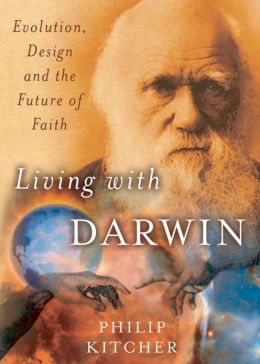
A few years ago, Philip Kitcher wrote a book called Living with Darwin: Evolution, Design, and the Future of Faith. Kitcher is a well-respected philosopher. He currently holds an appointment in the philosophy department at Columbia University.
Kitcher often writes about science, the scientific method, and more specifically about science and its clash with faith. He has dipped his toe, more than once, into the murky waters of creationism and the arguments around intelligent design.
I’ve never met Dr. Kitcher, but it is easy to tell from his writing that he is possessed of more in the way of patience and curiosity, intellectually speaking, than most intellectuals. As proof of this assertion, I submit a little story he tells in the preface of Living with Darwin. Flipping through a copy of TV Guide one day in the 1970s while babysitting his young son, Kitcher came across an advertisement for a book that claimed it would “set its readers straight on the question of ‘origins.’”
Now, here is what makes Kitcher uniquely himself, rather than your average philosopher of science. Kitcher filled out and mailed in the form attached to the advertisement. Soon after, he got a copy of Henry Morris’s The Remarkable Birth of Planet Earth. Henry Morris was, at the time, head of the Institute for Creation Research.
Philip Kitcher had become the proud owner of what he calls “a creationist classic.” Reading the book, Kitcher was startled to realize that, “there were objections to Darwinism to which [he] couldn’t immediately formulate a convincing answer.” This lit a fire under the nether parts of Dr. Kitcher, which he sought to extinguish by writing a clear, well-reasoned book that would formulate a convincing answer to any objections to Darwinism.
Living with Darwin is that book. As a response to intelligent design, Living with Darwin is utterly persuasive. Slowly, methodically, even with a kindhearted awareness of the pain he may be causing, Kitcher dismantles intelligent design as an intellectual project.
In a stern, though fair, admonishment to persons of faith who continue to argue along the lines of intelligent design, Kitcher writes:
Intelligent design-ers give Darwinians much trouble because their officially sanitized doctrine is presented with a wink. That wink signals to the sincerely religious that there is a faith-friendly alternative to godless evolutionism, and so recruits to the cause people who have no part in any pretense and no idea that they are supporting an illusion.
So, there we are. Darwin was right, and it is intellectually dishonest to wheedle with the facts of evolution. Life has evolved on this planet through a process of natural selection. Where that leaves us in respect to God is something people of faith are still working out.
According to Kitcher, the implications of Darwinism are pretty clear. The cruel and competitive story of evolution leaves no room for a providentialist God. You might be able to sustain some form of broadly construed spiritual pantheism. But that’s the most, Kitcher thinks, anyone could possible squeeze out of a planet operating under Darwin’s laws.
A problem for Kitcher, though, is why religion—which provides a false and misleading picture of the world—has emerged so universally among human beings. His answer is that “religious doctrines don’t have to be true to be successful.”
Turning his attention to Christianity in particular, he forwards a rough hypothesis as to why Christianity succeeded in the Greco-Roman world:
Statistics suggest that upper-middle-class pagan women were relatively more attracted by the religion—perhaps because they perceived the lives of their Christian counterparts as better than their own (that Christian husbands were more faithful and less abusive). An intriguing conjecture proposes that, in an urban world marked by filth and recurrent outbreaks of plague, the Christian injunction to comfort the sick would have raised survival rates in times of epidemic, simply because of the beneficial effects of giving water and other forms of basic care.
Kitcher is being reasonable and dispassionate here. A Deweyan pragmatist in his own philosophical commitments, Kitcher is at pains to recognize that Christianity and other religions do provide real-world benefits—from providing comfort to the sick and dying to the raising of survival rates during epidemics. Kitcher’s hope for the future is that we can get better at doing these same things without religion.
It is interesting, though, to think about that Christian injunction to care for the sick. In the famous Good Samaritan story from Luke’s Gospel, Jesus mentions nothing about raising survival rates. He talks, instead, about the necessity of love, that one must love God and that the love of God is manifested in the love of one’s neighbor: the neighbor being defined as any other human being who suffers, even a person otherwise defined as an enemy.
Kitcher reminds us, unintentionally, that the documents collected together in the New Testament contain very little in the way of metaphysical speculation—the nature of the deity, for instance, or solutions to the problems of theodicy. Jesus utters, all told, only meager and confusing fare when it comes to concrete God-talk.
Instead, he tells you how to be a disciple. And the fundamental attitude shift that is required in order to become a disciple is to act in love: comfort the sick, give someone water, administer basic care. As Kitcher intimates, these were not sentiments au courant within the Greco-Roman world.
So why the switch from Greco-Roman hardness of heart to Christian meekness? Was it the sudden collective desire to raise survival rates in times of epidemic? But where would this desire come from? Raising survival rates is a result, but it is not a motivation, especially since the result only came to be known after the fact.
There are Darwinian explanations for why altruism is beneficial for groups. But those explanations don’t touch on the first-person. They don’t step down into a human heart in the process of a genuine metanoia, a conversion from one way of living to another.
Metanoia is a fact of human experience, just as birth, growth, and death are facts. And from that fact we are carried back into the mysteries of faith: you, me, Darwin, Kitcher, everybody.
Morgan Meis is the critic-at-large for The Smart Set (thesmartset.com). He has a PhD in Philosophy and has written for n+1, The Believer, Harper’s Magazine, and The Virginia Quarterly Review. He won the Whiting Award in 2013. Morgan is also an editor at 3 Quarks Daily, and a winner of a Creative Capital | Warhol Foundation Arts Writers grant. A book of Morgan’s selected essays can be found here. He can be reached at [email protected].
The photo above is the official cover of the book Living With Darwin (publisher Oxford University Press), reviewed here.
Previous Post

February 9, 2015
Contemplative Fail
Next Post
February 11, 2015 Hazel Motes Is Out of Time
Browse Our Archives
Select a Category A. G. Harmon Alissa Wilkinson Allison Backous Art Authors Brad Fruhauff Bradford Winters Bryan Bliss Caroline Langston Chad Thomas Johnston Chris Hoke Christiana N. Peterson Culture D.G. Myers D.L. Mayfield Daniel Bowman Jr. David Griffith Elizabeth Duffy Faith Film Greg Wolfe Guest Contributor Interview Jan Vallone Jeffrey Overstreet Jessica Eddings-Roeser Jessica Mesman Griffith Kelly Foster Lindsey Crittenden Morgan Meis music Natalie Vestin Nick Olson Peggy Rosenthal Personal Reflection Poetry Friday Reflection Relationships Review Richard Chess Richard Cole Sara Zarr Shannon Huffman Polson Sonya Bilocerkowycz Tania Runyan Tony Woodlief Topical Categories Uncategorized Vic Sizemore Writing
Select a Month October 2018 September 2018 August 2018 July 2018 June 2018 May 2018 April 2018 March 2018 February 2018 January 2018 December 2017 November 2017 October 2017 September 2017 August 2017 July 2017 June 2017 May 2017 April 2017 March 2017 February 2017 January 2017 December 2016 November 2016 October 2016 September 2016 August 2016 July 2016 June 2016 May 2016 April 2016 March 2016 February 2016 January 2016 December 2015 November 2015 October 2015 September 2015 August 2015 July 2015 June 2015 May 2015 April 2015 March 2015 February 2015 January 2015 December 2014 November 2014 October 2014 September 2014 August 2014 July 2014 June 2014 May 2014 April 2014 March 2014 February 2014 January 2014 December 2013 November 2013 October 2013 September 2013 August 2013 July 2013 June 2013 May 2013 April 2013 March 2013 February 2013 January 2013 December 2012 November 2012 October 2012 September 2012 August 2012 July 2012 June 2012 May 2012 February 2008
Follow Us!
TAKE THE
Religious Wisdom Quiz
Which battle did Jonathan, Saul's son, win using faith instead of army size?
Select your answer to see how you score.
Garrison of the Philistines Battle of Ramah Siege of Jerusalem Battle of Gilboa
Related posts from Good Letters

Morning in a Forgotten Neighborhood



Leonard Cohen’s Holy and Broken Hallelujah
TRENDING AT PATHEOS Catholic

Rejecting Doom: Christian Hope And Human Action
Christianity is a religion of hope. We are to have hope and...

It’s What Comes From Within Which Matters
One of the most difficult things for us to understand is why...

Why I Choose the Eucharist Over the Sermon
Choose the Eucharist, Not the Sermon What are we supposed to get...

5 Design Elements Found in Spiritually Rooted Homes
Putting Spirituality Into Home Decor Our homes are more than our living...

Credo: A Story of God Told with the...
About 10 years ago, I began to imagine a personal "Credo" that...

The Anatomy of Divine Revelation in Catholic Thought
The claim that God has made Himself known to human beings is...
view all Catholic blogs
Ad-Free & Subscriber Log-In Subscription Support
- About Us
- 2026 Calendar
- Videos
- Podcasts
- Library of World Religions
- Faith In Media Tracker
- Advertise With Us
- Write for Us
- Privacy Policy
- Terms of Service
- Do Not Sell My Data
- Contact Us
- Radiant Digital
- Manage Newsletter Subscriptions
- Unsubscribe From Notifications
- Sitemap
Copyright 2008-2026, Patheos. All rights reserved.
Subscription Support Ad-Free & Subscriber Log-In
Follow Patheos