
BuddhistCatholicContemplativeEvangelicalGeneral ChristianHinduJewishLatter-day SaintMuslimNew VisionsProgressive Christian
Beliefs
- Buddhist
- Catholic
- Contemplative
- Evangelical
- General Christian
- Hindu
- Jewish
- Latter-day Saint
- More Voices
- Muslim
- New Visions
- Pagan
- Progressive Christian
Topics
- Religion News
- Food and Religion
- Sports and Religion
- Religious Art
- Religious Music and Entertainment
- Religious Events
- History and Religion
- Style and Religion
- Politics and Religion
- Women in Religion
- Recreation Outdoors and Religion
- Business Finance and Religion
- Careers Workplace and Religion
- Education and Religion
- Family Parenting and Religion
- Health Fitness and Religion
- Home and Religion
- Relationships and Religion
- Technology and Religion
- Travel and Religion
Columnists
- Buddhist Columnists
- Business Finance and Religion Columnists
- Careers Workplace and Religion Columnists
- Catholic Columnists
- Contemplative Columnists
- Education and Religion Columnists
- Evangelists Columnists
- Family Parenting and Religion Columnists
- General Christian Columnists
- Health Fitness and Religion Columnists
- Hindu Columnists
- History and Religion Columnists
- Home and Religion Columnists
- Jewish Columnists
- More Voices Columnists
- Latter Day Columnists
- Muslim Columnists
- New Visions Columnists
- Nonreligious Columnists
- Pagan Columnists
- Politics and Religion Columnists
- Progressive Columnists
- Recreation Outdoors and Religion Columnists
- Relationships and Religion Columnists
- Religion News Columnists
- Religious Art Columnists
- Religious Events Columnists
- Religious Music and Entertainment Columnists
- Sports and Religion Columnists
- Style and Religion Columnists
- Technology and Religion Columnists
- Travel and Religion Columnists
- Women in Religion Columnists
Resource Library
- 2026 Calendar
- Library of World Religions
- The 100 Most Holy Places on Earth
- Patheos Answers
- Podcasts
- Videos
- Faith Leaders Database
- Anglican Episcopalian
- Bahai
- Baptist
- Buddhism
- Christianity
- Confucianism
- Eastern Orthodoxy
- Hinduism
- Holiness and Pentecostal
- ISKCON
- Islam
- Judaism
- Lutheran
- Methodist
- The Church of Jesus Christ of Latter-day Saints
- New Age
- Paganism
- Presbytarian and Reformed
- Protestantism
- Religion Behind the Scenes
- Roman Catholic
- Scientology
- Shia Islam
- Sikhism
- Sufism
- Sunni Islam
- Taoism
- Zen
- See all religions
Research Tools
 Ad-Free & Subscriber Log-In Subscription Support
Ad-Free & Subscriber Log-In Subscription Support
Follow Patheos 

- Trending:
- Forgiveness
- |
- Marriage
- |
- Consciousness
- |
- Death Penalty
- |
- Election
- |
- Halloween
 Good Letters
-
Contributors
- Home
- Catholic
- Back to the Drawing Board
Back to the Drawing Board
Last updated on: February 20, 2015 at 1:51 am by Tania Runyan
Back to the Drawing Board 2015-02-18T17:58:16-07:00 Tania Runyan
Patheos Explore the world's faith through different perspectives on religion and spirituality! Patheos has the views of the prevalent religions and spiritualities of the world.
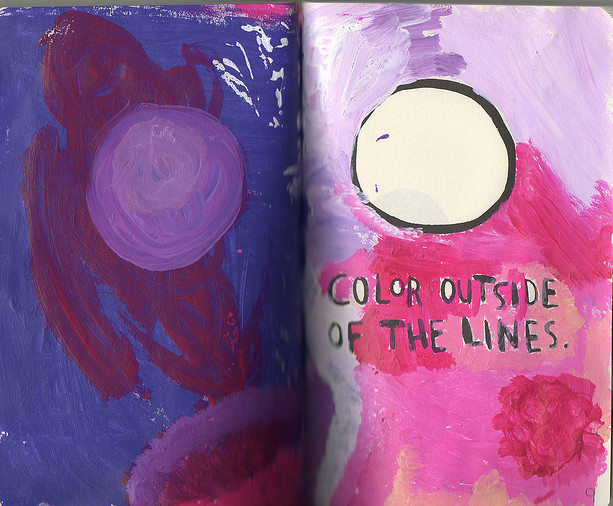 To say I can’t draw myself out of a cardboard box is to assume I know how to find the opening in the first place. I’m not spatially oriented, to say the least. I’ve always struggled to transfer any sort of mental vision to physical form, whether it be drawing, floral arranging, or applying a streak of eyeliner. I’m stymied by reading (as well as refolding) maps, folding sweaters, or closing Chinese takeout containers.
Just the other day, when trying to help my son’s first-grade class stack 100 paper cups, I asked the teacher, pretending it was on the students’ behalf, what strategies they should use to make the pyramid work.
“Teacher, how many cups do we need to put on the bottom row?” I had no idea.
I’ve always considered my mother, on the other hand, to be a visual genius. She won a national scholarship to art school in the 1950s, and although the direction of her life didn’t make a career in art feasible, she has spent her life living it.
As a child, I watched her design quilts and build Victorian dollhouses that rival those in museums. She surrounds her home and garden with beauty, down to every carved fretwork corner and glittering mosaic steppingstone. Her handwriting is perfect. My sister inherited many of these talents.
Then I came along.
Grammar school requires a profusion of visually creative output, and as a quite verbal but nonvisual child, I hated book reports. The reading wasn’t the problem, of course. It was the “report,” the poster, puppet, or—horrors—diorama, supposedly proving my engagement with the book, that filled me with dread.
It’s difficult for a perfectionist, artistic mother to sit by and watch her daughter bumble with scissors, glue, and a shoebox. So naturally, she got involved. Designing a scene from Charlotte’s Web would begin with my mom drawing a pig. Then she would end up cutting it out because I couldn’t get my scissors around the tail. At most, I would fill in the pig with a pink crayon while my mom set upon making a web reminiscent of a Chinese paper cutting.
Most projects went this way. It was a fine arrangement.
The downside was that it perpetuated my lack of confidence with visual creativity, causing me to avoid it whenever possible. Even now, my husband is the official gift wrapper, cake decorator, and streamer hanger.
When redesigning my living room or putting outfits together, I elicit help from friends. While there’s nothing wrong with some good advice, I’ve allowed myself to become completely dependent on others in this area of my life.
A couple years ago, my flowy-bloused, bead-bedecked friend Linda brought me a leather journal from her westward travels. “Draw in it,” she suggested.
“But I can’t. I don’t do art. I don’t like it.”
“Then that’s why you should do it.”
I ordered some aquarelles (watercolor crayons) by her suggestion. When they arrived, I scratched out some colors then put the book away. For a year or two.
This Christmas, my daughter got some art supplies and started painting—just simple tulips, suns, and birds—as a way to unwind. She’s declared no intentions of taking classes or getting “into” art; she just enjoys the feel of the brush on paper.
Since I’ve been in the midst of trying to accomplish so many writing goals, I thought it might be a good idea to take a break, even if just for a few minutes each day, from my “real work.” Why not give myself the freedom to, well, relax and really suck at something?
On the first day, I meditated on Matthew 7:11: “If you then, who are evil, know how to give good gifts to your children, how much more will your Father who is in heaven give good things to those who ask him!”
I reached for a few shades of brown and gold and sketched some sort of a lump. The more I colored, the more I realized I was drawing a piece of chocolate. The revelation of the subconscious. I stopped with just that blob on the page, oddly uplifted.
The next day, I read this quote from Augustine: “You were written, but I was without. You were with me, but I was not with you. So you called, you shouted, you broke through my deafness, you flared, blazed, and banished my blindness, you lavished your fragrance, and I gasped.”
I drew swirls, flames, and eventually a swath of color that I streaked with water, a scent of wet purples and greens, like lilacs in the rain.
One morning I was beset with parenting difficulties and stared at the journal, numb. Finally, I wrote the word Hope with a bright grass-green. I didn’t know what to do after that, so I went over to the next page and wrote the letter H again*.* I couldn’t even bring myself to complete the word, so I traced over the H. Again and again.
There was a comfort in going over that letter for several minutes, just staring at the pigment catching on the rough texture of the pages. In fact, for the next couple days, even when lying in bed far from my journal, I imagined the motion of tracing over that letter and fell asleep to the green H inside my lids.
At this point in the story, someone usually steps in, sees the pictures made in private, and discovers the unsuspecting artist’s latent talent. This is not that story. The pictures are hideous, and I have no intention of showing them to anyone. They appear to reveal the developmental stage of a toddler. But perhaps that is the point.
I’ve taken some time to come before God as a child with no goals, statements, or spiritual gifts. Just paper, color, and a tired heart, finally making a report, all by myself, of what I’ve learned.
With so much pressure to define our personalities, niches, and goals, can we allow ourselves the luxury of doing something badly? Can we botch a pie, fumble a sonnet, or plant a chaotic garden for the simple pleasure of trying something new with the creator by our side? Can his flaring, blazing, lavishing grace be sufficient?
I color on, the gift of wax beneath my nails.
Tania Runyan is the author of the poetry collections Second Sky (Cascade Poiema Series), A Thousand Vessels, Simple Weight, and Delicious Air, which was awarded Book of the Year by the Conference on Christianity and Literature in 2007. Her book How to Read a Poem, an instructional guide based on Billy Collins’s “Introduction to Poetry,” was recently released by T.S. Poetry Press. Her poems have appeared in many publications, including Poetry, Image, Books & Culture, Harvard Divinity Bulletin, The Christian Century, Atlanta Review, Indiana Review, and the anthology In a Fine Frenzy: Poets Respond to Shakespeare. Tania was awarded an NEA Literature Fellowship in 2011. She tutors high school students and edits for Every Day Poems and Relief.
Photo by Iris Aldeguer, used under the Creative Commons License.
Previous Post

February 19, 2015
After the Killings in Chapel Hill
Next Post
February 23, 2015 The Tenth Leper
Browse Our Archives
Select a Category A. G. Harmon Alissa Wilkinson Allison Backous Art Authors Brad Fruhauff Bradford Winters Bryan Bliss Caroline Langston Chad Thomas Johnston Chris Hoke Christiana N. Peterson Culture D.G. Myers D.L. Mayfield Daniel Bowman Jr. David Griffith Elizabeth Duffy Faith Film Greg Wolfe Guest Contributor Interview Jan Vallone Jeffrey Overstreet Jessica Eddings-Roeser Jessica Mesman Griffith Kelly Foster Lindsey Crittenden Morgan Meis music Natalie Vestin Nick Olson Peggy Rosenthal Personal Reflection Poetry Friday Reflection Relationships Review Richard Chess Richard Cole Sara Zarr Shannon Huffman Polson Sonya Bilocerkowycz Tania Runyan Tony Woodlief Topical Categories Uncategorized Vic Sizemore Writing
Select a Month October 2018 September 2018 August 2018 July 2018 June 2018 May 2018 April 2018 March 2018 February 2018 January 2018 December 2017 November 2017 October 2017 September 2017 August 2017 July 2017 June 2017 May 2017 April 2017 March 2017 February 2017 January 2017 December 2016 November 2016 October 2016 September 2016 August 2016 July 2016 June 2016 May 2016 April 2016 March 2016 February 2016 January 2016 December 2015 November 2015 October 2015 September 2015 August 2015 July 2015 June 2015 May 2015 April 2015 March 2015 February 2015 January 2015 December 2014 November 2014 October 2014 September 2014 August 2014 July 2014 June 2014 May 2014 April 2014 March 2014 February 2014 January 2014 December 2013 November 2013 October 2013 September 2013 August 2013 July 2013 June 2013 May 2013 April 2013 March 2013 February 2013 January 2013 December 2012 November 2012 October 2012 September 2012 August 2012 July 2012 June 2012 May 2012 February 2008
Follow Us!
TAKE THE
Religious Wisdom Quiz
What is Jesus' most famous sermon called?
Select your answer to see how you score.
The Parable of the Sower The Last Supper The Beatitudes The Sermon on the Mount
Related posts from Good Letters

On Writing Odes: Taking Time to Celebrate

Leonard Cohen’s Holy and Broken Hallelujah

Ready or Not for the Days of Awe

TRENDING AT PATHEOS Catholic

Rejecting Doom: Christian Hope And Human Action
Christianity is a religion of hope. We are to have hope and...

It’s What Comes From Within Which Matters
One of the most difficult things for us to understand is why...

Why I Choose the Eucharist Over the Sermon
Choose the Eucharist, Not the Sermon What are we supposed to get...

5 Design Elements Found in Spiritually Rooted Homes
Putting Spirituality Into Home Decor Our homes are more than our living...

Credo: A Story of God Told with the...
About 10 years ago, I began to imagine a personal "Credo" that...

The Anatomy of Divine Revelation in Catholic Thought
The claim that God has made Himself known to human beings is...
view all Catholic blogs
Ad-Free & Subscriber Log-In Subscription Support
- About Us
- 2026 Calendar
- Videos
- Podcasts
- Library of World Religions
- Faith In Media Tracker
- Advertise With Us
- Write for Us
- Privacy Policy
- Terms of Service
- Do Not Sell My Data
- Contact Us
- Radiant Digital
- Manage Newsletter Subscriptions
- Unsubscribe From Notifications
- Sitemap
Copyright 2008-2026, Patheos. All rights reserved.
Subscription Support Ad-Free & Subscriber Log-In
Follow Patheos