
BuddhistCatholicContemplativeEvangelicalGeneral ChristianHinduJewishLatter-day SaintMuslimNew VisionsProgressive Christian
Beliefs
- Buddhist
- Catholic
- Contemplative
- Evangelical
- General Christian
- Hindu
- Jewish
- Latter-day Saint
- More Voices
- Muslim
- New Visions
- Pagan
- Progressive Christian
Topics
- Religion News
- Food and Religion
- Sports and Religion
- Religious Art
- Religious Music and Entertainment
- Religious Events
- History and Religion
- Style and Religion
- Politics and Religion
- Women in Religion
- Recreation Outdoors and Religion
- Business Finance and Religion
- Careers Workplace and Religion
- Education and Religion
- Family Parenting and Religion
- Health Fitness and Religion
- Home and Religion
- Relationships and Religion
- Technology and Religion
- Travel and Religion
Columnists
- Buddhist Columnists
- Business Finance and Religion Columnists
- Careers Workplace and Religion Columnists
- Catholic Columnists
- Contemplative Columnists
- Education and Religion Columnists
- Evangelists Columnists
- Family Parenting and Religion Columnists
- General Christian Columnists
- Health Fitness and Religion Columnists
- Hindu Columnists
- History and Religion Columnists
- Home and Religion Columnists
- Jewish Columnists
- More Voices Columnists
- Latter Day Columnists
- Muslim Columnists
- New Visions Columnists
- Nonreligious Columnists
- Pagan Columnists
- Politics and Religion Columnists
- Progressive Columnists
- Recreation Outdoors and Religion Columnists
- Relationships and Religion Columnists
- Religion News Columnists
- Religious Art Columnists
- Religious Events Columnists
- Religious Music and Entertainment Columnists
- Sports and Religion Columnists
- Style and Religion Columnists
- Technology and Religion Columnists
- Travel and Religion Columnists
- Women in Religion Columnists
Resource Library
- 2026 Calendar
- Library of World Religions
- The 100 Most Holy Places on Earth
- Patheos Answers
- Podcasts
- Videos
- Faith Leaders Database
- Anglican Episcopalian
- Bahai
- Baptist
- Buddhism
- Christianity
- Confucianism
- Eastern Orthodoxy
- Hinduism
- Holiness and Pentecostal
- ISKCON
- Islam
- Judaism
- Lutheran
- Methodist
- The Church of Jesus Christ of Latter-day Saints
- New Age
- Paganism
- Presbytarian and Reformed
- Protestantism
- Religion Behind the Scenes
- Roman Catholic
- Scientology
- Shia Islam
- Sikhism
- Sufism
- Sunni Islam
- Taoism
- Zen
- See all religions
Research Tools
 Ad-Free & Subscriber Log-In Subscription Support
Ad-Free & Subscriber Log-In Subscription Support
Follow Patheos 

- Trending:
- Forgiveness
- |
- Marriage
- |
- Consciousness
- |
- Death Penalty
- |
- Election
- |
- Halloween
 Good Letters
-
Contributors
- Home
- Catholic
- Wearing a Coat of Many Colors
Wearing a Coat of Many Colors
Last updated on: January 9, 2015 at 10:33 pm by D.L. Mayfield
Wearing a Coat of Many Colors 2015-01-09T22:33:51-07:00 D.L. Mayfield
Patheos Explore the world's faith through different perspectives on religion and spirituality! Patheos has the views of the prevalent religions and spiritualities of the world.
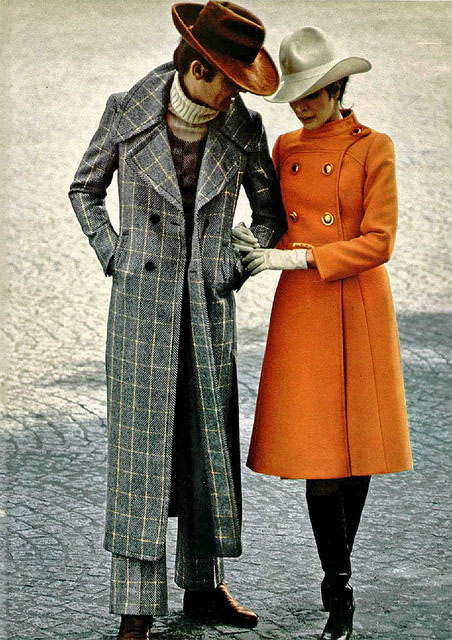 Around eight years ago, I bought a coat. I hardly ever bought brand-new clothes, and this was a real splurge on a Bible College-student budget. The coat was from Target, and it was a bright-orange corduroy plaid. I loved how it made me stand out amid the sea of black pea coats in the dreary Pacific Northwest winter.
I come from a background of believing that fashion isn’t important at all. The larger Evangelical culture routinely rejects the body and adornments as unholy, as distracting, as weirdly sexual. Even so, I loved how the coat made me feel special, and different, and colorful.
A year or so after I bought the coat, I watched a documentary about labor practices around the world. For the first time, I started to understand the systems of oppression that modern American fashion is based around. Horrified, I swore off buying new clothes for good. I committed myself to secondhand shopping, to making do, or doing without. I started reading and learning more and more from people who were loudly opting out of the “Empire.”
I got a button with a famously acerbic quote from my new hero, Dorothy Day: “If you have two coats, you have stolen one from the poor.” The button was large and I wore it prominently on the lapel of my orange corduroy jacket. I took perverse pleasure in watching as people would lean in to read my button, then register their shock and unease as they slowly backed away from me.
I was a little bit radical, and I loved making others feel uncomfortable in their own malaise.
I wore that coat, my one and only, until I moved to the Midwest. Here, in the minus-fourteen degree winters, the wind cut through my orange corduroy coat making me feel as if I was wearing nothing at all. I went to a thrift store and bought another coat—a marshmallow dark gray no-nonsense piece of winter utilitarianism.
I now blend in with the sea of people struggling to survive the dark winters here. I still keep my orange coat, but it is only good for a month or so in the spring or the fall. The button fell off a year or so ago, so I cannot be reminded of my moral failure anymore.
A writer and activist I greatly admire makes his own clothes out of burlap (in order to escape the oppressive systems in our world). He likes to tell the story of Mother Teresa’s feet, which were badly deformed by the end of her life:
It turns out that she would always pick through the donations for the Sisters of Charity and choose the worst pair of shoes for herself, which she would wear until the shoes were in tatters. The practice ruined her feet, and no doubt caused her great physical pain. I think it is such a beautiful, horrible story. I can’t stop thinking about it, even to this day.
My thrifted clothes tend to send a message that I am opting out, but I believe in the value of giving up personal rights and preferences for the sake of the community, and as political action.
I live in an inner-city context, and work primarily within conservative Muslim communities—so I am constantly wondering how I can be inoffensive, how I can escape notice, how I can blend in. I never think about beauty in regards to my appearance, but as a way to keep anonymous, which is a way of protecting myself.
I don’t like much of my clothing, and when I look in the mirror I see that I am always dressing for somebody else. I am dressing for the men that I want to avoid interacting with on the street corner. I am dressing for my students and friends, who are extremely gratified when I wear modest, Muslim-appropriate clothing. I am dressing for a world in which I am a continual stranger, where I am formless and void, where I surround myself with loose and ill-fitting clothing, where no matter how hard I try I don’t end up fitting in.
My diverse neighborhood is home to many immigrants and refugees—the majority from East Africa. I admire the women of my community who dress with confidence and color, expressing their personalities and their cultures with their clothes: gorgeous headscarves, brightly patterned dresses, heads held high, commanding the space they inhabit.
In the lives of these women and others, there are wars, there are famines, there are labor abuses and justice issues, there are predators on the street corner; there are ever so many reasons to shut oneself off to the wonder of color and fabric and complexity. And still, day after day, women everywhere choose to pursue beauty, blessing me with their own forms of prophetic imagination.
I envy them, the ones who outwardly value both beauty and their unique contribution to the world. Not for one second, though, do I consider that I could dress like that.
But if you believe in God you must believe in beauty, and it must go hand-in-hand with neighbor love. So my current struggle is this: in the ethical, political, fractured environment we live in, how can my clothing choices reflect a love of God and of my neighbor?
While I still believe that St. Dorothy, in all of her spitfire wisdom, was right in regards to possessions, I think I misinterpreted her directive. Because my friends and neighbors, many of whom would be classified as poor, have taught me something else: beauty, they are telling me, helps us transcend this broken kingdom that we live in.
“Go ahead,” I hear them saying, “have your one coat, and make it as colorful as you can.”
I wrote the above in response to a survey by the editors of Women in Clothes*, a collection of essays and vignettes exploring our relationship to clothes and how we present ourselves to the world. To find out more about the book and to read other responses (or fill out your own survey),* click here.
D.L. Mayfield lives and writes in the Midwest, where she currently is a part of a Christian order among the poor. Mayfield’s writing has appeared in McSweeney’s, Image, Christianity Today, Books and Culture, and The Other Journal. Her book of essays is forthcoming from HarperOne in 2016. Learn more at http://www.dlmayfield.com/.
Photo by Bess Georgette, used under a Creative Common license.
Previous Post

January 8, 2015
Girl Meets God in the Classroom, Part 2
Next Post
January 12, 2015 Monasticism In Lockdown America, Part 4: Asceticism
Browse Our Archives
Select a Category A. G. Harmon Alissa Wilkinson Allison Backous Art Authors Brad Fruhauff Bradford Winters Bryan Bliss Caroline Langston Chad Thomas Johnston Chris Hoke Christiana N. Peterson Culture D.G. Myers D.L. Mayfield Daniel Bowman Jr. David Griffith Elizabeth Duffy Faith Film Greg Wolfe Guest Contributor Interview Jan Vallone Jeffrey Overstreet Jessica Eddings-Roeser Jessica Mesman Griffith Kelly Foster Lindsey Crittenden Morgan Meis music Natalie Vestin Nick Olson Peggy Rosenthal Personal Reflection Poetry Friday Reflection Relationships Review Richard Chess Richard Cole Sara Zarr Shannon Huffman Polson Sonya Bilocerkowycz Tania Runyan Tony Woodlief Topical Categories Uncategorized Vic Sizemore Writing
Select a Month October 2018 September 2018 August 2018 July 2018 June 2018 May 2018 April 2018 March 2018 February 2018 January 2018 December 2017 November 2017 October 2017 September 2017 August 2017 July 2017 June 2017 May 2017 April 2017 March 2017 February 2017 January 2017 December 2016 November 2016 October 2016 September 2016 August 2016 July 2016 June 2016 May 2016 April 2016 March 2016 February 2016 January 2016 December 2015 November 2015 October 2015 September 2015 August 2015 July 2015 June 2015 May 2015 April 2015 March 2015 February 2015 January 2015 December 2014 November 2014 October 2014 September 2014 August 2014 July 2014 June 2014 May 2014 April 2014 March 2014 February 2014 January 2014 December 2013 November 2013 October 2013 September 2013 August 2013 July 2013 June 2013 May 2013 April 2013 March 2013 February 2013 January 2013 December 2012 November 2012 October 2012 September 2012 August 2012 July 2012 June 2012 May 2012 February 2008
Follow Us!
TAKE THE
Religious Wisdom Quiz
What is the largest predominantly Catholic country in South America?
Select your answer to see how you score.
Mexico Argentina Brazil Peru
Related posts from Good Letters



Leonard Cohen’s Holy and Broken Hallelujah

Ready or Not for the Days of Awe
TRENDING AT PATHEOS Catholic

Rejecting Doom: Christian Hope And Human Action
Christianity is a religion of hope. We are to have hope and...

It’s What Comes From Within Which Matters
One of the most difficult things for us to understand is why...

Why I Choose the Eucharist Over the Sermon
Choose the Eucharist, Not the Sermon What are we supposed to get...

5 Design Elements Found in Spiritually Rooted Homes
Putting Spirituality Into Home Decor Our homes are more than our living...

Credo: A Story of God Told with the...
About 10 years ago, I began to imagine a personal "Credo" that...

The Anatomy of Divine Revelation in Catholic Thought
The claim that God has made Himself known to human beings is...
view all Catholic blogs
Ad-Free & Subscriber Log-In Subscription Support
- About Us
- 2026 Calendar
- Videos
- Podcasts
- Library of World Religions
- Faith In Media Tracker
- Advertise With Us
- Write for Us
- Privacy Policy
- Terms of Service
- Do Not Sell My Data
- Contact Us
- Radiant Digital
- Manage Newsletter Subscriptions
- Unsubscribe From Notifications
- Sitemap
Copyright 2008-2026, Patheos. All rights reserved.
Subscription Support Ad-Free & Subscriber Log-In
Follow Patheos