
BuddhistCatholicContemplativeEvangelicalGeneral ChristianHinduJewishLatter-day SaintMuslimNew VisionsProgressive Christian
Beliefs
- Buddhist
- Catholic
- Contemplative
- Evangelical
- General Christian
- Hindu
- Jewish
- Latter-day Saint
- More Voices
- Muslim
- New Visions
- Pagan
- Progressive Christian
Topics
- Religion News
- Food and Religion
- Sports and Religion
- Religious Art
- Religious Music and Entertainment
- Religious Events
- History and Religion
- Style and Religion
- Politics and Religion
- Women in Religion
- Recreation Outdoors and Religion
- Business Finance and Religion
- Careers Workplace and Religion
- Education and Religion
- Family Parenting and Religion
- Health Fitness and Religion
- Home and Religion
- Relationships and Religion
- Technology and Religion
- Travel and Religion
Columnists
- Buddhist Columnists
- Business Finance and Religion Columnists
- Careers Workplace and Religion Columnists
- Catholic Columnists
- Contemplative Columnists
- Education and Religion Columnists
- Evangelists Columnists
- Family Parenting and Religion Columnists
- General Christian Columnists
- Health Fitness and Religion Columnists
- Hindu Columnists
- History and Religion Columnists
- Home and Religion Columnists
- Jewish Columnists
- More Voices Columnists
- Latter Day Columnists
- Muslim Columnists
- New Visions Columnists
- Nonreligious Columnists
- Pagan Columnists
- Politics and Religion Columnists
- Progressive Columnists
- Recreation Outdoors and Religion Columnists
- Relationships and Religion Columnists
- Religion News Columnists
- Religious Art Columnists
- Religious Events Columnists
- Religious Music and Entertainment Columnists
- Sports and Religion Columnists
- Style and Religion Columnists
- Technology and Religion Columnists
- Travel and Religion Columnists
- Women in Religion Columnists
Resource Library
- 2026 Calendar
- Library of World Religions
- The 100 Most Holy Places on Earth
- Patheos Answers
- Podcasts
- Videos
- Faith Leaders Database
- Anglican Episcopalian
- Bahai
- Baptist
- Buddhism
- Christianity
- Confucianism
- Eastern Orthodoxy
- Hinduism
- Holiness and Pentecostal
- ISKCON
- Islam
- Judaism
- Lutheran
- Methodist
- The Church of Jesus Christ of Latter-day Saints
- New Age
- Paganism
- Presbytarian and Reformed
- Protestantism
- Religion Behind the Scenes
- Roman Catholic
- Scientology
- Shia Islam
- Sikhism
- Sufism
- Sunni Islam
- Taoism
- Zen
- See all religions
Research Tools
 Ad-Free & Subscriber Log-In Subscription Support
Ad-Free & Subscriber Log-In Subscription Support
Follow Patheos 

- Trending:
- Forgiveness
- |
- Marriage
- |
- Consciousness
- |
- Death Penalty
- |
- Election
- |
- Halloween
 Good Letters
-
Contributors
- Home
- Catholic
- Certain Poor Shepherds
Certain Poor Shepherds
Last updated on: December 24, 2014 at 1:00 am by A. G. Harmon
Certain Poor Shepherds 2014-12-23T16:19:21-07:00 A. G. Harmon
Patheos Explore the world's faith through different perspectives on religion and spirituality! Patheos has the views of the prevalent religions and spiritualities of the world.
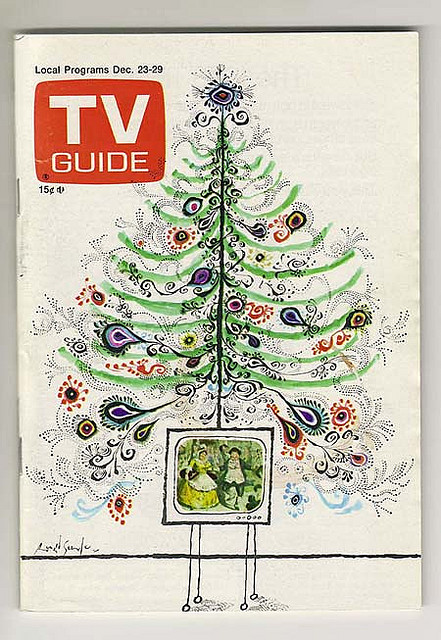 Long ago, when there were only three television stations, you had to wait for what you wanted. That feature had the benefit of making things exceptional, which is the perplexing irony of our times. Able to have all so quickly—with high speed downloads and internet superhighways—things don’t hold their value as long. Our taste buds are sanded clean from a glut of widely available sugar, a torrent of rainbows has blasted us colorblind, and iTunes has stunned us tone-deaf and tin-eared.
In the past, anticipation—having to wait—raised the worth of the arrival. We learn this lesson at Lent every year, and promptly forget it on Easter Monday. But hardheaded as we are, that’s the true way of things. Nuns and monks often tell the disbelieving that without privation, you cannot know joy; without sacrifice, you cannot marvel at abundance. St. Theresa slept on straw; St. Theresa walked barefoot; and yet, St. Theresa achieved her ecstasy. How about you?
It’s a sad fact that at this time of year, I don’t need anything much. What’s a new sweater or a gift certificate to me now? It doesn’t even seem like Christmas comes as slowly as it used to; every time you turn around, the wreaths and lights are going up. But it wasn’t always so.
When I was a child, there were things called “Specials” on those three stations I mentioned, and the “Christmas Special” was the best of all. Once a year, there were music specials (hosted by crooners and comedians who, if still living, now sell candles and golf clubs on HSN), and religious specials, like the midnight Mass from Rome (translated by a man with the most beautiful of speaking voices), and cartoon specials, the best of which were replayed—only once—every year. If you missed them, tough luck; you felt the cost of bad timing back then, when the clock and calendar mattered.
There were also big dramatic events around Christmas, like the productions of the “Hallmark Hall of Fame.” That very name was a gold standard for dramatic achievement. Now, what with an eponymously-named channel exclusively devoted to low romantic treacle, Hallmark is anything but special. Regardless, back then, they had ambition. They were something to wait for.
One such effort, replayed at Christmas for years, was “The Littlest Angel,” a musical version of the classic children’s book by Charles Tazewell. While I didn’t care for the songs, the tale was good.
It involves a little shepherd boy who dies and goes up to heaven, where he becomes very homesick. Thanks to a kindly old seraph, he’s allowed to return to earth and retrieve a box that contains his prized possessions. The things he’s collected are of value only to him—butterfly wings, a robin’s egg, some smooth stones from the river where he’d played, and a leather strap that was his faithful shepherd dog’s collar.
When the news spreads of Jesus’ coming birth, all the angels work on presents for him. The littlest angel has only the box to give—which of course pleases God the most because of its purity and sacrifice. It alone among all the gifts begins to shimmer, glow, then rise to the heavens to become the Star of Bethlehem.
Now the reason I’m mentioning this is because after seeing that special, and being the impressionable boy that I was, I got it into my head that I needed to have such a box. As it turned out, my brother had just finished making a crude cube for his shop class—a rough square made of plywood with a top held on by door hinges. He didn’t care for the thing, so I confiscated it and began my task. The object gathering went on for quite some time, until the box was filled. I also decorated the outside surface with stickers that came from cereal boxes.
I had the occasion to find that box recently as I was cleaning out closets for an impending move. There it sat on a shelf, unopened for years. Of course, what you expect to hear—deserve to hear—is that as I pulled out those treasures, one by one, my heart was warmed at the endearing things that I found inside. A flood of memories beset me as the decades slipped past…
Nope. As far as I could tell, it was just a bunch of trash. Some marbles, parts of a board game, jigsaw puzzle pieces, a little plastic army man, assorted badges, a strip of green stamps, a coupon for Purina dog food (?), and a spent bottle of aftershave.
What the hell was I doing?
While the littlest angel spent his few earthly years being inspired by the simple things and finding great meaning in them, it seems that I myself got no further than the “simple” part. The “specialness” angle eluded me altogether. The littlest angel created a reliquary for the pure; all I did was make a trash can.
So it seems I was a child of this age well before my time. Because the truth is, I couldn’t wait. I wanted to manufacture specialness. I wanted the box to be full and significant the minute that I got it. And honestly, I don’t know that I’m too much better even now.
But maybe I will be in days to come, for at least my lesson is a simple one, fit for the season: We all have something worth waiting for, and it’s impossible to fabricate worth. Better to bear empty hands in search of treasure than to fill them with whatever is shiny and close. Better to wait, and watch—poverty is all eyes—for what will reveal itself in time.
It comes, or so the story goes. It comes even on the coldest winter’s night, and even to the most unlikely; even to us, does it come, the certain poor shepherds, in fields where we lay.
A.G. Harmon teaches Shakespeare, Law and Literature, Jurisprudence, and Writing at The Catholic University of America in Washington, D.C. His novel, A House All Stilled, won the 2001 Peter Taylor Prize for the Novel.
Photo above by Huge Cool, used under a Creative Commons license.
Previous Post

December 23, 2014
The Ardent Whisper of God
Next Post
December 26, 2014 Where Is the Light in Our Darkness?
Browse Our Archives
Select a Category A. G. Harmon Alissa Wilkinson Allison Backous Art Authors Brad Fruhauff Bradford Winters Bryan Bliss Caroline Langston Chad Thomas Johnston Chris Hoke Christiana N. Peterson Culture D.G. Myers D.L. Mayfield Daniel Bowman Jr. David Griffith Elizabeth Duffy Faith Film Greg Wolfe Guest Contributor Interview Jan Vallone Jeffrey Overstreet Jessica Eddings-Roeser Jessica Mesman Griffith Kelly Foster Lindsey Crittenden Morgan Meis music Natalie Vestin Nick Olson Peggy Rosenthal Personal Reflection Poetry Friday Reflection Relationships Review Richard Chess Richard Cole Sara Zarr Shannon Huffman Polson Sonya Bilocerkowycz Tania Runyan Tony Woodlief Topical Categories Uncategorized Vic Sizemore Writing
Select a Month October 2018 September 2018 August 2018 July 2018 June 2018 May 2018 April 2018 March 2018 February 2018 January 2018 December 2017 November 2017 October 2017 September 2017 August 2017 July 2017 June 2017 May 2017 April 2017 March 2017 February 2017 January 2017 December 2016 November 2016 October 2016 September 2016 August 2016 July 2016 June 2016 May 2016 April 2016 March 2016 February 2016 January 2016 December 2015 November 2015 October 2015 September 2015 August 2015 July 2015 June 2015 May 2015 April 2015 March 2015 February 2015 January 2015 December 2014 November 2014 October 2014 September 2014 August 2014 July 2014 June 2014 May 2014 April 2014 March 2014 February 2014 January 2014 December 2013 November 2013 October 2013 September 2013 August 2013 July 2013 June 2013 May 2013 April 2013 March 2013 February 2013 January 2013 December 2012 November 2012 October 2012 September 2012 August 2012 July 2012 June 2012 May 2012 February 2008
Follow Us!
TAKE THE
Religious Wisdom Quiz
How did Moses' mother save him as a baby?
Select your answer to see how you score.
Sent him to another city Dressed him as a girl Placed him in a basket on the river Hid him in a cave
Related posts from Good Letters


Leonard Cohen’s Holy and Broken Hallelujah

Ready or Not for the Days of Awe

TRENDING AT PATHEOS Catholic

Rejecting Doom: Christian Hope And Human Action
Christianity is a religion of hope. We are to have hope and...

It’s What Comes From Within Which Matters
One of the most difficult things for us to understand is why...

Why I Choose the Eucharist Over the Sermon
Choose the Eucharist, Not the Sermon What are we supposed to get...

5 Design Elements Found in Spiritually Rooted Homes
Putting Spirituality Into Home Decor Our homes are more than our living...

Credo: A Story of God Told with the...
About 10 years ago, I began to imagine a personal "Credo" that...

The Anatomy of Divine Revelation in Catholic Thought
The claim that God has made Himself known to human beings is...
view all Catholic blogs
Ad-Free & Subscriber Log-In Subscription Support
- About Us
- 2026 Calendar
- Videos
- Podcasts
- Library of World Religions
- Faith In Media Tracker
- Advertise With Us
- Write for Us
- Privacy Policy
- Terms of Service
- Do Not Sell My Data
- Contact Us
- Radiant Digital
- Manage Newsletter Subscriptions
- Unsubscribe From Notifications
- Sitemap
Copyright 2008-2026, Patheos. All rights reserved.
Subscription Support Ad-Free & Subscriber Log-In
Follow Patheos