
BuddhistCatholicContemplativeEvangelicalGeneral ChristianHinduJewishLatter-day SaintMuslimNew VisionsProgressive Christian
Beliefs
- Buddhist
- Catholic
- Contemplative
- Evangelical
- General Christian
- Hindu
- Jewish
- Latter-day Saint
- More Voices
- Muslim
- New Visions
- Pagan
- Progressive Christian
Topics
- Religion News
- Food and Religion
- Sports and Religion
- Religious Art
- Religious Music and Entertainment
- Religious Events
- History and Religion
- Style and Religion
- Politics and Religion
- Women in Religion
- Recreation Outdoors and Religion
- Business Finance and Religion
- Careers Workplace and Religion
- Education and Religion
- Family Parenting and Religion
- Health Fitness and Religion
- Home and Religion
- Relationships and Religion
- Technology and Religion
- Travel and Religion
Columnists
- Buddhist Columnists
- Business Finance and Religion Columnists
- Careers Workplace and Religion Columnists
- Catholic Columnists
- Contemplative Columnists
- Education and Religion Columnists
- Evangelists Columnists
- Family Parenting and Religion Columnists
- General Christian Columnists
- Health Fitness and Religion Columnists
- Hindu Columnists
- History and Religion Columnists
- Home and Religion Columnists
- Jewish Columnists
- More Voices Columnists
- Latter Day Columnists
- Muslim Columnists
- New Visions Columnists
- Nonreligious Columnists
- Pagan Columnists
- Politics and Religion Columnists
- Progressive Columnists
- Recreation Outdoors and Religion Columnists
- Relationships and Religion Columnists
- Religion News Columnists
- Religious Art Columnists
- Religious Events Columnists
- Religious Music and Entertainment Columnists
- Sports and Religion Columnists
- Style and Religion Columnists
- Technology and Religion Columnists
- Travel and Religion Columnists
- Women in Religion Columnists
Resource Library
- 2026 Calendar
- Library of World Religions
- The 100 Most Holy Places on Earth
- Patheos Answers
- Podcasts
- Videos
- Faith Leaders Database
- Anglican Episcopalian
- Bahai
- Baptist
- Buddhism
- Christianity
- Confucianism
- Eastern Orthodoxy
- Hinduism
- Holiness and Pentecostal
- ISKCON
- Islam
- Judaism
- Lutheran
- Methodist
- The Church of Jesus Christ of Latter-day Saints
- New Age
- Paganism
- Presbytarian and Reformed
- Protestantism
- Religion Behind the Scenes
- Roman Catholic
- Scientology
- Shia Islam
- Sikhism
- Sufism
- Sunni Islam
- Taoism
- Zen
- See all religions
Research Tools
 Ad-Free & Subscriber Log-In Subscription Support
Ad-Free & Subscriber Log-In Subscription Support
Follow Patheos 

- Trending:
- Forgiveness
- |
- Marriage
- |
- Consciousness
- |
- Death Penalty
- |
- Election
- |
- Halloween
 Good Letters
-
Contributors
- Home
- Catholic
- The Photographic Eye of God
The Photographic Eye of God
Last updated on: November 6, 2014 at 1:50 am by Morgan Meis
The Photographic Eye of God 2014-11-03T16:12:05-07:00 Morgan Meis
Patheos Explore the world's faith through different perspectives on religion and spirituality! Patheos has the views of the prevalent religions and spiritualities of the world.
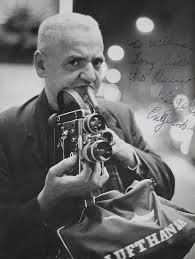 He called himself Weegee The Famous. Weegee, for short. His real name was Arthur Fellig. But even that wasn’t quite real. Born in a little town in what is now Ukraine in 1899, Weegee was originally named Ascher Fellig. He was a subject of the Austro-Hungarian Empire.
Ascher’s family immigrated to America in 1909, where he became Arthur. In the 1930s, Arthur took up freelance photography, roaming the streets of his new home. That’s when he performed his third transforming act, into Weegee The Famous. No longer an Austro-Hungarian, he’d become a New Yorker.
There are competing stories about how and why Arthur (née Ascher) became Weegee. The most satisfying story is that Weegee is a phonetic form of Ouija. Weegee was so quick getting to the scene for a good photograph (often a crime scene), people started to say he was like a living Ouija board. He knew what was going to happen before it happened.
More than anything else, Weegee liked to photograph murder scenes. Asked what he did for a living, he would reply, “Murder is my business.” It is said that he photographed as many as five thousand dead bodies, murdered bodies, during his career as a photographer.
Weegee’s photos are hard to ignore. They go beyond their inherent sensationalism, beyond the pornography of the dead and dying. It is difficult to say exactly why.
In his essay “Uses of Photography,” John Berger quotes Susan Sontag from her book, On Photography: “A photograph is not only an image (as a painting is an image), an interpretation of the real; it is also a trace, something directly stenciled off the real, like a footprint or a death mask.”
Reflecting on this quote, Berger goes on to say that a photograph is “a memento from a life being lived.” The uncanny effect of photography is in how it snatches a living instant. In being snatched, the moment is ripped out of its context and displayed as an absolute.
Weegee’s photographs are mementos snatched not from a life being lived, but from a life that has slammed shut. These people died in car crashes and shoot-outs. They died in violence that snatched them out of the midst of their own lives just like a photograph snatches an image from the flow of time.
Some of Weegee’s most arresting shots show a dead body on the street surrounded by cops and onlookers. Here, the camera has captured two forms of time overlapping in one picture. For the dead person, time has stopped or ceased to matter. For the onlookers, the death just witnessed is a moment (either of horror or indifference or something in between) that marks a spot in their ongoing lives.
How do those two forms of time fit together? How can one image capture both the end, and the ceaseless flow of time? There they are, inhabiting the very same frame, co-mingling in the infinite instant of the picture.
It doesn’t take John Berger very long—in his little essay about photography—to start talking about God. Berger remembers Daumier’s famous cartoon of the early French photographer, Nadar. Nadar is riding in a hot air balloon, photographing all the people in the city down below.
Berger asks: “Has the camera replaced the eye of God? The decline of religion corresponds with the rise of photography. Has the culture of capitalism telescoped God into photography?”
I particularly like the phrase “telescoped God into photography.” But what does it mean to think of the camera replacing the eye of God or of culture telescoping God into photography?
Perhaps this takes us back to the central importance of images. The problems and mysteries of images go back, after all, long before the invention of the camera. There are passages, I seem to remember, in the Bible.
The King James translation contains, rather early on, these unforgettable words— made more powerful by the repetition and Elizabethan grammar. “So God created man in his own image, in the image of God created he him; male and female created he them.”
The translators were correct to italicize “own.” Unpacking the full mystery of what it means to be created in God’s own image is the work of more than one lifetime, more than all lifetimes. But from the moment of man’s creation onward the pull toward images, the fascination with images, the danger of images has been constant.
One definition of humankind could be “the creature that looks at images,” or “the creature that makes images.” There is an entire Commandment given over to worrying about graven images and the idolatry that results from worshipping images for themselves.
Images are at the heart of the story between man and God.
So, maybe John Berger is right that the camera has something to do with the eye of God. The power of Weegee’s otherwise exploitative images is in the way that they telescope time for us, merging the finite and infinite just as it would be in the eye of God. The images seem to give us a glimpse of God’s seeing.
It is really just a photograph of a dead man in the street, his hat lying distressingly on the concrete nearby, a metal can filled with some sort of unidentifiable fruit in the foreground. By the next morning, the scene was cleaned up and returned to normal. But the power of the camera has left this trace for us, a fragment stenciled off the real and transcribed onto a more enduring form of memory. The dead man dies eternally, now.
Morgan Meis is the critic-at-large for The Smart Set (thesmartset.com). He has a PhD in Philosophy and has written for n+1, The Believer, Harper’s Magazine, and The Virginia Quarterly Review. He won the Whiting Award in 2013. Morgan is also an editor at 3 Quarks Daily, and a winner of a Creative Capital | Warhol Foundation Arts Writers grant. A book of Morgan’s selected essays can be found here. He can be reached at [email protected].
Previous Post

November 5, 2014
My Big Bang Theory
Next Post
November 7, 2014 The Jewish Roots of Christian Worship for Churchgoing Dummies
Browse Our Archives
Select a Category A. G. Harmon Alissa Wilkinson Allison Backous Art Authors Brad Fruhauff Bradford Winters Bryan Bliss Caroline Langston Chad Thomas Johnston Chris Hoke Christiana N. Peterson Culture D.G. Myers D.L. Mayfield Daniel Bowman Jr. David Griffith Elizabeth Duffy Faith Film Greg Wolfe Guest Contributor Interview Jan Vallone Jeffrey Overstreet Jessica Eddings-Roeser Jessica Mesman Griffith Kelly Foster Lindsey Crittenden Morgan Meis music Natalie Vestin Nick Olson Peggy Rosenthal Personal Reflection Poetry Friday Reflection Relationships Review Richard Chess Richard Cole Sara Zarr Shannon Huffman Polson Sonya Bilocerkowycz Tania Runyan Tony Woodlief Topical Categories Uncategorized Vic Sizemore Writing
Select a Month October 2018 September 2018 August 2018 July 2018 June 2018 May 2018 April 2018 March 2018 February 2018 January 2018 December 2017 November 2017 October 2017 September 2017 August 2017 July 2017 June 2017 May 2017 April 2017 March 2017 February 2017 January 2017 December 2016 November 2016 October 2016 September 2016 August 2016 July 2016 June 2016 May 2016 April 2016 March 2016 February 2016 January 2016 December 2015 November 2015 October 2015 September 2015 August 2015 July 2015 June 2015 May 2015 April 2015 March 2015 February 2015 January 2015 December 2014 November 2014 October 2014 September 2014 August 2014 July 2014 June 2014 May 2014 April 2014 March 2014 February 2014 January 2014 December 2013 November 2013 October 2013 September 2013 August 2013 July 2013 June 2013 May 2013 April 2013 March 2013 February 2013 January 2013 December 2012 November 2012 October 2012 September 2012 August 2012 July 2012 June 2012 May 2012 February 2008
Follow Us!
TAKE THE
Religious Wisdom Quiz
True or False: Boaz was Ruth's brother-in-law who married her.
Select your answer to see how you score.
FALSE TRUE
Related posts from Good Letters

Morning in a Forgotten Neighborhood


Leonard Cohen’s Holy and Broken Hallelujah

Ready or Not for the Days of Awe
TRENDING AT PATHEOS Catholic

Creation, Preservation, and Teleology in Catholic Theology
As I write this, it is very early Monday morning. Like millions...

The Parable Of The Sower And The Word...
One of Christ’s most famous parables is that of the sower who...

Rejecting Doom: Christian Hope And Human Action
Christianity is a religion of hope. We are to have hope and...

Why I Choose the Eucharist Over the Sermon
Choose the Eucharist, Not the Sermon What are we supposed to get...

5 Design Elements Found in Spiritually Rooted Homes
Putting Spirituality Into Home Decor Our homes are more than our living...

Credo: A Story of God Told with the...
About 10 years ago, I began to imagine a personal "Credo" that...
view all Catholic blogs
Ad-Free & Subscriber Log-In Subscription Support
- About Us
- 2026 Calendar
- Videos
- Podcasts
- Library of World Religions
- Faith In Media Tracker
- Advertise With Us
- Write for Us
- Privacy Policy
- Terms of Service
- Do Not Sell My Data
- Contact Us
- Radiant Digital
- Manage Newsletter Subscriptions
- Unsubscribe From Notifications
- Sitemap
Copyright 2008-2026, Patheos. All rights reserved.
Subscription Support Ad-Free & Subscriber Log-In
Follow Patheos