
BuddhistCatholicContemplativeEvangelicalGeneral ChristianHinduJewishLatter-day SaintMuslimNew VisionsProgressive Christian
Beliefs
- Buddhist
- Catholic
- Contemplative
- Evangelical
- General Christian
- Hindu
- Jewish
- Latter-day Saint
- More Voices
- Muslim
- New Visions
- Pagan
- Progressive Christian
Topics
- Religion News
- Food and Religion
- Sports and Religion
- Religious Art
- Religious Music and Entertainment
- Religious Events
- History and Religion
- Style and Religion
- Politics and Religion
- Women in Religion
- Recreation Outdoors and Religion
- Business Finance and Religion
- Careers Workplace and Religion
- Education and Religion
- Family Parenting and Religion
- Health Fitness and Religion
- Home and Religion
- Relationships and Religion
- Technology and Religion
- Travel and Religion
Columnists
- Buddhist Columnists
- Business Finance and Religion Columnists
- Careers Workplace and Religion Columnists
- Catholic Columnists
- Contemplative Columnists
- Education and Religion Columnists
- Evangelists Columnists
- Family Parenting and Religion Columnists
- General Christian Columnists
- Health Fitness and Religion Columnists
- Hindu Columnists
- History and Religion Columnists
- Home and Religion Columnists
- Jewish Columnists
- More Voices Columnists
- Latter Day Columnists
- Muslim Columnists
- New Visions Columnists
- Nonreligious Columnists
- Pagan Columnists
- Politics and Religion Columnists
- Progressive Columnists
- Recreation Outdoors and Religion Columnists
- Relationships and Religion Columnists
- Religion News Columnists
- Religious Art Columnists
- Religious Events Columnists
- Religious Music and Entertainment Columnists
- Sports and Religion Columnists
- Style and Religion Columnists
- Technology and Religion Columnists
- Travel and Religion Columnists
- Women in Religion Columnists
Resource Library
- 2026 Calendar
- Library of World Religions
- The 100 Most Holy Places on Earth
- Patheos Answers
- Podcasts
- Videos
- Faith Leaders Database
- Anglican Episcopalian
- Bahai
- Baptist
- Buddhism
- Christianity
- Confucianism
- Eastern Orthodoxy
- Hinduism
- Holiness and Pentecostal
- ISKCON
- Islam
- Judaism
- Lutheran
- Methodist
- The Church of Jesus Christ of Latter-day Saints
- New Age
- Paganism
- Presbytarian and Reformed
- Protestantism
- Religion Behind the Scenes
- Roman Catholic
- Scientology
- Shia Islam
- Sikhism
- Sufism
- Sunni Islam
- Taoism
- Zen
- See all religions
Research Tools
 Ad-Free & Subscriber Log-In Subscription Support
Ad-Free & Subscriber Log-In Subscription Support
Follow Patheos 

- Trending:
- Forgiveness
- |
- Marriage
- |
- Consciousness
- |
- Death Penalty
- |
- Election
- |
- Halloween
 Good Letters
-
Contributors
- Home
- Catholic
- Praying the “Sleeping Tune”
Praying the “Sleeping Tune”
Last updated on: November 3, 2014 at 1:18 am by Tania Runyan
Praying the “Sleeping Tune” 2014-10-29T13:35:35-07:00 Tania Runyan
Patheos Explore the world's faith through different perspectives on religion and spirituality! Patheos has the views of the prevalent religions and spiritualities of the world.
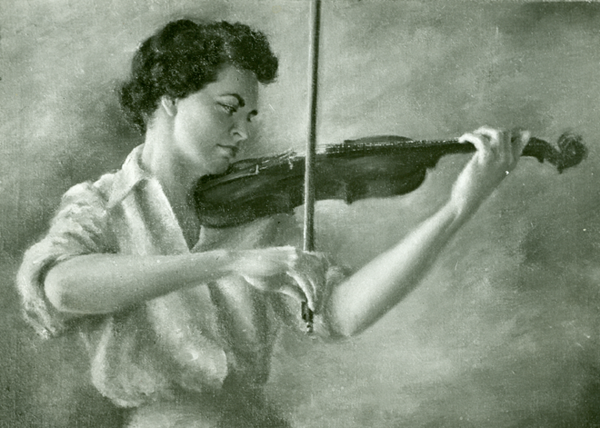 In an effort to help believers who struggle with prayer, many evangelical speakers and books have attempted to break the discipline down into manageable parts. As a young adult, I learned the acronym ACTS as a way to structure my conversations with God (Adoration, Confession, Thanksgiving, and Supplication). I’ve purchased, begun, and abandoned at least a dozen prayer journals and apps.
There’s nothing wrong with methods that help us commit to spiritual practices. However, these strategies haven’t helped me, at least lately, feel any more in tune with God. Or, to be more honest, I haven’t even tried to use them. I feel burdened by these resources then guilty for remaining silent while believers in other countries literally risk their necks to speak to their Creator.
In his book The Naked Now, Richard Rohr writes that “prayer is actually setting out a tuning fork. All you can really do in the spiritual life is get tuned to receive the always present message.”
As a violinist, I’ve used a tuning fork throughout my life, mesmerized by the silver vibrations of the A I hold to my ear, the tone that resonates at the slightest tap. The metaphor of absorbing the sound waves of God has helped me more than any other “method” of prayer. I never really know what I’m listening for. But I know I want to hear it.
This past weekend, when I traveled to Michigan to spend some time with writing friends, I could pick up just one sound whenever listening for the “present message”: a Scottish song called “Sleeping Tune.” I’d been working on the song for a couple of weeks, and it seemed to have taken up residence in my bones.
Written by Gordon Duncan, a Scottish piper and composer who committed suicide in 2005 at the age of forty-one, “Sleeping Tune” is arranged originally for bagpipes. Despite its title, it seems more geared toward waking than sleep, gradually reaching, in a lilting, minor key, toward a higher level of hope.
As my friends sat writing on the first floor, I shut myself up in an upstairs bedroom, grabbed my fiddle, and stood by the windows spattered with lake water and rain. I thought back to my violin teacher in grad school, a wildly romantic, curly-haired Armenian who had me strip my playing down to its rawest emotions. I dumped vibrato, double stops, and any other flourishes so I could play my feelings without relying on other musically expressive devices.
“You’re a poet,” my teacher said. “Play some pictures. Play the feelings in the pictures. But just with open strings.”
So the teacher called out sensory experiences, and I played them with no fingering, just the plain strings I’d learned to bow when I was nine years old. Play a crocus blooming, he said, and I slid my bow across the A lightly but with just enough pressure to break through the crust of snow. Play the smell of bread breaking, he said, and I let the low G rise goldenly with the slow lift of the knuckles of my right hand. It was the simplest, hardest, and most profound playing I’d done in years.
On this morning on Lake Michigan, the light never broke out of the rolling, stormy fog. Purple leaves whirled and stuck to the window. I started to play “The Sleeping Tune” with my brothers and sisters in mind.
I made the high E raw and wan for the one who’d lost two babies in six months. I slid into the B with a slow, lilting grace for the one who’d just been diagnosed with Autism Spectrum Disorder. And for my friend who had lost his job, and for the two struggling with their romantic relationship, I eventually opened a loose vibrato on the highest, most heartening note of the piece.
Opening myself to God’s wavelengths, I rippled, I trust, just a portion of his love back.
I haven’t spoken aloud to God in awhile. But with this song in my head and hands, I’ve been praying without ceasing.
Tania Runyan is the author of the poetry collections Second Sky (Cascade Poiema Series), A Thousand Vessels, Simple Weight, and Delicious Air, which was awarded Book of the Year by the Conference on Christianity and Literature in 2007. Her book How to Read a Poem, an instructional guide based on Billy Collins’s “Introduction to Poetry,” was recently released by T.S. Poetry Press. Her poems have appeared in many publications, including Poetry, Image, Books & Culture, Harvard Divinity Bulletin, The Christian Century, Atlanta Review, Indiana Review, and the anthology In a Fine Frenzy: Poets Respond to Shakespeare. Tania was awarded an NEA Literature Fellowship in 2011. She tutors high school students and edits for Every Day Poems and Relief.
Previous Post

October 31, 2014
Monasticism in Lockdown America, Part 1
Next Post
November 4, 2014 Lorenzo the Magnificent
Browse Our Archives
Select a Category A. G. Harmon Alissa Wilkinson Allison Backous Art Authors Brad Fruhauff Bradford Winters Bryan Bliss Caroline Langston Chad Thomas Johnston Chris Hoke Christiana N. Peterson Culture D.G. Myers D.L. Mayfield Daniel Bowman Jr. David Griffith Elizabeth Duffy Faith Film Greg Wolfe Guest Contributor Interview Jan Vallone Jeffrey Overstreet Jessica Eddings-Roeser Jessica Mesman Griffith Kelly Foster Lindsey Crittenden Morgan Meis music Natalie Vestin Nick Olson Peggy Rosenthal Personal Reflection Poetry Friday Reflection Relationships Review Richard Chess Richard Cole Sara Zarr Shannon Huffman Polson Sonya Bilocerkowycz Tania Runyan Tony Woodlief Topical Categories Uncategorized Vic Sizemore Writing
Select a Month October 2018 September 2018 August 2018 July 2018 June 2018 May 2018 April 2018 March 2018 February 2018 January 2018 December 2017 November 2017 October 2017 September 2017 August 2017 July 2017 June 2017 May 2017 April 2017 March 2017 February 2017 January 2017 December 2016 November 2016 October 2016 September 2016 August 2016 July 2016 June 2016 May 2016 April 2016 March 2016 February 2016 January 2016 December 2015 November 2015 October 2015 September 2015 August 2015 July 2015 June 2015 May 2015 April 2015 March 2015 February 2015 January 2015 December 2014 November 2014 October 2014 September 2014 August 2014 July 2014 June 2014 May 2014 April 2014 March 2014 February 2014 January 2014 December 2013 November 2013 October 2013 September 2013 August 2013 July 2013 June 2013 May 2013 April 2013 March 2013 February 2013 January 2013 December 2012 November 2012 October 2012 September 2012 August 2012 July 2012 June 2012 May 2012 February 2008
Follow Us!
TAKE THE
Religious Wisdom Quiz
In Philippians, Paul says to work out your salvation with what?
Select your answer to see how you score.
Prayer and fasting Fear and trembling Joy and thanksgiving Faith and obedience
Related posts from Good Letters

On Writing Odes: Taking Time to Celebrate

Leonard Cohen’s Holy and Broken Hallelujah

Ready or Not for the Days of Awe

TRENDING AT PATHEOS Catholic

Rejecting Doom: Christian Hope And Human Action
Christianity is a religion of hope. We are to have hope and...

It’s What Comes From Within Which Matters
One of the most difficult things for us to understand is why...

Why I Choose the Eucharist Over the Sermon
Choose the Eucharist, Not the Sermon What are we supposed to get...

5 Design Elements Found in Spiritually Rooted Homes
Putting Spirituality Into Home Decor Our homes are more than our living...

Credo: A Story of God Told with the...
About 10 years ago, I began to imagine a personal "Credo" that...

The Anatomy of Divine Revelation in Catholic Thought
The claim that God has made Himself known to human beings is...
view all Catholic blogs
Ad-Free & Subscriber Log-In Subscription Support
- About Us
- 2026 Calendar
- Videos
- Podcasts
- Library of World Religions
- Faith In Media Tracker
- Advertise With Us
- Write for Us
- Privacy Policy
- Terms of Service
- Do Not Sell My Data
- Contact Us
- Radiant Digital
- Manage Newsletter Subscriptions
- Unsubscribe From Notifications
- Sitemap
Copyright 2008-2026, Patheos. All rights reserved.
Subscription Support Ad-Free & Subscriber Log-In
Follow Patheos