
BuddhistCatholicContemplativeEvangelicalGeneral ChristianHinduJewishLatter-day SaintMuslimNew VisionsProgressive Christian
Beliefs
- Buddhist
- Catholic
- Contemplative
- Evangelical
- General Christian
- Hindu
- Jewish
- Latter-day Saint
- More Voices
- Muslim
- New Visions
- Pagan
- Progressive Christian
Topics
- Religion News
- Food and Religion
- Sports and Religion
- Religious Art
- Religious Music and Entertainment
- Religious Events
- History and Religion
- Style and Religion
- Politics and Religion
- Women in Religion
- Recreation Outdoors and Religion
- Business Finance and Religion
- Careers Workplace and Religion
- Education and Religion
- Family Parenting and Religion
- Health Fitness and Religion
- Home and Religion
- Relationships and Religion
- Technology and Religion
- Travel and Religion
Columnists
- Buddhist Columnists
- Business Finance and Religion Columnists
- Careers Workplace and Religion Columnists
- Catholic Columnists
- Contemplative Columnists
- Education and Religion Columnists
- Evangelists Columnists
- Family Parenting and Religion Columnists
- General Christian Columnists
- Health Fitness and Religion Columnists
- Hindu Columnists
- History and Religion Columnists
- Home and Religion Columnists
- Jewish Columnists
- More Voices Columnists
- Latter Day Columnists
- Muslim Columnists
- New Visions Columnists
- Nonreligious Columnists
- Pagan Columnists
- Politics and Religion Columnists
- Progressive Columnists
- Recreation Outdoors and Religion Columnists
- Relationships and Religion Columnists
- Religion News Columnists
- Religious Art Columnists
- Religious Events Columnists
- Religious Music and Entertainment Columnists
- Sports and Religion Columnists
- Style and Religion Columnists
- Technology and Religion Columnists
- Travel and Religion Columnists
- Women in Religion Columnists
Resource Library
- 2026 Calendar
- Library of World Religions
- The 100 Most Holy Places on Earth
- Patheos Answers
- Podcasts
- Videos
- Faith Leaders Database
- Anglican Episcopalian
- Bahai
- Baptist
- Buddhism
- Christianity
- Confucianism
- Eastern Orthodoxy
- Hinduism
- Holiness and Pentecostal
- ISKCON
- Islam
- Judaism
- Lutheran
- Methodist
- The Church of Jesus Christ of Latter-day Saints
- New Age
- Paganism
- Presbytarian and Reformed
- Protestantism
- Religion Behind the Scenes
- Roman Catholic
- Scientology
- Shia Islam
- Sikhism
- Sufism
- Sunni Islam
- Taoism
- Zen
- See all religions
Research Tools
 Ad-Free & Subscriber Log-In Subscription Support
Ad-Free & Subscriber Log-In Subscription Support
Follow Patheos 

- Trending:
- Forgiveness
- |
- Marriage
- |
- Consciousness
- |
- Death Penalty
- |
- Election
- |
- Halloween
 Good Letters
-
Contributors
- Home
- Catholic
- Epic Tales: an Interview with Amit Majmudar, part 2
Epic Tales: an Interview with Amit Majmudar, part 2
Last updated on: November 13, 2014 at 1:58 am by Guest Contributor
Epic Tales: an Interview with Amit Majmudar, part 2 2014-11-10T16:53:42-07:00 Guest Contributor
Patheos Explore the world's faith through different perspectives on religion and spirituality! Patheos has the views of the prevalent religions and spiritualities of the world.
 Guest post by Sarah Arthur
SA: In your essay “Me and the Monotheists,” you say that even though you are a Hindu, many Christians seem to warmly welcome your poetry (e.g., I’ve included your poem “Incarnation” in the anthology Light Upon Light). You say this is primarily about “aesthetic resonance”—particularly with imagery—but you also point to the English language itself as being encoded with biblical influence.
And yet not every contemporary English-speaking poet writes this way. Can you elaborate?
AM: In most prose, each individual word is lightweight, and we experience less of its history, meaning, and power. So in that previous sentence, when I wrote the word word, it was not the Word that was in the beginning. If this were a poem, the medium itself would demand a higher concentration from you and me on the word word—as if it were capitalized (nouns used to be capitalized in early English writing all the time, as you know; they still are in German).
The word Word, used in a poem, would take on the totality of its meaning, history, and power, and the first lines of the Gospel of John would be, accordingly, inescapable. The only alternative strategy, to purge or forget word’s religious history in English, would be if I used the word word as it is used in prose, lightly. But this would be the equivalent of painting an orchid with no memory of O’Keefe, or writing a Nocturne for piano with no memory of Chopin.
It can be done. But you are stacking bricks on the empty space where a tradition should be, and everything falls through. In a well-built poem, every English word has a foundation, and that foundation is, very frequently, whether you like it or not, religious. Consider the noun disobedience. Or the noun rose. Or, to refer to the title of your excellent anthology: Light. In poetry, echoes give us substance.
SA: It seems as though many contemporary writers are indeed trying to purge words of their “history, meaning, and power”—because these are perceived as exerting negative influence (patriarchal, colonialist, religiously bigoted, etc.).
Is it fair to say there are some histories, some meanings, some powers that are best forgotten or rewritten? Or is this simply impossible: what we gain in perceived freedom we lose in substance?
AM: Good question—very pertinent to the academic climate of the past few decades, where everything is interrogated for its congruence with modern social, moral, and political ideas.
I am by ethnicity an Indian, by religion a Hindu; the East India Company received its charter in the same year that Hamlet was first performed; and yet I love Shakespeare. Eliot and Larkin were anti-Semitic, but that is only the start of it.
All classical authors, and almost all authors worldwide before the nineteenth century movement to abolish the slave trade, were okay with human slavery. If talking-point-by-talking-point agreement with contemporary social and moral ideas is a precondition of literary value, then we should purge and discredit almost everybody, because slavery was everywhere for centuries, and few if any of these great writers were bothered by it.
Even Cervantes never spoke out against slavery, and he was a slave—for five years among the Turks.
Where do you start, where do you stop when you play the game of retrospective moral supremacy? I’d rather not play that game at all: It is too simple and there is no reward, only loss after loss after loss. For me, the most intelligent form of literary play is reading.
SA: You claim a number of classic poets like Shakespeare as influences. Are there any contemporary writers you find particularly compelling?
AM: From a religious and verbal perspective, Christian Wiman, clearly. He was one of the first editors ever to publish my work, back in 2005, which dovetails with your prior question. There are many other strong verbal talents out there, plenty of affecting writers, and interesting religious writers as well. But Wiman is a total writer in a way most others aren’t, collapsing verbal ingenuity, emotional power, and religious engagement into one art.
Like all the best religious poets, he has a personal and tumultuous relationship with his God. He does not write about God; he writes inside God.
SA: What are you working on right now?
AM: A biography of my six-year-old son, if you can believe that. He was born with a congenital heart defect, and he went through an epic medical and surgical odyssey from birth to age five. He is my epic hero, and I am going to sing his heroic exploits.
The book is also, and perhaps above all, a religious exploration. Because the question of how such a thing could befall him (or any of the thousands of newborns born into instant suffering every year) returns me, alas, to theodicy, and to the most perennially intractable questions of all. If I can explain this one thing to him, I can explain the universe to myself. Wish me luck.
SA: Indeed! What a journey. So is this where you get to practice your own concept of the epic art, what you describe in your essay “Epic Fail”?
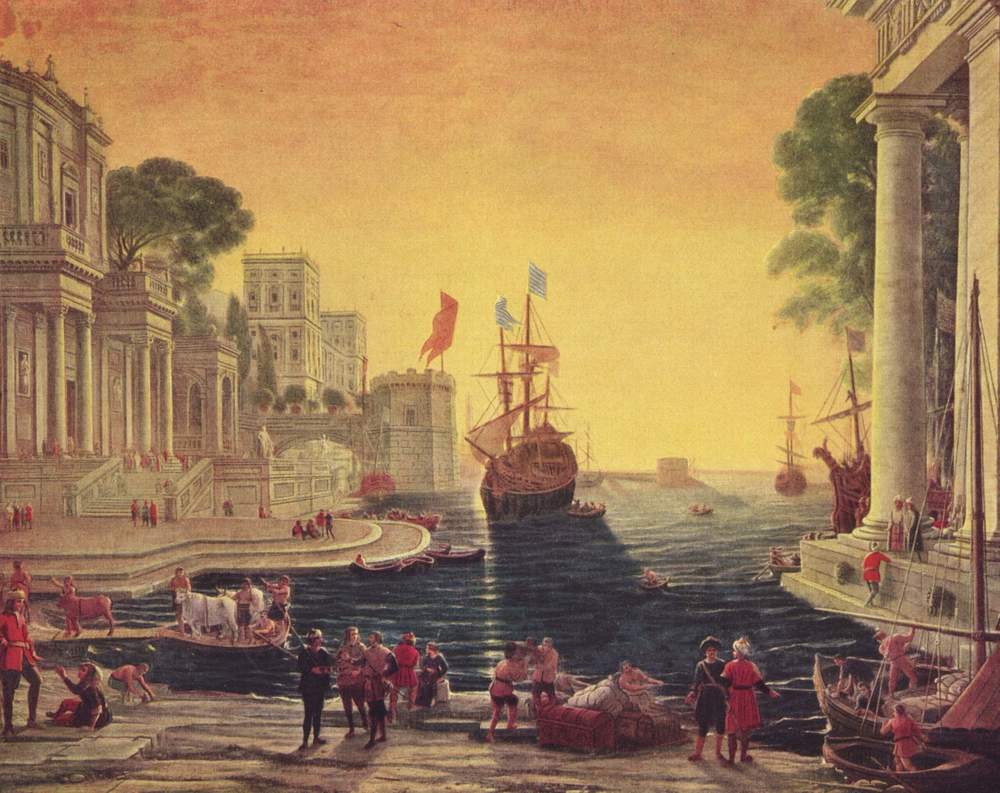
You say that Virgil got it wrong, whereas Homer got it right: a true epic is not so much a sweeping narrative covering centuries, but a “single point of maximum narrative pressure.” Which is what a medical condition does to life, doesn’t it?
AM: Perhaps I was a little harsh on Virgil—in the end, his work has lasted and retains power, which is more than any critic can say for his critique. I do agree about the epic power and epic concentration that illness grants to events. The whole past and potentially foreclosed future bear down on that one point.
Writing down the whole sequence of my son’s surgeries and complications, I was struck by the curious unity of his ordeal. What seemed and was experienced as episodic, in the manner of a romance (in which the hero overcomes peril after peril), became, as I wrote it down, more like an epic poem, in which the hero suffers all in order to attain a single desired endpoint: In his case, like Odysseus’s, a homecoming.
Sarah Arthur is the author or editor of nine books, including the literary guides to prayer from Paraclete Press: Light Upon Light: A Literary Guide to Prayer for Advent, Christmas, and Epiphany and At the Still Point: A Literary Guide to Prayer in Ordinary Time. She is a fun-loving presenter for events around the country, including the annual C. S. Lewis Festival in Northern Michigan and the Frederick Buechner Writer’s Workshop at Princeton Theological Seminary. Her website is www.saraharthur.com.
Previous Post

November 12, 2014
Epic Tales: an Interview with Amit Majmudar, part 1
Next Post
November 14, 2014 Apocatastasis at the Essex
Browse Our Archives
Select a Category A. G. Harmon Alissa Wilkinson Allison Backous Art Authors Brad Fruhauff Bradford Winters Bryan Bliss Caroline Langston Chad Thomas Johnston Chris Hoke Christiana N. Peterson Culture D.G. Myers D.L. Mayfield Daniel Bowman Jr. David Griffith Elizabeth Duffy Faith Film Greg Wolfe Guest Contributor Interview Jan Vallone Jeffrey Overstreet Jessica Eddings-Roeser Jessica Mesman Griffith Kelly Foster Lindsey Crittenden Morgan Meis music Natalie Vestin Nick Olson Peggy Rosenthal Personal Reflection Poetry Friday Reflection Relationships Review Richard Chess Richard Cole Sara Zarr Shannon Huffman Polson Sonya Bilocerkowycz Tania Runyan Tony Woodlief Topical Categories Uncategorized Vic Sizemore Writing
Select a Month October 2018 September 2018 August 2018 July 2018 June 2018 May 2018 April 2018 March 2018 February 2018 January 2018 December 2017 November 2017 October 2017 September 2017 August 2017 July 2017 June 2017 May 2017 April 2017 March 2017 February 2017 January 2017 December 2016 November 2016 October 2016 September 2016 August 2016 July 2016 June 2016 May 2016 April 2016 March 2016 February 2016 January 2016 December 2015 November 2015 October 2015 September 2015 August 2015 July 2015 June 2015 May 2015 April 2015 March 2015 February 2015 January 2015 December 2014 November 2014 October 2014 September 2014 August 2014 July 2014 June 2014 May 2014 April 2014 March 2014 February 2014 January 2014 December 2013 November 2013 October 2013 September 2013 August 2013 July 2013 June 2013 May 2013 April 2013 March 2013 February 2013 January 2013 December 2012 November 2012 October 2012 September 2012 August 2012 July 2012 June 2012 May 2012 February 2008
Follow Us!
TAKE THE
Religious Wisdom Quiz
How long did the judges rule before kings?
Select your answer to see how you score.
300 years Approximately 350 years 200 years 400 years
Related posts from Good Letters


On Writing Odes: Taking Time to Celebrate

Poetry Friday: "The Burned Butterfly"

A Conversation with Alicia Ostriker: Part 1
TRENDING AT PATHEOS Catholic

Rejecting Doom: Christian Hope And Human Action
Christianity is a religion of hope. We are to have hope and...

It’s What Comes From Within Which Matters
One of the most difficult things for us to understand is why...

Why I Choose the Eucharist Over the Sermon
Choose the Eucharist, Not the Sermon What are we supposed to get...

5 Design Elements Found in Spiritually Rooted Homes
Putting Spirituality Into Home Decor Our homes are more than our living...

Credo: A Story of God Told with the...
About 10 years ago, I began to imagine a personal "Credo" that...

The Anatomy of Divine Revelation in Catholic Thought
The claim that God has made Himself known to human beings is...
view all Catholic blogs
Ad-Free & Subscriber Log-In Subscription Support
- About Us
- 2026 Calendar
- Videos
- Podcasts
- Library of World Religions
- Faith In Media Tracker
- Advertise With Us
- Write for Us
- Privacy Policy
- Terms of Service
- Do Not Sell My Data
- Contact Us
- Radiant Digital
- Manage Newsletter Subscriptions
- Unsubscribe From Notifications
- Sitemap
Copyright 2008-2026, Patheos. All rights reserved.
Subscription Support Ad-Free & Subscriber Log-In
Follow Patheos