
BuddhistCatholicContemplativeEvangelicalGeneral ChristianHinduJewishLatter-day SaintMuslimNew VisionsProgressive Christian
Beliefs
- Buddhist
- Catholic
- Contemplative
- Evangelical
- General Christian
- Hindu
- Jewish
- Latter-day Saint
- More Voices
- Muslim
- New Visions
- Pagan
- Progressive Christian
Topics
- Religion News
- Food and Religion
- Sports and Religion
- Religious Art
- Religious Music and Entertainment
- Religious Events
- History and Religion
- Style and Religion
- Politics and Religion
- Women in Religion
- Recreation Outdoors and Religion
- Business Finance and Religion
- Careers Workplace and Religion
- Education and Religion
- Family Parenting and Religion
- Health Fitness and Religion
- Home and Religion
- Relationships and Religion
- Technology and Religion
- Travel and Religion
Columnists
- Buddhist Columnists
- Business Finance and Religion Columnists
- Careers Workplace and Religion Columnists
- Catholic Columnists
- Contemplative Columnists
- Education and Religion Columnists
- Evangelists Columnists
- Family Parenting and Religion Columnists
- General Christian Columnists
- Health Fitness and Religion Columnists
- Hindu Columnists
- History and Religion Columnists
- Home and Religion Columnists
- Jewish Columnists
- More Voices Columnists
- Latter Day Columnists
- Muslim Columnists
- New Visions Columnists
- Nonreligious Columnists
- Pagan Columnists
- Politics and Religion Columnists
- Progressive Columnists
- Recreation Outdoors and Religion Columnists
- Relationships and Religion Columnists
- Religion News Columnists
- Religious Art Columnists
- Religious Events Columnists
- Religious Music and Entertainment Columnists
- Sports and Religion Columnists
- Style and Religion Columnists
- Technology and Religion Columnists
- Travel and Religion Columnists
- Women in Religion Columnists
Resource Library
- 2026 Calendar
- Library of World Religions
- The 100 Most Holy Places on Earth
- Patheos Answers
- Podcasts
- Videos
- Faith Leaders Database
- Anglican Episcopalian
- Bahai
- Baptist
- Buddhism
- Christianity
- Confucianism
- Eastern Orthodoxy
- Hinduism
- Holiness and Pentecostal
- ISKCON
- Islam
- Judaism
- Lutheran
- Methodist
- The Church of Jesus Christ of Latter-day Saints
- New Age
- Paganism
- Presbytarian and Reformed
- Protestantism
- Religion Behind the Scenes
- Roman Catholic
- Scientology
- Shia Islam
- Sikhism
- Sufism
- Sunni Islam
- Taoism
- Zen
- See all religions
Research Tools
 Ad-Free & Subscriber Log-In Subscription Support
Ad-Free & Subscriber Log-In Subscription Support
Follow Patheos 

- Trending:
- Forgiveness
- |
- Marriage
- |
- Consciousness
- |
- Death Penalty
- |
- Election
- |
- Halloween
 Good Letters
-
Contributors
- Home
- Catholic
- Elsa Blue and Frozen Power
Elsa Blue and Frozen Power
Last updated on: November 28, 2014 at 1:08 am by Caroline Langston
Elsa Blue and Frozen Power 2014-11-26T22:09:49-07:00 Caroline Langston
Patheos Explore the world's faith through different perspectives on religion and spirituality! Patheos has the views of the prevalent religions and spiritualities of the world.
 For Chad Thomas Johnston
Along with Kermit green, Barbie pink and—Lord have mercy—SpongeBob yellow, we can now officially add another color to the commercial childhood color spectrum:
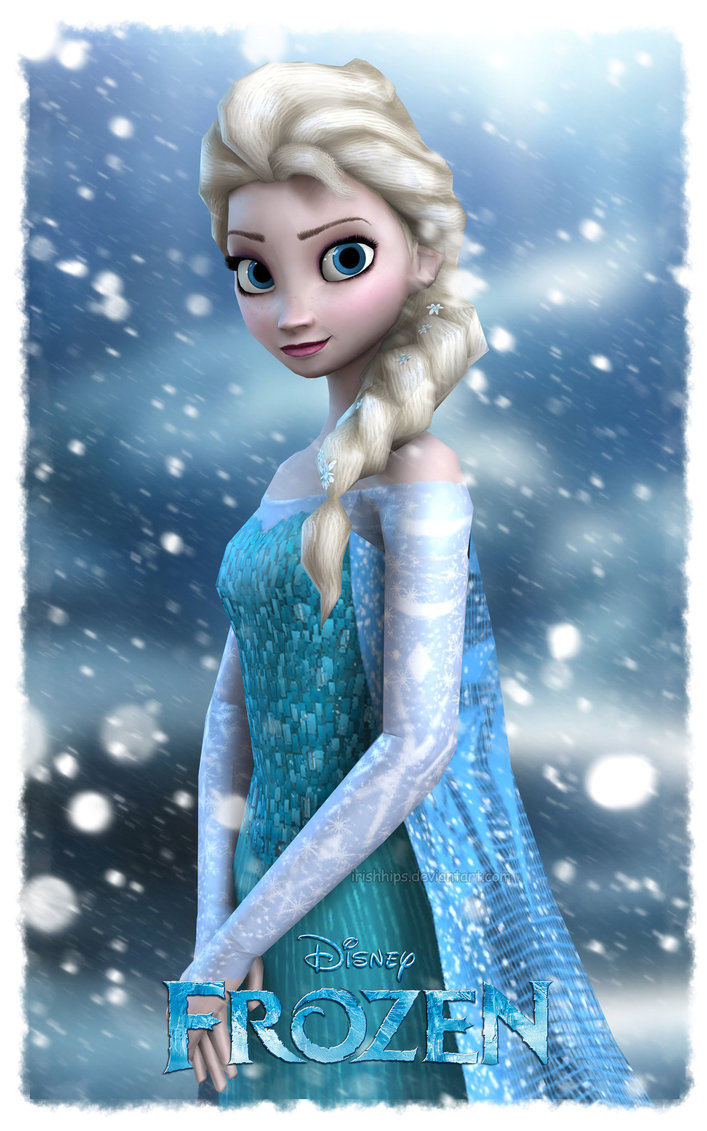
Elsa blue.
Not the uninspiring medium light-blue of the golden-haired Disney Cinderella, the color of hard-sided Samsonite suitcases and redolent of 1950s animation, but a far more rarified shade, mixed with white and the tiniest drop of yellow-gold. A color that is just a step closer to Tiffany blue, and I bet you anything that this is not a coincidence.
In case you have no idea what I’m talking about, and have been preoccupied with your life of craft beers and reading Teodor Adorno, “Elsa blue” is the chief signifier and synecdoche of the 2014 animated film Frozen that recounts the story of two orphaned princesses in the Norwegian-inspired kingdom of Arendelle, the older of whom—the now-Queen Elsa—has the lethal and hidden power to create snow and ice.
When Elsa’s power almost freezes both her kingdom and her sister Anna (“Ahhhnna, not Anna,” my five-year-old daughter always has to tell me), Elsa flees to the mountains to be alone amid the Mad King Ludwig ice palace of her own creation with Idina Menzel’s theme song “Let It Go” playing as her celebration of finally being able to reveal her true self.
And then there’s that blue dress.
Take my word for it: It’s everywhere.
My daughter first started talking about the movie last spring. The film was already out, but the Elsa blue thunderstorm clouds were just gathering at the edge of the horizon. At the time of my daughter’s birthday in April, the Frozen party supplies were not yet in the stores around us; there were just hints of the deluge to come in the form of coloring books and stickers.
Now, seven months later, my daughter has been to at least three Frozen birthday parties, and there’s a fourth looming a bit closer to the winter solstice. To say nothing of the promise she has extracted from me about how her birthday party in April will be the biggest best Frozen party yet. “With all Frozen presents,” she informs me.
“You can’t ask people to give you specific presents,” I tell her. “That’s tacky. It’s like including registry info in a wedding invitation. You’re supposed to wait for people to ask.”
I’m not sure she quite got that.
It’s at these times that I wish I had been more successful in my efforts to be one of those homespun Waldorf-type parents who only gives her children handmade wooden toys.
The twist of these Frozen parties, apparently, is that the guests are encouraged to wear their own Frozen dresses. In theory, any princess dress is supposed to count, but in practice, everyone ends up coming as Elsa.
(My husband took my daughter to the last one of these, and came back singing a twist on the old Mojo Nixon song, “Elsa is everywhere, Elsa is everything.”)
The first one of these parties we attended, my daughter refused my suggestion that she wear “whatever princess dress she had,” and we had to visit not one, but two Targets to find one. And then it itched.
The truth is that I actually like the dress, which has long, sheer white sleeves that are just barely off the shoulder (derivative, I think, of the sheer sleeves made from ice-skating costume material that Vera Wang first popularized in wedding dresses of the early 1990s; Laurene Powell Jobs gown for example), an Empire waist, and a sheer cape that flows out from the shoulders.
Sleeves: Something that, these days, tend to be characteristic in evening wear only of pious Muslims and frum Orthodox Jews.
And the very existence of evening-dress sleeves—all the other dresses in the movie, it’s worth saying, also have long sleeves, a kind of Tyrolean-Edith Schaeffer aesthetic—bespeak of what I think is the significance of the Frozen madness that its marketers cleverly clued into: A desire for modesty, and to preserve innocence.
Much has been made both in feminist and traditional circles about the pink princess obsession of the past few years that has dominated toy marketing—feminists arguing that the color infantilizes girls and denies them agency, and a variety of critics across the spectrum claiming that the princess phenom merely sets young women up to be obsessed with “hotness” later, to be docile and compliant sexual partners, mere adjuncts to their brash “princes.”
Well, not Frozen. It’s significant, I think, that the predominant color of the film is one that, unlike pink, could never be considered indicative of the flush of sexual excitement, of blood-swollen pudenda (and in fact, it’s the opposite!).
Much has also been made of the film’s apparent routing of fairy-tale conventions: Queen Elsa scorns her sister’s love-at-first-sight romance with the snooty, visiting Prince Hans (who turns out to be a real bad guy), and the great act of sacrificial love is of one sister for the other. Princess Anna ends up companionably falling in love with mountain man Kristoff—this kindly, lumbering good guy is, in fact, about the only pink thing in the movie.
But the signal image of the film is of Elsa, unleashing her power under her own recognizance, her elaborate ice palace an objective correlative of her inner spiritual life.
A girl: innocent, empowered, and alone. An image of self-containment for which many of our daughters might be longing.
A native of Yazoo City, Mississippi, Caroline Langston is a convert to the Eastern Orthodox Church. She is a widely published writer and essayist, a winner of the Pushcart Prize, and a commentator for NPR’s “All Things Considered.”
unconventional Disney princess
Previous Post

November 26, 2014
Death and the Absurdity of Heaven
Next Post
December 1, 2014 Mantras for Advent
Browse Our Archives
Select a Category A. G. Harmon Alissa Wilkinson Allison Backous Art Authors Brad Fruhauff Bradford Winters Bryan Bliss Caroline Langston Chad Thomas Johnston Chris Hoke Christiana N. Peterson Culture D.G. Myers D.L. Mayfield Daniel Bowman Jr. David Griffith Elizabeth Duffy Faith Film Greg Wolfe Guest Contributor Interview Jan Vallone Jeffrey Overstreet Jessica Eddings-Roeser Jessica Mesman Griffith Kelly Foster Lindsey Crittenden Morgan Meis music Natalie Vestin Nick Olson Peggy Rosenthal Personal Reflection Poetry Friday Reflection Relationships Review Richard Chess Richard Cole Sara Zarr Shannon Huffman Polson Sonya Bilocerkowycz Tania Runyan Tony Woodlief Topical Categories Uncategorized Vic Sizemore Writing
Select a Month October 2018 September 2018 August 2018 July 2018 June 2018 May 2018 April 2018 March 2018 February 2018 January 2018 December 2017 November 2017 October 2017 September 2017 August 2017 July 2017 June 2017 May 2017 April 2017 March 2017 February 2017 January 2017 December 2016 November 2016 October 2016 September 2016 August 2016 July 2016 June 2016 May 2016 April 2016 March 2016 February 2016 January 2016 December 2015 November 2015 October 2015 September 2015 August 2015 July 2015 June 2015 May 2015 April 2015 March 2015 February 2015 January 2015 December 2014 November 2014 October 2014 September 2014 August 2014 July 2014 June 2014 May 2014 April 2014 March 2014 February 2014 January 2014 December 2013 November 2013 October 2013 September 2013 August 2013 July 2013 June 2013 May 2013 April 2013 March 2013 February 2013 January 2013 December 2012 November 2012 October 2012 September 2012 August 2012 July 2012 June 2012 May 2012 February 2008
Follow Us!
TAKE THE
Religious Wisdom Quiz
Proverbs warns against what kind of woman as a symbol of temptation?
Select your answer to see how you score.
Widow Queen Adulterous woman Mother-in-law
Related posts from Good Letters




TRENDING AT PATHEOS Catholic

Rejecting Doom: Christian Hope And Human Action
Christianity is a religion of hope. We are to have hope and...

It’s What Comes From Within Which Matters
One of the most difficult things for us to understand is why...

Why I Choose the Eucharist Over the Sermon
Choose the Eucharist, Not the Sermon What are we supposed to get...

5 Design Elements Found in Spiritually Rooted Homes
Putting Spirituality Into Home Decor Our homes are more than our living...

Credo: A Story of God Told with the...
About 10 years ago, I began to imagine a personal "Credo" that...

The Anatomy of Divine Revelation in Catholic Thought
The claim that God has made Himself known to human beings is...
view all Catholic blogs
Ad-Free & Subscriber Log-In Subscription Support
- About Us
- 2026 Calendar
- Videos
- Podcasts
- Library of World Religions
- Faith In Media Tracker
- Advertise With Us
- Write for Us
- Privacy Policy
- Terms of Service
- Do Not Sell My Data
- Contact Us
- Radiant Digital
- Manage Newsletter Subscriptions
- Unsubscribe From Notifications
- Sitemap
Copyright 2008-2026, Patheos. All rights reserved.
Subscription Support Ad-Free & Subscriber Log-In
Follow Patheos