
BuddhistCatholicContemplativeEvangelicalGeneral ChristianHinduJewishLatter-day SaintMuslimNew VisionsProgressive Christian
Beliefs
- Buddhist
- Catholic
- Contemplative
- Evangelical
- General Christian
- Hindu
- Jewish
- Latter-day Saint
- More Voices
- Muslim
- New Visions
- Pagan
- Progressive Christian
Topics
- Religion News
- Food and Religion
- Sports and Religion
- Religious Art
- Religious Music and Entertainment
- Religious Events
- History and Religion
- Style and Religion
- Politics and Religion
- Women in Religion
- Recreation Outdoors and Religion
- Business Finance and Religion
- Careers Workplace and Religion
- Education and Religion
- Family Parenting and Religion
- Health Fitness and Religion
- Home and Religion
- Relationships and Religion
- Technology and Religion
- Travel and Religion
Columnists
- Buddhist Columnists
- Business Finance and Religion Columnists
- Careers Workplace and Religion Columnists
- Catholic Columnists
- Contemplative Columnists
- Education and Religion Columnists
- Evangelists Columnists
- Family Parenting and Religion Columnists
- General Christian Columnists
- Health Fitness and Religion Columnists
- Hindu Columnists
- History and Religion Columnists
- Home and Religion Columnists
- Jewish Columnists
- More Voices Columnists
- Latter Day Columnists
- Muslim Columnists
- New Visions Columnists
- Nonreligious Columnists
- Pagan Columnists
- Politics and Religion Columnists
- Progressive Columnists
- Recreation Outdoors and Religion Columnists
- Relationships and Religion Columnists
- Religion News Columnists
- Religious Art Columnists
- Religious Events Columnists
- Religious Music and Entertainment Columnists
- Sports and Religion Columnists
- Style and Religion Columnists
- Technology and Religion Columnists
- Travel and Religion Columnists
- Women in Religion Columnists
Resource Library
- 2026 Calendar
- Library of World Religions
- The 100 Most Holy Places on Earth
- Patheos Answers
- Podcasts
- Videos
- Faith Leaders Database
- Anglican Episcopalian
- Bahai
- Baptist
- Buddhism
- Christianity
- Confucianism
- Eastern Orthodoxy
- Hinduism
- Holiness and Pentecostal
- ISKCON
- Islam
- Judaism
- Lutheran
- Methodist
- The Church of Jesus Christ of Latter-day Saints
- New Age
- Paganism
- Presbytarian and Reformed
- Protestantism
- Religion Behind the Scenes
- Roman Catholic
- Scientology
- Shia Islam
- Sikhism
- Sufism
- Sunni Islam
- Taoism
- Zen
- See all religions
Research Tools
 Ad-Free & Subscriber Log-In Subscription Support
Ad-Free & Subscriber Log-In Subscription Support
Follow Patheos 

- Trending:
- Forgiveness
- |
- Marriage
- |
- Consciousness
- |
- Death Penalty
- |
- Election
- |
- Halloween
 Good Letters
-
Contributors
- Home
- Catholic
- Death and the Absurdity of Heaven
Death and the Absurdity of Heaven
Last updated on: November 26, 2014 at 1:48 am by Morgan Meis
Death and the Absurdity of Heaven 2014-11-25T18:23:00-07:00 Morgan Meis
Patheos Explore the world's faith through different perspectives on religion and spirituality! Patheos has the views of the prevalent religions and spiritualities of the world.
 I remember, as an undergraduate, reading Spinoza for the first time. I came across the sentence, “The free man thinks of nothing less than death.” Spinoza meant, of course, that a free man never thinks about death.
But I managed to read the sentence in the opposite way. I took the phrase “nothing less” in the way you might say, “I want nothing less than the best cheesecake in the state.” I thought Spinoza was saying that the free man demanded the very best to think about. Death, obviously, tops that list.
I took it for granted that everyone thinks about death almost all of the time. On becoming a Catholic in my adulthood, I was excited by the prospect of joining the morbid parade of suffering souls trudging stolidly toward the grave, fingering our rosaries and muttering under our breath about the veil of tears.
One small virtue of Catholicism, to my mind, is that we still read Ecclesiastes.
This is an evil among all things that are done under the sun, that there is one event unto all: yea, also the heart of the sons of men is full of evil, and madness is in their heart while they live, and after that they go to the dead.
What then, of this talk of everlasting life? What about the kingdom of heaven and the eternal bliss of the afterlife?
“One of my problems with Christianity,” Christian Wiman wrote in his book My Bright Abyss: Meditation of a Modern Believer, “is that all talk of heaven seems absurd to me, though I believe that we have souls and that they survive our deaths, in some sense that we are entirely incapable of imagining (‘Imagine a Carthage sown with salt…’).”
The line about imagining a Carthage sown with salt is from Marilynne Robinson’s Housekeeping. She writes about a field of salt giving birth to a vegetable profusion that grows from rime and brine. That’s to say, something impossible happens, something we are incapable of imagining.
The triumph in the way that Marilynne Robinson writes about death, the afterlife, the end of time, is that the words border on the absurd. Fields of salt giving birth to strange crystalline trees. The world made whole again by salt calyxes opening into prisms.
It is not, it can’t be, that the life we know is going to continue on after the brief pause of our own deaths. It can’t be that. Because thinking it through, that would be the very definition of hell.
But that is the very thing we desire. We want to die without really dying. We want to lose ourselves only to somehow, magically, regain ourselves again on the other side. We want to become one with God, just as we’ve been promised, but we want to pretend that becoming one with God doesn’t mean a burning away of everything we’ve come to know as self.
“Whatever sense belief makes of death, it has to incorporate its self-evident reality, not deny it.” That’s what Francis Spufford wrote in Unapologetic: Why, Despite Everything, Christianity Can Still Make Surprising Emotional Sense. He continues:
And again, in my experience, belief makes the problem harder, not easier. Because there death is, real for us as it is for everyone else, and yet (as with every other outrage of the cruel world) we also have to fit it together somehow with the intermittently felt, constantly transmitted assurance that we are loved.
The problem of death doesn’t go away with Christianity. We are not promised immortality. Immortality is a kind of blasphemy, a refusal to accept the condition of mortal life, which is death. Real death. Not pretend, temporary death.
In real death, we give our lives totally and completely to God, to the beyond. What does that mean? We can’t possibly know, or else it wouldn’t be real. It wouldn’t be death.
Those last few sentences seem, after some reflection, too strident. I want to have faith in the face of death, and I don’t know how to do that. That’s the simple fact of it.
I was pleased to discover that in the preface to his new collection of essays, (Loitering, TinHouseBooks) Charles D’Ambrosio quotes Patricia Hampl on Augustine. Augustine wonders in his Confessions whether it is possible to call upon God before knowing him. Hampl writes (and D’Ambrosio quotes):
The assumption here is that faith is not to be confused with certainty; the only thing people can really count on is longing and the occult directives of desire. So, Augustine wonders, does that mean prayer must come before faith? Illogical as it is, perhaps not-knowing is the first condition of prayer, rather than its negation. Can that be?
To add pleasure to pleasure, this seems to be exactly what Marilynne Robinson is getting at in the passage in Housekeeping, the one that Christian Wiman quoted in his own book of tortured meditations on belief.
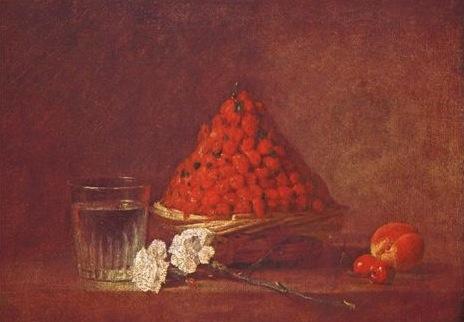
“For a wish for a hand on one’s hair is all but to feel it,” wrote Robinson: “So whatever we may lose, very craving gives it back to us again. Though we dream and hardly know it, longing, like an angel, fosters us, smooths our hair, and brings us wild strawberries.”
Maybe I was wrong, then, about what we get and don’t get. Maybe, in trying to face the hard, flat truth of death without the comfort of a sentimentalized Christianity, I am still, in a sense, claiming to know what I cannot know. What I am asked to do instead is to desire, to ask, openly and without benefit of self-protection.
I am willing to die, God, I think, as best I can as a good Christian. But I want some wild strawberries.
Morgan Meis is the critic-at-large for The Smart Set (thesmartset.com). He has a PhD in Philosophy and has written for n+1, The Believer, Harper’s Magazine, and The Virginia Quarterly Review. He won the Whiting Award in 2013. Morgan is also an editor at 3 Quarks Daily, and a winner of a Creative Capital | Warhol Foundation Arts Writers grant. A book of Morgan’s selected essays can be found here. He can be reached at [email protected].
Previous Post

November 25, 2014
A Tradition without Tryptophan
Next Post
November 28, 2014 Elsa Blue and Frozen Power
Browse Our Archives
Select a Category A. G. Harmon Alissa Wilkinson Allison Backous Art Authors Brad Fruhauff Bradford Winters Bryan Bliss Caroline Langston Chad Thomas Johnston Chris Hoke Christiana N. Peterson Culture D.G. Myers D.L. Mayfield Daniel Bowman Jr. David Griffith Elizabeth Duffy Faith Film Greg Wolfe Guest Contributor Interview Jan Vallone Jeffrey Overstreet Jessica Eddings-Roeser Jessica Mesman Griffith Kelly Foster Lindsey Crittenden Morgan Meis music Natalie Vestin Nick Olson Peggy Rosenthal Personal Reflection Poetry Friday Reflection Relationships Review Richard Chess Richard Cole Sara Zarr Shannon Huffman Polson Sonya Bilocerkowycz Tania Runyan Tony Woodlief Topical Categories Uncategorized Vic Sizemore Writing
Select a Month October 2018 September 2018 August 2018 July 2018 June 2018 May 2018 April 2018 March 2018 February 2018 January 2018 December 2017 November 2017 October 2017 September 2017 August 2017 July 2017 June 2017 May 2017 April 2017 March 2017 February 2017 January 2017 December 2016 November 2016 October 2016 September 2016 August 2016 July 2016 June 2016 May 2016 April 2016 March 2016 February 2016 January 2016 December 2015 November 2015 October 2015 September 2015 August 2015 July 2015 June 2015 May 2015 April 2015 March 2015 February 2015 January 2015 December 2014 November 2014 October 2014 September 2014 August 2014 July 2014 June 2014 May 2014 April 2014 March 2014 February 2014 January 2014 December 2013 November 2013 October 2013 September 2013 August 2013 July 2013 June 2013 May 2013 April 2013 March 2013 February 2013 January 2013 December 2012 November 2012 October 2012 September 2012 August 2012 July 2012 June 2012 May 2012 February 2008
Follow Us!
TAKE THE
Religious Wisdom Quiz
What happened to Jesus 40 days after His resurrection?
Select your answer to see how you score.
He went back into hiding He performed one last miracle He ascended into heaven He visited the temple
Related posts from Good Letters

Morning in a Forgotten Neighborhood


Leonard Cohen’s Holy and Broken Hallelujah

Ready or Not for the Days of Awe
TRENDING AT PATHEOS Catholic

Rejecting Doom: Christian Hope And Human Action
Christianity is a religion of hope. We are to have hope and...

It’s What Comes From Within Which Matters
One of the most difficult things for us to understand is why...

Why I Choose the Eucharist Over the Sermon
Choose the Eucharist, Not the Sermon What are we supposed to get...

5 Design Elements Found in Spiritually Rooted Homes
Putting Spirituality Into Home Decor Our homes are more than our living...

Credo: A Story of God Told with the...
About 10 years ago, I began to imagine a personal "Credo" that...

The Anatomy of Divine Revelation in Catholic Thought
The claim that God has made Himself known to human beings is...
view all Catholic blogs
Ad-Free & Subscriber Log-In Subscription Support
- About Us
- 2026 Calendar
- Videos
- Podcasts
- Library of World Religions
- Faith In Media Tracker
- Advertise With Us
- Write for Us
- Privacy Policy
- Terms of Service
- Do Not Sell My Data
- Contact Us
- Radiant Digital
- Manage Newsletter Subscriptions
- Unsubscribe From Notifications
- Sitemap
Copyright 2008-2026, Patheos. All rights reserved.
Subscription Support Ad-Free & Subscriber Log-In
Follow Patheos