
BuddhistCatholicContemplativeEvangelicalGeneral ChristianHinduJewishLatter-day SaintMuslimNew VisionsProgressive Christian
Beliefs
- Buddhist
- Catholic
- Contemplative
- Evangelical
- General Christian
- Hindu
- Jewish
- Latter-day Saint
- More Voices
- Muslim
- New Visions
- Pagan
- Progressive Christian
Topics
- Religion News
- Food and Religion
- Sports and Religion
- Religious Art
- Religious Music and Entertainment
- Religious Events
- History and Religion
- Style and Religion
- Politics and Religion
- Women in Religion
- Recreation Outdoors and Religion
- Business Finance and Religion
- Careers Workplace and Religion
- Education and Religion
- Family Parenting and Religion
- Health Fitness and Religion
- Home and Religion
- Relationships and Religion
- Technology and Religion
- Travel and Religion
Columnists
- Buddhist Columnists
- Business Finance and Religion Columnists
- Careers Workplace and Religion Columnists
- Catholic Columnists
- Contemplative Columnists
- Education and Religion Columnists
- Evangelists Columnists
- Family Parenting and Religion Columnists
- General Christian Columnists
- Health Fitness and Religion Columnists
- Hindu Columnists
- History and Religion Columnists
- Home and Religion Columnists
- Jewish Columnists
- More Voices Columnists
- Latter Day Columnists
- Muslim Columnists
- New Visions Columnists
- Nonreligious Columnists
- Pagan Columnists
- Politics and Religion Columnists
- Progressive Columnists
- Recreation Outdoors and Religion Columnists
- Relationships and Religion Columnists
- Religion News Columnists
- Religious Art Columnists
- Religious Events Columnists
- Religious Music and Entertainment Columnists
- Sports and Religion Columnists
- Style and Religion Columnists
- Technology and Religion Columnists
- Travel and Religion Columnists
- Women in Religion Columnists
Resource Library
- 2026 Calendar
- Library of World Religions
- The 100 Most Holy Places on Earth
- Patheos Answers
- Podcasts
- Videos
- Faith Leaders Database
- Anglican Episcopalian
- Bahai
- Baptist
- Buddhism
- Christianity
- Confucianism
- Eastern Orthodoxy
- Hinduism
- Holiness and Pentecostal
- ISKCON
- Islam
- Judaism
- Lutheran
- Methodist
- The Church of Jesus Christ of Latter-day Saints
- New Age
- Paganism
- Presbytarian and Reformed
- Protestantism
- Religion Behind the Scenes
- Roman Catholic
- Scientology
- Shia Islam
- Sikhism
- Sufism
- Sunni Islam
- Taoism
- Zen
- See all religions
Research Tools
 Ad-Free & Subscriber Log-In Subscription Support
Ad-Free & Subscriber Log-In Subscription Support
Follow Patheos 

- Trending:
- Forgiveness
- |
- Marriage
- |
- Consciousness
- |
- Death Penalty
- |
- Election
- |
- Halloween
 Good Letters
-
Contributors
- Home
- Catholic
- Slogans in Ruins: Land for Peace, Two State Solution
Slogans in Ruins: Land for Peace, Two State Solution
Last updated on: September 26, 2014 at 3:39 pm by Richard Chess
Slogans in Ruins: Land for Peace, Two State Solution 2014-09-26T15:39:40-07:00 Richard Chess
Patheos Explore the world's faith through different perspectives on religion and spirituality! Patheos has the views of the prevalent religions and spiritualities of the world.
“Hope lost and fear won,” said Udi Segal, the diplomatic correspondent for Israel’s Channel 2 News. Referring to Secretary of State John Kerry’s nine-month negotiations whose collapse in April contributed to the escalation, Mr. Segal added, “I don’t think the people in Palestine or in Israel feel more confidence in those Western, American Kerry-like ambitions to solve our problem with those peace slogans.”
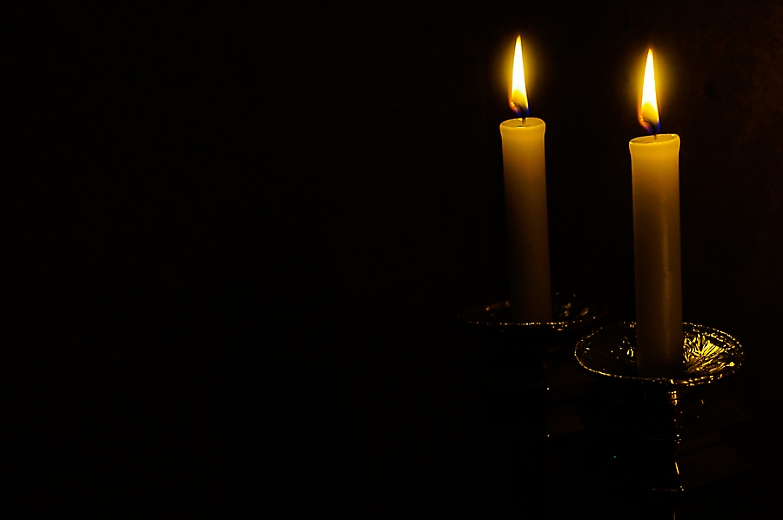
This week, again, the news fills me with despair. But on Shabbat I recover hope. Is this a two-state solution to the problem of being human: six days, despair; on the Sabbath, hope?
This summer I flew in turbulent weather. I gripped the armrest, squeezed my eyes shut, and visualized: land, land, let me stand, once more, on solid ground for peace.
At night, when I’d prefer to be sleeping, my perseverating mind goes to war with my worn body. I need a two-state solution: one that will allow me to sleep when I sleep, one that will allow me to work when I work.
I am not a gardener. I am not a weeder. I am not a pruner. I am not a fertilizer. I am not a tender of soil. I do not turn to land for peace.
My problems are real. My problems are white and American and Jewish and middle class and academic and male. My problems are nothing compared to the problems of others. Reading and watching and thinking about theirs, the problems of those who are walking targets, those who are working poor: could this be the one- state solution to my problems?
Would a two-state solution look like this: devoting my waking hours to creating conditions in which all can thrive? Say the fathers of the Talmud, “You are not obligated to complete the work, but neither are you free to desist from it.”
I drive around my part of the state. In Yancey County, land for sale. In Madison County, land for sale. In Mitchell County, land for sale. Will the land sell for luxury, a gated community, a golf resort? Or will the land sell for peace, an off-the-grid potter’s studio, a meditator’s retreat?
Can anyone state, in simple terms, a solution to the problem of global warming? Can anyone state, in simple terms, a solution to the problem of sexual harassment and rape? Can anyone state, in simple terms, a solution to the problem of the surveillance state? Can anyone state, in simple terms, a solution to the problem of institutional racism? Can anyone state, in simple terms, a solution to the problem of homelessness? Can anyone state, in simple terms, a solution to the problem of growing numbers of refugees around the world?
Can anyone state—Oh! The problems seem to multiply, when you try to tally them, the problems seem too many to count!
This past Shabbat, I joined the congregation in saying aloud, after the Torah service (usually I let my mind, untethered, drift during this part of the service) a prayer for our country. May this land under Your Providence be an influence for good throughout the world, uniting all people in peace and freedom and helping them to fulfill the vision of Your prophet: “Nation shall not lift up sword against nation, neither shall they experience war any more.”
Then, still standing, we read aloud, May we see the day when war and bloodshed cease. And I thought, the prophets knew, and I thought, the rabbis who composed the symphony of Sabbath prayers knew, and I thought it goes back, it goes back, how far back it goes, the knowing, the knowing, the knowing of war. Will the land on which we build and sleep ever be for peace?
Who came up with the first two-state solution? God, when he counseled Abraham to honor Sarah’s wishes and send Hagar and Ishmael, his son, away. Abraham’s lineage, God says, will continue through Isaac. Ishmael, God reassures Abraham, will also be the father of a nation. Thus, God’s two-state solution. I’ll leave it up to you to decide how that worked out.
Who has time for Palestine, time for Israel? In my community, a few small, devoted, loosely formed groups do; a few passionate individuals make their case in private and public, with raised voices and money. Emboldened by their synagogue, their church, they fight to make that land over there a land for peace for one side if not the other.
Beyond a two-state solution, beyond land for peace: Shabbat. And beyond Shabbat, even beyond beyond—the never and nowhere to which Sabbath prayers point? I could almost feel it, during the Shabbat service, but what I felt is beyond words.
Then I came back to this time, this place, this actual earth where slogans are lobbed like bombs, leaving behind smoking ruins: two-state solution, land for peace.
Richard Chess is the author of three books of poetry,Tekiah, Chair in the Desert, and Third Temple. Poems of his have appeared in Telling and Remembering: A Century of American Jewish Poetry, Bearing the Mystery: Twenty Years of IMAGE, and Best Spiritual Writing 2005. He is the Roy Carroll Professor of Honors Arts and Sciences at the University of North Carolina at Asheville. He is also the director of UNC Asheville’s Center for Jewish Studies.
Previous Post

September 8, 2014
My Garden, the Book of Joel, and God’s Plagues
Next Post
September 10, 2014 Songs Dead Men Sing
Browse Our Archives
Select a Category A. G. Harmon Alissa Wilkinson Allison Backous Art Authors Brad Fruhauff Bradford Winters Bryan Bliss Caroline Langston Chad Thomas Johnston Chris Hoke Christiana N. Peterson Culture D.G. Myers D.L. Mayfield Daniel Bowman Jr. David Griffith Elizabeth Duffy Faith Film Greg Wolfe Guest Contributor Interview Jan Vallone Jeffrey Overstreet Jessica Eddings-Roeser Jessica Mesman Griffith Kelly Foster Lindsey Crittenden Morgan Meis music Natalie Vestin Nick Olson Peggy Rosenthal Personal Reflection Poetry Friday Reflection Relationships Review Richard Chess Richard Cole Sara Zarr Shannon Huffman Polson Sonya Bilocerkowycz Tania Runyan Tony Woodlief Topical Categories Uncategorized Vic Sizemore Writing
Select a Month October 2018 September 2018 August 2018 July 2018 June 2018 May 2018 April 2018 March 2018 February 2018 January 2018 December 2017 November 2017 October 2017 September 2017 August 2017 July 2017 June 2017 May 2017 April 2017 March 2017 February 2017 January 2017 December 2016 November 2016 October 2016 September 2016 August 2016 July 2016 June 2016 May 2016 April 2016 March 2016 February 2016 January 2016 December 2015 November 2015 October 2015 September 2015 August 2015 July 2015 June 2015 May 2015 April 2015 March 2015 February 2015 January 2015 December 2014 November 2014 October 2014 September 2014 August 2014 July 2014 June 2014 May 2014 April 2014 March 2014 February 2014 January 2014 December 2013 November 2013 October 2013 September 2013 August 2013 July 2013 June 2013 May 2013 April 2013 March 2013 February 2013 January 2013 December 2012 November 2012 October 2012 September 2012 August 2012 July 2012 June 2012 May 2012 February 2008
Follow Us!
TAKE THE
Religious Wisdom Quiz
Which Christian holiday starts the new liturgical year in Western churches?
Select your answer to see how you score.
Advent Epiphany Easter Lent
Related posts from Good Letters

Leonard Cohen’s Holy and Broken Hallelujah

Ready or Not for the Days of Awe


TRENDING AT PATHEOS Catholic

Rejecting Doom: Christian Hope And Human Action
Christianity is a religion of hope. We are to have hope and...

It’s What Comes From Within Which Matters
One of the most difficult things for us to understand is why...

Why I Choose the Eucharist Over the Sermon
Choose the Eucharist, Not the Sermon What are we supposed to get...

5 Design Elements Found in Spiritually Rooted Homes
Putting Spirituality Into Home Decor Our homes are more than our living...

Credo: A Story of God Told with the...
About 10 years ago, I began to imagine a personal "Credo" that...

The Anatomy of Divine Revelation in Catholic Thought
The claim that God has made Himself known to human beings is...
view all Catholic blogs
Ad-Free & Subscriber Log-In Subscription Support
- About Us
- 2026 Calendar
- Videos
- Podcasts
- Library of World Religions
- Faith In Media Tracker
- Advertise With Us
- Write for Us
- Privacy Policy
- Terms of Service
- Do Not Sell My Data
- Contact Us
- Radiant Digital
- Manage Newsletter Subscriptions
- Unsubscribe From Notifications
- Sitemap
Copyright 2008-2026, Patheos. All rights reserved.
Subscription Support Ad-Free & Subscriber Log-In
Follow Patheos