
BuddhistCatholicContemplativeEvangelicalGeneral ChristianHinduJewishLatter-day SaintMuslimNew VisionsProgressive Christian
Beliefs
- Buddhist
- Catholic
- Contemplative
- Evangelical
- General Christian
- Hindu
- Jewish
- Latter-day Saint
- More Voices
- Muslim
- New Visions
- Pagan
- Progressive Christian
Topics
- Religion News
- Food and Religion
- Sports and Religion
- Religious Art
- Religious Music and Entertainment
- Religious Events
- History and Religion
- Style and Religion
- Politics and Religion
- Women in Religion
- Recreation Outdoors and Religion
- Business Finance and Religion
- Careers Workplace and Religion
- Education and Religion
- Family Parenting and Religion
- Health Fitness and Religion
- Home and Religion
- Relationships and Religion
- Technology and Religion
- Travel and Religion
Columnists
- Buddhist Columnists
- Business Finance and Religion Columnists
- Careers Workplace and Religion Columnists
- Catholic Columnists
- Contemplative Columnists
- Education and Religion Columnists
- Evangelists Columnists
- Family Parenting and Religion Columnists
- General Christian Columnists
- Health Fitness and Religion Columnists
- Hindu Columnists
- History and Religion Columnists
- Home and Religion Columnists
- Jewish Columnists
- More Voices Columnists
- Latter Day Columnists
- Muslim Columnists
- New Visions Columnists
- Nonreligious Columnists
- Pagan Columnists
- Politics and Religion Columnists
- Progressive Columnists
- Recreation Outdoors and Religion Columnists
- Relationships and Religion Columnists
- Religion News Columnists
- Religious Art Columnists
- Religious Events Columnists
- Religious Music and Entertainment Columnists
- Sports and Religion Columnists
- Style and Religion Columnists
- Technology and Religion Columnists
- Travel and Religion Columnists
- Women in Religion Columnists
Resource Library
- 2026 Calendar
- Library of World Religions
- The 100 Most Holy Places on Earth
- Patheos Answers
- Podcasts
- Videos
- Faith Leaders Database
- Anglican Episcopalian
- Bahai
- Baptist
- Buddhism
- Christianity
- Confucianism
- Eastern Orthodoxy
- Hinduism
- Holiness and Pentecostal
- ISKCON
- Islam
- Judaism
- Lutheran
- Methodist
- The Church of Jesus Christ of Latter-day Saints
- New Age
- Paganism
- Presbytarian and Reformed
- Protestantism
- Religion Behind the Scenes
- Roman Catholic
- Scientology
- Shia Islam
- Sikhism
- Sufism
- Sunni Islam
- Taoism
- Zen
- See all religions
Research Tools
 Ad-Free & Subscriber Log-In Subscription Support
Ad-Free & Subscriber Log-In Subscription Support
Follow Patheos 

- Trending:
- Forgiveness
- |
- Marriage
- |
- Consciousness
- |
- Death Penalty
- |
- Election
- |
- Halloween
 Good Letters
-
Contributors
- Home
- Catholic
- Detonating Jonah
Detonating Jonah
Last updated on: September 26, 2014 at 3:50 pm by Bradford Winters
Detonating Jonah 2014-09-26T15:50:08-07:00 Bradford Winters
Patheos Explore the world's faith through different perspectives on religion and spirituality! Patheos has the views of the prevalent religions and spiritualities of the world.
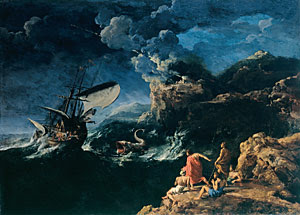 When news broke this summer that Sunni extremists with ISIS, the Islamic State in Iraq and Syria, had blown up the tomb of Jonah after capturing the Iraqi city of Mosul, the shockwaves left a piece of me in the rubble from halfway across the world in Brooklyn.
Not that the trail of massacres, beheadings and forced expulsions by ISIS haven’t made for far more shocking news before and since then, as the gruesome executions of American journalists James Foley and Steven Sotloff recently attest.
I can watch the online video of Jonah’s tomb blown to bits in a cloud of dust; but the beheadings of Foley and Sotloff I cannot.
Yet when I watch the former, I am revolted and I cringe. There it is one second, there it isn’t the next: the alleged resting place of my beloved Jonah.
Our beloved Jonah, inasmuch as he is equally revered in Islam as he is in the Judeo-Christian tradition: the Qur’an includes its own version of the book, “Yunus,”and Muhammad is said to have proclaimed, “One should not say that I am better than Jonah.”
Hence the “tears and anger” in Mosul, as reported by The New York Times, where the Sunni population’s initial embrace of liberation by ISIS from centralized Shiite oppression in Baghdad gave way first to resentment, and then resistance, as the city’s trove of treasured holy sites and rich tradition of interfaith compatibility were destroyed.
I can’t say I shed a tear in Brooklyn, but I did feel sad and angry nonetheless—not just because Jonah figures prominently in my own tradition as the prototype referred to by Jesus apropos his coming death, burial, and resurrection. More pointedly, more personally, the story of Jonah provided my very first encounter with scripture as “living and active, sharper than any two-edged sword”according to the New Testament author of the Letter to the Hebrews.
In the context of my wider love affair with the biblical prophets, the cantankerous Jonah was first. This has much to do with the fact that at the time I myself was “in the belly” in my late twenties, swallowed up by a confluence of spiritual, vocational, and romantic despair.
Into this darkness came the story of Jonah for the umpteenth time, but with it this time a stunning illumination, a sense of revelation, that trumps any other I’ve experienced in reading scripture to this day. (If I recall correctly, I was in the belly of an airplane when it hit me, perhaps primed for the epiphany in our modern travel context.)
We know how the story begins, we know how it ends, and we certainly know that any discussion of Jonah typically resorts to questions of credibility about its more fantastical elements. But there was the gem in the middle, a spiritual principle of such profound subtlety that I can’t be sure my life would have taken the same direction had I not noticed it when I did—or, rather, had it not pierced me with that two-edged sword.
Space prohibits me from excerpting the entire psalm that comprises the second chapter in the book, but here are the first two verses inside which the principle had previously been locked:
Then Jonah prayed to the Lord his God
from the belly of the fish,
saying, “I called to the Lord, out of my distress,
and he answered me;
out of the belly of Sheol I cried,
and thou didst hear my voice.
Notice anything striking? If not, neither did I for quite some time. It’s a familiar enough passage for its nearly exact recurrence in the Psalms; what’s so special about it here? Wait a minute…the construction doesn’t make sense: the grammar doesn’t match the narrative. Why is Jonah giving thanks for answered prayer from the belly of the fish, before his prayer has been answered?
Holy sh—I mean, spirit.
Jonah prayed in the past tense while still inside the belly of the fish; his prayer for deliverance was a prayer of thanksgiving that deliverance had been accomplished before it took place.
Now, I’ve read my fair share of books on prayer over the years, perhaps too many in comparison to the time spent in prayer itself. But I’m pretty sure I’ve never come across a more revelatory principle than this: the fullness of prayer, which is the fullness of faith, is the express conviction that it has already been answered if not yet borne out in experience.
(Lest the impression this made on me imply a case of being most impressed with my exegetical faculties, I take credit for nothing except eyes blind enough to be opened to the text.)
Jesus gets at same principle in Matthew when he states: “Therefore I say to you, anything you pray for and ask, believe that you will receive it, and it will be done to you.”
But there’s a fine difference, in that the grammatical/temporal incongruity in the Jonah narrative seems to take the principle one step further by suggesting a prayer already answered before the answer comes to pass. We are outside of linear time in such a paradigm, which is perhaps exactly where we should be as pray-ers.
I know I should be, as one who finds it far more difficult to practice this principle than preach it as I do here. But had I not taken it to heart in my late twenties, had I not waited for deliverance with the expectancy of Jonah, rather than attempt to eject myself from the belly I was in, I might not have found myself at the altar later with Jonah’s psalm for a reading and a partial line from that verse inscribed in our wedding rings.
Something detonated in me and on the page thanks to Jonah, something far more powerful and lasting than the perpetrators at his tomb in Mosul could ever hope to accomplish.
Bradford Winters is a screenwriter/producer in television whose work has included such series as Oz, Kings, Boss, and The Americans. His poems have appeared in Sewanee Theological Review, Spoon River Poetry Review, and Georgetown Review, among other journals. He lives in Brooklyn with his wife and three children.
Previous Post

September 12, 2014
The Machinery of Cowardice Fails the Children of Rotherham
Next Post
September 16, 2014 There’s No Original Art
Browse Our Archives
Select a Category A. G. Harmon Alissa Wilkinson Allison Backous Art Authors Brad Fruhauff Bradford Winters Bryan Bliss Caroline Langston Chad Thomas Johnston Chris Hoke Christiana N. Peterson Culture D.G. Myers D.L. Mayfield Daniel Bowman Jr. David Griffith Elizabeth Duffy Faith Film Greg Wolfe Guest Contributor Interview Jan Vallone Jeffrey Overstreet Jessica Eddings-Roeser Jessica Mesman Griffith Kelly Foster Lindsey Crittenden Morgan Meis music Natalie Vestin Nick Olson Peggy Rosenthal Personal Reflection Poetry Friday Reflection Relationships Review Richard Chess Richard Cole Sara Zarr Shannon Huffman Polson Sonya Bilocerkowycz Tania Runyan Tony Woodlief Topical Categories Uncategorized Vic Sizemore Writing
Select a Month October 2018 September 2018 August 2018 July 2018 June 2018 May 2018 April 2018 March 2018 February 2018 January 2018 December 2017 November 2017 October 2017 September 2017 August 2017 July 2017 June 2017 May 2017 April 2017 March 2017 February 2017 January 2017 December 2016 November 2016 October 2016 September 2016 August 2016 July 2016 June 2016 May 2016 April 2016 March 2016 February 2016 January 2016 December 2015 November 2015 October 2015 September 2015 August 2015 July 2015 June 2015 May 2015 April 2015 March 2015 February 2015 January 2015 December 2014 November 2014 October 2014 September 2014 August 2014 July 2014 June 2014 May 2014 April 2014 March 2014 February 2014 January 2014 December 2013 November 2013 October 2013 September 2013 August 2013 July 2013 June 2013 May 2013 April 2013 March 2013 February 2013 January 2013 December 2012 November 2012 October 2012 September 2012 August 2012 July 2012 June 2012 May 2012 February 2008
Follow Us!
TAKE THE
Religious Wisdom Quiz
I came to Jesus at night to ask about being born again. Who was this Pharisee and member of the Jewish ruling council?
Select your answer to see how you score.
Joseph of Arimathea Nicodemus Gamaliel Caiaphas
Related posts from Good Letters



Poetry Friday: "The Burned Butterfly"
TRENDING AT PATHEOS Catholic

Rejecting Doom: Christian Hope And Human Action
Christianity is a religion of hope. We are to have hope and...

It’s What Comes From Within Which Matters
One of the most difficult things for us to understand is why...

Why I Choose the Eucharist Over the Sermon
Choose the Eucharist, Not the Sermon What are we supposed to get...

5 Design Elements Found in Spiritually Rooted Homes
Putting Spirituality Into Home Decor Our homes are more than our living...

Credo: A Story of God Told with the...
About 10 years ago, I began to imagine a personal "Credo" that...

The Anatomy of Divine Revelation in Catholic Thought
The claim that God has made Himself known to human beings is...
view all Catholic blogs
Ad-Free & Subscriber Log-In Subscription Support
- About Us
- 2026 Calendar
- Videos
- Podcasts
- Library of World Religions
- Faith In Media Tracker
- Advertise With Us
- Write for Us
- Privacy Policy
- Terms of Service
- Do Not Sell My Data
- Contact Us
- Radiant Digital
- Manage Newsletter Subscriptions
- Unsubscribe From Notifications
- Sitemap
Copyright 2008-2026, Patheos. All rights reserved.
Subscription Support Ad-Free & Subscriber Log-In
Follow Patheos