
BuddhistCatholicContemplativeEvangelicalGeneral ChristianHinduJewishLatter-day SaintMuslimNew VisionsProgressive Christian
Beliefs
- Buddhist
- Catholic
- Contemplative
- Evangelical
- General Christian
- Hindu
- Jewish
- Latter-day Saint
- More Voices
- Muslim
- New Visions
- Pagan
- Progressive Christian
Topics
- Religion News
- Food and Religion
- Sports and Religion
- Religious Art
- Religious Music and Entertainment
- Religious Events
- History and Religion
- Style and Religion
- Politics and Religion
- Women in Religion
- Recreation Outdoors and Religion
- Business Finance and Religion
- Careers Workplace and Religion
- Education and Religion
- Family Parenting and Religion
- Health Fitness and Religion
- Home and Religion
- Relationships and Religion
- Technology and Religion
- Travel and Religion
Columnists
- Buddhist Columnists
- Business Finance and Religion Columnists
- Careers Workplace and Religion Columnists
- Catholic Columnists
- Contemplative Columnists
- Education and Religion Columnists
- Evangelists Columnists
- Family Parenting and Religion Columnists
- General Christian Columnists
- Health Fitness and Religion Columnists
- Hindu Columnists
- History and Religion Columnists
- Home and Religion Columnists
- Jewish Columnists
- More Voices Columnists
- Latter Day Columnists
- Muslim Columnists
- New Visions Columnists
- Nonreligious Columnists
- Pagan Columnists
- Politics and Religion Columnists
- Progressive Columnists
- Recreation Outdoors and Religion Columnists
- Relationships and Religion Columnists
- Religion News Columnists
- Religious Art Columnists
- Religious Events Columnists
- Religious Music and Entertainment Columnists
- Sports and Religion Columnists
- Style and Religion Columnists
- Technology and Religion Columnists
- Travel and Religion Columnists
- Women in Religion Columnists
Resource Library
- 2026 Calendar
- Library of World Religions
- The 100 Most Holy Places on Earth
- Patheos Answers
- Podcasts
- Videos
- Faith Leaders Database
- Anglican Episcopalian
- Bahai
- Baptist
- Buddhism
- Christianity
- Confucianism
- Eastern Orthodoxy
- Hinduism
- Holiness and Pentecostal
- ISKCON
- Islam
- Judaism
- Lutheran
- Methodist
- The Church of Jesus Christ of Latter-day Saints
- New Age
- Paganism
- Presbytarian and Reformed
- Protestantism
- Religion Behind the Scenes
- Roman Catholic
- Scientology
- Shia Islam
- Sikhism
- Sufism
- Sunni Islam
- Taoism
- Zen
- See all religions
Research Tools
 Ad-Free & Subscriber Log-In Subscription Support
Ad-Free & Subscriber Log-In Subscription Support
Follow Patheos 

- Trending:
- Forgiveness
- |
- Marriage
- |
- Consciousness
- |
- Death Penalty
- |
- Election
- |
- Halloween
 Good Letters
-
Contributors
- Home
- Catholic
- An American Girl’s Tale
An American Girl’s Tale
Last updated on: September 26, 2014 at 3:47 pm by Caroline Langston
An American Girl’s Tale 2014-09-26T15:47:41-07:00 Caroline Langston
Patheos Explore the world's faith through different perspectives on religion and spirituality! Patheos has the views of the prevalent religions and spiritualities of the world.
 Dave Ramsey, the millionaire evangelical Christian money coach who’s famous for telling his clients they “can’t afford it” and hectoring them to pay their bills in cash, would have thought I had lost my mind.
And, indeed, it is true that I was aflame with that particularly American form of madness which manifests itself as Having to Shop. The day before I had faced some obstacles peculiar to the American professional workplace, nothing that was all that punishing but was disorienting and exhausting enough—work-life balance, blah blah blah—that the only appropriate remedy was to spend money. I took my five-year-old daughter to the American Girl store in Tyson’s Corner Mall.
This was a matter of some urgency: The dolls Marie-Grace and Cécile had “been retired,” and I was in a race to get at least one of them.
Let us pause now to consider the phenomenon of American Girl dolls in general, premium-priced, but not especially fragile or rare dolls that were once noted for their exceptionally and historically detailed accessories. The line of dolls with accompanying books launched way back at the end of the 1980s, long after my own doll years in the more modest era of the patchwork-clad Holly Hobbie.
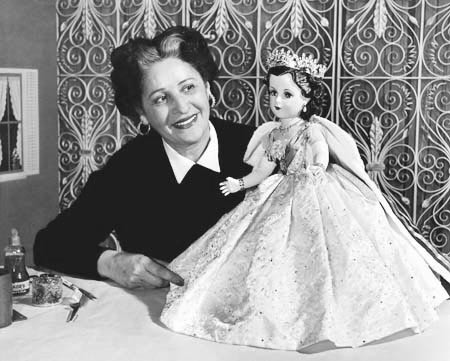
What I really always wanted was a Madame Alexander doll (first introduced in the 1920s): tulle-skirted, porcelain-faced with 50s eyebrows and prim rosebud lips, but my mother said that we could not afford one, end of story. And that was just what happened when you asked for something in the 1970s, which is why we now have forty-something mothers like me willing to plunk down $125 on a plastic doll made in China.
The line of American Girl historical characters originally represented a rather narrow and Caucasian understanding of what the term American represented: There was Midwestern Swedish immigrant Kirsten, wealthy Victorian-era Samantha, and middle-class World War II-era Molly, to name a few, who were eventually joined by Native American Kaya, Latina Josefina, and, to much fanfare in the mid-90s, African-American Addie.
At the time, Addie struck me as having the most interesting storyline—with a daring escape to freedom on the Underground Railroad and a reunited family. Furthermore, Addie’s eponymous book collection was authored by Connie Porter, who had a noted debut with her novel-in-stories All Bright Court, about a community of black miners in the North.
By the time I had my own daughter, the American Girl company had been sold to Mattel and sucked up into a veritable consumerist ecstasy, with the original emphasis on historical dolls downplayed in favor of made-to-order dolls designed to look like their young female owners, and the range and cuteness of the available accessories (cheerleading outfits, sports equipment, wheelchairs) overwhelmed historical relevance or accuracy.
Meanwhile, American Girl stories began to pop up in cities around the nation, starting with the New York City flagship store, and with their overpriced bistros and in-house doll hair salons began to seem, by 2008, to be the apogee of Late Capitalism.
This is why I found the 2011 introduction of Marie-Grace and Cécile especially interesting: Set in 1850s New Orleans, the story behind this “friendship pair” is that of the daughter of a white do-gooder doctor newly arrived in the city, Marie-Grace Gardner, who gradually becomes friends with wealthy Creole Cécile Rey, and the two go on to have a variety of learning adventures.
I don’t know any more specifics than what I learned from the blurbs in the catalogues, because my own daughter was too young at that point for the American Girl historical character dolls. But oh how I loved the fact that the stories were set in New Orleans, the city where I’d gone to college for four years, and a complicated place indeed. I loved the costumes with their Empress Eugénie skirts, the mosquito net covered beds, and lacy iron chairs.
And perhaps most of all, I loved the narrative of inter-cultural friendship. In keeping with both the particulars of New Orleans itself and the unspoken complexities of race relations in America, it reached beyond our standard —and greatly separated—narratives of Black and White toward recognition of the new and multiracial America dawning before us.
When I heard during the spring of 2014 that “AG,” as online doll collectors refer to American Girl, had decided to retire Marie-Grace and Cécile entirely as part of a revamped marketing campaign for the historical characters, it occurred to me that perhaps the rest of America had not quite been ready for the new and multiracial America that their introduction had represented.
To begin with, nine years after Hurricane Katrina, Americans still don’t quite know what to make of New Orleans. But underlying even that confusion is the essential shadow that issues of race still cast over American life, the continuum and shared blood, borne of oppression, between us, still unrecognized and un-admitted.
The forced retirement of Marie-Grace and Cécile then, reminded me of nothing less than the original American sin that William Faulkner so beautifully expresses in Absalom, Absalom—when plantation son Henry Sutpen refuses to recognize the humanity of his Creole half-brother, Charles Bon, and kills him instead—and as writer John Jeremiah Sullivan analyzes so beautifully in his introduction to the new Modern Library edition of the novel.
And perhaps I’m not the only one who has felt this way: When we got to the American Girl store we were able to find Marie-Grace dolls and bought one, appropriate for my own dear daughter of do-gooding parents, down to her same shining golden brown hair. But Cécile, the friend, had already sold out and was gone. Rising in price and boosted by her hoarding fans, restored to memory and recognition on E-Bay.
A native of Yazoo City, Mississippi, Caroline Langston is a convert to the Eastern Orthodox Church. She is a widely published writer and essayist, a winner of the Pushcart Prize, and a commentator for NPR’s “All Things Considered.”
Previous Post

September 4, 2014
All Unhappy Families Are Alike
Next Post
September 8, 2014 My Garden, the Book of Joel, and God’s Plagues
Browse Our Archives
Select a Category A. G. Harmon Alissa Wilkinson Allison Backous Art Authors Brad Fruhauff Bradford Winters Bryan Bliss Caroline Langston Chad Thomas Johnston Chris Hoke Christiana N. Peterson Culture D.G. Myers D.L. Mayfield Daniel Bowman Jr. David Griffith Elizabeth Duffy Faith Film Greg Wolfe Guest Contributor Interview Jan Vallone Jeffrey Overstreet Jessica Eddings-Roeser Jessica Mesman Griffith Kelly Foster Lindsey Crittenden Morgan Meis music Natalie Vestin Nick Olson Peggy Rosenthal Personal Reflection Poetry Friday Reflection Relationships Review Richard Chess Richard Cole Sara Zarr Shannon Huffman Polson Sonya Bilocerkowycz Tania Runyan Tony Woodlief Topical Categories Uncategorized Vic Sizemore Writing
Select a Month October 2018 September 2018 August 2018 July 2018 June 2018 May 2018 April 2018 March 2018 February 2018 January 2018 December 2017 November 2017 October 2017 September 2017 August 2017 July 2017 June 2017 May 2017 April 2017 March 2017 February 2017 January 2017 December 2016 November 2016 October 2016 September 2016 August 2016 July 2016 June 2016 May 2016 April 2016 March 2016 February 2016 January 2016 December 2015 November 2015 October 2015 September 2015 August 2015 July 2015 June 2015 May 2015 April 2015 March 2015 February 2015 January 2015 December 2014 November 2014 October 2014 September 2014 August 2014 July 2014 June 2014 May 2014 April 2014 March 2014 February 2014 January 2014 December 2013 November 2013 October 2013 September 2013 August 2013 July 2013 June 2013 May 2013 April 2013 March 2013 February 2013 January 2013 December 2012 November 2012 October 2012 September 2012 August 2012 July 2012 June 2012 May 2012 February 2008
Follow Us!
TAKE THE
Religious Wisdom Quiz
Which book directly follows Joshua?
Select your answer to see how you score.
Judges Numbers Ruth Leviticus
Related posts from Good Letters




TRENDING AT PATHEOS Catholic

Rejecting Doom: Christian Hope And Human Action
Christianity is a religion of hope. We are to have hope and...

It’s What Comes From Within Which Matters
One of the most difficult things for us to understand is why...

Why I Choose the Eucharist Over the Sermon
Choose the Eucharist, Not the Sermon What are we supposed to get...

5 Design Elements Found in Spiritually Rooted Homes
Putting Spirituality Into Home Decor Our homes are more than our living...

Credo: A Story of God Told with the...
About 10 years ago, I began to imagine a personal "Credo" that...

The Anatomy of Divine Revelation in Catholic Thought
The claim that God has made Himself known to human beings is...
view all Catholic blogs
Ad-Free & Subscriber Log-In Subscription Support
- About Us
- 2026 Calendar
- Videos
- Podcasts
- Library of World Religions
- Faith In Media Tracker
- Advertise With Us
- Write for Us
- Privacy Policy
- Terms of Service
- Do Not Sell My Data
- Contact Us
- Radiant Digital
- Manage Newsletter Subscriptions
- Unsubscribe From Notifications
- Sitemap
Copyright 2008-2026, Patheos. All rights reserved.
Subscription Support Ad-Free & Subscriber Log-In
Follow Patheos