
BuddhistCatholicContemplativeEvangelicalGeneral ChristianHinduJewishLatter-day SaintMuslimNew VisionsProgressive Christian
Beliefs
- Buddhist
- Catholic
- Contemplative
- Evangelical
- General Christian
- Hindu
- Jewish
- Latter-day Saint
- More Voices
- Muslim
- New Visions
- Pagan
- Progressive Christian
Topics
- Religion News
- Food and Religion
- Sports and Religion
- Religious Art
- Religious Music and Entertainment
- Religious Events
- History and Religion
- Style and Religion
- Politics and Religion
- Women in Religion
- Recreation Outdoors and Religion
- Business Finance and Religion
- Careers Workplace and Religion
- Education and Religion
- Family Parenting and Religion
- Health Fitness and Religion
- Home and Religion
- Relationships and Religion
- Technology and Religion
- Travel and Religion
Columnists
- Buddhist Columnists
- Business Finance and Religion Columnists
- Careers Workplace and Religion Columnists
- Catholic Columnists
- Contemplative Columnists
- Education and Religion Columnists
- Evangelists Columnists
- Family Parenting and Religion Columnists
- General Christian Columnists
- Health Fitness and Religion Columnists
- Hindu Columnists
- History and Religion Columnists
- Home and Religion Columnists
- Jewish Columnists
- More Voices Columnists
- Latter Day Columnists
- Muslim Columnists
- New Visions Columnists
- Nonreligious Columnists
- Pagan Columnists
- Politics and Religion Columnists
- Progressive Columnists
- Recreation Outdoors and Religion Columnists
- Relationships and Religion Columnists
- Religion News Columnists
- Religious Art Columnists
- Religious Events Columnists
- Religious Music and Entertainment Columnists
- Sports and Religion Columnists
- Style and Religion Columnists
- Technology and Religion Columnists
- Travel and Religion Columnists
- Women in Religion Columnists
Resource Library
- 2026 Calendar
- Library of World Religions
- The 100 Most Holy Places on Earth
- Patheos Answers
- Podcasts
- Videos
- Faith Leaders Database
- Anglican Episcopalian
- Bahai
- Baptist
- Buddhism
- Christianity
- Confucianism
- Eastern Orthodoxy
- Hinduism
- Holiness and Pentecostal
- ISKCON
- Islam
- Judaism
- Lutheran
- Methodist
- The Church of Jesus Christ of Latter-day Saints
- New Age
- Paganism
- Presbytarian and Reformed
- Protestantism
- Religion Behind the Scenes
- Roman Catholic
- Scientology
- Shia Islam
- Sikhism
- Sufism
- Sunni Islam
- Taoism
- Zen
- See all religions
Research Tools
 Ad-Free & Subscriber Log-In Subscription Support
Ad-Free & Subscriber Log-In Subscription Support
Follow Patheos 

- Trending:
- Forgiveness
- |
- Marriage
- |
- Consciousness
- |
- Death Penalty
- |
- Election
- |
- Halloween
 Good Letters
-
Contributors
- Home
- Catholic
- The Gift of Gravy Days
The Gift of Gravy Days
Last updated on: September 26, 2014 at 3:41 pm by Peggy Rosenthal
The Gift of Gravy Days 2014-09-26T15:41:52-07:00 Peggy Rosenthal
Patheos Explore the world's faith through different perspectives on religion and spirituality! Patheos has the views of the prevalent religions and spiritualities of the world.
 Well, I’ve reached my three score and ten years.
It must sound positively ancient to those of you who are half my age—or even two-thirds. I know that when I was in my thirties, forties, even fifties, seventy sounded old: not only over the hill but way down toward the bottom of the other side.
“Seventy is the sum of our years, or eighty if we are strong,” sings Psalm 90. I’m not strong. I have a chronic form of leukemia that could carry me off any day. In fact, when I was diagnosed with it just before my sixtieth birthday, my doctor said with an upbeat, encouraging voice “You can expect to live ten more years!”—which at the time sounded like a lot. So I had scientific confirmation that the psalmist’s sum of seventy years was indeed my allotment.
And just a few weeks ago, I was pretty sure my allotment had run out. I was suddenly hospitalized with a form of pneumonia that nabs bodies with compromised immune systems, like mine. After days of IV antibiotics running into each arm, I was about to phone my pastor for funeral arrangements when the antibiotics finally did their job and knocked out the pneumonia bacteria.
It was a close call, and made me more aware than ever of the wonder of each new day. I wake asking what am I doing here because each of these days now is clearly an extra, a bonus day. Each is gravy.
What am I meant to do with this gravy? Enjoy it on my mashed potatoes, yes (though in moderation: beware of too much cholesterol!). Pass it out to those who don’t have any gravy, or even potatoes, mashed or otherwise. Send favorite gravy recipes to close friends, enclosed in a note saying “I love you.” Treasure the sunshine as it turns the gravy on my plate to gold.
In this way, each gravy day passes. At least, this is how they pass now that I’m feeling pretty well. When that changes, when I start to feel sick again and the gravy gets cold and hard, will I still give thanks for it?
I pray that I will, but there’s no telling.
My husband, who’s a couple years past his three score and ten, suffers undiagnosable discomforts almost daily. His gravy is lumpy. He tries to remain grateful for it, but this isn’t easy.
Our friend Brother Anthony, a Trappist monk, nearly died of a heart ailment some years ago. When he recovered, he said to us cheerily, “Well, I’ve got a reprieve!” And isn’t that what we all have at best?
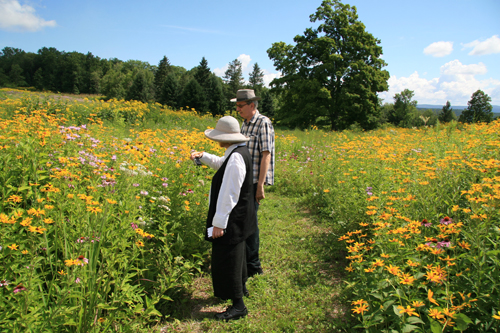
As for us mortals, our days are like grass;
we flower like the flower of the field;
the wind blows and we are gone
and our place never sees us again (Psalm 103).
It’s a beautiful image: days like grass and wildflowers look more appealing than days like gravy. Still, the truth of the psalm’s image—the wind blows and we are gone—is daunting. I’m astonished that even though every single human who ever lived has faced mortality, we’re still mystified by it.
Make us know the shortness of our life
that we may gain wisdom of heart (Psalm 90).
How does knowing the shortness of our life, recognizing our mortality, gain us wisdom?
Rowan Williams, the former Archbishop of Canterbury, suggests an answer in his rich book Christ on Trial. “Wisdom speaks through the weakness of a human life: only by accepting my own weakness, and surrendering various falsehoods that might let me think myself strong and safe, can I attune my life to that of God.”
Wisdom speaks through weakness. I can easily identify with the weakness. But I’m not so sure I hear Wisdom speaking in my ear. Maybe she’s speaking in a whisper, saying:
God’s love is everlasting
upon those who cling to his name (Psalm 103).
To believe this would surely be attuning my life to God’s. And I do believe in God’s everlasting love; I do believe in eternal life. Yet…this decidedly non-eternal life is the one I know, the one I cling to even as I also cling to God’s name, God’s love. Even as I know that these gravy days are just that: pure bonus, pure gift.
Psalm 84 addresses God:
One day within your grounds
is better than a thousand elsewhere…
For you are a sun and a shield.
Each gravy day is an extra day within God’s sun-drenched grounds, a shimmering glimpse of eternal life beyond the grave.
I won’t offend you by punning on “gravy” and “grave.” They derive from different root words, and from my earliest days as a writer I made a private vow to pun only etymologically.
Yet here we are: gravy days are numbered; all our days are numbered; we can’t avoid coming to the grave.
Right now, waiting to regain my energy after the pneumonia, I feel as if I do have one foot in the grave. My prayer is that when the time comes and this foot sinks down deeper, the other foot will stay firm on a stair that’s shimmery light, sun-drenched with promise.
Peggy Rosenthal is director of Poetry Retreats and writes widely on poetry as a spiritual resource. Her books include Praying through Poetry: Hope for Violent Times(Franciscan Media), and The Poets’ Jesus (Oxford). SeeAmazon for full list. She also teaches an online course, “Poetry as a Spiritual Practice,” through Image’s Glen Online program*.*
Previous Post

August 20, 2014
The Weary Lion and the Wary Lamb
Next Post
August 22, 2014 How to Talk to the Dying
Browse Our Archives
Select a Category A. G. Harmon Alissa Wilkinson Allison Backous Art Authors Brad Fruhauff Bradford Winters Bryan Bliss Caroline Langston Chad Thomas Johnston Chris Hoke Christiana N. Peterson Culture D.G. Myers D.L. Mayfield Daniel Bowman Jr. David Griffith Elizabeth Duffy Faith Film Greg Wolfe Guest Contributor Interview Jan Vallone Jeffrey Overstreet Jessica Eddings-Roeser Jessica Mesman Griffith Kelly Foster Lindsey Crittenden Morgan Meis music Natalie Vestin Nick Olson Peggy Rosenthal Personal Reflection Poetry Friday Reflection Relationships Review Richard Chess Richard Cole Sara Zarr Shannon Huffman Polson Sonya Bilocerkowycz Tania Runyan Tony Woodlief Topical Categories Uncategorized Vic Sizemore Writing
Select a Month October 2018 September 2018 August 2018 July 2018 June 2018 May 2018 April 2018 March 2018 February 2018 January 2018 December 2017 November 2017 October 2017 September 2017 August 2017 July 2017 June 2017 May 2017 April 2017 March 2017 February 2017 January 2017 December 2016 November 2016 October 2016 September 2016 August 2016 July 2016 June 2016 May 2016 April 2016 March 2016 February 2016 January 2016 December 2015 November 2015 October 2015 September 2015 August 2015 July 2015 June 2015 May 2015 April 2015 March 2015 February 2015 January 2015 December 2014 November 2014 October 2014 September 2014 August 2014 July 2014 June 2014 May 2014 April 2014 March 2014 February 2014 January 2014 December 2013 November 2013 October 2013 September 2013 August 2013 July 2013 June 2013 May 2013 April 2013 March 2013 February 2013 January 2013 December 2012 November 2012 October 2012 September 2012 August 2012 July 2012 June 2012 May 2012 February 2008
Follow Us!
TAKE THE
Religious Wisdom Quiz
What does "Shiloh" (where the Tabernacle stood) mean?
Select your answer to see how you score.
Land of Bread Well of Water House of Prayer Place of Peace
Related posts from Good Letters

Poetry Friday: "The Burned Butterfly"


Leonard Cohen’s Holy and Broken Hallelujah

Ready or Not for the Days of Awe
TRENDING AT PATHEOS Catholic

Creation, Preservation, and Teleology in Catholic Theology
As I write this, it is very early Monday morning. Like millions...

The Parable Of The Sower And The Word...
One of Christ’s most famous parables is that of the sower who...

Rejecting Doom: Christian Hope And Human Action
Christianity is a religion of hope. We are to have hope and...

Why I Choose the Eucharist Over the Sermon
Choose the Eucharist, Not the Sermon What are we supposed to get...

5 Design Elements Found in Spiritually Rooted Homes
Putting Spirituality Into Home Decor Our homes are more than our living...

Credo: A Story of God Told with the...
About 10 years ago, I began to imagine a personal "Credo" that...
view all Catholic blogs
Ad-Free & Subscriber Log-In Subscription Support
- About Us
- 2026 Calendar
- Videos
- Podcasts
- Library of World Religions
- Faith In Media Tracker
- Advertise With Us
- Write for Us
- Privacy Policy
- Terms of Service
- Do Not Sell My Data
- Contact Us
- Radiant Digital
- Manage Newsletter Subscriptions
- Unsubscribe From Notifications
- Sitemap
Copyright 2008-2026, Patheos. All rights reserved.
Subscription Support Ad-Free & Subscriber Log-In
Follow Patheos