
BuddhistCatholicContemplativeEvangelicalGeneral ChristianHinduJewishLatter-day SaintMuslimNew VisionsProgressive Christian
Beliefs
- Buddhist
- Catholic
- Contemplative
- Evangelical
- General Christian
- Hindu
- Jewish
- Latter-day Saint
- More Voices
- Muslim
- New Visions
- Pagan
- Progressive Christian
Topics
- Religion News
- Food and Religion
- Sports and Religion
- Religious Art
- Religious Music and Entertainment
- Religious Events
- History and Religion
- Style and Religion
- Politics and Religion
- Women in Religion
- Recreation Outdoors and Religion
- Business Finance and Religion
- Careers Workplace and Religion
- Education and Religion
- Family Parenting and Religion
- Health Fitness and Religion
- Home and Religion
- Relationships and Religion
- Technology and Religion
- Travel and Religion
Columnists
- Buddhist Columnists
- Business Finance and Religion Columnists
- Careers Workplace and Religion Columnists
- Catholic Columnists
- Contemplative Columnists
- Education and Religion Columnists
- Evangelists Columnists
- Family Parenting and Religion Columnists
- General Christian Columnists
- Health Fitness and Religion Columnists
- Hindu Columnists
- History and Religion Columnists
- Home and Religion Columnists
- Jewish Columnists
- More Voices Columnists
- Latter Day Columnists
- Muslim Columnists
- New Visions Columnists
- Nonreligious Columnists
- Pagan Columnists
- Politics and Religion Columnists
- Progressive Columnists
- Recreation Outdoors and Religion Columnists
- Relationships and Religion Columnists
- Religion News Columnists
- Religious Art Columnists
- Religious Events Columnists
- Religious Music and Entertainment Columnists
- Sports and Religion Columnists
- Style and Religion Columnists
- Technology and Religion Columnists
- Travel and Religion Columnists
- Women in Religion Columnists
Resource Library
- 2026 Calendar
- Library of World Religions
- The 100 Most Holy Places on Earth
- Patheos Answers
- Podcasts
- Videos
- Faith Leaders Database
- Anglican Episcopalian
- Bahai
- Baptist
- Buddhism
- Christianity
- Confucianism
- Eastern Orthodoxy
- Hinduism
- Holiness and Pentecostal
- ISKCON
- Islam
- Judaism
- Lutheran
- Methodist
- The Church of Jesus Christ of Latter-day Saints
- New Age
- Paganism
- Presbytarian and Reformed
- Protestantism
- Religion Behind the Scenes
- Roman Catholic
- Scientology
- Shia Islam
- Sikhism
- Sufism
- Sunni Islam
- Taoism
- Zen
- See all religions
Research Tools
 Ad-Free & Subscriber Log-In Subscription Support
Ad-Free & Subscriber Log-In Subscription Support
Follow Patheos 

- Trending:
- Forgiveness
- |
- Marriage
- |
- Consciousness
- |
- Death Penalty
- |
- Election
- |
- Halloween
 Good Letters
-
Contributors
- Home
- Catholic
- Righteous Minds Left and Right
Righteous Minds Left and Right
Last updated on: August 8, 2014 at 3:45 am by Vic Sizemore
Righteous Minds Left and Right 2014-08-08T03:45:42-07:00 Vic Sizemore
Patheos Explore the world's faith through different perspectives on religion and spirituality! Patheos has the views of the prevalent religions and spiritualities of the world.
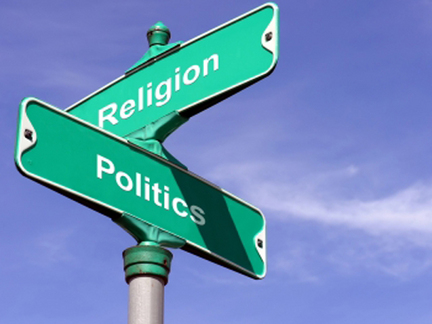 The orthodontist’s new office has a waiting room tricked out with video games—even a genuine old tabletop Mrs. Pac-Man. Grace and I were racing cars—and she was winning by more than a lap—when the woman in purple scrubs called her name.
“Hey Grace,” she drawled, as Grace approached her. She had frosty blond hair and friendly blue eyes, and cool running shoes under those purple scrubs, rocking the hip-grandma look. She swung her arm in a wide come-on wave and said, “You’re coming too, Mom and Dad.”
Later, when Gracie’s mother complimented her on how easy she makes her job look, she said, “I’ve been doing this for forty-five years.” She joked and teased in just the right ways to put Grace at ease as she lay back and opened her mouth for the light stretching on its long arm toward her.
After the orthodontist examined her and discussed the braces—and oral surgery—our hip grandma was back with the pricing sheet. She was just as good at this part, had the numbers written neatly, the math done, clear and simple. She said, “You have good insurance. Insurance usually doesn’t cover this much.”
Gracie’s mother and I both said this was great news, good to hear.
Then she added, “And they never will again now, because of Obamacare.” As she emphasized the O word, her pretty smile curled into a crisp sneer. Then just as quickly, it was gone and she had moved on to the next line of numbers.
I was not surprised by the political interjection. Nor was I surprised when, describing a new doctor on staff, she said, “We are so blessed to have him.” I was on the conservative side of town. On the other side of town, we would have been just as likely to hear a comment from the opposite side of the Affordable Care Act controversy—just as opinionated, and just as inappropriate for the circumstances.
My town has two distinct personalities: one side is die-hard right wing conservative and the other side is just as staunchly on the left. I have watched these two sides do battle in a bumper sticker war. The Darwin fish (an ichthus with feet) popped up to counter the Jesus fish; another ichthus came along with the Jesus fish swallowing the Darwin fish food-chain style. Slogans are volleyed back and forth: equal rights for unborn women, and keep your theology off my biology; God bless America, and God bless the whole world, no exceptions; marriage God’s design (a silhouette of a man, a plus sign, and a silhouette of a woman), and the blue and yellow equal sign.
As I teach on one side of town and then the other, I often find myself in the company of conservative Christians who cannot fathom how someone calling herself Christian could be liberal, and hours later in the company of liberals who boggle over how someone claiming to follow Jesus could be conservative. Over the past several years, I have watched these responses turn from wonder to animosity. Wherever you fall on the spectrum, surely you agree that the increasing polarization is troubling.
In his book The Righteous Mind: Why Good People Are Divided by Politics and Religion, Jonathan Haidt shares a wealth of research on this issue. He uses the word righteous not with its current connotations of religion and judgmentalism, but from the original “just, upright, virtuous.” As ugly as the rhetoric is becoming, it is a fact that many on both sides are doing what they sincerely believe to be upright and virtuous.
Haidt begins with the question, “How can honest and sincere people come to opposite conclusions?” His research maps out the moral foundation of politics, which he places in six basic categories: care/harm, fairness/cheating, loyalty/betrayal, authority/subversion, sanctity/degradation, liberty/oppression. What he discovers is that consistently liberals have a three-foundation morality (care, fairness, liberty) while conservatives have a six-foundation morality (care, fairness, loyalty, authority, sanctity, liberty).
This leads to competing grand narratives. While liberals tell a story of progress toward a more caring and fair society, conservatives tell a story of defending moral foundations against forces that ever work to erode them. These appear to be—and in the realm of politics are—opposing narratives.
The truth is however that both sides make legitimate and correct claims. Our society operates within what Haidt calls a “moral exoskeleton,” a set of values that makes a society possible. Liberals rightly claim this moral exoskeleton is imperfect, needs fixing. Conservatives rightly maintain that it will not do to bring the whole thing crashing down. “You can’t help the bees by destroying the hive.”
Haidt offers a couple of suggestions for reaching a more civil politics, which might or might not work, but does not spend much time on them. His purpose for the book is simply to explain how good people can reach such differing opinions about important issues.
Could it be that the first necessary step is to admit that, whatever side you are on, you can get nowhere without faith that the other side is also “composed of good people who have something important to say”? Is it naive to believe it is possible?
Vic Sizemore earned his MFA in fiction from Seattle Pacific University in 2009. His short stories are published or forthcoming in StoryQuarterly, Southern Humanities Review, Connecticut Review, Portland Review, Blue Mesa Review, Sou’wester, Silk Road Review, Atticus Review, PANK Magazine Fiction Fix, Vol.1 Brooklyn, Conclave, and elsewhere. Excerpts from his novel The Calling are published in Connecticut Review, Portland Review, Prick of the Spindle, Burrow Press Review, Rock & Sling, and Relief. His fiction has won the New Millennium Writings Award for Fiction, and been nominated for Best American Nonrequired Reading and a Pushcart Prize. You can find Vic athttp://vicsizemore.wordpress.com/.
Previous Post

August 7, 2014
Aesop’s Fables Are Always in Fashion
Next Post
August 11, 2014 Escape from the Holy Land, Part 1
Browse Our Archives
Select a Category A. G. Harmon Alissa Wilkinson Allison Backous Art Authors Brad Fruhauff Bradford Winters Bryan Bliss Caroline Langston Chad Thomas Johnston Chris Hoke Christiana N. Peterson Culture D.G. Myers D.L. Mayfield Daniel Bowman Jr. David Griffith Elizabeth Duffy Faith Film Greg Wolfe Guest Contributor Interview Jan Vallone Jeffrey Overstreet Jessica Eddings-Roeser Jessica Mesman Griffith Kelly Foster Lindsey Crittenden Morgan Meis music Natalie Vestin Nick Olson Peggy Rosenthal Personal Reflection Poetry Friday Reflection Relationships Review Richard Chess Richard Cole Sara Zarr Shannon Huffman Polson Sonya Bilocerkowycz Tania Runyan Tony Woodlief Topical Categories Uncategorized Vic Sizemore Writing
Select a Month October 2018 September 2018 August 2018 July 2018 June 2018 May 2018 April 2018 March 2018 February 2018 January 2018 December 2017 November 2017 October 2017 September 2017 August 2017 July 2017 June 2017 May 2017 April 2017 March 2017 February 2017 January 2017 December 2016 November 2016 October 2016 September 2016 August 2016 July 2016 June 2016 May 2016 April 2016 March 2016 February 2016 January 2016 December 2015 November 2015 October 2015 September 2015 August 2015 July 2015 June 2015 May 2015 April 2015 March 2015 February 2015 January 2015 December 2014 November 2014 October 2014 September 2014 August 2014 July 2014 June 2014 May 2014 April 2014 March 2014 February 2014 January 2014 December 2013 November 2013 October 2013 September 2013 August 2013 July 2013 June 2013 May 2013 April 2013 March 2013 February 2013 January 2013 December 2012 November 2012 October 2012 September 2012 August 2012 July 2012 June 2012 May 2012 February 2008
Follow Us!
TAKE THE
Religious Wisdom Quiz
What was the name of the man who suffered great loss but remained faithful to God?
Select your answer to see how you score.
Noah Job Abraham Elijah
Related posts from Good Letters



Can a Racist Drive a Prius? Stereotypes and...

TRENDING AT PATHEOS Catholic

Rejecting Doom: Christian Hope And Human Action
Christianity is a religion of hope. We are to have hope and...

It’s What Comes From Within Which Matters
One of the most difficult things for us to understand is why...

Why I Choose the Eucharist Over the Sermon
Choose the Eucharist, Not the Sermon What are we supposed to get...

5 Design Elements Found in Spiritually Rooted Homes
Putting Spirituality Into Home Decor Our homes are more than our living...

Credo: A Story of God Told with the...
About 10 years ago, I began to imagine a personal "Credo" that...

The Anatomy of Divine Revelation in Catholic Thought
The claim that God has made Himself known to human beings is...
view all Catholic blogs
Ad-Free & Subscriber Log-In Subscription Support
- About Us
- 2026 Calendar
- Videos
- Podcasts
- Library of World Religions
- Faith In Media Tracker
- Advertise With Us
- Write for Us
- Privacy Policy
- Terms of Service
- Do Not Sell My Data
- Contact Us
- Radiant Digital
- Manage Newsletter Subscriptions
- Unsubscribe From Notifications
- Sitemap
Copyright 2008-2026, Patheos. All rights reserved.
Subscription Support Ad-Free & Subscriber Log-In
Follow Patheos