
BuddhistCatholicContemplativeEvangelicalGeneral ChristianHinduJewishLatter-day SaintMuslimNew VisionsProgressive Christian
Beliefs
- Buddhist
- Catholic
- Contemplative
- Evangelical
- General Christian
- Hindu
- Jewish
- Latter-day Saint
- More Voices
- Muslim
- New Visions
- Pagan
- Progressive Christian
Topics
- Religion News
- Food and Religion
- Sports and Religion
- Religious Art
- Religious Music and Entertainment
- Religious Events
- History and Religion
- Style and Religion
- Politics and Religion
- Women in Religion
- Recreation Outdoors and Religion
- Business Finance and Religion
- Careers Workplace and Religion
- Education and Religion
- Family Parenting and Religion
- Health Fitness and Religion
- Home and Religion
- Relationships and Religion
- Technology and Religion
- Travel and Religion
Columnists
- Buddhist Columnists
- Business Finance and Religion Columnists
- Careers Workplace and Religion Columnists
- Catholic Columnists
- Contemplative Columnists
- Education and Religion Columnists
- Evangelists Columnists
- Family Parenting and Religion Columnists
- General Christian Columnists
- Health Fitness and Religion Columnists
- Hindu Columnists
- History and Religion Columnists
- Home and Religion Columnists
- Jewish Columnists
- More Voices Columnists
- Latter Day Columnists
- Muslim Columnists
- New Visions Columnists
- Nonreligious Columnists
- Pagan Columnists
- Politics and Religion Columnists
- Progressive Columnists
- Recreation Outdoors and Religion Columnists
- Relationships and Religion Columnists
- Religion News Columnists
- Religious Art Columnists
- Religious Events Columnists
- Religious Music and Entertainment Columnists
- Sports and Religion Columnists
- Style and Religion Columnists
- Technology and Religion Columnists
- Travel and Religion Columnists
- Women in Religion Columnists
Resource Library
- 2026 Calendar
- Library of World Religions
- The 100 Most Holy Places on Earth
- Patheos Answers
- Podcasts
- Videos
- Faith Leaders Database
- Anglican Episcopalian
- Bahai
- Baptist
- Buddhism
- Christianity
- Confucianism
- Eastern Orthodoxy
- Hinduism
- Holiness and Pentecostal
- ISKCON
- Islam
- Judaism
- Lutheran
- Methodist
- The Church of Jesus Christ of Latter-day Saints
- New Age
- Paganism
- Presbytarian and Reformed
- Protestantism
- Religion Behind the Scenes
- Roman Catholic
- Scientology
- Shia Islam
- Sikhism
- Sufism
- Sunni Islam
- Taoism
- Zen
- See all religions
Research Tools
 Ad-Free & Subscriber Log-In Subscription Support
Ad-Free & Subscriber Log-In Subscription Support
Follow Patheos 

- Trending:
- Forgiveness
- |
- Marriage
- |
- Consciousness
- |
- Death Penalty
- |
- Election
- |
- Halloween
 Good Letters
-
Contributors
- Home
- Catholic
- Lessons of The Giver
Lessons of The Giver
Last updated on: September 26, 2014 at 3:45 pm by A. G. Harmon
Lessons of The Giver 2014-09-26T15:45:46-07:00 A. G. Harmon
Patheos Explore the world's faith through different perspectives on religion and spirituality! Patheos has the views of the prevalent religions and spiritualities of the world.
M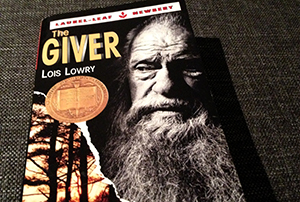 emory, of both the best and the worst, is central to guidance. Without it, we forego paths that have led to prosperity, take paths that have led to ruin.
Further, memory is extremely personal, while at the same time supremely collective. We all have our own particular catalog of recollections, which we consult, as need be. But we are all also part of a greater story, and our lives intersect with each other in such complex and dangerous ways that the shared memory of what we have been to each other, and done to each other, must be sounded to direct how we are to live with each other. This we call history, and its caretaking is a solemn affair.
In Lois Lowry’s classic young adult novel, The Giver, brought to the screen August 15 in a very fine film version (with Jeff Bridges, Meryl Streep, and Brenton Thwaites), memory is not allowed to the individual members of the state. It is the repository of only one, who retains the past in case it’s ever needed. As he ages, he must pass—“give”—his storehouse to another.
The reason for this state of affairs is that in hopes of ridding the world of misery, the society has decided simply to stop remembering it altogether. That can only be accomplished by stopping all that would bring misery to be. The implication is that the world as we know it consists of highs and lows, peaks and valleys, heavens and hells. As such, it is a world of chance—one in which we have the power to make paradise or perdition. That is what a world is.
In defiance of that fact, in The Giver, the choice has been made to end all choice. For the argument goes that when the individual is left to his own devices—ignorant, greedy, lustful, lazy, wrath-prone wretch that he is—he will most often choose wrongly. Better to parcel out what he really needs—what he isn’t smart enough to know he does.
This will necessarily require a certain amount of surrender. If you take away the bottom, you’re going to have to take away the top. To end agony, you must also end ecstasy. The human condition is such that the possibility of the good is dependent upon the risk of the bad; the dimensions of life only rise into fullness when all things are potentialities.
In Jacques Barzun’s From Dawn to Decadence, he writes about this; the repeated historical impulse to achieve “sameness,” the elimination of degrees. It is the “leveling instinct,” which would pull up the lowly by way of pulling down the high.
What drives this impulse?—the idea that misery, which we dread, is a consequence of the conflict over differences. If all is equal, down will go sickness, crime, poverty, loneliness. So rules are made against them; committees, formed; initiatives, funded. Overseers—deputized, empowered—craft strategies to bring it all about.
But that means that individuality must go, and initiative, and competition—because they only cause conflict. And you have to take away risk and profit because such possibilities allow for loss and devastation. Along the same lines, the best way to stop envy is to sand away beauty; the most thorough means to end sadness is by way of ending its opposite, joy. One is not sad if he has no concept of bliss.
Now, these things can only be experienced in particular manifestations of the lived world—through music, poetry, art, love-making, friendship, family. Consequently, these realities must be modified—clipped in some way, trimmed so that they actualize the good of all. In the course of so doing, they become unrecognizable.
Further, not everyone can enjoy what is actualized. In a finite world, only so much can go around. So the unfit, the surplus, must give way to those deemed worthy, according to the overseer’s lights. It is ironic, that the age-old drive for egalitarianism ends in the persecution of the truly low—those who “drain” resources.
Like others before her, Lowry knows that the way to control what is felt is to control how it is talked about. In The Giver, death penalties, infanticide, and euthanasia are called “release.” Of course, words lose meaning when there is no contrast. If we eliminate degrees, we begin to lose the concepts of heat and cold, and finally, through disuse, the ability to distinguish them. For what is there to feel in such a place?
As reassurance, the state stresses that this is all part of the bargain. Fear is being eliminated, after all—the Benthamite “Leviathan,” vanquished.
It is all very tempting; it is certainly the most persuasive argument politically: “Choose me,” comfort the overseers, “and I will eliminate all that snarls your name from the shadows, all that claws at your door, that drives you from sleep in screams. Give me your freedom, and I will give you your peace.”
The problem, as the movie shows, is that such a thing cannot be achieved in a world that allows for color, or emotion, or ties that permit anything beyond a state-sanctioned level of “enjoyment.” Certainly not love. But then, enjoyment is not love.
The lesson of The Giver is that while the individual man often chooses wrongly, he is no man at all if he cannot choose, and it is no world at all if the hazard of both victory and defeat are not possibilities. The solution is for each man to choose better, not for a group of men to eliminate the option—not even with the best of intentions.
When they try, they only end up enforcing, with ruthless, monstrous precision, an ideal state that defies any semblance of what an organic polity is meant to be. Without freedom, there is no meaning, and without meaning, there is no point. Call it what they will, it is not a world; it is not a life; they are not men.
A.G. Harmon teaches Shakespeare, Law and Literature, Jurisprudence, and Writing at The Catholic University of America in Washington, D.C. His novel, *A House All Stilled,*won the 2001 Peter Taylor Prize for the Novel.
Previous Post

August 25, 2014
We Who Are Left Behind
Next Post
August 27, 2014 Your Life Doesn't Mean What You Think It Means
Browse Our Archives
Select a Category A. G. Harmon Alissa Wilkinson Allison Backous Art Authors Brad Fruhauff Bradford Winters Bryan Bliss Caroline Langston Chad Thomas Johnston Chris Hoke Christiana N. Peterson Culture D.G. Myers D.L. Mayfield Daniel Bowman Jr. David Griffith Elizabeth Duffy Faith Film Greg Wolfe Guest Contributor Interview Jan Vallone Jeffrey Overstreet Jessica Eddings-Roeser Jessica Mesman Griffith Kelly Foster Lindsey Crittenden Morgan Meis music Natalie Vestin Nick Olson Peggy Rosenthal Personal Reflection Poetry Friday Reflection Relationships Review Richard Chess Richard Cole Sara Zarr Shannon Huffman Polson Sonya Bilocerkowycz Tania Runyan Tony Woodlief Topical Categories Uncategorized Vic Sizemore Writing
Select a Month October 2018 September 2018 August 2018 July 2018 June 2018 May 2018 April 2018 March 2018 February 2018 January 2018 December 2017 November 2017 October 2017 September 2017 August 2017 July 2017 June 2017 May 2017 April 2017 March 2017 February 2017 January 2017 December 2016 November 2016 October 2016 September 2016 August 2016 July 2016 June 2016 May 2016 April 2016 March 2016 February 2016 January 2016 December 2015 November 2015 October 2015 September 2015 August 2015 July 2015 June 2015 May 2015 April 2015 March 2015 February 2015 January 2015 December 2014 November 2014 October 2014 September 2014 August 2014 July 2014 June 2014 May 2014 April 2014 March 2014 February 2014 January 2014 December 2013 November 2013 October 2013 September 2013 August 2013 July 2013 June 2013 May 2013 April 2013 March 2013 February 2013 January 2013 December 2012 November 2012 October 2012 September 2012 August 2012 July 2012 June 2012 May 2012 February 2008
Follow Us!
TAKE THE
Religious Wisdom Quiz
What did Jesus heal on a man lowered through a roof in Capernaum?
Select your answer to see how you score.
Dumbness Paralysis Blindness Leprosy
Related posts from Good Letters

On Writing Odes: Taking Time to Celebrate


A Conversation with Barbara Brown Taylor

Taking Our Chances with Choice
TRENDING AT PATHEOS Catholic

Rejecting Doom: Christian Hope And Human Action
Christianity is a religion of hope. We are to have hope and...

It’s What Comes From Within Which Matters
One of the most difficult things for us to understand is why...

Why I Choose the Eucharist Over the Sermon
Choose the Eucharist, Not the Sermon What are we supposed to get...

5 Design Elements Found in Spiritually Rooted Homes
Putting Spirituality Into Home Decor Our homes are more than our living...

Credo: A Story of God Told with the...
About 10 years ago, I began to imagine a personal "Credo" that...

The Anatomy of Divine Revelation in Catholic Thought
The claim that God has made Himself known to human beings is...
view all Catholic blogs
Ad-Free & Subscriber Log-In Subscription Support
- About Us
- 2026 Calendar
- Videos
- Podcasts
- Library of World Religions
- Faith In Media Tracker
- Advertise With Us
- Write for Us
- Privacy Policy
- Terms of Service
- Do Not Sell My Data
- Contact Us
- Radiant Digital
- Manage Newsletter Subscriptions
- Unsubscribe From Notifications
- Sitemap
Copyright 2008-2026, Patheos. All rights reserved.
Subscription Support Ad-Free & Subscriber Log-In
Follow Patheos