
BuddhistCatholicContemplativeEvangelicalGeneral ChristianHinduJewishLatter-day SaintMuslimNew VisionsProgressive Christian
Beliefs
- Buddhist
- Catholic
- Contemplative
- Evangelical
- General Christian
- Hindu
- Jewish
- Latter-day Saint
- More Voices
- Muslim
- New Visions
- Pagan
- Progressive Christian
Topics
- Religion News
- Food and Religion
- Sports and Religion
- Religious Art
- Religious Music and Entertainment
- Religious Events
- History and Religion
- Style and Religion
- Politics and Religion
- Women in Religion
- Recreation Outdoors and Religion
- Business Finance and Religion
- Careers Workplace and Religion
- Education and Religion
- Family Parenting and Religion
- Health Fitness and Religion
- Home and Religion
- Relationships and Religion
- Technology and Religion
- Travel and Religion
Columnists
- Buddhist Columnists
- Business Finance and Religion Columnists
- Careers Workplace and Religion Columnists
- Catholic Columnists
- Contemplative Columnists
- Education and Religion Columnists
- Evangelists Columnists
- Family Parenting and Religion Columnists
- General Christian Columnists
- Health Fitness and Religion Columnists
- Hindu Columnists
- History and Religion Columnists
- Home and Religion Columnists
- Jewish Columnists
- More Voices Columnists
- Latter Day Columnists
- Muslim Columnists
- New Visions Columnists
- Nonreligious Columnists
- Pagan Columnists
- Politics and Religion Columnists
- Progressive Columnists
- Recreation Outdoors and Religion Columnists
- Relationships and Religion Columnists
- Religion News Columnists
- Religious Art Columnists
- Religious Events Columnists
- Religious Music and Entertainment Columnists
- Sports and Religion Columnists
- Style and Religion Columnists
- Technology and Religion Columnists
- Travel and Religion Columnists
- Women in Religion Columnists
Resource Library
- 2026 Calendar
- Library of World Religions
- The 100 Most Holy Places on Earth
- Patheos Answers
- Podcasts
- Videos
- Faith Leaders Database
- Anglican Episcopalian
- Bahai
- Baptist
- Buddhism
- Christianity
- Confucianism
- Eastern Orthodoxy
- Hinduism
- Holiness and Pentecostal
- ISKCON
- Islam
- Judaism
- Lutheran
- Methodist
- The Church of Jesus Christ of Latter-day Saints
- New Age
- Paganism
- Presbytarian and Reformed
- Protestantism
- Religion Behind the Scenes
- Roman Catholic
- Scientology
- Shia Islam
- Sikhism
- Sufism
- Sunni Islam
- Taoism
- Zen
- See all religions
Research Tools
 Ad-Free & Subscriber Log-In Subscription Support
Follow Patheos 

- Trending:
- Advent
- |
- Forgiveness
- |
- Thanksgiving
- |
- Election
- |
- Seasonal Holidays
- |
- Marriage
 Good Letters
-
Contributors
- Home
- Catholic
- He Fits Right In: Our Story of Open Adoption
He Fits Right In: Our Story of Open Adoption
Last updated on: August 6, 2014 at 7:05 am by Tania Runyan
He Fits Right In: Our Story of Open Adoption 2014-08-06T07:05:01-07:00 Tania Runyan
Patheos Explore the world's faith through different perspectives on religion and spirituality! Patheos has the views of the prevalent religions and spiritualities of the world.
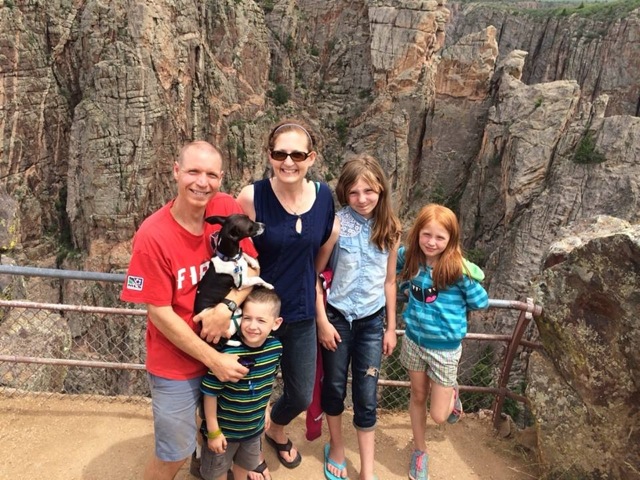 I’ve tried to stop policing adoption language, no matter how much phrases like “real mom,” “put up for adoption,” and “kids of your own” make me flinch. Before I entered the world of adoption (and not even the cross-cultural or international variety, which invite their own plethora of zingers), I didn’t understand the negative emotional power of these phrases. Such language virtually never originates from a place of disdain, however, but from a genuine lack of understanding.
We gave birth to two daughters who are now eleven and nine. We adopted Samuel, now six, when he was a newborn. One of the most common comments we receive goes something like this:
“He looks just like you guys! He fits in so well, you can’t even tell he’s adopted.”
The remark is always meant as a compliment, of course, and I try to accept it as such. While I believe Samuel looks nothing like us—he is much cuter than I could ever imagine being—I appreciate the affirmation of our family, that Samuel is indeed a “real” Runyan. However, the “you can’t even tell” piece of the comment evidences our culture’s deep-seated belief that adoption is somehow lesser, shameful, or even deserving of secrecy.
Samuel has known his story for as long as he’s been capable. We tell him he was born in Pekin, a town a few hours south of us, to Hannah, who was sixteen at the time. We tell him she loved him very much—and still does— but wanted him to live with a mommy and daddy. Once Samuel understands the birds and the bees, we will be able to explain the role of the birth father as well. For now, he knows he grew in Hannah’s tummy, not mine, but is not ready to comprehend how he got there.
Samuel keeps a photo album, just like his sisters, that celebrates the first days of his life. The pictures of everyone holding him in the hospital—me, my husband, my husband’s sisters, Hannah, the birth father, and the birth grandparents—tell his story. We continue to see Hannah and her parents several times a year. We’ve taken trips, gone to church, and celebrated holidays together. The biological grandparents have considered our daughters to be their grandchildren from the start.
Many people believe that open adoption is a form of co-parenting that confuses the child. In fact, while we were awaiting Samuel’s birth, a friend exclaimed, “He’s gonna know his birth mom? Weird. No thanks.”
It’s curious that many people who claim to be pro-life believe that a birth mother should carry a child to term then immediately erase all connections. They also want to ignore the research that overwhelmingly supports the benefits of open adoption to the child. Isn’t this the life we claim we want to protect?
There has never been any question that we are Samuel’s parents. After first meeting us at seven months pregnant, Hannah told her mom, “He kicked a lot when Tania talked. Do you think he knows she’s going to be his mommy?”
We took him home at two days old to feed, clothe, and diaper him. He lives in our house, hangs his artwork on the fridge, and receives the expected hugs and timeouts. He calls me Mom and my husband Dad because we are. He calls “Hanny” (his name for Hannah) his birth mom because she is. The belief that we must earn true parenthood by ignoring Samuel’s roots or, alternatively, consider ourselves stand-in parents for the “real” ones is a false dichotomy.
I’m not going to pretend that every open adoption goes as smoothly and sweetly as ours. Visiting biological parents can be painful, awkward, and difficult. Sometimes the birth parents are uninterested, addicted to drugs, or focused on other children. However, we owe our children, when reasonable to do so, the opportunity to learn their stories before reaching adulthood. And if we can bring them in relationship with their biological roots in a loving, directed manner, they may not need to conduct a painful, nearly inevitable, search later in life.
Angie Johnston, adult adoptee and mother, writes the following in her article “Why Adopted Children Need to Know Their Stories,” in Lifelines, the magazine published by Bethany Christian Services:
“When we openly talk with our children about their stories—however good or bad—it connects them with their existences. When we parents are unafraid of their stories we honor children’s existences. We say to them, “You are real. You are here. You exist.’”
This is what is real about Samuel.
He looks like both birth parents, two dark-haired, blue-eyed beauties. A lot. His eyes crinkle to the point of disappearing when he smiles, just like his birth father’s. He also has his birth father’s quirky sense of humor and ability to raise one eyebrow to the moon. Like Hannah, Samuel makes friends everywhere he goes, from Target to the doctor’s waiting room, but requires his space to recharge. He also exhibits her natural dance moves and attraction to funky fashion choices. The power of DNA extends to the most surprising of details.
This is also real about Samuel.
He lies on the couch—smushed between the dog and his two sisters—as we read stories for hours. He hikes through the mountains with us on summer road trips and splashes in the waves with his cousins. He experiments with recipes in the kitchen while employing all manner of sardonic Runyanisms. The power of family extends to every moment of his life.
Often when Hannah visits, she will take some time to tuck Samuel in. I will hear them reading, laughing, and singing together upstairs. The worst thing? A little boy gets additional hugs and attention from someone who cares about him. A young woman receives the reassurance that the baby she gave birth to six years ago is cherished and safe.
Love always fits right in. You can tell.
Tania Runyan is the author of the poetry collections Second Sky (Cascade Poiema Series), A Thousand Vessels, Simple Weight, and Delicious Air, which was awarded Book of the Year by the Conference on Christianity and Literature in 2007. Her book How to Read a Poem, an instructional guide based on Billy Collins’s “Introduction to Poetry,” was recently released by T.S. Poetry Press. Her poems have appeared in many publications, including Poetry, Image, Books & Culture, Harvard Divinity Bulletin, The Christian Century, Atlanta Review, Indiana Review, and the anthology In a Fine Frenzy: Poets Respond to Shakespeare. Tania was awarded an NEA Literature Fellowship in 2011. She tutors high school students and edits for Every Day Poems and Relief.
Image used: The Runyan Family, provided by Tania Runyan
Previous Post

August 5, 2014
The New Truth Quashes Dissent
Next Post
August 7, 2014 Aesop’s Fables Are Always in Fashion
Browse Our Archives
Select a Category A. G. Harmon Alissa Wilkinson Allison Backous Art Authors Brad Fruhauff Bradford Winters Bryan Bliss Caroline Langston Chad Thomas Johnston Chris Hoke Christiana N. Peterson Culture D.G. Myers D.L. Mayfield Daniel Bowman Jr. David Griffith Elizabeth Duffy Faith Film Greg Wolfe Guest Contributor Interview Jan Vallone Jeffrey Overstreet Jessica Eddings-Roeser Jessica Mesman Griffith Kelly Foster Lindsey Crittenden Morgan Meis music Natalie Vestin Nick Olson Peggy Rosenthal Personal Reflection Poetry Friday Reflection Relationships Review Richard Chess Richard Cole Sara Zarr Shannon Huffman Polson Sonya Bilocerkowycz Tania Runyan Tony Woodlief Topical Categories Uncategorized Vic Sizemore Writing
Select a Month October 2018 September 2018 August 2018 July 2018 June 2018 May 2018 April 2018 March 2018 February 2018 January 2018 December 2017 November 2017 October 2017 September 2017 August 2017 July 2017 June 2017 May 2017 April 2017 March 2017 February 2017 January 2017 December 2016 November 2016 October 2016 September 2016 August 2016 July 2016 June 2016 May 2016 April 2016 March 2016 February 2016 January 2016 December 2015 November 2015 October 2015 September 2015 August 2015 July 2015 June 2015 May 2015 April 2015 March 2015 February 2015 January 2015 December 2014 November 2014 October 2014 September 2014 August 2014 July 2014 June 2014 May 2014 April 2014 March 2014 February 2014 January 2014 December 2013 November 2013 October 2013 September 2013 August 2013 July 2013 June 2013 May 2013 April 2013 March 2013 February 2013 January 2013 December 2012 November 2012 October 2012 September 2012 August 2012 July 2012 June 2012 May 2012 February 2008
Follow Us!
TAKE THE
Religious Wisdom Quiz
What empire defeated the Assyrians and took control of Israel?
Select your answer to see how you score.
Egyptian Greek Persian Babylonian
Related posts from Good Letters

On Writing Odes: Taking Time to Celebrate


TRENDING AT PATHEOS Catholic

How Discretion Guides Us Away From Extremes
Prudence is an important virtue for all of us. While we should...

Bad Survey Questions Distort Eucharistic Theology
It seems to be the newest thing: someone conducts a bad survey...

If Baptism Washes Away Sin, Why Do Catholics...
The seven sacraments stand as the foundation of Catholic ecclesial life. The...

The Power of Setting a Good Example
Remember last August when the Chicago White Sox hosted a "Pope Hat...

A Catholic Critique of Biblical Unitarianism
If the statistics are to be believed, Unitarianism is rising worldwide. Although...

How Grandma Tourism Helps Grandparents Live Their Vocation
Grandma, The New Travel Influencer What started as a nostalgia-inspired social media...
view all Catholic blogs
Ad-Free & Subscriber Log-In Subscription Support
- About Us
- 2026 Calendar
- Videos
- Podcasts
- Library of World Religions
- Faith In Media Tracker
- Advertise With Us
- Write for Us
- Privacy Policy
- Terms of Service
- Do Not Sell My Data
- Contact Us
- Radiant Digital
- Manage Newsletter Subscriptions
- Unsubscribe From Notifications
- Sitemap
Copyright 2008-2026, Patheos, part of the Radiant Digital network of media brands. All rights reserved.
Subscription Support Ad-Free & Subscriber Log-In
Follow Patheos