
BuddhistCatholicContemplativeEvangelicalGeneral ChristianHinduJewishLatter-day SaintMuslimNew VisionsProgressive Christian
Beliefs
- Buddhist
- Catholic
- Contemplative
- Evangelical
- General Christian
- Hindu
- Jewish
- Latter-day Saint
- More Voices
- Muslim
- New Visions
- Pagan
- Progressive Christian
Topics
- Religion News
- Food and Religion
- Sports and Religion
- Religious Art
- Religious Music and Entertainment
- Religious Events
- History and Religion
- Style and Religion
- Politics and Religion
- Women in Religion
- Recreation Outdoors and Religion
- Business Finance and Religion
- Careers Workplace and Religion
- Education and Religion
- Family Parenting and Religion
- Health Fitness and Religion
- Home and Religion
- Relationships and Religion
- Technology and Religion
- Travel and Religion
Columnists
- Buddhist Columnists
- Business Finance and Religion Columnists
- Careers Workplace and Religion Columnists
- Catholic Columnists
- Contemplative Columnists
- Education and Religion Columnists
- Evangelists Columnists
- Family Parenting and Religion Columnists
- General Christian Columnists
- Health Fitness and Religion Columnists
- Hindu Columnists
- History and Religion Columnists
- Home and Religion Columnists
- Jewish Columnists
- More Voices Columnists
- Latter Day Columnists
- Muslim Columnists
- New Visions Columnists
- Nonreligious Columnists
- Pagan Columnists
- Politics and Religion Columnists
- Progressive Columnists
- Recreation Outdoors and Religion Columnists
- Relationships and Religion Columnists
- Religion News Columnists
- Religious Art Columnists
- Religious Events Columnists
- Religious Music and Entertainment Columnists
- Sports and Religion Columnists
- Style and Religion Columnists
- Technology and Religion Columnists
- Travel and Religion Columnists
- Women in Religion Columnists
Resource Library
- 2026 Calendar
- Library of World Religions
- The 100 Most Holy Places on Earth
- Patheos Answers
- Podcasts
- Videos
- Faith Leaders Database
- Anglican Episcopalian
- Bahai
- Baptist
- Buddhism
- Christianity
- Confucianism
- Eastern Orthodoxy
- Hinduism
- Holiness and Pentecostal
- ISKCON
- Islam
- Judaism
- Lutheran
- Methodist
- The Church of Jesus Christ of Latter-day Saints
- New Age
- Paganism
- Presbytarian and Reformed
- Protestantism
- Religion Behind the Scenes
- Roman Catholic
- Scientology
- Shia Islam
- Sikhism
- Sufism
- Sunni Islam
- Taoism
- Zen
- See all religions
Research Tools
 Ad-Free & Subscriber Log-In Subscription Support
Ad-Free & Subscriber Log-In Subscription Support
Follow Patheos 

- Trending:
- Forgiveness
- |
- Marriage
- |
- Consciousness
- |
- Death Penalty
- |
- Election
- |
- Halloween
 Good Letters
-
Contributors
- Home
- Catholic
- The Gay Science and Nietzsche’s Prayer Rant
The Gay Science and Nietzsche’s Prayer Rant
Last updated on: July 14, 2014 at 1:00 am by Morgan Meis
The Gay Science and Nietzsche’s Prayer Rant 2014-07-11T10:04:18-07:00 Morgan Meis
Patheos Explore the world's faith through different perspectives on religion and spirituality! Patheos has the views of the prevalent religions and spiritualities of the world.
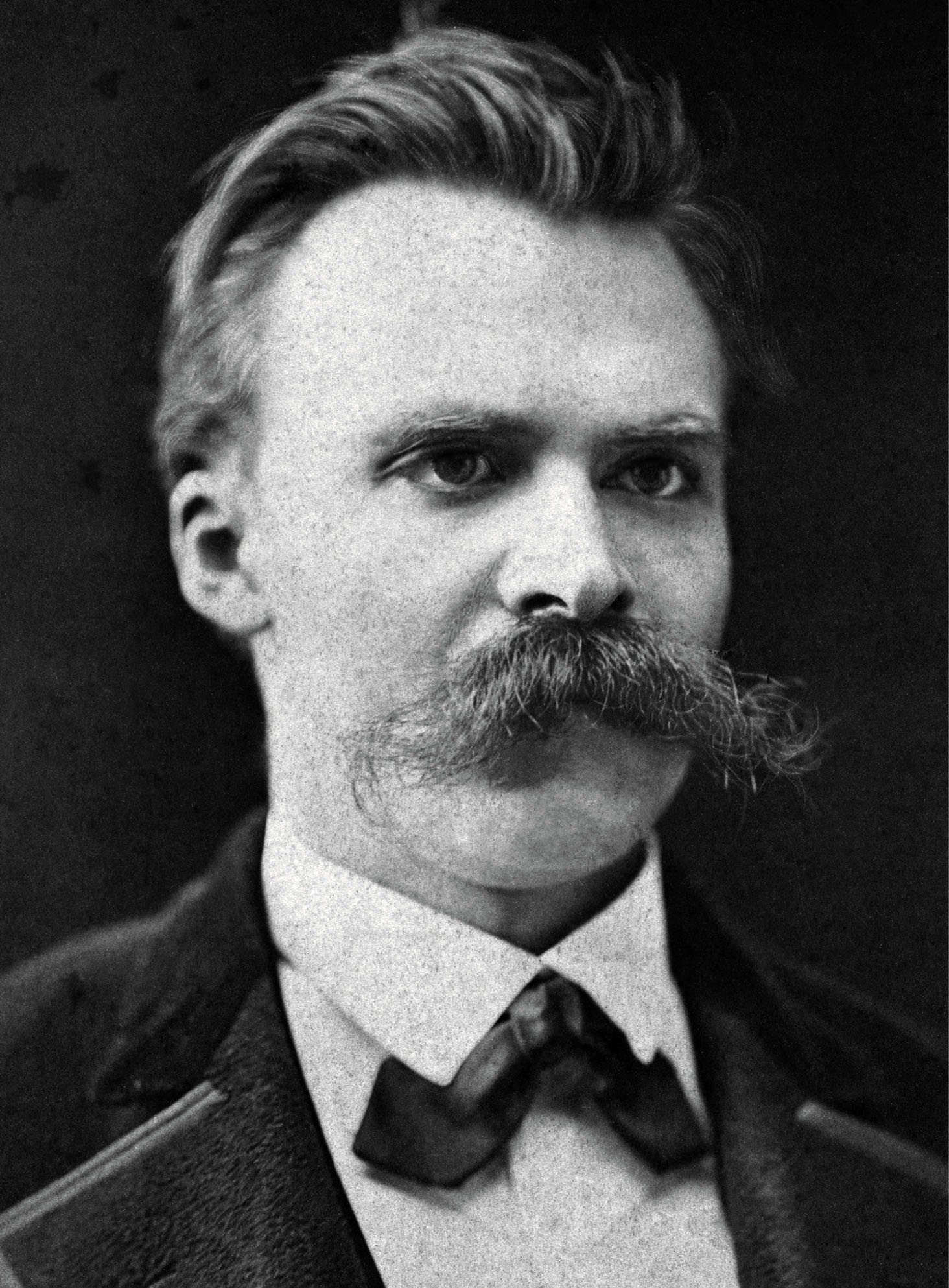 There’s a place in Nietzsche’s The Gay Science where he really lets Christians have it. Section 125 of Book III of The Gay Science is, in fact, where Nietzsche makes one of his famous pronouncements about the death of God.
Nietzsche puts the claim that God is dead into the mouth of a “madman.” “Do we smell nothing as yet of the divine decomposition?” the madman asks, “Gods, too, decompose. God is dead. God remains dead. And we have killed him.”
But the Section that struck me most recently is not about the death of God. It is, instead, Section 128 of Book III of The Gay Science. The heading of this Section is, “The Value of Prayer.”
“Prayer,” Nietzsche opens, “has been invented for those people who never really have thoughts of their own and who do not know any elevation of the soul or at least do not notice it when it occurs: what are they to do at sacred sites and in all significant situations in life, where calm and some sort of dignity are called for?”
It’s a good question. What are we to do at sacred sites and in significant situations that call for some dignity? How do we keep calm? How do we know what to do when we want to confront the sacred?
“To keep them at least from disturbing others, the wisdom of all founders of religions, small as well as great, has prescribed to them the formulas of prayers—as mechanical work for the lips that takes some time and requires some exertion of the memory as well as the same fixed posture for hands, feet, and the eyes.”
Nietzsche is having good fun at our expense here. Still, I can’t begrudge him the point. I, for one, do need formulas for prayers. I need mechanical work for my lips that takes some time. I require some exertion of my memory. I am deeply thankful to have fixed postures for my hands, feet, and eyes.
Without these prescribed things to say and do, I would, in fact, be rather at a loss in the attempt at worship and prayer. I would sit there dumbfounded. Or I would fidget and fuss. Many of us, myself included, do plenty of fidgeting during worship and prayer even with all the prescriptions.
At the end of Nietzsche’s hilarious prayer rant, he concludes, “What religion wants from the masses is no more than that they should keep still with their eyes, hands, legs, and other organs; that way they become more beautiful for a while and—look more like human beings.” You’ve got to love the italics on “keep still” and the reference to “other organs.”
The main point of prayer, as Nietzsche sees it, is to get the vast lot of pathetic humanity to sit down, shut up, and try not to fart for at least a few minutes.
Amen.
But for all the humor and contempt, could it be that Nietzsche reveals something of his own frustrated hopes and desires in this Section of The Gay Science? Prayer, says Nietzsche, was invented for those who do not know any “elevation of the soul.”
Prayer is for those pedestrian folk who “do not know what to do.” Rare souls (persons more like Nietzsche himself, presumably) do not require the mechanical work of prayer and meditation.
What a little boy Nietzsche is in these thoughts. He is like all of us who’ve wanted something elevated, something grand. Not finding anything grand in church or at sites of worship, we proceed to throw tantrums. We manifest our disappointments.
In this, I welcome Nietzsche as a fellow sufferer. He wanted something elevated and he got rote memorization and lots of kneeling and standing up. He wanted to see the face of God and was told, instead, to keep his bodily organs under control during the homily.
So Nietzsche threw a tantrum. That his tantrum consisted in a handful of books that are among the most brilliant rants against man and God ever conceived was simply our undeserved good luck.
Read Section 128 of Book III of The Gay Science again and a sympathetic fellow emerges from the bluster and bombast. He wants to know if this existence we’re faced with is really it. He hopes not. He desperately wants something grand out of human experience. He cries out against the world, “Is this grey place the sum total of our aspirations?”
He observes the people of prayer and suspects a trick. Where is the elevation of spirit here? The work of prayer seems, to Nietzsche, to be the very opposite of elevation. According to Nietzsche, the vast herd of prayerful people seem simply to have given up. They take the world as it is. They dumbly accept it as a gift.
A strange gift.
Trudging along, those of us with no elevation of soul learn the proper prayers. We learn how to regulate our actions in the prescribed manner. We learn to murmur the prescribed words. We learn to hold our hands out and to kneel and to rise and whatever else.
And we learn how to wait and we learn how to hope and we learn, finally, how to die.
Morgan Meis is the critic-at-large for The Smart Set (thesmartset.com). He has a PhD in Philosophy and has written for n+1, The Believer, Harper’s Magazine, and The Virginia Quarterly Review. He won the Whiting Award in 2013. Morgan is also an editor at 3 Quarks Daily, and a winner of a Creative Capital | Warhol Foundation Arts Writers grant. A book of Morgan’s selected essays can be found here. He can be reached at [email protected].
Previous Post

July 11, 2014
Cheers to the World Cup
Next Post
July 15, 2014 Everybody Should Write Poetry
Browse Our Archives
Select a Category A. G. Harmon Alissa Wilkinson Allison Backous Art Authors Brad Fruhauff Bradford Winters Bryan Bliss Caroline Langston Chad Thomas Johnston Chris Hoke Christiana N. Peterson Culture D.G. Myers D.L. Mayfield Daniel Bowman Jr. David Griffith Elizabeth Duffy Faith Film Greg Wolfe Guest Contributor Interview Jan Vallone Jeffrey Overstreet Jessica Eddings-Roeser Jessica Mesman Griffith Kelly Foster Lindsey Crittenden Morgan Meis music Natalie Vestin Nick Olson Peggy Rosenthal Personal Reflection Poetry Friday Reflection Relationships Review Richard Chess Richard Cole Sara Zarr Shannon Huffman Polson Sonya Bilocerkowycz Tania Runyan Tony Woodlief Topical Categories Uncategorized Vic Sizemore Writing
Select a Month October 2018 September 2018 August 2018 July 2018 June 2018 May 2018 April 2018 March 2018 February 2018 January 2018 December 2017 November 2017 October 2017 September 2017 August 2017 July 2017 June 2017 May 2017 April 2017 March 2017 February 2017 January 2017 December 2016 November 2016 October 2016 September 2016 August 2016 July 2016 June 2016 May 2016 April 2016 March 2016 February 2016 January 2016 December 2015 November 2015 October 2015 September 2015 August 2015 July 2015 June 2015 May 2015 April 2015 March 2015 February 2015 January 2015 December 2014 November 2014 October 2014 September 2014 August 2014 July 2014 June 2014 May 2014 April 2014 March 2014 February 2014 January 2014 December 2013 November 2013 October 2013 September 2013 August 2013 July 2013 June 2013 May 2013 April 2013 March 2013 February 2013 January 2013 December 2012 November 2012 October 2012 September 2012 August 2012 July 2012 June 2012 May 2012 February 2008
Follow Us!
TAKE THE
Religious Wisdom Quiz
I am a coat of many colors that sparked jealousy among brothers. What am I?
Select your answer to see how you score.
The priests robe Joseph's coat A royal garment Jacob's robe
Related posts from Good Letters

Morning in a Forgotten Neighborhood

Poetry Friday: "The Burned Butterfly"

TRENDING AT PATHEOS Catholic

The Parable Of The Sower And The Word...
One of Christ’s most famous parables is that of the sower who...

Rejecting Doom: Christian Hope And Human Action
Christianity is a religion of hope. We are to have hope and...

Why I Choose the Eucharist Over the Sermon
Choose the Eucharist, Not the Sermon What are we supposed to get...

5 Design Elements Found in Spiritually Rooted Homes
Putting Spirituality Into Home Decor Our homes are more than our living...

Credo: A Story of God Told with the...
About 10 years ago, I began to imagine a personal "Credo" that...

The Anatomy of Divine Revelation in Catholic Thought
The claim that God has made Himself known to human beings is...
view all Catholic blogs
Ad-Free & Subscriber Log-In Subscription Support
- About Us
- 2026 Calendar
- Videos
- Podcasts
- Library of World Religions
- Faith In Media Tracker
- Advertise With Us
- Write for Us
- Privacy Policy
- Terms of Service
- Do Not Sell My Data
- Contact Us
- Radiant Digital
- Manage Newsletter Subscriptions
- Unsubscribe From Notifications
- Sitemap
Copyright 2008-2026, Patheos. All rights reserved.
Subscription Support Ad-Free & Subscriber Log-In
Follow Patheos