
BuddhistCatholicContemplativeEvangelicalGeneral ChristianHinduJewishLatter-day SaintMuslimNew VisionsProgressive Christian
Beliefs
- Buddhist
- Catholic
- Contemplative
- Evangelical
- General Christian
- Hindu
- Jewish
- Latter-day Saint
- More Voices
- Muslim
- New Visions
- Pagan
- Progressive Christian
Topics
- Religion News
- Food and Religion
- Sports and Religion
- Religious Art
- Religious Music and Entertainment
- Religious Events
- History and Religion
- Style and Religion
- Politics and Religion
- Women in Religion
- Recreation Outdoors and Religion
- Business Finance and Religion
- Careers Workplace and Religion
- Education and Religion
- Family Parenting and Religion
- Health Fitness and Religion
- Home and Religion
- Relationships and Religion
- Technology and Religion
- Travel and Religion
Columnists
- Buddhist Columnists
- Business Finance and Religion Columnists
- Careers Workplace and Religion Columnists
- Catholic Columnists
- Contemplative Columnists
- Education and Religion Columnists
- Evangelists Columnists
- Family Parenting and Religion Columnists
- General Christian Columnists
- Health Fitness and Religion Columnists
- Hindu Columnists
- History and Religion Columnists
- Home and Religion Columnists
- Jewish Columnists
- More Voices Columnists
- Latter Day Columnists
- Muslim Columnists
- New Visions Columnists
- Nonreligious Columnists
- Pagan Columnists
- Politics and Religion Columnists
- Progressive Columnists
- Recreation Outdoors and Religion Columnists
- Relationships and Religion Columnists
- Religion News Columnists
- Religious Art Columnists
- Religious Events Columnists
- Religious Music and Entertainment Columnists
- Sports and Religion Columnists
- Style and Religion Columnists
- Technology and Religion Columnists
- Travel and Religion Columnists
- Women in Religion Columnists
Resource Library
- 2026 Calendar
- Library of World Religions
- The 100 Most Holy Places on Earth
- Patheos Answers
- Podcasts
- Videos
- Faith Leaders Database
- Anglican Episcopalian
- Bahai
- Baptist
- Buddhism
- Christianity
- Confucianism
- Eastern Orthodoxy
- Hinduism
- Holiness and Pentecostal
- ISKCON
- Islam
- Judaism
- Lutheran
- Methodist
- The Church of Jesus Christ of Latter-day Saints
- New Age
- Paganism
- Presbytarian and Reformed
- Protestantism
- Religion Behind the Scenes
- Roman Catholic
- Scientology
- Shia Islam
- Sikhism
- Sufism
- Sunni Islam
- Taoism
- Zen
- See all religions
Research Tools
 Ad-Free & Subscriber Log-In Subscription Support
Ad-Free & Subscriber Log-In Subscription Support
Follow Patheos 

- Trending:
- Forgiveness
- |
- Marriage
- |
- Consciousness
- |
- Death Penalty
- |
- Election
- |
- Halloween
 Good Letters
-
Contributors
- Home
- Catholic
- Lavender and Pennies
Lavender and Pennies
Last updated on: July 22, 2014 at 1:00 am by A. G. Harmon
Lavender and Pennies 2014-07-17T13:00:27-07:00 A. G. Harmon
Patheos Explore the world's faith through different perspectives on religion and spirituality! Patheos has the views of the prevalent religions and spiritualities of the world.
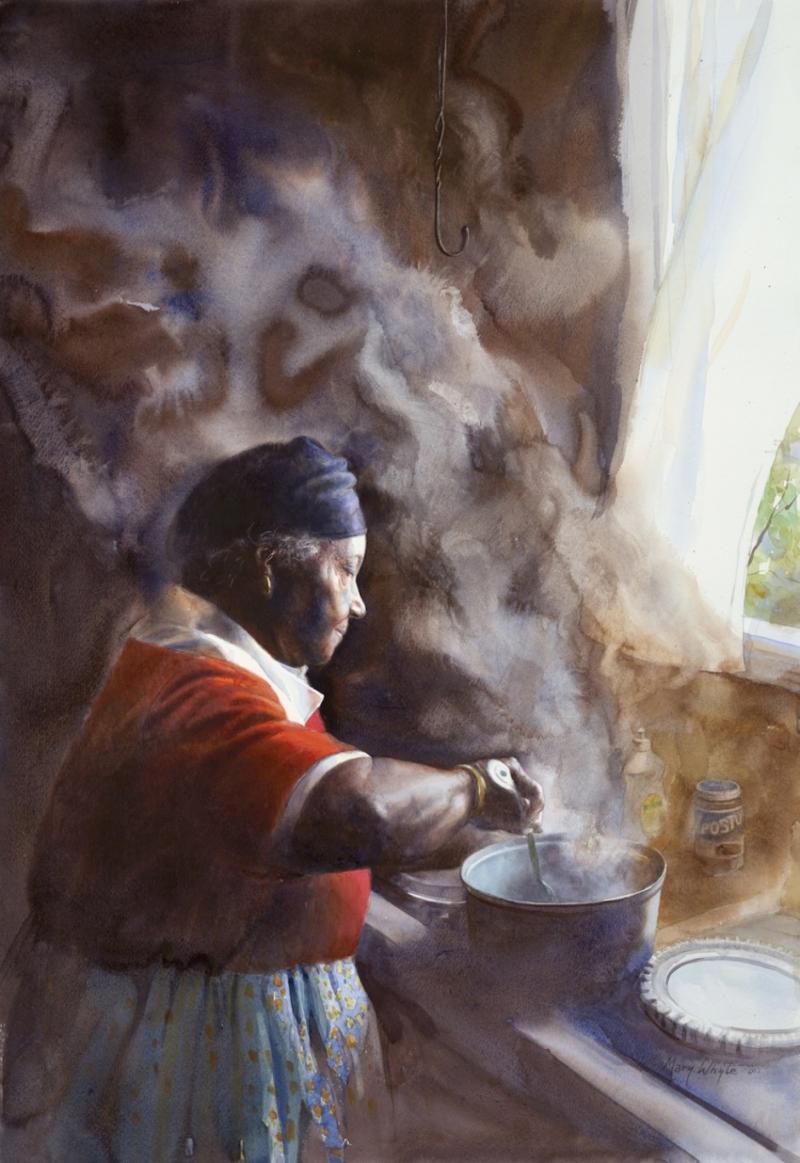 Whenever you detect the mysterious smell of lavender in a house, it means a friendly spirit is passing through one of the nearby rooms. The fragrance has to come out of nowhere, I’m told, and it has to be strong. Otherwise, your mind is just playing tricks on you.
And if you see pennies lying around on tables and windowsills, that means the spirits have “been visiting” while you were out. Again, nothing to be alarmed over; just some of the everyday goings on in a world deeply infused with things from well beyond it.
All of this knowledge comes to me by way of a lady who’s worked for my family ever since I was a boy—call her May Iris—and has lived in the very same place since she was a girl. She knows all kinds of things like that, full of a wisdom that’s being lost at a rate too clichéd to remark upon.
For instance, she can distinguish, to the day, between blackberry winter, locust winter, and dogwood winter (in the South, important parts of spring; there’s a mesmerizing story by Robert Penn Warren called “Blackberry Winter”).
May Iris knows how to cook greens, preserve fruit, fry green tomatoes, make mouthwatering salmon croquettes (pronounced by sounding the “l” rather self-consciously, as most had never heard it said different back when the only way you could buy salmon was in a can). She will make curtains, laying them out on the floor and piecing them together with an array of pins held in her mouth, and can needlepoint pillows, sew bedspreads, and patch quilts.
She can even strip tobacco and cure it the old way, hanging it in stalks from the eaves of a bleached barn, its rich golden ears dangling down in a solemn field above you, inverted, like the harvest of an old world god.
But I’m straying away from my lesson—which is about ghosts. I don’t hold to any of this stuff (though as a child I was crazy for such stories in the sunshiny daytime, then regretful of having heard them in the soul-filled night), but I do find the tales interesting. I’ve heard tons of them from women and men who’ve worked for my family through the years.
Now, mind you, this is over a long period of time—and spans farms both in Mississippi and Tennessee—and these are tales of people who lived agriculturally-based lives, working in big fields or at houses attached to them. They were good Christian people, down to the very one, but they never got schooled much, and never grew beyond the pantheistic folkways of their heritage.
Thank God for that, say I. My life has been the richer for it.
One man—call him Silas—who lived on the place, was fond of visiting the palm reader in town. Her salon had a big sign with a badly drawn hand on it, with the thumb broken in several spots (was her name Miss Isidore?). He would come back from his readings with messages from friends and relations.
One time, Silas was suspicious about a man he thought was after his wife. I became doubtful of Miss Isidore’s powers, even if Silas did not, when confirmation of the scoundrel’s identity came through a reading that he reported:
Silas: “Is it who I think it is?”
Miss Isidore: “Yes.”
Silas: “Just as I thought!”
Another lady—call her Dinah—taught me to run across water if the spirits are chasing you, as they can’t pass over it. And if your horse spooks in the same place on the road come evening, there’s a “haint” in that spot; you can’t see him, but the horse can (Balaam’s Ass, I suppose). I’ve ridden lots of spooky horses in my time, so where I’m from must be as charmed as a Tolkien forest.
When Dinah’s husband died, she was both sad and ashamed—sad because she missed him, but ashamed because she was scared he might visit her. She confessed this to me, guiltily, through her tears.
When I was down visiting recently, I was told about the lavender and pennies because there was a death in a house not too far away—the violent death of a young mother, shot by her husband, with a year-old baby still in the crib. May Iris said the folks around there had better be on the lookout. When people die that way, they can’t help but feel restless and confused.
How anybody could ever live there again was beyond her imagining; I admit, it is beyond mine too. Not because of the spirits, but because I would never stop thinking about it. I once dreamed of buying an antebellum home nearby, then found out that it had been a funeral parlor at the turn of the century. My aspirations changed.
Of course, if a house, or a road, or a town, is old enough, it will have many such associated stories—of deaths, both pleasant and natural, violent and strange. It will accumulate lovely accretions that will make your heart hurt when you remember them, but also terrible scourges that will blight the good, like a port wine stain on the face of newborn baby—or like the frightful history of a child in a crib, whose mother will forever have been murdered by her father, while she was asleep in the very next room.
I’ve wondered whether knowing too much is a bad thing. It’s like the Irishman’s dog my grandfather would talk about—he was “too smart,” which is what got him killed. Is it better to live in ignorance of certain things, to walk blithely about and around them, than it is to know and be plagued?
And yet, I guess there’s no escaping knowledge that presents itself to us, like an apple hanging from a shady tree. We always seem to do it; we always pick, and eat.
A.G. Harmon teaches Shakespeare, Law and Literature, Jurisprudence, and Writing at The Catholic University of America in Washington, D.C. His novel, A House All Stilled, won the 2001 Peter Taylor Prize for the Novel.
Image used: Sister Heyward (2001), Mary Whyte, watercolor on paper, 24 x 16 in.
Previous Post

July 21, 2014
My Own Desert (Tortoise) Father
Next Post
July 23, 2014 God, Guilt, and Aronofsky’s Noah, Part 1
Browse Our Archives
Select a Category A. G. Harmon Alissa Wilkinson Allison Backous Art Authors Brad Fruhauff Bradford Winters Bryan Bliss Caroline Langston Chad Thomas Johnston Chris Hoke Christiana N. Peterson Culture D.G. Myers D.L. Mayfield Daniel Bowman Jr. David Griffith Elizabeth Duffy Faith Film Greg Wolfe Guest Contributor Interview Jan Vallone Jeffrey Overstreet Jessica Eddings-Roeser Jessica Mesman Griffith Kelly Foster Lindsey Crittenden Morgan Meis music Natalie Vestin Nick Olson Peggy Rosenthal Personal Reflection Poetry Friday Reflection Relationships Review Richard Chess Richard Cole Sara Zarr Shannon Huffman Polson Sonya Bilocerkowycz Tania Runyan Tony Woodlief Topical Categories Uncategorized Vic Sizemore Writing
Select a Month October 2018 September 2018 August 2018 July 2018 June 2018 May 2018 April 2018 March 2018 February 2018 January 2018 December 2017 November 2017 October 2017 September 2017 August 2017 July 2017 June 2017 May 2017 April 2017 March 2017 February 2017 January 2017 December 2016 November 2016 October 2016 September 2016 August 2016 July 2016 June 2016 May 2016 April 2016 March 2016 February 2016 January 2016 December 2015 November 2015 October 2015 September 2015 August 2015 July 2015 June 2015 May 2015 April 2015 March 2015 February 2015 January 2015 December 2014 November 2014 October 2014 September 2014 August 2014 July 2014 June 2014 May 2014 April 2014 March 2014 February 2014 January 2014 December 2013 November 2013 October 2013 September 2013 August 2013 July 2013 June 2013 May 2013 April 2013 March 2013 February 2013 January 2013 December 2012 November 2012 October 2012 September 2012 August 2012 July 2012 June 2012 May 2012 February 2008
Follow Us!
TAKE THE
Religious Wisdom Quiz
What is the longest book of the Bible?
Select your answer to see how you score.
Numbers 2 Chronicles Psalms Genesis
Related posts from Good Letters



Poetry Friday: A Quick Interpretation of the Sixth...

TRENDING AT PATHEOS Catholic

Rejecting Doom: Christian Hope And Human Action
Christianity is a religion of hope. We are to have hope and...

It’s What Comes From Within Which Matters
One of the most difficult things for us to understand is why...

Why I Choose the Eucharist Over the Sermon
Choose the Eucharist, Not the Sermon What are we supposed to get...

5 Design Elements Found in Spiritually Rooted Homes
Putting Spirituality Into Home Decor Our homes are more than our living...

Credo: A Story of God Told with the...
About 10 years ago, I began to imagine a personal "Credo" that...

The Anatomy of Divine Revelation in Catholic Thought
The claim that God has made Himself known to human beings is...
view all Catholic blogs
Ad-Free & Subscriber Log-In Subscription Support
- About Us
- 2026 Calendar
- Videos
- Podcasts
- Library of World Religions
- Faith In Media Tracker
- Advertise With Us
- Write for Us
- Privacy Policy
- Terms of Service
- Do Not Sell My Data
- Contact Us
- Radiant Digital
- Manage Newsletter Subscriptions
- Unsubscribe From Notifications
- Sitemap
Copyright 2008-2026, Patheos. All rights reserved.
Subscription Support Ad-Free & Subscriber Log-In
Follow Patheos