
BuddhistCatholicContemplativeEvangelicalGeneral ChristianHinduJewishLatter-day SaintMuslimNew VisionsProgressive Christian
Beliefs
- Buddhist
- Catholic
- Contemplative
- Evangelical
- General Christian
- Hindu
- Jewish
- Latter-day Saint
- More Voices
- Muslim
- New Visions
- Pagan
- Progressive Christian
Topics
- Religion News
- Food and Religion
- Sports and Religion
- Religious Art
- Religious Music and Entertainment
- Religious Events
- History and Religion
- Style and Religion
- Politics and Religion
- Women in Religion
- Recreation Outdoors and Religion
- Business Finance and Religion
- Careers Workplace and Religion
- Education and Religion
- Family Parenting and Religion
- Health Fitness and Religion
- Home and Religion
- Relationships and Religion
- Technology and Religion
- Travel and Religion
Columnists
- Buddhist Columnists
- Business Finance and Religion Columnists
- Careers Workplace and Religion Columnists
- Catholic Columnists
- Contemplative Columnists
- Education and Religion Columnists
- Evangelists Columnists
- Family Parenting and Religion Columnists
- General Christian Columnists
- Health Fitness and Religion Columnists
- Hindu Columnists
- History and Religion Columnists
- Home and Religion Columnists
- Jewish Columnists
- More Voices Columnists
- Latter Day Columnists
- Muslim Columnists
- New Visions Columnists
- Nonreligious Columnists
- Pagan Columnists
- Politics and Religion Columnists
- Progressive Columnists
- Recreation Outdoors and Religion Columnists
- Relationships and Religion Columnists
- Religion News Columnists
- Religious Art Columnists
- Religious Events Columnists
- Religious Music and Entertainment Columnists
- Sports and Religion Columnists
- Style and Religion Columnists
- Technology and Religion Columnists
- Travel and Religion Columnists
- Women in Religion Columnists
Resource Library
- 2026 Calendar
- Library of World Religions
- The 100 Most Holy Places on Earth
- Patheos Answers
- Podcasts
- Videos
- Faith Leaders Database
- Anglican Episcopalian
- Bahai
- Baptist
- Buddhism
- Christianity
- Confucianism
- Eastern Orthodoxy
- Hinduism
- Holiness and Pentecostal
- ISKCON
- Islam
- Judaism
- Lutheran
- Methodist
- The Church of Jesus Christ of Latter-day Saints
- New Age
- Paganism
- Presbytarian and Reformed
- Protestantism
- Religion Behind the Scenes
- Roman Catholic
- Scientology
- Shia Islam
- Sikhism
- Sufism
- Sunni Islam
- Taoism
- Zen
- See all religions
Research Tools
 Ad-Free & Subscriber Log-In Subscription Support
Ad-Free & Subscriber Log-In Subscription Support
Follow Patheos 

- Trending:
- Forgiveness
- |
- Marriage
- |
- Consciousness
- |
- Death Penalty
- |
- Election
- |
- Halloween
 Good Letters
-
Contributors
- Home
- Catholic
- A Jew Prays in Venice, Part 1
A Jew Prays in Venice, Part 1
Last updated on: June 30, 2014 at 4:33 pm by Richard Chess
A Jew Prays in Venice, Part 1 2014-06-30T16:33:08-07:00 Richard Chess
Patheos Explore the world's faith through different perspectives on religion and spirituality! Patheos has the views of the prevalent religions and spiritualities of the world.
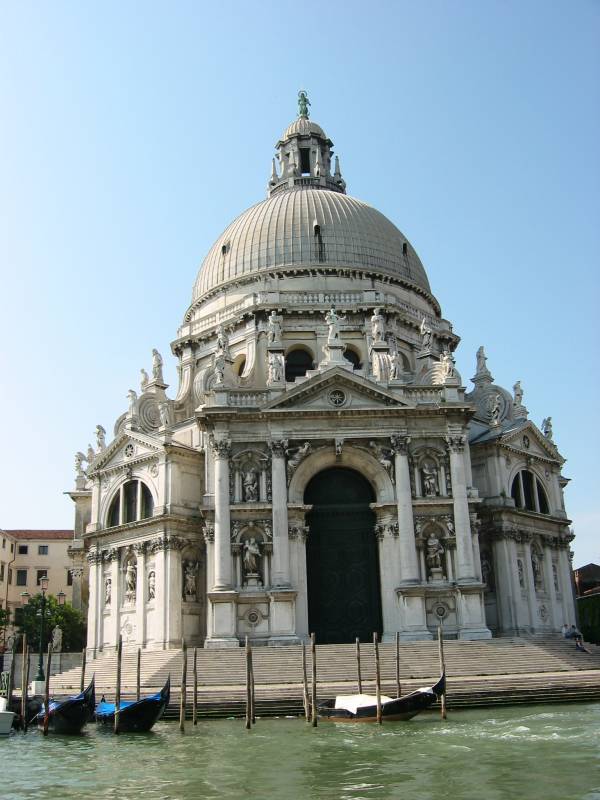 In Venice, in the Santa Maria della Salute church, in the presence of Madonna della Salute (Madonna of Health), I sang Debbie Friedman’s Mi Shebeirach, Jewish prayer for healing, quietly to myself.
Before entering the area of the church roped off for prayer only, I hesitated. Should a pretty good Jewish boy enter a spaced designated for Catholic worship?
My wife and I were near the end of our first trip to Italy. In the months leading up to the trip, I had been reading Merton’s New Seeds of Contemplation, a book I had owned for years but had never read or had read only a little of, probably in my late twenties, and had forgotten.
Grounded in his experiences as a Trappist monk and drawing on his deep interest in Buddhism and other contemplative traditions, Merton’s essays on faith, detachment, egoism, dualism, God, and related topics awakened in me an interest in and openness to Catholicism that I had never before experienced.
“We do not detach ourselves from things in order to attach ourselves to God,” Merton writes, “but rather we become detached from ourselves in order to see and use all things in and for God.”
This passage might have excited me even if I hadn’t been practicing—as a Jew—mindfulness meditation regularly for the past seven years. My teachers, two loving and wise rabbis—have stimulated my inquiry into such concepts as “self” and “God” as understood and experienced from both Jewish and Buddhist perspectives.
Nothing in this passage and so many others, including this—”The obstacle [to our union with God] is in our ‘self,’ that is to say in the tenacious need to maintain our separate, external, egotistic will”—in Merton’s New Seeds presented itself as an obstacle between my own experiences as a contemplative Jew and Merton’s as a Catholic monk.
Merton’s descriptions of contemplative experiences validated some of my own and challenged me: can I learn to see clearly the story of my “self” and, through steady, compassionate practice, let go of “the tenacious need to maintain” my “separate, external, egotistic will” and experience, if only for a moment here, a moment there, “all things in and for God”?
Though there is nothing to be found in New Seeds about the history of the church, nothing in particular about Rome, Florence, or Venice, Merton, I sensed, was as good a way as any to prepare me for Italy, an inner experience of Italy.
Laurie, who retired in the fall, devoted months to planning our trip. At the Osher Lifelong Learning Institute at UNC Asheville, she took a class on Italian Renaissance Art. After every class, I devoured her notes.
Preparing for her encounter with ancient monuments and ruins, she sat for countless hours face-to-face with an “ancient” object in our house—a nine-year-old Dell laptop computer—plying it with questions: What apartments are available for rent-by-owner on such and such days in Rome? In Florence? In Venice? Are they comfortable? Clean? Strategically located? Do they have WIFI? She scrutinized the comments section of each apartment’s listing for hidden messages.
Diligently, methodically, she planned the itineraries for our days in Rome and Florence. By Venice, she said, we’ll be tired. We’ll want to rest. We’ll take the apartment overlooking the Gulf of Venice, the apartment, as it turned out, located right at the Celestia vaporetto (waterbus) stop, in the Castello neighborhood, about as far possible from the knot of tourists in San Marco Plaza.
In Rome we walked from the Coliseum to the Jewish Ghetto and across Ponte Fabricio and Ponte Cestio to Trasteverre, and from there to the monumental statue of Giordano Bruno looming over Campo de’ Fiori, and to the view of the Spanish Steps from the room in which Keats died, and back to our modest room in the Laterano neighborhood.
We squeezed through the Vatican crowds as we followed Barbara, our guide, who began and concluded every stop on the tour with O-Kie.
In Florence, we concentrated on Francisco, our guide to the Uffizi, because we wanted to see how seeing changed: in the Ognissanti Madonna, Giotto paints Madonna and child in a well-defined, realistic space, and light and shadow on the knees and folds of the garments offer fullness, offer dimensionality, offer the human eye a representation of the human body in human space.
We padded around Brunelleschi’s paradigm-shifting cathedral dome and wandering narrow Florentine streets in search of Gastone, the restaurant recommended by Alessandro, whose apartment on Via dei Servi we were enjoying, crossing and returning over Ponte Vecchio.
My wife was right. After walking, walking, and walking, we had dutifully seen what we had dreamed of seeing. We had roamed as long as the light and our legs would allow us to roam.
We were ready for days without an itinerary. We were ready for Venice.
To be continued tomorrow.
Richard Chess is the author of three books of poetry, Tekiah, Chair in the Desert, and Third Temple. Poems of his have appeared in Telling and Remembering: A Century of American Jewish Poetry, Bearing the Mystery: Twenty Years of IMAGE, and Best Spiritual Writing 2005. He is the Roy Carroll Professor of Honors Arts and Sciences at the University of North Carolina at Asheville. He is also the director of UNC Asheville’s Center for Jewish Studies.
Previous Post

June 4, 2014
My Date with One-Eared Joe
Next Post
June 6, 2014 A Jew Prays in Venice, Part 2
Browse Our Archives
Select a Category A. G. Harmon Alissa Wilkinson Allison Backous Art Authors Brad Fruhauff Bradford Winters Bryan Bliss Caroline Langston Chad Thomas Johnston Chris Hoke Christiana N. Peterson Culture D.G. Myers D.L. Mayfield Daniel Bowman Jr. David Griffith Elizabeth Duffy Faith Film Greg Wolfe Guest Contributor Interview Jan Vallone Jeffrey Overstreet Jessica Eddings-Roeser Jessica Mesman Griffith Kelly Foster Lindsey Crittenden Morgan Meis music Natalie Vestin Nick Olson Peggy Rosenthal Personal Reflection Poetry Friday Reflection Relationships Review Richard Chess Richard Cole Sara Zarr Shannon Huffman Polson Sonya Bilocerkowycz Tania Runyan Tony Woodlief Topical Categories Uncategorized Vic Sizemore Writing
Select a Month October 2018 September 2018 August 2018 July 2018 June 2018 May 2018 April 2018 March 2018 February 2018 January 2018 December 2017 November 2017 October 2017 September 2017 August 2017 July 2017 June 2017 May 2017 April 2017 March 2017 February 2017 January 2017 December 2016 November 2016 October 2016 September 2016 August 2016 July 2016 June 2016 May 2016 April 2016 March 2016 February 2016 January 2016 December 2015 November 2015 October 2015 September 2015 August 2015 July 2015 June 2015 May 2015 April 2015 March 2015 February 2015 January 2015 December 2014 November 2014 October 2014 September 2014 August 2014 July 2014 June 2014 May 2014 April 2014 March 2014 February 2014 January 2014 December 2013 November 2013 October 2013 September 2013 August 2013 July 2013 June 2013 May 2013 April 2013 March 2013 February 2013 January 2013 December 2012 November 2012 October 2012 September 2012 August 2012 July 2012 June 2012 May 2012 February 2008
Follow Us!
TAKE THE
Religious Wisdom Quiz
Who was the first king of Judah after Israel split?
Select your answer to see how you score.
Ahab Asa Rehoboam Jeroboam
Related posts from Good Letters

A Conversation with Alicia Ostriker: Part 1

Ready or Not for the Days of Awe

TRENDING AT PATHEOS Catholic

Rejecting Doom: Christian Hope And Human Action
Christianity is a religion of hope. We are to have hope and...

It’s What Comes From Within Which Matters
One of the most difficult things for us to understand is why...

Why I Choose the Eucharist Over the Sermon
Choose the Eucharist, Not the Sermon What are we supposed to get...

5 Design Elements Found in Spiritually Rooted Homes
Putting Spirituality Into Home Decor Our homes are more than our living...

Credo: A Story of God Told with the...
About 10 years ago, I began to imagine a personal "Credo" that...

The Anatomy of Divine Revelation in Catholic Thought
The claim that God has made Himself known to human beings is...
view all Catholic blogs
Ad-Free & Subscriber Log-In Subscription Support
- About Us
- 2026 Calendar
- Videos
- Podcasts
- Library of World Religions
- Faith In Media Tracker
- Advertise With Us
- Write for Us
- Privacy Policy
- Terms of Service
- Do Not Sell My Data
- Contact Us
- Radiant Digital
- Manage Newsletter Subscriptions
- Unsubscribe From Notifications
- Sitemap
Copyright 2008-2026, Patheos. All rights reserved.
Subscription Support Ad-Free & Subscriber Log-In
Follow Patheos