
BuddhistCatholicContemplativeEvangelicalGeneral ChristianHinduJewishLatter-day SaintMuslimNew VisionsProgressive Christian
Beliefs
- Buddhist
- Catholic
- Contemplative
- Evangelical
- General Christian
- Hindu
- Jewish
- Latter-day Saint
- More Voices
- Muslim
- New Visions
- Pagan
- Progressive Christian
Topics
- Religion News
- Food and Religion
- Sports and Religion
- Religious Art
- Religious Music and Entertainment
- Religious Events
- History and Religion
- Style and Religion
- Politics and Religion
- Women in Religion
- Recreation Outdoors and Religion
- Business Finance and Religion
- Careers Workplace and Religion
- Education and Religion
- Family Parenting and Religion
- Health Fitness and Religion
- Home and Religion
- Relationships and Religion
- Technology and Religion
- Travel and Religion
Columnists
- Buddhist Columnists
- Business Finance and Religion Columnists
- Careers Workplace and Religion Columnists
- Catholic Columnists
- Contemplative Columnists
- Education and Religion Columnists
- Evangelists Columnists
- Family Parenting and Religion Columnists
- General Christian Columnists
- Health Fitness and Religion Columnists
- Hindu Columnists
- History and Religion Columnists
- Home and Religion Columnists
- Jewish Columnists
- More Voices Columnists
- Latter Day Columnists
- Muslim Columnists
- New Visions Columnists
- Nonreligious Columnists
- Pagan Columnists
- Politics and Religion Columnists
- Progressive Columnists
- Recreation Outdoors and Religion Columnists
- Relationships and Religion Columnists
- Religion News Columnists
- Religious Art Columnists
- Religious Events Columnists
- Religious Music and Entertainment Columnists
- Sports and Religion Columnists
- Style and Religion Columnists
- Technology and Religion Columnists
- Travel and Religion Columnists
- Women in Religion Columnists
Resource Library
- 2026 Calendar
- Library of World Religions
- The 100 Most Holy Places on Earth
- Patheos Answers
- Podcasts
- Videos
- Faith Leaders Database
- Anglican Episcopalian
- Bahai
- Baptist
- Buddhism
- Christianity
- Confucianism
- Eastern Orthodoxy
- Hinduism
- Holiness and Pentecostal
- ISKCON
- Islam
- Judaism
- Lutheran
- Methodist
- The Church of Jesus Christ of Latter-day Saints
- New Age
- Paganism
- Presbytarian and Reformed
- Protestantism
- Religion Behind the Scenes
- Roman Catholic
- Scientology
- Shia Islam
- Sikhism
- Sufism
- Sunni Islam
- Taoism
- Zen
- See all religions
Research Tools
 Ad-Free & Subscriber Log-In Subscription Support
Ad-Free & Subscriber Log-In Subscription Support
Follow Patheos 

- Trending:
- Forgiveness
- |
- Marriage
- |
- Consciousness
- |
- Death Penalty
- |
- Election
- |
- Halloween
 Good Letters
-
Contributors
- Home
- Catholic
- The Great iAm
The Great iAm
Last updated on: May 12, 2014 at 1:00 am by Bradford Winters
The Great iAm 2014-05-07T16:40:12-07:00 Bradford Winters
Patheos Explore the world's faith through different perspectives on religion and spirituality! Patheos has the views of the prevalent religions and spiritualities of the world.
M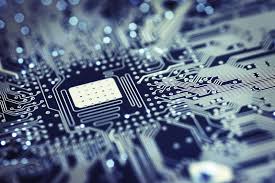 y lovely mother, God bless her, is cursed. And having just spent a weekend with her brother, I can safely claim that he’s cursed, too. Maybe “cursed” is too soft a diagnosis, as my siblings and I have often jokingly wondered if with Mom it’s actually a case of outright demonic possession: does she have a demon who attacks her facility with all things technological?
Computers, cellphones, printers and TVs—you name it. Entertainment systems and the remote controls that come with them? Don’t get me started. If it’s a demon in Mom, or one with many offspring in all her appliances, it’s one that wants to draw the line at her electric toothbrush.
Yes, there’s a generational component in play. But might even that be more about generational sin, a legacy of dysfunctionality born long ago when our mechanically challenged ancestors quickly gave up on the frustrating task of turning the family swords into plowshares? Because in lesser but definite ways I, too, have been cursed.
Long before the iPod and iPad came around, I was sold the iCan’t and iDon’t.
For years I chalked up this quality to my Luddite leanings in a cyberfrenentic world. I was among the last of my friends to adopt e-mail or a cellphone, then among the last to adopt a smartphone. I hated the constant OS updates on my laptop, happy to stick with House Cat or whatever it was called while everyone else moved on to Snow Leopard and Mountain Lion.
Then what should have been a routine exercise turned first into a nightmare, then something of an exorcism.
To make a long and fairly boring story short, I was on the phone with AT&T before a sabbatical overseas when an agent from tech “support” (in this case “abuse”) had me restore my phone to factory settings without first creating a backup. Presto! Everything was gone when the phone booted back up, with additional casualties on my laptop in the process. Thus began a downward spiral of increasingly futile proportions, with AT&T in one ear and Apple in the other, each hoping to disown the problem until a series of hand-offs at Apple left me on the line with a man of angelic dimensions fittingly named Michael.
In keeping with the self-evident title of Brett T. Robinson’s Appletopia: Media Technology and the Religious Imagination of Steve Jobs, this Michael was truly an Archangel assigned to cases like mine. As a Tier 2 Advisor at Apple, he ruled a domain that nine out of ten of our standard tech support calls never ascend to.
And make no mistake: for this Michael, the attempt at restoration and recovery of all that had been lost was nothing short of a battle in ethereal realms on his part, with secondary forces pulled in over the phone from other parts of the country. He was determined to win, much like his biblical namesake when entangled with the Prince of Persia in the Book of Daniel.
At least that’s where my mind went over the course of our hours-long call, while his simply went to the problem at hand.
But it was the perfect occasion to let my old-man Luddite die off and be replaced with a born-again technophile—or at least the fetal beginnings of one and perhaps only in theory—who has had a revelation of the fascinating parallels between the spiritual and technological realms.
Let’s start with sheer semantics, wherein analogues abound. Restore. Save. Submit. Agree. Send. The commands we give on our devices a perfect echo of the ones we are given by our Deity. Restart. Refresh. Force Quit. Return.
Hence the design of computer hardware and software based on human “wetware,” our cellular processes that model computer processing and, well, cellular communication. Watch Stephen Meyer’s DNA by Design, and whatever your beliefs or lack thereof, you will likely come away amazed to learn that the human genome operates much like the system of folders within folders on your PC, replete with self-correcting enzymes that traverse the endless sequences of DNA to repair bugs in the code.
All of which is to say that if we are made in God’s image, then computers are made in ours.
“In the beginning was the code,” Jürgen Schmidhuber, co-director of the Swiss AI lab IDSIA, famously proclaimed at a 2012 TEDx talk in which he addressed the increasingly popular belief among scientists that the universe not only operates like a computer, but in a sense is one.
More recently, the New York Times raised the same question with an article titled, “Is the Universe a Simulation?” In it author Edward Frankel summarizes the surreal hypothesis:
But one fanciful possibility is that we live in a computer simulation based on the laws of mathematics—not in what we commonly take to be the real world. According to this theory, some highly advanced computer programmer of the future has devised this simulation, and we are unknowingly part of it. Thus when we discover a mathematical truth, we are simply discovering aspects of the code that the programmer used.
Yet doesn’t the very question of such a programmer, small “p,” beg the painfully glaring question of a Programmer, capital “P” instead? I go through my doubts about the existence of God, sure; but a teenage gamer from the future playing his philosophical shoot-’em-up called Planet Earth?
If that’s conceivable, I would imagine that so is Paul’s alternative paradigm as described in his letter to the Ephesians: “For we are His workmanship, created in Christ Jesus for good works, which God prepared beforehand so that we would walk in them.”
Translate that into the vernacular of computer science, and perhaps you get a program called Free Will—but one overcome with the virus of sin.
Surely we are surrounded by so great an iCloud of witnesses.
Bradford Winters is a screenwriter/producer in television whose work has included such series as Oz, Kings, Boss, and The Americans. His poems have appeared in Sewanee Theological Review, Spoon River Poetry Review, and Georgetown Review, among other journals. He lives in Brooklyn with his wife and three children.
Previous Post

May 9, 2014
A Day Wide Enough for Wonder
Next Post
May 13, 2014 Ruin and Possibility in David Gordon Green’s Joe
Browse Our Archives
Select a Category A. G. Harmon Alissa Wilkinson Allison Backous Art Authors Brad Fruhauff Bradford Winters Bryan Bliss Caroline Langston Chad Thomas Johnston Chris Hoke Christiana N. Peterson Culture D.G. Myers D.L. Mayfield Daniel Bowman Jr. David Griffith Elizabeth Duffy Faith Film Greg Wolfe Guest Contributor Interview Jan Vallone Jeffrey Overstreet Jessica Eddings-Roeser Jessica Mesman Griffith Kelly Foster Lindsey Crittenden Morgan Meis music Natalie Vestin Nick Olson Peggy Rosenthal Personal Reflection Poetry Friday Reflection Relationships Review Richard Chess Richard Cole Sara Zarr Shannon Huffman Polson Sonya Bilocerkowycz Tania Runyan Tony Woodlief Topical Categories Uncategorized Vic Sizemore Writing
Select a Month October 2018 September 2018 August 2018 July 2018 June 2018 May 2018 April 2018 March 2018 February 2018 January 2018 December 2017 November 2017 October 2017 September 2017 August 2017 July 2017 June 2017 May 2017 April 2017 March 2017 February 2017 January 2017 December 2016 November 2016 October 2016 September 2016 August 2016 July 2016 June 2016 May 2016 April 2016 March 2016 February 2016 January 2016 December 2015 November 2015 October 2015 September 2015 August 2015 July 2015 June 2015 May 2015 April 2015 March 2015 February 2015 January 2015 December 2014 November 2014 October 2014 September 2014 August 2014 July 2014 June 2014 May 2014 April 2014 March 2014 February 2014 January 2014 December 2013 November 2013 October 2013 September 2013 August 2013 July 2013 June 2013 May 2013 April 2013 March 2013 February 2013 January 2013 December 2012 November 2012 October 2012 September 2012 August 2012 July 2012 June 2012 May 2012 February 2008
Follow Us!
TAKE THE
Religious Wisdom Quiz
Who was cast into a fiery furnace but was unharmed?
Select your answer to see how you score.
Moses, Aaron, and Joshua Daniel Shadrach, Meshach, and Abednego Elijah and Elisha
Related posts from Good Letters

The Jewish Roots of Christian Worship for Churchgoing...

Escape from the Holy Land, Part 2

Escape from the Holy Land, Part 1
TRENDING AT PATHEOS Catholic

Rejecting Doom: Christian Hope And Human Action
Christianity is a religion of hope. We are to have hope and...

It’s What Comes From Within Which Matters
One of the most difficult things for us to understand is why...

Why I Choose the Eucharist Over the Sermon
Choose the Eucharist, Not the Sermon What are we supposed to get...

5 Design Elements Found in Spiritually Rooted Homes
Putting Spirituality Into Home Decor Our homes are more than our living...

Credo: A Story of God Told with the...
About 10 years ago, I began to imagine a personal "Credo" that...

The Anatomy of Divine Revelation in Catholic Thought
The claim that God has made Himself known to human beings is...
view all Catholic blogs
Ad-Free & Subscriber Log-In Subscription Support
- About Us
- 2026 Calendar
- Videos
- Podcasts
- Library of World Religions
- Faith In Media Tracker
- Advertise With Us
- Write for Us
- Privacy Policy
- Terms of Service
- Do Not Sell My Data
- Contact Us
- Radiant Digital
- Manage Newsletter Subscriptions
- Unsubscribe From Notifications
- Sitemap
Copyright 2008-2026, Patheos. All rights reserved.
Subscription Support Ad-Free & Subscriber Log-In
Follow Patheos