
BuddhistCatholicContemplativeEvangelicalGeneral ChristianHinduJewishLatter-day SaintMuslimNew VisionsProgressive Christian
Beliefs
- Buddhist
- Catholic
- Contemplative
- Evangelical
- General Christian
- Hindu
- Jewish
- Latter-day Saint
- More Voices
- Muslim
- New Visions
- Pagan
- Progressive Christian
Topics
- Religion News
- Food and Religion
- Sports and Religion
- Religious Art
- Religious Music and Entertainment
- Religious Events
- History and Religion
- Style and Religion
- Politics and Religion
- Women in Religion
- Recreation Outdoors and Religion
- Business Finance and Religion
- Careers Workplace and Religion
- Education and Religion
- Family Parenting and Religion
- Health Fitness and Religion
- Home and Religion
- Relationships and Religion
- Technology and Religion
- Travel and Religion
Columnists
- Buddhist Columnists
- Business Finance and Religion Columnists
- Careers Workplace and Religion Columnists
- Catholic Columnists
- Contemplative Columnists
- Education and Religion Columnists
- Evangelists Columnists
- Family Parenting and Religion Columnists
- General Christian Columnists
- Health Fitness and Religion Columnists
- Hindu Columnists
- History and Religion Columnists
- Home and Religion Columnists
- Jewish Columnists
- More Voices Columnists
- Latter Day Columnists
- Muslim Columnists
- New Visions Columnists
- Nonreligious Columnists
- Pagan Columnists
- Politics and Religion Columnists
- Progressive Columnists
- Recreation Outdoors and Religion Columnists
- Relationships and Religion Columnists
- Religion News Columnists
- Religious Art Columnists
- Religious Events Columnists
- Religious Music and Entertainment Columnists
- Sports and Religion Columnists
- Style and Religion Columnists
- Technology and Religion Columnists
- Travel and Religion Columnists
- Women in Religion Columnists
Resource Library
- 2026 Calendar
- Library of World Religions
- The 100 Most Holy Places on Earth
- Patheos Answers
- Podcasts
- Videos
- Faith Leaders Database
- Anglican Episcopalian
- Bahai
- Baptist
- Buddhism
- Christianity
- Confucianism
- Eastern Orthodoxy
- Hinduism
- Holiness and Pentecostal
- ISKCON
- Islam
- Judaism
- Lutheran
- Methodist
- The Church of Jesus Christ of Latter-day Saints
- New Age
- Paganism
- Presbytarian and Reformed
- Protestantism
- Religion Behind the Scenes
- Roman Catholic
- Scientology
- Shia Islam
- Sikhism
- Sufism
- Sunni Islam
- Taoism
- Zen
- See all religions
Research Tools
 Ad-Free & Subscriber Log-In Subscription Support
Ad-Free & Subscriber Log-In Subscription Support
Follow Patheos 

- Trending:
- Forgiveness
- |
- Marriage
- |
- Consciousness
- |
- Death Penalty
- |
- Election
- |
- Halloween
 Good Letters
-
Contributors
- Home
- Catholic
- Ruin and Possibility in David Gordon Green’s Joe
Ruin and Possibility in David Gordon Green’s Joe
Last updated on: May 13, 2014 at 1:00 am by A. G. Harmon
Ruin and Possibility in David Gordon Green’s Joe 2014-05-09T15:48:14-07:00 A. G. Harmon
Patheos Explore the world's faith through different perspectives on religion and spirituality! Patheos has the views of the prevalent religions and spiritualities of the world.
H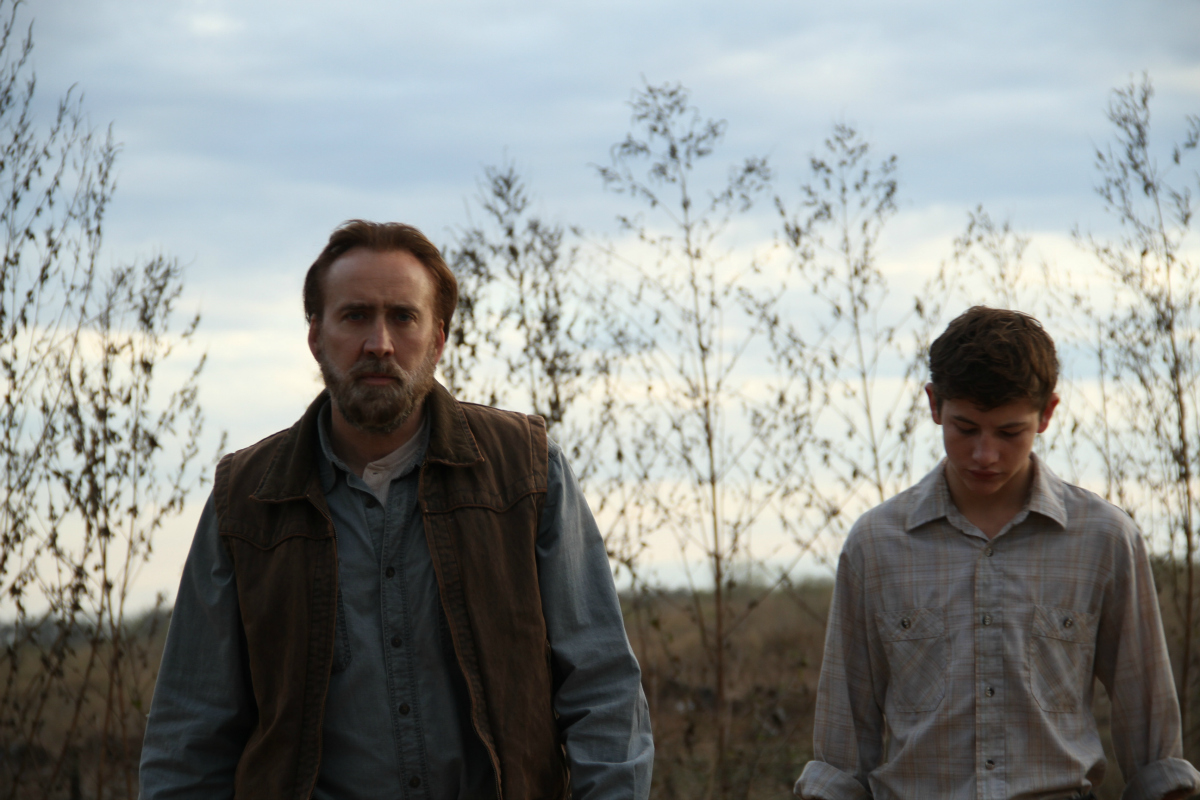 ow many of our triumphs in a long and confusing life are accountable not to the things that we do, but to the things that we ultimately cannot do? How much larger is a soul for the many unmarked feats, the unnoticed evidence of furious battles fought against the self, just to hold back, to tamp down, to remain and endure when all would warrant otherwise?
Medals, trophies are given for action, not inaction. But it seems a terrible injustice to call the agonies suffered in attempts to retain basic decency “inaction.” The malgre lui who ultimately cannot do what everything inside him says that he should is a quiet, but nonetheless valiant, warrior. They also serve who only withstand and remain.
Such inner turmoil is at the center of David Gordon Green’s latest film, Joe. Among the many fine directors today, Green has consistently impressed with his signature vision, featuring intense sojourners in fraught landscapes. His premiere effort, George Washington—about the burdened lives of children who cover up a crime—was widely appreciated, as were his subsequent movies, All the Real Girls, a love story set in a small Southern town, and Undertow, about a young boy chased by a murderous uncle. Green wrote all of these efforts, but his current offering is based on a novel by the late Mississippi writer, Larry Brown.
In the film, Nicholas Cage has one of his best outings as a man with a past suggested to have been so violent that he’s always one burnt cigarette away from exploding into a rampage. He has to manage himself carefully, isolate himself thoughtfully, from interacting too deeply with others.
Of course, life won’t cooperate. Joe is hounded by a weasely pervert (wonderfully played by Ronnie Gene Blevins), menaced by an overanxious policeman, and even harassed by a hooker’s throat-lunging dog. On top of that, he’s the kind of man who both knows a lot and can do a lot, so people, even good people, pull at him from all directions.
Sometimes he snaps, wildly, and so he must stay hemmed in and barb-wired off—even calling the law on himself when he senses a point of no return. If he averts his eyes from the many awful things in the bloody, filthy place that he inhabits, one that is at turns rain-soaked and sun-parched, he feels it’s for the best of all—himself and those whom he might “touch,” if his temper is riled. He’s a man of extremes in a place of extremes, as dangerous as a match atop a gas can.
The fragile compromise he’s made with life has him contracting for a group of developers, hiring gangs of men to poison trees for their eventual clearing. The workers come and go—some steady, some drunk and lawless—and the labor is as hard and unforgiving as the weather. The whole town is populated with the chronically wretched—the kind of people who escape the quixotic plans of utopians, who live rough in a relentless destiny, who always have just enough money for cigarettes, liquor, drugs, and candy.
Throughout, Joe’s intensity wears on him like a blister that won’t heal, as it is never given that chance; drinking too much and brooding too long, he senses it’s only a matter of time before things blow up. The virtue in the story lies in his choice—in the direction in which his personal conflagration is spent.
When a hard-working, eager-faced, fifteen-year-old boy wanders into the woods one day (played by Tye Sheridan, in another standout performance), Joe gives him a job. The boy’s backstory is tragic, but he’s uncowed and able, with the inexplicable hopefulness of youth. Perhaps that’s why Joe grows attached to him, despite his misgivings; those who are old, who have seen what life will do to a heart, somehow cannot resist the charms of the young, and the belief that if adolescent energy and faith are encouraged, maybe this time it will be different; maybe this child will make it further, have more—reap a greater share of joy than grief.
So after getting a good day of hard labor from the boy, Joe invites him to come back the next day. Only this time, the boy wants to bring his father.
What follows is a tour de force—both artistically and cosmically. Because the man who plays the boy’s drifter, alcoholic father—Gary Poulter—was himself a drifter and alcoholic that Green cast straight off the streets of Austin, Texas. Looking twenty years older than he really was, Poulter incarnates the role of a man who abuses both himself and others beyond all endurable limits, but who is also capable of a shocking tenderness. Even as he performs an unspeakable act in one moment, in the next his face changes with a self-recognition long past tears, like the surface of dark water when the moon drifts between clouds.
In this derelict of a man, Joe stares at the ruin of what he could become; but in the promise of this man’s son, he stares at the hope of what he could have been, and at what he intends will have a chance to be—if the poisoned and the dying will give it room to grow.
Just prior to the film’s release, Poulter was found dead in the shallows of a lake—at a depth not deep enough to drown in, but too deep for a broken man to stand up against. It was a hard finish for a hard life.
But then, something always gets us in the end; it is whether we succumb to a cancer that would kill us on its own relentless, merciless terms, or whether we can cast it off—regardless of how fused it is with our being—and can die on terms of our own, that makes for the battle each must face, ultimately, definitively, in spite of ourselves.
A.G. Harmon teaches Shakespeare, Law and Literature, Jurisprudence, and Writing at The Catholic University of America in Washington, D.C. His novel, A House All Stilled, won the 2001 Peter Taylor Prize for the Novel.
Previous Post

May 12, 2014
The Great iAm
Next Post
May 14, 2014 Sunday in Sweet Afton
Browse Our Archives
Select a Category A. G. Harmon Alissa Wilkinson Allison Backous Art Authors Brad Fruhauff Bradford Winters Bryan Bliss Caroline Langston Chad Thomas Johnston Chris Hoke Christiana N. Peterson Culture D.G. Myers D.L. Mayfield Daniel Bowman Jr. David Griffith Elizabeth Duffy Faith Film Greg Wolfe Guest Contributor Interview Jan Vallone Jeffrey Overstreet Jessica Eddings-Roeser Jessica Mesman Griffith Kelly Foster Lindsey Crittenden Morgan Meis music Natalie Vestin Nick Olson Peggy Rosenthal Personal Reflection Poetry Friday Reflection Relationships Review Richard Chess Richard Cole Sara Zarr Shannon Huffman Polson Sonya Bilocerkowycz Tania Runyan Tony Woodlief Topical Categories Uncategorized Vic Sizemore Writing
Select a Month October 2018 September 2018 August 2018 July 2018 June 2018 May 2018 April 2018 March 2018 February 2018 January 2018 December 2017 November 2017 October 2017 September 2017 August 2017 July 2017 June 2017 May 2017 April 2017 March 2017 February 2017 January 2017 December 2016 November 2016 October 2016 September 2016 August 2016 July 2016 June 2016 May 2016 April 2016 March 2016 February 2016 January 2016 December 2015 November 2015 October 2015 September 2015 August 2015 July 2015 June 2015 May 2015 April 2015 March 2015 February 2015 January 2015 December 2014 November 2014 October 2014 September 2014 August 2014 July 2014 June 2014 May 2014 April 2014 March 2014 February 2014 January 2014 December 2013 November 2013 October 2013 September 2013 August 2013 July 2013 June 2013 May 2013 April 2013 March 2013 February 2013 January 2013 December 2012 November 2012 October 2012 September 2012 August 2012 July 2012 June 2012 May 2012 February 2008
Follow Us!
TAKE THE
Religious Wisdom Quiz
Who did God give the Ten Commandments to?
Select your answer to see how you score.
Joshua Noah Abraham Moses
Related posts from Good Letters



Emmy Watch: The Marvelous Mrs. Maisel

TRENDING AT PATHEOS Catholic

Rejecting Doom: Christian Hope And Human Action
Christianity is a religion of hope. We are to have hope and...

It’s What Comes From Within Which Matters
One of the most difficult things for us to understand is why...

Why I Choose the Eucharist Over the Sermon
Choose the Eucharist, Not the Sermon What are we supposed to get...

5 Design Elements Found in Spiritually Rooted Homes
Putting Spirituality Into Home Decor Our homes are more than our living...

Credo: A Story of God Told with the...
About 10 years ago, I began to imagine a personal "Credo" that...

The Anatomy of Divine Revelation in Catholic Thought
The claim that God has made Himself known to human beings is...
view all Catholic blogs
Ad-Free & Subscriber Log-In Subscription Support
- About Us
- 2026 Calendar
- Videos
- Podcasts
- Library of World Religions
- Faith In Media Tracker
- Advertise With Us
- Write for Us
- Privacy Policy
- Terms of Service
- Do Not Sell My Data
- Contact Us
- Radiant Digital
- Manage Newsletter Subscriptions
- Unsubscribe From Notifications
- Sitemap
Copyright 2008-2026, Patheos. All rights reserved.
Subscription Support Ad-Free & Subscriber Log-In
Follow Patheos