
BuddhistCatholicContemplativeEvangelicalGeneral ChristianHinduJewishLatter-day SaintMuslimNew VisionsProgressive Christian
Beliefs
- Buddhist
- Catholic
- Contemplative
- Evangelical
- General Christian
- Hindu
- Jewish
- Latter-day Saint
- More Voices
- Muslim
- New Visions
- Pagan
- Progressive Christian
Topics
- Religion News
- Food and Religion
- Sports and Religion
- Religious Art
- Religious Music and Entertainment
- Religious Events
- History and Religion
- Style and Religion
- Politics and Religion
- Women in Religion
- Recreation Outdoors and Religion
- Business Finance and Religion
- Careers Workplace and Religion
- Education and Religion
- Family Parenting and Religion
- Health Fitness and Religion
- Home and Religion
- Relationships and Religion
- Technology and Religion
- Travel and Religion
Columnists
- Buddhist Columnists
- Business Finance and Religion Columnists
- Careers Workplace and Religion Columnists
- Catholic Columnists
- Contemplative Columnists
- Education and Religion Columnists
- Evangelists Columnists
- Family Parenting and Religion Columnists
- General Christian Columnists
- Health Fitness and Religion Columnists
- Hindu Columnists
- History and Religion Columnists
- Home and Religion Columnists
- Jewish Columnists
- More Voices Columnists
- Latter Day Columnists
- Muslim Columnists
- New Visions Columnists
- Nonreligious Columnists
- Pagan Columnists
- Politics and Religion Columnists
- Progressive Columnists
- Recreation Outdoors and Religion Columnists
- Relationships and Religion Columnists
- Religion News Columnists
- Religious Art Columnists
- Religious Events Columnists
- Religious Music and Entertainment Columnists
- Sports and Religion Columnists
- Style and Religion Columnists
- Technology and Religion Columnists
- Travel and Religion Columnists
- Women in Religion Columnists
Resource Library
- 2026 Calendar
- Library of World Religions
- The 100 Most Holy Places on Earth
- Patheos Answers
- Podcasts
- Videos
- Faith Leaders Database
- Anglican Episcopalian
- Bahai
- Baptist
- Buddhism
- Christianity
- Confucianism
- Eastern Orthodoxy
- Hinduism
- Holiness and Pentecostal
- ISKCON
- Islam
- Judaism
- Lutheran
- Methodist
- The Church of Jesus Christ of Latter-day Saints
- New Age
- Paganism
- Presbytarian and Reformed
- Protestantism
- Religion Behind the Scenes
- Roman Catholic
- Scientology
- Shia Islam
- Sikhism
- Sufism
- Sunni Islam
- Taoism
- Zen
- See all religions
Research Tools
 Ad-Free & Subscriber Log-In Subscription Support
Ad-Free & Subscriber Log-In Subscription Support
Follow Patheos 

- Trending:
- Forgiveness
- |
- Marriage
- |
- Consciousness
- |
- Death Penalty
- |
- Election
- |
- Halloween
 Good Letters
-
Contributors
- Home
- Catholic
- Mystery and (Southern) Manners
Mystery and (Southern) Manners
Last updated on: January 16, 2015 at 3:50 pm by Caroline Langston
Mystery and (Southern) Manners 2015-01-16T15:50:47-07:00 Caroline Langston
Patheos Explore the world's faith through different perspectives on religion and spirituality! Patheos has the views of the prevalent religions and spiritualities of the world.
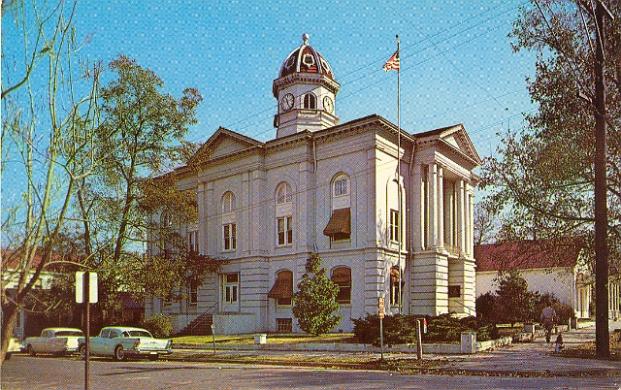 It’s a chicken-and-egg kind of question I get all the time, but I don’t think I am the only one who has faced it: Am I more religious because I am a Southerner (as most of my Yankee friends seem to think), or do I seem more Southern because I am religious—never mind the fact that I am a longtime, generally happy exile to the Northeast Corridor?
I’m sending this question out not only to some of the other Southerners who have proceeded through “Good Letters”—A.G. Harmon, Kelly Foster, Tony Woodlief (A.G., Kelly and I are from Mississippi, and Kelly and I are even from the same town)—but to all of you out there who might have some input on the matter.
For what so many of us Southerners—even those of us who are not, ahem, writers—seem to share is a great and abiding sense of mystery about the world. Perhaps this is due to the fact that, in the main, even now, most of us grew up around codes of manners and behavior that were commonly known, but rarely spoken of, and there was even less discussion about the realities of class and race that were all around us. And we could go off on long tangents about the various implications.
Whatever the reason, it is a characteristic of my life that the world has constantly seemed (and continues to seem) to be filled with portents about nearly everything, turns of circumstance that seem significant, as though a narrative arc cuts through my life as sharply as a ray of sun.
Two little anecdotes that a number of my fellow Yazooans—at least the Gen-X ones—may remember:
The Black Guy with His Head Under His Coat: Exactly like what he sounds like, the Black Guy with His Head Under His Coat was a young African-American man who walked up and down the residential streets of my hometown wearing an old suit coat, the lapels of which he held over his bent head, out from which cover he peered ominously as he walked.
How come y’all think he is the way he is? kids would ask each other. And I do not once, ever, recall this being expressed in a spirit of scorn. Rather, it was a worrisome sign—one that would seem to require some kind of repentance, or acclamation:
And I have seen the eternal Footman hold my coat and snicker,
And in short, I was afraid.
The Highway 49 Hooker: There is no evidence that the Highway 49 Hooker actually was one. She was a white woman in shorts, sunglasses, and giant black headphones who could be seen riding a bicycle at any time, day to night, on the highway from my hometown of Yazoo City to Jackson. What’s significant about this, for those of you who are used to thinking that the boundaries of communities are contiguous, a la Greenwich-CosCob-Norwalk-Westport-Stamford, the landscape between Yazoo City and Jackson is practically empty, flat fields interspersed here and there with stands of the forests that had once covered the land, only rarely dotted with a store, or a clump of houses. You’d be driving 65 mph on a blindingly hot summer day, 100 degrees and sultry (or more precisely, your mother would be driving), and all of a sudden, there’s she’d be, the Highway 49 Hooker, miles from anywhere.
Unlike the guy with his head under his coat, the Highway 49 Hooker did spark some salacious humor—how, for example, did she even get to be called hooker?
And I could keep going on and on: the gas-blue neon letters of the Yazoo Motel emerging out of the darkness when we drove back into town at night; my cousins’ crazy yard man Ollie who arrived from a stay in the state mental hospital and started looking around for dynamite to “blow up armadillos.”
I thought everyone thought that the world was a mixture of the strange and uncanny until I went up North to boarding school and in a meeting of the Human Relations Committee—a glorified values-clarification rap-session type-thing of the kind that Phyllis Schlafly and Mary Pride types would flip out about as indicating the dawn of the New Age—a sweet handsome boy named Ned Rosen from a wealthy Boston suburb said, “I just don’t understand all these crazy stories you talk about all the time. This stuff doesn’t even sound real.” (I think this was in reference to my mother.)
Ned Rosen ended up going to Harvard and later into the movie industry in California, and, plagued by his own ghosts, committed suicide in his early thirties. He thus unwittingly became part of the enduring mythos that trails through my own life, the very thing that was incredulous to him: I will light a candle at times in his memory (though we were never close friends), and find myself mourning all over again that someone who seemed so together would fall apart.
Believe it or not, this impulse to mystery is not, I think, chiefly a product of Christianity: I remember going to New England and thinking how unhaunted and literal both the evangelicals and Catholics—outside from the Italians and Poles—up there were (fake leather car coats and paperback NIV Bibles for the evangelicals; fish-sticks and genuflection for the Catholics).
So it must be a Southern thing, although I’ve long recognized similar impulses in Latin American and South Asian cultures: When I read One Hundred Years of Solitude, so much of the storytelling sounded so familiar, even as it wasn’t, and I wasn’t surprised, for I had heard Marquez had read Faulkner.
But really, theory fails me here: This was all just a ruse so I could tell you stories about the mysteries I—we—have encountered.
For they are relics, evidence, of the substrata of the Logos that enlivens all things.
A native of Yazoo City, Mississippi, Caroline Langstonis a convert to the Eastern Orthodox Church. She is a widely published writer and essayist, a winner of the Pushcart Prize, and a commentator for NPR’s “All Things Considered.”
Previous Post

May 23, 2014
Scientific Passions
Next Post
May 28, 2014 You Tell ’Em, Duke Porn Star
Browse Our Archives
Select a Category A. G. Harmon Alissa Wilkinson Allison Backous Art Authors Brad Fruhauff Bradford Winters Bryan Bliss Caroline Langston Chad Thomas Johnston Chris Hoke Christiana N. Peterson Culture D.G. Myers D.L. Mayfield Daniel Bowman Jr. David Griffith Elizabeth Duffy Faith Film Greg Wolfe Guest Contributor Interview Jan Vallone Jeffrey Overstreet Jessica Eddings-Roeser Jessica Mesman Griffith Kelly Foster Lindsey Crittenden Morgan Meis music Natalie Vestin Nick Olson Peggy Rosenthal Personal Reflection Poetry Friday Reflection Relationships Review Richard Chess Richard Cole Sara Zarr Shannon Huffman Polson Sonya Bilocerkowycz Tania Runyan Tony Woodlief Topical Categories Uncategorized Vic Sizemore Writing
Select a Month October 2018 September 2018 August 2018 July 2018 June 2018 May 2018 April 2018 March 2018 February 2018 January 2018 December 2017 November 2017 October 2017 September 2017 August 2017 July 2017 June 2017 May 2017 April 2017 March 2017 February 2017 January 2017 December 2016 November 2016 October 2016 September 2016 August 2016 July 2016 June 2016 May 2016 April 2016 March 2016 February 2016 January 2016 December 2015 November 2015 October 2015 September 2015 August 2015 July 2015 June 2015 May 2015 April 2015 March 2015 February 2015 January 2015 December 2014 November 2014 October 2014 September 2014 August 2014 July 2014 June 2014 May 2014 April 2014 March 2014 February 2014 January 2014 December 2013 November 2013 October 2013 September 2013 August 2013 July 2013 June 2013 May 2013 April 2013 March 2013 February 2013 January 2013 December 2012 November 2012 October 2012 September 2012 August 2012 July 2012 June 2012 May 2012 February 2008
Follow Us!
TAKE THE
Religious Wisdom Quiz
According to Philippians, whose name is above every name?
Select your answer to see how you score.
The Lord God Jesus Christ
Related posts from Good Letters


Leonard Cohen’s Holy and Broken Hallelujah

Ready or Not for the Days of Awe

TRENDING AT PATHEOS Catholic

Rejecting Doom: Christian Hope And Human Action
Christianity is a religion of hope. We are to have hope and...

It’s What Comes From Within Which Matters
One of the most difficult things for us to understand is why...

Why I Choose the Eucharist Over the Sermon
Choose the Eucharist, Not the Sermon What are we supposed to get...

5 Design Elements Found in Spiritually Rooted Homes
Putting Spirituality Into Home Decor Our homes are more than our living...

Credo: A Story of God Told with the...
About 10 years ago, I began to imagine a personal "Credo" that...

The Anatomy of Divine Revelation in Catholic Thought
The claim that God has made Himself known to human beings is...
view all Catholic blogs
Ad-Free & Subscriber Log-In Subscription Support
- About Us
- 2026 Calendar
- Videos
- Podcasts
- Library of World Religions
- Faith In Media Tracker
- Advertise With Us
- Write for Us
- Privacy Policy
- Terms of Service
- Do Not Sell My Data
- Contact Us
- Radiant Digital
- Manage Newsletter Subscriptions
- Unsubscribe From Notifications
- Sitemap
Copyright 2008-2026, Patheos. All rights reserved.
Subscription Support Ad-Free & Subscriber Log-In
Follow Patheos