
BuddhistCatholicContemplativeEvangelicalGeneral ChristianHinduJewishLatter-day SaintMuslimNew VisionsProgressive Christian
Beliefs
- Buddhist
- Catholic
- Contemplative
- Evangelical
- General Christian
- Hindu
- Jewish
- Latter-day Saint
- More Voices
- Muslim
- New Visions
- Pagan
- Progressive Christian
Topics
- Religion News
- Food and Religion
- Sports and Religion
- Religious Art
- Religious Music and Entertainment
- Religious Events
- History and Religion
- Style and Religion
- Politics and Religion
- Women in Religion
- Recreation Outdoors and Religion
- Business Finance and Religion
- Careers Workplace and Religion
- Education and Religion
- Family Parenting and Religion
- Health Fitness and Religion
- Home and Religion
- Relationships and Religion
- Technology and Religion
- Travel and Religion
Columnists
- Buddhist Columnists
- Business Finance and Religion Columnists
- Careers Workplace and Religion Columnists
- Catholic Columnists
- Contemplative Columnists
- Education and Religion Columnists
- Evangelists Columnists
- Family Parenting and Religion Columnists
- General Christian Columnists
- Health Fitness and Religion Columnists
- Hindu Columnists
- History and Religion Columnists
- Home and Religion Columnists
- Jewish Columnists
- More Voices Columnists
- Latter Day Columnists
- Muslim Columnists
- New Visions Columnists
- Nonreligious Columnists
- Pagan Columnists
- Politics and Religion Columnists
- Progressive Columnists
- Recreation Outdoors and Religion Columnists
- Relationships and Religion Columnists
- Religion News Columnists
- Religious Art Columnists
- Religious Events Columnists
- Religious Music and Entertainment Columnists
- Sports and Religion Columnists
- Style and Religion Columnists
- Technology and Religion Columnists
- Travel and Religion Columnists
- Women in Religion Columnists
Resource Library
- 2026 Calendar
- Library of World Religions
- The 100 Most Holy Places on Earth
- Patheos Answers
- Podcasts
- Videos
- Faith Leaders Database
- Anglican Episcopalian
- Bahai
- Baptist
- Buddhism
- Christianity
- Confucianism
- Eastern Orthodoxy
- Hinduism
- Holiness and Pentecostal
- ISKCON
- Islam
- Judaism
- Lutheran
- Methodist
- The Church of Jesus Christ of Latter-day Saints
- New Age
- Paganism
- Presbytarian and Reformed
- Protestantism
- Religion Behind the Scenes
- Roman Catholic
- Scientology
- Shia Islam
- Sikhism
- Sufism
- Sunni Islam
- Taoism
- Zen
- See all religions
Research Tools
 Ad-Free & Subscriber Log-In Subscription Support
Ad-Free & Subscriber Log-In Subscription Support
Follow Patheos 

- Trending:
- Forgiveness
- |
- Marriage
- |
- Consciousness
- |
- Death Penalty
- |
- Election
- |
- Halloween
 Good Letters
-
Contributors
- Home
- Catholic
- New Plagues This Passover
New Plagues This Passover
Last updated on: April 14, 2014 at 1:00 am by Richard Chess
New Plagues This Passover 2014-04-11T15:50:15-07:00 Richard Chess
Patheos Explore the world's faith through different perspectives on religion and spirituality! Patheos has the views of the prevalent religions and spiritualities of the world.
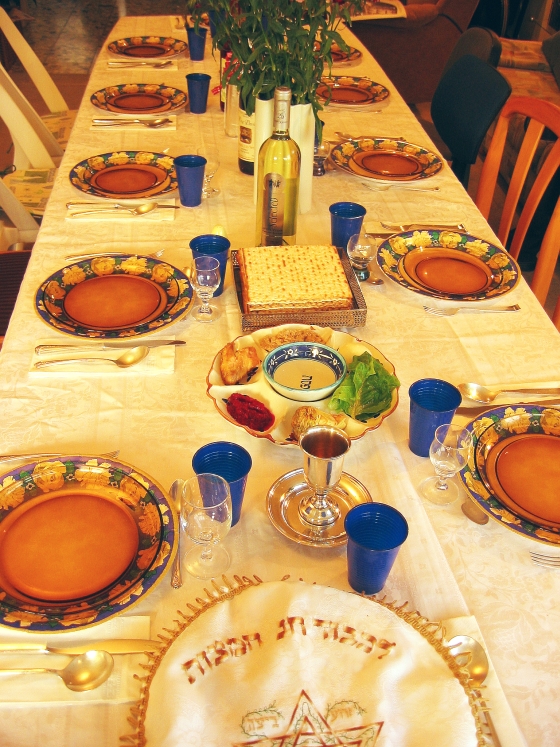 As I write this, Passover is just a little more than a week away. This year, the first night of Passover coincides with our son’s twenty-first birthday. I suspect that, instead of attending a seder (we floated the idea of his coming home from school to be with us for the first seder), he’ll be drinking a beer, his first…legal beer. That’s one loss for halakhah, Jewish ritual law (beer is clearly not kosher for Passover), and one gain for living within civil law.
I don’t think the Passover narrative is of much interest to him, at least not insofar as it tells the story of the Jews. It may be of greater interest to him as it speaks to and inspires other peoples’ national liberation struggles. Still, my wife and I are fairly certain that he, like his sisters, enjoyed our playful, imaginative seders as he was growing up. Whether we celebrated them in our home or at the homes of our closest friends, we always sought creative ways of keeping the seder fresh and relevant.
Mah nishtana? what makes this night different from all others? the youngest at the table chant. After they finish chanting the traditional four questions, we share our own questions at this particular moment at this particular seder. Question, question, and keep questioning: that’s a Jewish value, embedded in the Passover seder. It’s one of the first things we teach our children: question everything.
And when, as they get older, their questions challenge us—what’s the deal with the Palestinians? Why is it always the first thing you ask, is she Jewish, is he, that poet, that politician, that victim of the latest shooting? What’s up with your primitive tribalism?—and reveal their troubled relationship to Judaism and Jewish culture, console yourself by remembering this: Adam (Hebrew for human, for person) is made of adamah (earth: adam, plus question: mah).
What is a human? That’s the first question. Who asked? How about the same Character who, in the garden, asks, Adam, where are you?
But we’re not in the garden, and there’s no getting back to the garden. We’re in Egypt now, and we’re bound for the desert, forty years in the desert (and, eventually—how long must we wait?— for the meal and the kosher-for-Passover desserts), but first it’s time for some plagues.
Blood, boils, locusts, slaying of the first born, we chant, dipping a pinky into the cup of wine and shaking one drop for each plague onto our plates as we go down the list, and then we call out more, adding the plagues of our time to the traditional list.
What will they be this year? Our state government determined to destroy North Carolina’s schools and disenfranchise the “ineligible,” “most dangerous,” vulnerable voters in the state? Our state government committed to ignoring science and relaxing or rewriting environmental regulations that claim to protect but actually threaten the environment—the environment in which business can thrive?
Since the Holocaust, we say, after the traditional curses, Auschwitz, Birkenau, Majdanek. Maybe on this Passover we should add some other names, maybe we should call out the name of our state budget director, the rose of North Carolina, Mr. Art Pope? And even if we don’t say it aloud, we’ll think, Adelson, Koch and Koch. (But isn’t Adelson good for the Jews? For one answer to that question, read Thomas Friedman’s recent column: “Sheldon: Iran’s Best Friend.”
As I write this, I feel helpless in the face of the power of these men and their poison money. Just saying—just thinking their names hardens my heart. Pharaoh! I’m Pharaoh!
But I don’t want to be Pharaoh! I want to be Moses!
Such chutzpah, such arrogance to think of myself and Moses in the same thought.
Says the haggadah: Look at the matzoh, that’s who you are: unrisen, lowly, bumpy, dry baked, brittle square of unleavened bread. Not even strong enough to hold egg salad between two pieces. Take a bite and the matzoh cracks and crumbles. That’s who you are. Forget about leading your people!
Angry, enraged, impoverished of spirit, frail boned, I am, and by the haggadah commanded: “in each generation, each person is obligated to see himself or herself as though he or she personally came forth from Egypt.”
Will I get there this Passover? Will the ritual of the Passover seder transport me back to Egypt? Will it lift me, tongue burned by the bitter herb, lips salted with the tears of spring, the tears of enslaved ancestors, heart hardened, and released on the wings of song—Dayenu, it would be enough; Had Gadya, one little goat—out of Egypt?
I don’t know. But I’m ready to give myself over to the process just to see what might happen this year.
And, dear son, dear daughters, for you I wish the same, a chance (by whatever means) to remember what it means to be enslaved, to be subject to the tyrannical vision of an Other, be it a politician, a billionaire, or a consumerist culture, and to see whatever system you are in clearly, and to participate in a process, Jewish or not, that will strengthen and inspire and lift you free so that you may be an inspiration, a source of strength and comfort and encouragement to others who are not yet free, others who become free and imprisoned, imprisoned and free, over and over again throughout the length of their nights and days.
Richard Chess is the author of three books of poetry, Tekiah, Chair in the Desert, and Third Temple. Poems of his have appeared in Telling and Remembering: A Century of American Jewish Poetry, Bearing the Mystery: Twenty Years of IMAGE, and Best Spiritual Writing 2005. He is the Roy Carroll Professor of Honors Arts and Sciences at the University of North Carolina at Asheville. He is also the director of UNC Asheville’s Center for Jewish Studies.
Previous Post

April 11, 2014
Poetry at the Goodwill
Next Post
April 15, 2014 Oasis: An Observation from The Way of Saint James
Browse Our Archives
Select a Category A. G. Harmon Alissa Wilkinson Allison Backous Art Authors Brad Fruhauff Bradford Winters Bryan Bliss Caroline Langston Chad Thomas Johnston Chris Hoke Christiana N. Peterson Culture D.G. Myers D.L. Mayfield Daniel Bowman Jr. David Griffith Elizabeth Duffy Faith Film Greg Wolfe Guest Contributor Interview Jan Vallone Jeffrey Overstreet Jessica Eddings-Roeser Jessica Mesman Griffith Kelly Foster Lindsey Crittenden Morgan Meis music Natalie Vestin Nick Olson Peggy Rosenthal Personal Reflection Poetry Friday Reflection Relationships Review Richard Chess Richard Cole Sara Zarr Shannon Huffman Polson Sonya Bilocerkowycz Tania Runyan Tony Woodlief Topical Categories Uncategorized Vic Sizemore Writing
Select a Month October 2018 September 2018 August 2018 July 2018 June 2018 May 2018 April 2018 March 2018 February 2018 January 2018 December 2017 November 2017 October 2017 September 2017 August 2017 July 2017 June 2017 May 2017 April 2017 March 2017 February 2017 January 2017 December 2016 November 2016 October 2016 September 2016 August 2016 July 2016 June 2016 May 2016 April 2016 March 2016 February 2016 January 2016 December 2015 November 2015 October 2015 September 2015 August 2015 July 2015 June 2015 May 2015 April 2015 March 2015 February 2015 January 2015 December 2014 November 2014 October 2014 September 2014 August 2014 July 2014 June 2014 May 2014 April 2014 March 2014 February 2014 January 2014 December 2013 November 2013 October 2013 September 2013 August 2013 July 2013 June 2013 May 2013 April 2013 March 2013 February 2013 January 2013 December 2012 November 2012 October 2012 September 2012 August 2012 July 2012 June 2012 May 2012 February 2008
Follow Us!
TAKE THE
Religious Wisdom Quiz
Who said, "Repent, for the kingdom of heaven is at hand"?
Select your answer to see how you score.
Peter John the Baptist Jesus Isaiah
Related posts from Good Letters

Ready or Not for the Days of Awe



TRENDING AT PATHEOS Catholic

Rejecting Doom: Christian Hope And Human Action
Christianity is a religion of hope. We are to have hope and...

It’s What Comes From Within Which Matters
One of the most difficult things for us to understand is why...

Why I Choose the Eucharist Over the Sermon
Choose the Eucharist, Not the Sermon What are we supposed to get...

5 Design Elements Found in Spiritually Rooted Homes
Putting Spirituality Into Home Decor Our homes are more than our living...

Credo: A Story of God Told with the...
About 10 years ago, I began to imagine a personal "Credo" that...

The Anatomy of Divine Revelation in Catholic Thought
The claim that God has made Himself known to human beings is...
view all Catholic blogs
Ad-Free & Subscriber Log-In Subscription Support
- About Us
- 2026 Calendar
- Videos
- Podcasts
- Library of World Religions
- Faith In Media Tracker
- Advertise With Us
- Write for Us
- Privacy Policy
- Terms of Service
- Do Not Sell My Data
- Contact Us
- Radiant Digital
- Manage Newsletter Subscriptions
- Unsubscribe From Notifications
- Sitemap
Copyright 2008-2026, Patheos. All rights reserved.
Subscription Support Ad-Free & Subscriber Log-In
Follow Patheos