
BuddhistCatholicContemplativeEvangelicalGeneral ChristianHinduJewishLatter-day SaintMuslimNew VisionsProgressive Christian
Beliefs
- Buddhist
- Catholic
- Contemplative
- Evangelical
- General Christian
- Hindu
- Jewish
- Latter-day Saint
- More Voices
- Muslim
- New Visions
- Pagan
- Progressive Christian
Topics
- Religion News
- Food and Religion
- Sports and Religion
- Religious Art
- Religious Music and Entertainment
- Religious Events
- History and Religion
- Style and Religion
- Politics and Religion
- Women in Religion
- Recreation Outdoors and Religion
- Business Finance and Religion
- Careers Workplace and Religion
- Education and Religion
- Family Parenting and Religion
- Health Fitness and Religion
- Home and Religion
- Relationships and Religion
- Technology and Religion
- Travel and Religion
Columnists
- Buddhist Columnists
- Business Finance and Religion Columnists
- Careers Workplace and Religion Columnists
- Catholic Columnists
- Contemplative Columnists
- Education and Religion Columnists
- Evangelists Columnists
- Family Parenting and Religion Columnists
- General Christian Columnists
- Health Fitness and Religion Columnists
- Hindu Columnists
- History and Religion Columnists
- Home and Religion Columnists
- Jewish Columnists
- More Voices Columnists
- Latter Day Columnists
- Muslim Columnists
- New Visions Columnists
- Nonreligious Columnists
- Pagan Columnists
- Politics and Religion Columnists
- Progressive Columnists
- Recreation Outdoors and Religion Columnists
- Relationships and Religion Columnists
- Religion News Columnists
- Religious Art Columnists
- Religious Events Columnists
- Religious Music and Entertainment Columnists
- Sports and Religion Columnists
- Style and Religion Columnists
- Technology and Religion Columnists
- Travel and Religion Columnists
- Women in Religion Columnists
Resource Library
- 2026 Calendar
- Library of World Religions
- The 100 Most Holy Places on Earth
- Patheos Answers
- Podcasts
- Videos
- Faith Leaders Database
- Anglican Episcopalian
- Bahai
- Baptist
- Buddhism
- Christianity
- Confucianism
- Eastern Orthodoxy
- Hinduism
- Holiness and Pentecostal
- ISKCON
- Islam
- Judaism
- Lutheran
- Methodist
- The Church of Jesus Christ of Latter-day Saints
- New Age
- Paganism
- Presbytarian and Reformed
- Protestantism
- Religion Behind the Scenes
- Roman Catholic
- Scientology
- Shia Islam
- Sikhism
- Sufism
- Sunni Islam
- Taoism
- Zen
- See all religions
Research Tools
 Ad-Free & Subscriber Log-In Subscription Support
Ad-Free & Subscriber Log-In Subscription Support
Follow Patheos 

- Trending:
- Forgiveness
- |
- Marriage
- |
- Consciousness
- |
- Death Penalty
- |
- Election
- |
- Halloween
 Good Letters
-
Contributors
- Home
- Catholic
- Crying Ocean
Crying Ocean
Last updated on: July 20, 2015 at 12:42 pm by Guest Contributor
Crying Ocean 2015-07-20T12:42:00-07:00 Guest Contributor
Patheos Explore the world's faith through different perspectives on religion and spirituality! Patheos has the views of the prevalent religions and spiritualities of the world.
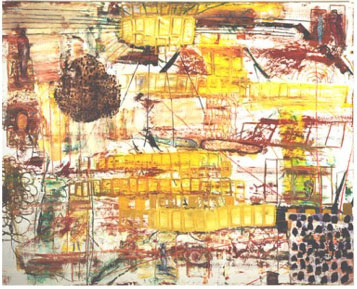 Guest post by Natalie Vestin
In Judith Kitchen’s essay “Direction,” she writes of traveling with a friend in Greece and being asked to step out of her cab on a dark road by a driver she doesn’t trust. She and her friend refuse to get out, not by saying no, but by huddling in the back seat and crying thalassa, thalassa. Ocean, ocean.
Crying direction and saving themselves.
I split this past summer between residencies in Minnesota and Nebraska, writing, thinking about ocean and about salvation. About what’s inside us—how the matter of our origins can save us. About love for the how of creation and a God who deserves to be loved for the how. About crying thalassa, saying “I am ocean and worth saving.”
I was writing about dance and thinking about bones, calcium, carbonate of lime. Calcium comes from water. When mammals were just a dream on a volcanic and shifting earth, bones were made by water. I’m water, carbonate of lime, the memory of a tide. I was formed by wetness and rolling wave. I’m light and breakable as heaven.
I’m taking some poetic license here. I’m also trying to take a little salvation where I can find it.
Last fall I was on Whidbey Island for the Image/BioLogos colloquy. The ocean was a five-minute walk from my little house at Camp Casey. I wrapped my scarf around my head and face and walked to the shore every morning, prayed a little, but mostly just watched the waves and listened, thought about God and skeletons, tried to press my nose to creation and figure out who both of us are.
I was nervous about the colloquy, not knowing what to expect from this small group of artists come together to talk about art, faith, and evolution. I attended a conservative parochial school until I was sixteen, where we learned that we lived in a 4,000-year-old universe, and evolutionary beliefs were the fallback for those who couldn’t muddle their way through a proper idea.
But I also grew up with a physicist father who took me on car rides to tell me about the seven dimensions that coiled themselves around our known four after the Big Bang. My father told me that God wears a lab coat, and that after we die, we get to tour the lab and ask any questions we want. He taught me that science is about showing love by looking closer. I came to believe that valuing mystery was essential to loving and learning about the universe and its creation, but that mystery at the deliberate expense and shunning of knowledge is abominable.
On Whidbey Island, I didn’t find a group of dogmatists. I found a people governed by love. I found artists and scientists whose work, by looking closer, tries to patch brokenness with beauty. Biologist Cal Dewitt showed us how to pay attention to what forms our world by pointing out how trees rotting unseen under the soil create geometries of mushrooms.
Painters Linnea Spransy, Kim Alexander, Mark Sprinkle, and Alfonse Borysewicz showed pieces of artwork that probed humanity’s experience with God via formulae and mythmaking. Writers Suzanne Antonetta, Kathleen Housley, and Jeanne Murray Walker read work that held all nature, diverse human culture, and our “little sister” Homo floresiensis in careful, praising hands. Composers Toby Twining and Jeremy Begbie used the mathematical manipulations of sound to create space for considering the divine.
I came to Whidbey worried about bodies—all kinds. I’d spent the last year writing about dance and injury, about an incarnate God and a dancing God, about pain, about hurting human bodies yearning for grace. So much of how we degrade each other and the planet is through the body, mocking movement and desire and hunger and difference, emptying it, making it something to be used.
My Christ is rarely on the cross; he’s learning to walk, inhabiting a leg and pelvis and ribcage, figuring out how to give the guy in the lab coat the one thing he’s always lacked. He’s hurting and awkward and making attempts at grace.
I’ve become increasingly convinced that merging art and science, particularly evolutionary science, fights degradation of the human and earth body. For if you can study and write and paint and compose and look closer and love the hell out of whatever you look at, you know there is nothing wrong with you, you are not irrevocably broken or ruined, you belong here as much as everyone and everything else.
In the beginning, there was God and also nothing. If the Big Bang was the start of expansion, compression might be God, God the great squeezing smallness at the center, God what happens before it unfurls.
The miracle at the beginning was hydrogen, helium, carbon. The preacher at the gravesite makes a terrible underestimation when he releases his handful of soil. The gentle man with the gentle eyes smudging your forehead on Ash Wednesday misspeaks the same when the miracle is as close as his fingertip. From dust you came, and to dust you shall return, but we can eschew dust for now and call it carbon and call it a blessing, miracle, holy, humble, perfect as anything that is almost everything.
Every piece of art I saw or heard on Whidbey confirmed it: we are the how of creation. We are lush protoplasm, bones made by ocean, the memory of Homo erectus’ bony brow and forward tilting skull, two hearts merged into one and formed from that first fishy creature born with a dilated blood vessel in its chest that received electricity and began to beat, beat, beat.
We are parts formed by formulae, we are spillage from the lab in the sky. We are adored, children of miracle, carbon, and the God that unfurls equations into moving, changing life.
Natalie Vestin is a writer and health researcher from Saint Paul. Her essays have been published in The Iowa Review, Puerto del Sol, Bellingham Review, Chautauqua, and elsewhere. She is the winner of the 2013 John Guyon Literary Nonfiction Award, the Prairie Schooner 2012 Creative Nonfiction Prize, and the 2012 Sonora Review Essay Prize. She’s currently working on a project exploring the female gaze in astronomy.
This post was made possible through the support of a grant from The BioLogos Foundation’s Evolution and Christian Faith program. The opinions expressed are those of the author and do not necessarily reflect the views of BioLogos.
Image used: Alfonse Borysewicz, Iconostatis/Cor Unum #3*, paint on canvas, 2004*
Previous Post

April 22, 2014
I Sing the Body Eclectic
Next Post
April 24, 2014 Voices in the Methow Valley
Browse Our Archives
Select a Category A. G. Harmon Alissa Wilkinson Allison Backous Art Authors Brad Fruhauff Bradford Winters Bryan Bliss Caroline Langston Chad Thomas Johnston Chris Hoke Christiana N. Peterson Culture D.G. Myers D.L. Mayfield Daniel Bowman Jr. David Griffith Elizabeth Duffy Faith Film Greg Wolfe Guest Contributor Interview Jan Vallone Jeffrey Overstreet Jessica Eddings-Roeser Jessica Mesman Griffith Kelly Foster Lindsey Crittenden Morgan Meis music Natalie Vestin Nick Olson Peggy Rosenthal Personal Reflection Poetry Friday Reflection Relationships Review Richard Chess Richard Cole Sara Zarr Shannon Huffman Polson Sonya Bilocerkowycz Tania Runyan Tony Woodlief Topical Categories Uncategorized Vic Sizemore Writing
Select a Month October 2018 September 2018 August 2018 July 2018 June 2018 May 2018 April 2018 March 2018 February 2018 January 2018 December 2017 November 2017 October 2017 September 2017 August 2017 July 2017 June 2017 May 2017 April 2017 March 2017 February 2017 January 2017 December 2016 November 2016 October 2016 September 2016 August 2016 July 2016 June 2016 May 2016 April 2016 March 2016 February 2016 January 2016 December 2015 November 2015 October 2015 September 2015 August 2015 July 2015 June 2015 May 2015 April 2015 March 2015 February 2015 January 2015 December 2014 November 2014 October 2014 September 2014 August 2014 July 2014 June 2014 May 2014 April 2014 March 2014 February 2014 January 2014 December 2013 November 2013 October 2013 September 2013 August 2013 July 2013 June 2013 May 2013 April 2013 March 2013 February 2013 January 2013 December 2012 November 2012 October 2012 September 2012 August 2012 July 2012 June 2012 May 2012 February 2008
Follow Us!
TAKE THE
Religious Wisdom Quiz
I came to Jesus at night to ask about being born again. Who was this Pharisee and member of the Jewish ruling council?
Select your answer to see how you score.
Joseph of Arimathea Nicodemus Gamaliel Caiaphas
Related posts from Good Letters

The Stars of the Earth Cry Out


Poetry Friday: “The Ordinary Time”
TRENDING AT PATHEOS Catholic

Rejecting Doom: Christian Hope And Human Action
Christianity is a religion of hope. We are to have hope and...

It’s What Comes From Within Which Matters
One of the most difficult things for us to understand is why...

Why I Choose the Eucharist Over the Sermon
Choose the Eucharist, Not the Sermon What are we supposed to get...

5 Design Elements Found in Spiritually Rooted Homes
Putting Spirituality Into Home Decor Our homes are more than our living...

Credo: A Story of God Told with the...
About 10 years ago, I began to imagine a personal "Credo" that...

The Anatomy of Divine Revelation in Catholic Thought
The claim that God has made Himself known to human beings is...
view all Catholic blogs
Ad-Free & Subscriber Log-In Subscription Support
- About Us
- 2026 Calendar
- Videos
- Podcasts
- Library of World Religions
- Faith In Media Tracker
- Advertise With Us
- Write for Us
- Privacy Policy
- Terms of Service
- Do Not Sell My Data
- Contact Us
- Radiant Digital
- Manage Newsletter Subscriptions
- Unsubscribe From Notifications
- Sitemap
Copyright 2008-2026, Patheos. All rights reserved.
Subscription Support Ad-Free & Subscriber Log-In
Follow Patheos