
BuddhistCatholicContemplativeEvangelicalGeneral ChristianHinduJewishLatter-day SaintMuslimNew VisionsProgressive Christian
Beliefs
- Buddhist
- Catholic
- Contemplative
- Evangelical
- General Christian
- Hindu
- Jewish
- Latter-day Saint
- More Voices
- Muslim
- New Visions
- Pagan
- Progressive Christian
Topics
- Religion News
- Food and Religion
- Sports and Religion
- Religious Art
- Religious Music and Entertainment
- Religious Events
- History and Religion
- Style and Religion
- Politics and Religion
- Women in Religion
- Recreation Outdoors and Religion
- Business Finance and Religion
- Careers Workplace and Religion
- Education and Religion
- Family Parenting and Religion
- Health Fitness and Religion
- Home and Religion
- Relationships and Religion
- Technology and Religion
- Travel and Religion
Columnists
- Buddhist Columnists
- Business Finance and Religion Columnists
- Careers Workplace and Religion Columnists
- Catholic Columnists
- Contemplative Columnists
- Education and Religion Columnists
- Evangelists Columnists
- Family Parenting and Religion Columnists
- General Christian Columnists
- Health Fitness and Religion Columnists
- Hindu Columnists
- History and Religion Columnists
- Home and Religion Columnists
- Jewish Columnists
- More Voices Columnists
- Latter Day Columnists
- Muslim Columnists
- New Visions Columnists
- Nonreligious Columnists
- Pagan Columnists
- Politics and Religion Columnists
- Progressive Columnists
- Recreation Outdoors and Religion Columnists
- Relationships and Religion Columnists
- Religion News Columnists
- Religious Art Columnists
- Religious Events Columnists
- Religious Music and Entertainment Columnists
- Sports and Religion Columnists
- Style and Religion Columnists
- Technology and Religion Columnists
- Travel and Religion Columnists
- Women in Religion Columnists
Resource Library
- 2026 Calendar
- Library of World Religions
- The 100 Most Holy Places on Earth
- Patheos Answers
- Podcasts
- Videos
- Faith Leaders Database
- Anglican Episcopalian
- Bahai
- Baptist
- Buddhism
- Christianity
- Confucianism
- Eastern Orthodoxy
- Hinduism
- Holiness and Pentecostal
- ISKCON
- Islam
- Judaism
- Lutheran
- Methodist
- The Church of Jesus Christ of Latter-day Saints
- New Age
- Paganism
- Presbytarian and Reformed
- Protestantism
- Religion Behind the Scenes
- Roman Catholic
- Scientology
- Shia Islam
- Sikhism
- Sufism
- Sunni Islam
- Taoism
- Zen
- See all religions
Research Tools
 Ad-Free & Subscriber Log-In Subscription Support
Ad-Free & Subscriber Log-In Subscription Support
Follow Patheos 

- Trending:
- Forgiveness
- |
- Marriage
- |
- Consciousness
- |
- Death Penalty
- |
- Election
- |
- Halloween
 Good Letters
-
Contributors
- Home
- Catholic
- An Hour Upon the Stage
An Hour Upon the Stage
Last updated on: April 21, 2014 at 1:00 am by A. G. Harmon
An Hour Upon the Stage 2014-04-17T12:51:32-07:00 A. G. Harmon
Patheos Explore the world's faith through different perspectives on religion and spirituality! Patheos has the views of the prevalent religions and spiritualities of the world.
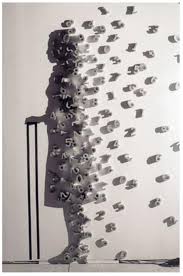 Among the variety of strange notions that we get into our heads, one of the most common is the sensation that we’re being watched. For no apparent reason, we begin to glance around us, not really expecting to find anything, and yet compelled to look anyway.
“It’s nothing,” we say, and turn our attentions back to the task at hand.
It’s also one of the tell tale signs of a transient madness, to believe that something is stalking us—lurking near, slipping from tree to tree. When we’re upstairs, we hear footsteps downstairs. Even the not-so-mad have bouts of paranoia, suspecting that we’re being talked about, that others have some secret agenda that bodes us ill, or possess some furtively-gained knowledge that they have no business knowing.
The shades go down further, out of a fear that at some vulnerable moment, we have left them up too far—that in a careless bit of morning, or a negligent trace of night, we have left ourselves exposed, not for long, but for long enough. The guilty soul cowers at the unspoken, unspeaking threat of an apocalypse that will reveal it for what it truly is.
But that too passes. We forget the sensation when the razzle-dazzle of life intrudes. Calliopes are distracting, providing the comfort of color, music, and above all, movement. Who frets when caught within its currents, amidst its familiar and comforting repetitions? In fact, it’s always rather a surprise when it begins to slow, when the song starts to fade, when the lights dim and finally go out.
Then a voice comes from a place unseen; an authority that has been watching us all along, hidden but aware. And it tells us that things are over now, that it’s time to rise and leave.
Our great playwrights have used this universally-acknowledged sensation to full effect. The characters in Tom Stoppard’s The Real Inspector Hound and Rosencrantz and Guildenstern are Dead, among others, break the plane between reality and pretense as casually as though they’re passing through a turnstile. The latter play is, of course, derivative of the great master, for the conceit of “players on a stage” is Shakespeare’s favorite. The opening line of his tragedy Hamlet, rife with meta-dramatic allusions, has one of the guards ask—as though sensing he’s being watched by an audience: “Who’s there?”
One of our most profound tragedies is that we forget that we’re only in a play. We’re like performers who have lost sight of the fact that we’re merely speaking lines, that the furniture and lights are just stagecraft. Without cause, we begin to believe in our scripts.
For characters are never aware that there’s a last page coming, that there’s a Scene V followed by a fade to black. They “act” as though they’ll live and move and have their being forever, on this little platform, underneath this gentle arch. They never see the curtain rise, so they never fear the curtain falling.
Some, however, awake from this delusion. Some—saints, I think—know that they’re in a play, but also know that there’s something very real about it. And what’s real is not the other performers, or the setting, or the plot—none of the things that captivate us, trick us. Instead, they catch on to the point of it all.
The metaphors that transcend our small, time-shaped roles, are what they pay attention to—the things that point to the eternal verities—faith, hope, love, courage, perseverance—all the things we speak of when we reflect upon a drama that we’ve beheld, and ask: “What was it really all about?”
If we could only understand that, and understand it not while we behold it from afar, but while we’re in the very midst of the production—while we ourselves are being watched—then perhaps we could enact our roles correctly. The play’s the thing, indeed.
So how do we do this well?
Hans Urs Von Balthasar’s theory of theo-dramatics explains our existence in terms of the human drama and what it reveals about life’s meaning. Philosopher Joel Garver sums up one dimension of the theory in this way:
Drama finds its expression in the life of the Trinity—the author is the Father, the actor is the Son, and the director is the Spirit. But in redemptive history, Christ is the chief actor and we are called to be co-actors with Him. The basic thrust of Balthasar’s discussion is that only by our insertion into the authentic acting of Christ—that is, a mission that overcomes the duality between self and role—are we freed to become true persons ourselves.
Our authenticity turns upon that incorporation—upon our heart’s investment in the eternal importance of every temporal act—upon its awareness of what it means to our salvation. We may move among pasteboard set pieces, tread above footlights that pass for a sun, but our acts can have real significance if we know what they are for and what we do in accomplishing them.
Otherwise, we are worse than heedless. We are fools caught in a farce, who don’t know that nothing we do matters except for why we do it.
It is a fool’s lot to be shocked, to find out that the story has ended, and that it was, in the end, only a few short acts long.
But how often we prove to be just such fools. We behave as though this narrative will go on forever, forgetting that the crowns are only props, the cheers, only echoes, and that the star billing can be—will be—erased, when the drama is over.
We must remember, as we play, that there is, in fact, a writer; there is, indeed, a watcher.
“Do you ever have that funny feeling that you’re being…” others may well ask.
Yes. I do. And it’s because I am.
A.G. Harmon teaches Shakespeare, Law and Literature, Jurisprudence, and Writing at The Catholic University of America in Washington, D.C. His novel, A House All Stilled, won the 2001 Peter Taylor Prize for the Novel.
Previous Post

April 17, 2014
Saint Death and Easter
Next Post
April 22, 2014 I Sing the Body Eclectic
Browse Our Archives
Select a Category A. G. Harmon Alissa Wilkinson Allison Backous Art Authors Brad Fruhauff Bradford Winters Bryan Bliss Caroline Langston Chad Thomas Johnston Chris Hoke Christiana N. Peterson Culture D.G. Myers D.L. Mayfield Daniel Bowman Jr. David Griffith Elizabeth Duffy Faith Film Greg Wolfe Guest Contributor Interview Jan Vallone Jeffrey Overstreet Jessica Eddings-Roeser Jessica Mesman Griffith Kelly Foster Lindsey Crittenden Morgan Meis music Natalie Vestin Nick Olson Peggy Rosenthal Personal Reflection Poetry Friday Reflection Relationships Review Richard Chess Richard Cole Sara Zarr Shannon Huffman Polson Sonya Bilocerkowycz Tania Runyan Tony Woodlief Topical Categories Uncategorized Vic Sizemore Writing
Select a Month October 2018 September 2018 August 2018 July 2018 June 2018 May 2018 April 2018 March 2018 February 2018 January 2018 December 2017 November 2017 October 2017 September 2017 August 2017 July 2017 June 2017 May 2017 April 2017 March 2017 February 2017 January 2017 December 2016 November 2016 October 2016 September 2016 August 2016 July 2016 June 2016 May 2016 April 2016 March 2016 February 2016 January 2016 December 2015 November 2015 October 2015 September 2015 August 2015 July 2015 June 2015 May 2015 April 2015 March 2015 February 2015 January 2015 December 2014 November 2014 October 2014 September 2014 August 2014 July 2014 June 2014 May 2014 April 2014 March 2014 February 2014 January 2014 December 2013 November 2013 October 2013 September 2013 August 2013 July 2013 June 2013 May 2013 April 2013 March 2013 February 2013 January 2013 December 2012 November 2012 October 2012 September 2012 August 2012 July 2012 June 2012 May 2012 February 2008
Follow Us!
TAKE THE
Religious Wisdom Quiz
What does "Moses" mean?
Select your answer to see how you score.
Gifted Born Amid Trouble Rescued Drawn Out (of water)
Related posts from Good Letters

The Crown and Victoria: Tales of Two Queens


TRENDING AT PATHEOS Catholic

The Parable Of The Sower And The Word...
One of Christ’s most famous parables is that of the sower who...

Rejecting Doom: Christian Hope And Human Action
Christianity is a religion of hope. We are to have hope and...

Why I Choose the Eucharist Over the Sermon
Choose the Eucharist, Not the Sermon What are we supposed to get...

5 Design Elements Found in Spiritually Rooted Homes
Putting Spirituality Into Home Decor Our homes are more than our living...

Credo: A Story of God Told with the...
About 10 years ago, I began to imagine a personal "Credo" that...

The Anatomy of Divine Revelation in Catholic Thought
The claim that God has made Himself known to human beings is...
view all Catholic blogs
Ad-Free & Subscriber Log-In Subscription Support
- About Us
- 2026 Calendar
- Videos
- Podcasts
- Library of World Religions
- Faith In Media Tracker
- Advertise With Us
- Write for Us
- Privacy Policy
- Terms of Service
- Do Not Sell My Data
- Contact Us
- Radiant Digital
- Manage Newsletter Subscriptions
- Unsubscribe From Notifications
- Sitemap
Copyright 2008-2026, Patheos. All rights reserved.
Subscription Support Ad-Free & Subscriber Log-In
Follow Patheos