
BuddhistCatholicContemplativeEvangelicalGeneral ChristianHinduJewishLatter-day SaintMuslimNew VisionsProgressive Christian
Beliefs
- Buddhist
- Catholic
- Contemplative
- Evangelical
- General Christian
- Hindu
- Jewish
- Latter-day Saint
- More Voices
- Muslim
- New Visions
- Pagan
- Progressive Christian
Topics
- Religion News
- Food and Religion
- Sports and Religion
- Religious Art
- Religious Music and Entertainment
- Religious Events
- History and Religion
- Style and Religion
- Politics and Religion
- Women in Religion
- Recreation Outdoors and Religion
- Business Finance and Religion
- Careers Workplace and Religion
- Education and Religion
- Family Parenting and Religion
- Health Fitness and Religion
- Home and Religion
- Relationships and Religion
- Technology and Religion
- Travel and Religion
Columnists
- Buddhist Columnists
- Business Finance and Religion Columnists
- Careers Workplace and Religion Columnists
- Catholic Columnists
- Contemplative Columnists
- Education and Religion Columnists
- Evangelists Columnists
- Family Parenting and Religion Columnists
- General Christian Columnists
- Health Fitness and Religion Columnists
- Hindu Columnists
- History and Religion Columnists
- Home and Religion Columnists
- Jewish Columnists
- More Voices Columnists
- Latter Day Columnists
- Muslim Columnists
- New Visions Columnists
- Nonreligious Columnists
- Pagan Columnists
- Politics and Religion Columnists
- Progressive Columnists
- Recreation Outdoors and Religion Columnists
- Relationships and Religion Columnists
- Religion News Columnists
- Religious Art Columnists
- Religious Events Columnists
- Religious Music and Entertainment Columnists
- Sports and Religion Columnists
- Style and Religion Columnists
- Technology and Religion Columnists
- Travel and Religion Columnists
- Women in Religion Columnists
Resource Library
- 2026 Calendar
- Library of World Religions
- The 100 Most Holy Places on Earth
- Patheos Answers
- Podcasts
- Videos
- Faith Leaders Database
- Anglican Episcopalian
- Bahai
- Baptist
- Buddhism
- Christianity
- Confucianism
- Eastern Orthodoxy
- Hinduism
- Holiness and Pentecostal
- ISKCON
- Islam
- Judaism
- Lutheran
- Methodist
- The Church of Jesus Christ of Latter-day Saints
- New Age
- Paganism
- Presbytarian and Reformed
- Protestantism
- Religion Behind the Scenes
- Roman Catholic
- Scientology
- Shia Islam
- Sikhism
- Sufism
- Sunni Islam
- Taoism
- Zen
- See all religions
Research Tools
 Ad-Free & Subscriber Log-In Subscription Support
Ad-Free & Subscriber Log-In Subscription Support
Follow Patheos 

- Trending:
- Forgiveness
- |
- Marriage
- |
- Consciousness
- |
- Death Penalty
- |
- Election
- |
- Halloween
 Good Letters
-
Contributors
- Home
- Catholic
- Stumbling into the Waterfall: 25 Years of Image
Stumbling into the Waterfall: 25 Years of Image
Last updated on: April 14, 2014 at 12:18 pm by Tania Runyan
Stumbling into the Waterfall: 25 Years of Image 2014-04-14T12:18:01-07:00 Tania Runyan
Patheos Explore the world's faith through different perspectives on religion and spirituality! Patheos has the views of the prevalent religions and spiritualities of the world.
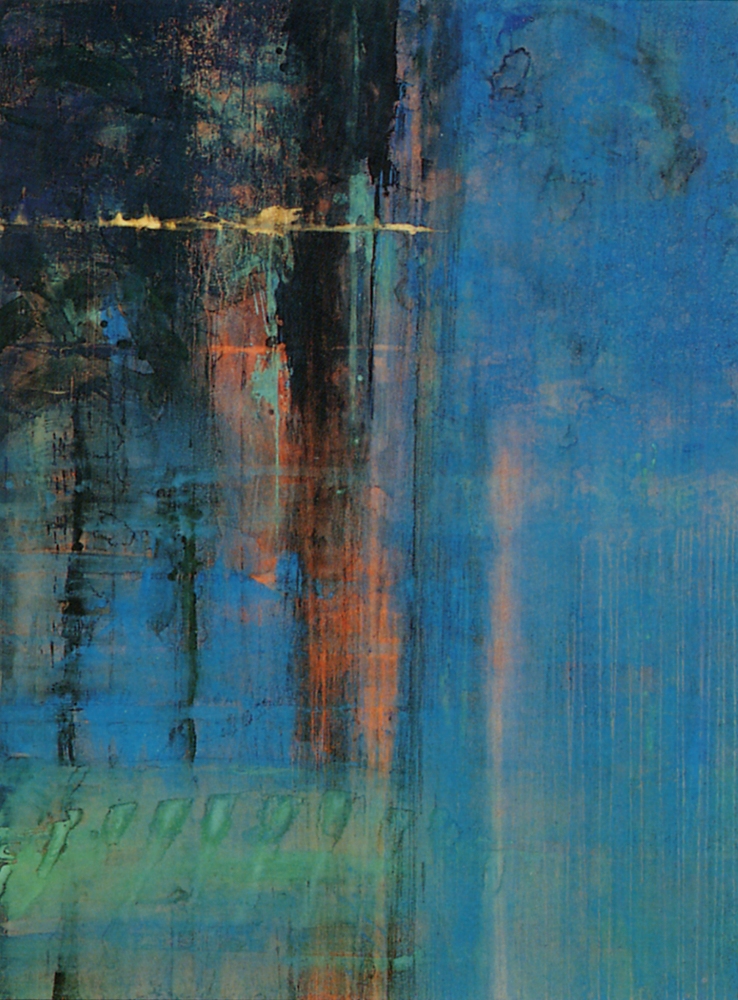 To celebrate Image’s twenty-fifth anniversary, we are posting a series of essays from people who have encountered our programs over the years. Today’s post is the first.
I had been living a double life.
Two nights a week, I attended a large evangelical church, where I prayed, sang, and gave my money and time. I led a small group where we spoke fiercely of our spiritual struggles, relationships, careers, and painful pasts.
At the same time, while riding the train downtown to my publishing job every morning, I wrote poems. My notebooks revealed another flavor of faith and struggle, prayer wrought with image and metaphor.
Both of these lives manifested the “real” me, and one was not more valuable than the other. But sustaining two identities with equal passion cannot last long. I’d lived that way through most of college and grad school, and now it was 1999, the thick of adulthood. Could I bring my two lives together? Could I experience the fullness of millennial joy Prince had promised years ago?
One afternoon at a local Barnes & Noble, I wandered to the newsstand and spotted a new acquisition: Image: A Journal of Arts and Religion. The cover image, Sacrificial Grace by Makoto Fujimura, gripped me with its decided lack of grip. This abstract, color-streaked waterfall “counted” as religious art? I wanted to enter it with my arms open, allow it to drench me with its mystery.
I immediately read the introduction by one Gregory Wolfe. Apparently, this journal I had never heard of was celebrating its tenth anniversary.
“The paradox lies in this,” he wrote. “We can experience presence—one could just as easily say grace—when art approximates the leap of faith, when it dares to place us directly inside an act of discovery. The risk of imagination, like the risk of faith, instills fear in those who believe we can only be saved by rational propositions. But the paradoxical truth is that unless we learn how to live in that risk-taking leap of faith, we will lose touch with the meaning of those propositions.”
His words (who was this guy?) mirrored what I believed and had been unable to explain: that my writing was an act of faith, that imagination itself was belief. For all their earnestness, most Christian publishers did not welcome imagination’s uncertainty—its messy, dripping Fujimuran shades. But I didn’t write my poems in spite of my faith. I wrote them as an expression of it.
And the poems in this Image! They conversed with biblical themes without theological agendas or superficial emotion, like these lines from Morri Creech’s “Parable of the Trees”:
Walking beneath the abundant leaves,
Christ felt the seed of hunger
take root in his body.
And as he reached among the branches
his dry lips parted
and the waters stirred in his mouth
for the nectar of figs,
and he knew at once
how the supple spirit
submits to human longing…
In his essay “River Grace” in that issue, Fujimura tells of his conversion— without words like “asking Jesus into my heart.” There is nothing inherently wrong with that phrasing, but it had begun to lose meaning for me. But here, I read about someone fighting Christ until, through a Blake poem, “I found myself responding to Christ and his message. Quietly, and quite unexpectedly, my allegiance shifted from art to Christ. It took me a year to realize that what had happened that day was a conversion experience.”
No altar call? No sinner’s prayer? There was room for this kind of conversion?
I was young and naïve. So I emailed Greg Wolfe as if he weren’t a scholar and author running a top literary journal:
“So I can be a faithful person who takes art seriously? I’m not the only one out there?”
Yes, he assured me. There are many of you.
“But what if my church doesn’t get the kind of writing I do?”
Then make like Jesus and flip over the Zondervan display in the church bookstore/café.
Actually, I don’t remember exactly what Greg said, but we corresponded for some time, and as a result, I no longer felt so alone. My community of artists of faith began to form.
Without question, evangelicalism is known for keeping lockstep with “rational (or sometimes not-so-rational) propositions,” distrusting mystery, and dismissing the arts unless they serve a utilitarian purpose of drawing people to a service. Kinkade’s certain, sentimental lines usually win out over Fujimura’s fog.
But I have little patience for the baby-and-bath-water throwing that dismisses evangelicalism wholesale because of these weaknesses. I have stuck with my church (albeit in my own oddball way) because of its strengths of vision, community outreach, expressive worship, and, in the case of most churches I’ve attended, commitment to helping the widows, orphans, and immigrants among us.
As difficult as it can be to effect change, I believe in influencing others as long as one has the emotional health to do so. Yes, sometimes you need to go elsewhere to thrive. But sometimes you can breathe hope into others who have been thinking like you all along.
After discovering Image, I started a poetry group at my church. We shared work with one another and gave readings at gallery showings. My pastor has invited me to read poems at services and discuss my work on his radio show. Church friends have come to readings and discovered they enjoy poetry, even when it employs spiritual doubt, graphic content, and colorful language. I’ve discovered that often I’m the one not giving others a chance.
And while I’m realistic enough to know that today’s typical evangelical fundraising campaign isn’t going to earmark a literary center, we are widening our circles of possibility with every new generation of believers.
Without nurturing communities like Image, I would have continued to live a divided life. Now I know there is a vibrant group that “gets me” no matter what happens within the church doors. Happy twenty-fifth anniversary, Image. Let’s party like it’s 2014.
Tania Runyan is the author of the poetry collections Second Sky (Cascade Poiema Series), A Thousand Vessels, Simple Weight, and Delicious Air, which was awarded Book of the Year by the Conference on Christianity and Literature in 2007. Her book How to Read a Poem, an instructional guide based on Billy Collins’s “Introduction to Poetry,” was recently released by T.S. Poetry Press. Her poems have appeared in many publications, including Poetry, Image, Books & Culture, Harvard Divinity Bulletin, The Christian Century, Atlanta Review, Indiana Review, and the anthology In a Fine Frenzy: Poets Respond to Shakespeare. Tania was awarded an NEA Literature Fellowship in 2011. She tutors high school students and edits for Every Day Poems and Relief.
Image used: Makoto Fujimura. Sacrificial Grace*, 1997. Mineral pigment on paper. 90 x 66 inches.*
Previous Post

March 18, 2014
Memory: Jubilee and Knell
Next Post
March 20, 2014 Scott Cairns and his Idiot Psalms
Browse Our Archives
Select a Category A. G. Harmon Alissa Wilkinson Allison Backous Art Authors Brad Fruhauff Bradford Winters Bryan Bliss Caroline Langston Chad Thomas Johnston Chris Hoke Christiana N. Peterson Culture D.G. Myers D.L. Mayfield Daniel Bowman Jr. David Griffith Elizabeth Duffy Faith Film Greg Wolfe Guest Contributor Interview Jan Vallone Jeffrey Overstreet Jessica Eddings-Roeser Jessica Mesman Griffith Kelly Foster Lindsey Crittenden Morgan Meis music Natalie Vestin Nick Olson Peggy Rosenthal Personal Reflection Poetry Friday Reflection Relationships Review Richard Chess Richard Cole Sara Zarr Shannon Huffman Polson Sonya Bilocerkowycz Tania Runyan Tony Woodlief Topical Categories Uncategorized Vic Sizemore Writing
Select a Month October 2018 September 2018 August 2018 July 2018 June 2018 May 2018 April 2018 March 2018 February 2018 January 2018 December 2017 November 2017 October 2017 September 2017 August 2017 July 2017 June 2017 May 2017 April 2017 March 2017 February 2017 January 2017 December 2016 November 2016 October 2016 September 2016 August 2016 July 2016 June 2016 May 2016 April 2016 March 2016 February 2016 January 2016 December 2015 November 2015 October 2015 September 2015 August 2015 July 2015 June 2015 May 2015 April 2015 March 2015 February 2015 January 2015 December 2014 November 2014 October 2014 September 2014 August 2014 July 2014 June 2014 May 2014 April 2014 March 2014 February 2014 January 2014 December 2013 November 2013 October 2013 September 2013 August 2013 July 2013 June 2013 May 2013 April 2013 March 2013 February 2013 January 2013 December 2012 November 2012 October 2012 September 2012 August 2012 July 2012 June 2012 May 2012 February 2008
Follow Us!
TAKE THE
Religious Wisdom Quiz
Who said: "Little children, keep yourselves from idols"?
Select your answer to see how you score.
John Paul James Peter
Related posts from Good Letters

On Writing Odes: Taking Time to Celebrate


Leonard Cohen’s Holy and Broken Hallelujah

Ready or Not for the Days of Awe
TRENDING AT PATHEOS Catholic

Rejecting Doom: Christian Hope And Human Action
Christianity is a religion of hope. We are to have hope and...

It’s What Comes From Within Which Matters
One of the most difficult things for us to understand is why...

Why I Choose the Eucharist Over the Sermon
Choose the Eucharist, Not the Sermon What are we supposed to get...

5 Design Elements Found in Spiritually Rooted Homes
Putting Spirituality Into Home Decor Our homes are more than our living...

Credo: A Story of God Told with the...
About 10 years ago, I began to imagine a personal "Credo" that...

The Anatomy of Divine Revelation in Catholic Thought
The claim that God has made Himself known to human beings is...
view all Catholic blogs
Ad-Free & Subscriber Log-In Subscription Support
- About Us
- 2026 Calendar
- Videos
- Podcasts
- Library of World Religions
- Faith In Media Tracker
- Advertise With Us
- Write for Us
- Privacy Policy
- Terms of Service
- Do Not Sell My Data
- Contact Us
- Radiant Digital
- Manage Newsletter Subscriptions
- Unsubscribe From Notifications
- Sitemap
Copyright 2008-2026, Patheos. All rights reserved.
Subscription Support Ad-Free & Subscriber Log-In
Follow Patheos