
BuddhistCatholicContemplativeEvangelicalGeneral ChristianHinduJewishLatter-day SaintMuslimNew VisionsProgressive Christian
Beliefs
- Buddhist
- Catholic
- Contemplative
- Evangelical
- General Christian
- Hindu
- Jewish
- Latter-day Saint
- More Voices
- Muslim
- New Visions
- Pagan
- Progressive Christian
Topics
- Religion News
- Food and Religion
- Sports and Religion
- Religious Art
- Religious Music and Entertainment
- Religious Events
- History and Religion
- Style and Religion
- Politics and Religion
- Women in Religion
- Recreation Outdoors and Religion
- Business Finance and Religion
- Careers Workplace and Religion
- Education and Religion
- Family Parenting and Religion
- Health Fitness and Religion
- Home and Religion
- Relationships and Religion
- Technology and Religion
- Travel and Religion
Columnists
- Buddhist Columnists
- Business Finance and Religion Columnists
- Careers Workplace and Religion Columnists
- Catholic Columnists
- Contemplative Columnists
- Education and Religion Columnists
- Evangelists Columnists
- Family Parenting and Religion Columnists
- General Christian Columnists
- Health Fitness and Religion Columnists
- Hindu Columnists
- History and Religion Columnists
- Home and Religion Columnists
- Jewish Columnists
- More Voices Columnists
- Latter Day Columnists
- Muslim Columnists
- New Visions Columnists
- Nonreligious Columnists
- Pagan Columnists
- Politics and Religion Columnists
- Progressive Columnists
- Recreation Outdoors and Religion Columnists
- Relationships and Religion Columnists
- Religion News Columnists
- Religious Art Columnists
- Religious Events Columnists
- Religious Music and Entertainment Columnists
- Sports and Religion Columnists
- Style and Religion Columnists
- Technology and Religion Columnists
- Travel and Religion Columnists
- Women in Religion Columnists
Resource Library
- 2026 Calendar
- Library of World Religions
- The 100 Most Holy Places on Earth
- Patheos Answers
- Podcasts
- Videos
- Faith Leaders Database
- Anglican Episcopalian
- Bahai
- Baptist
- Buddhism
- Christianity
- Confucianism
- Eastern Orthodoxy
- Hinduism
- Holiness and Pentecostal
- ISKCON
- Islam
- Judaism
- Lutheran
- Methodist
- The Church of Jesus Christ of Latter-day Saints
- New Age
- Paganism
- Presbytarian and Reformed
- Protestantism
- Religion Behind the Scenes
- Roman Catholic
- Scientology
- Shia Islam
- Sikhism
- Sufism
- Sunni Islam
- Taoism
- Zen
- See all religions
Research Tools
 Ad-Free & Subscriber Log-In Subscription Support
Ad-Free & Subscriber Log-In Subscription Support
Follow Patheos 

- Trending:
- Forgiveness
- |
- Marriage
- |
- Consciousness
- |
- Death Penalty
- |
- Election
- |
- Halloween
 Good Letters
-
Contributors
- Home
- Catholic
- In the Kingdom of the Ditch
In the Kingdom of the Ditch
Last updated on: March 18, 2014 at 10:16 pm by Peggy Rosenthal
In the Kingdom of the Ditch 2014-03-18T22:16:09-07:00 Peggy Rosenthal
Patheos Explore the world's faith through different perspectives on religion and spirituality! Patheos has the views of the prevalent religions and spiritualities of the world.
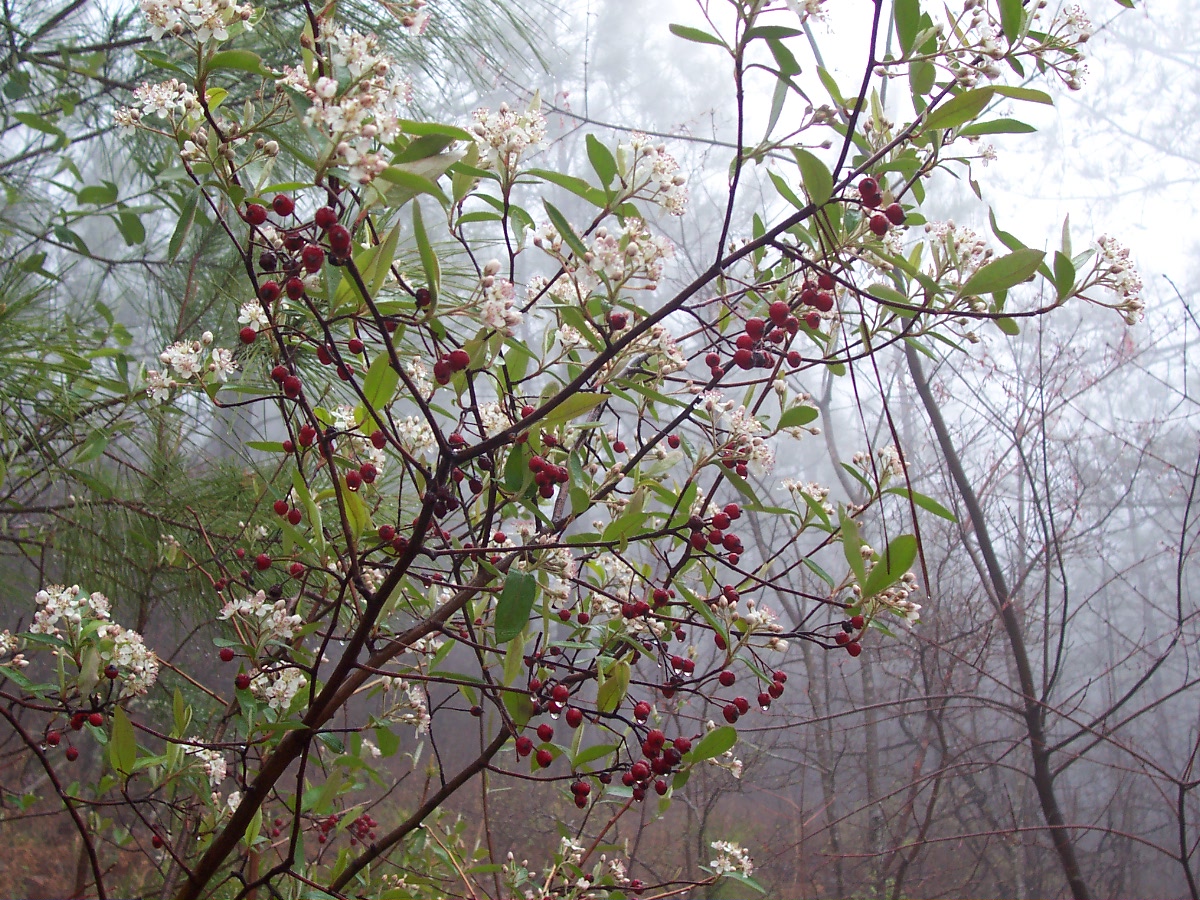 I used to find “nature poetry” boring. Descriptions of wind through the trees, hilltop vistas, butterflies alighting on flowers all left me unmoved. Then I started reading Todd Davis’s poems.
Choosing to live in the Pennsylvania mountains, Davis has immersed himself in the natural world—as a painter immerses himself in color, as a composer immerses herself in sound.
Nature is Davis’s language.
The poems of his newest volume, In the Kingdom of the Ditch, speak not so much of nature as by means of it.
Here, for instance, is “Atrial Fibrilation”:
Yesterday was the dull gray of a river stone. This morning
snow covers our neighbor’s roof, the sky the color of an indigo
bunting’s cap. Fresh from sleep we reach back for last summer’s
green, listen to a blue jay at the feeder as it cracks open a seed
to warm itself on the fire that still burns in the hull. To the west
our fields are bare, and beyond, in a room that holds her, my mother
wears a heart monitor. She rises stiffly from bed for a sponge-bath,
hoping her heart won’t flutter like the wings of a sparrow, the furious
beating of a finch as it tries to bring the body into balance, an agreement
with the wind, the rhythm of the blessedly invisible air.
In that “furious beating of a finch,” Davis finds an image for his mother’s fibrillating heart—and also, I think, for all our human fragility. We all need to bring ourselves “into balance” each morning, each day, really each minute. Through his language for the finch, Davis traces our body’s and soul’s teetering steps in “the blessedly invisible air.”
In “Missing Boy,” a pine snake sliding out of “the skin / of his former / self” gives Davis poignant terms for his growing son:
It sloughs
and curls,
scales
of what
he’s learned
but now believes
he does not
need.
And it’s nature that Davis turns to as he tries to make sense of his father’s recent death. In “Last Bones of Winter”:
Where the snow drifted deepest
I find the last of it hiding beneath stone.
Soon wood sorrel will blossom, white
as the snow it replaces. What else does death mean
except not here now? In the new warmth
the plum tree fills its branches with pink
bags, and near the seep skunk cabbage crawls
from its grave. Somehow my father knew
he would disappear before the last of the year….
Every year there comes a night when the last
bones of winter vanish, when temperatures
stay above freezing and stone settles deeper
in snow’s absence. On such nights the flesh
can’t help but fail, falling away and collecting
in the turning grass, only to become
something else.
What else do we become after death? The poem’s images raise this question. But Davis refuses easy answers. Rather, his poems look to nature for clues to life’s great questions. Take “Imago Dei”:
The weasel who lives
along the water’s edge
splits the muskrat’s vein:
jugular-blood stringing
the back of the head;
mouth shut until death’s
jaw-hinge opens the throat
so tongue may lap warmth
and salt. What’s left
of the idea we were made
in the image of God?
What’s left, indeed, after this gory scene?
Does nature speak to Davis of God? He’s not sure. At the start of “Transfiguration” (one of my favorites in the book), the answer seems to be yes:
When I walk among the beech saplings that rise from the roots
of the mother-tree, each turns in a cord of light and I imagine
this is what we mean to say when we speak the word God*.*
But then there’s the ambiguity—or what I hear as an ambiguity— in “When the Body Is Absent”:
The light that lifts the day has fallen on beebrush, and the ghost
of God, which smells so much like these pale flowers bees cross over,
is everywhere in the air.
When I first read this poem, I heard echoes of the “Holy Ghost” in “the ghost of God,” so it seemed evidence of God’s presence. But then, as I sat longer with the poem, the “ghost” began to seem a sign of God’s absence. For a ghost is perhaps not a presence.
Maybe in this reading I was influenced by Todd Davis’s delightful poem “Homily,” in the current Image (#79), which begins:
By the second week in September nuthatches capture the last
elderberries, excrement purpled and extravagant, sprayed
drunkenly across my truck’s hood. I’ve been thinking about the God
I pray to with no lasting effect and note the effortless work
the stream does as it feeds these bushes. My father was baptized
in the Green River, led by the hand in white robes to be dunked
beneath the current. Sometimes when mother gathers sheets
from the line in late summer, she finds the droppings of a bluebird
written like a sacred text. But what saint could decipher it?
Here, in a comic collage of missed connections, the divine, natural, and human worlds keep missing each other (or messing on each other).
I see a similar yet more uncomfortable vision in this latest volume’s brief title poem:
In the Kingdom of the Ditch
where Queen Anne’s lace holds
its saucer and raspberry its black
thimble, the shrew and the rat snake
seek after the same God,
who mercifully fills the belly
of one, then offers it to the other.
The Queen Anne’s lace and the raspberry stand quietly by while a Darwinian drama takes place—between creatures that “seek after the same God.” Who is this God? And is “the Kingdom of the Ditch” the Kingdom of God, or its antithesis? These are the questions that the poems of this volume keep probing.
Peggy Rosenthal is director of Poetry Retreats and writes widely on poetry as a spiritual resource. Her books include Praying through Poetry: Hope for Violent Times (Franciscan Media), and The Poets’ Jesus (Oxford). See Amazon for full list. She also teaches an online course, “Poetry as a Spiritual Practice,” through Image’s Glen Online program*.*
Previous Post

March 13, 2014
The Creationist Crisis
Next Post
March 17, 2014 The Shroud of Turin
Browse Our Archives
Select a Category A. G. Harmon Alissa Wilkinson Allison Backous Art Authors Brad Fruhauff Bradford Winters Bryan Bliss Caroline Langston Chad Thomas Johnston Chris Hoke Christiana N. Peterson Culture D.G. Myers D.L. Mayfield Daniel Bowman Jr. David Griffith Elizabeth Duffy Faith Film Greg Wolfe Guest Contributor Interview Jan Vallone Jeffrey Overstreet Jessica Eddings-Roeser Jessica Mesman Griffith Kelly Foster Lindsey Crittenden Morgan Meis music Natalie Vestin Nick Olson Peggy Rosenthal Personal Reflection Poetry Friday Reflection Relationships Review Richard Chess Richard Cole Sara Zarr Shannon Huffman Polson Sonya Bilocerkowycz Tania Runyan Tony Woodlief Topical Categories Uncategorized Vic Sizemore Writing
Select a Month October 2018 September 2018 August 2018 July 2018 June 2018 May 2018 April 2018 March 2018 February 2018 January 2018 December 2017 November 2017 October 2017 September 2017 August 2017 July 2017 June 2017 May 2017 April 2017 March 2017 February 2017 January 2017 December 2016 November 2016 October 2016 September 2016 August 2016 July 2016 June 2016 May 2016 April 2016 March 2016 February 2016 January 2016 December 2015 November 2015 October 2015 September 2015 August 2015 July 2015 June 2015 May 2015 April 2015 March 2015 February 2015 January 2015 December 2014 November 2014 October 2014 September 2014 August 2014 July 2014 June 2014 May 2014 April 2014 March 2014 February 2014 January 2014 December 2013 November 2013 October 2013 September 2013 August 2013 July 2013 June 2013 May 2013 April 2013 March 2013 February 2013 January 2013 December 2012 November 2012 October 2012 September 2012 August 2012 July 2012 June 2012 May 2012 February 2008
Follow Us!
TAKE THE
Religious Wisdom Quiz
I am a coat of many colors that sparked jealousy among brothers. What am I?
Select your answer to see how you score.
The priests robe Joseph's coat Jacob's robe A royal garment
Related posts from Good Letters


On Writing Odes: Taking Time to Celebrate

Poetry Friday: "The Burned Butterfly"

A Conversation with Alicia Ostriker: Part 1
TRENDING AT PATHEOS Catholic

The Parable Of The Sower And The Word...
One of Christ’s most famous parables is that of the sower who...

Rejecting Doom: Christian Hope And Human Action
Christianity is a religion of hope. We are to have hope and...

Why I Choose the Eucharist Over the Sermon
Choose the Eucharist, Not the Sermon What are we supposed to get...

5 Design Elements Found in Spiritually Rooted Homes
Putting Spirituality Into Home Decor Our homes are more than our living...

Credo: A Story of God Told with the...
About 10 years ago, I began to imagine a personal "Credo" that...

The Anatomy of Divine Revelation in Catholic Thought
The claim that God has made Himself known to human beings is...
view all Catholic blogs
Ad-Free & Subscriber Log-In Subscription Support
- About Us
- 2026 Calendar
- Videos
- Podcasts
- Library of World Religions
- Faith In Media Tracker
- Advertise With Us
- Write for Us
- Privacy Policy
- Terms of Service
- Do Not Sell My Data
- Contact Us
- Radiant Digital
- Manage Newsletter Subscriptions
- Unsubscribe From Notifications
- Sitemap
Copyright 2008-2026, Patheos. All rights reserved.
Subscription Support Ad-Free & Subscriber Log-In
Follow Patheos