
BuddhistCatholicContemplativeEvangelicalGeneral ChristianHinduJewishLatter-day SaintMuslimNew VisionsProgressive Christian
Beliefs
- Buddhist
- Catholic
- Contemplative
- Evangelical
- General Christian
- Hindu
- Jewish
- Latter-day Saint
- More Voices
- Muslim
- New Visions
- Pagan
- Progressive Christian
Topics
- Religion News
- Food and Religion
- Sports and Religion
- Religious Art
- Religious Music and Entertainment
- Religious Events
- History and Religion
- Style and Religion
- Politics and Religion
- Women in Religion
- Recreation Outdoors and Religion
- Business Finance and Religion
- Careers Workplace and Religion
- Education and Religion
- Family Parenting and Religion
- Health Fitness and Religion
- Home and Religion
- Relationships and Religion
- Technology and Religion
- Travel and Religion
Columnists
- Buddhist Columnists
- Business Finance and Religion Columnists
- Careers Workplace and Religion Columnists
- Catholic Columnists
- Contemplative Columnists
- Education and Religion Columnists
- Evangelists Columnists
- Family Parenting and Religion Columnists
- General Christian Columnists
- Health Fitness and Religion Columnists
- Hindu Columnists
- History and Religion Columnists
- Home and Religion Columnists
- Jewish Columnists
- More Voices Columnists
- Latter Day Columnists
- Muslim Columnists
- New Visions Columnists
- Nonreligious Columnists
- Pagan Columnists
- Politics and Religion Columnists
- Progressive Columnists
- Recreation Outdoors and Religion Columnists
- Relationships and Religion Columnists
- Religion News Columnists
- Religious Art Columnists
- Religious Events Columnists
- Religious Music and Entertainment Columnists
- Sports and Religion Columnists
- Style and Religion Columnists
- Technology and Religion Columnists
- Travel and Religion Columnists
- Women in Religion Columnists
Resource Library
- 2026 Calendar
- Library of World Religions
- The 100 Most Holy Places on Earth
- Patheos Answers
- Podcasts
- Videos
- Faith Leaders Database
- Anglican Episcopalian
- Bahai
- Baptist
- Buddhism
- Christianity
- Confucianism
- Eastern Orthodoxy
- Hinduism
- Holiness and Pentecostal
- ISKCON
- Islam
- Judaism
- Lutheran
- Methodist
- The Church of Jesus Christ of Latter-day Saints
- New Age
- Paganism
- Presbytarian and Reformed
- Protestantism
- Religion Behind the Scenes
- Roman Catholic
- Scientology
- Shia Islam
- Sikhism
- Sufism
- Sunni Islam
- Taoism
- Zen
- See all religions
Research Tools
 Ad-Free & Subscriber Log-In Subscription Support
Ad-Free & Subscriber Log-In Subscription Support
Follow Patheos 

- Trending:
- Forgiveness
- |
- Marriage
- |
- Consciousness
- |
- Death Penalty
- |
- Election
- |
- Halloween
 Good Letters
-
Contributors
- Home
- Catholic
- Henri Nouwen, Reaching Out: 25 Years of Image
Henri Nouwen, Reaching Out: 25 Years of Image
Last updated on: April 14, 2014 at 12:17 pm by Guest Contributor
Henri Nouwen, Reaching Out: 25 Years of Image 2014-04-14T12:17:46-07:00 Guest Contributor
Patheos Explore the world's faith through different perspectives on religion and spirituality! Patheos has the views of the prevalent religions and spiritualities of the world.
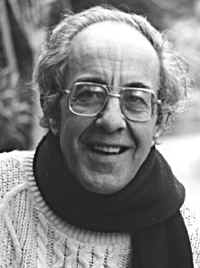
To celebrate Image’s twenty-fifth anniversary we are posting a series of essays from people who have encountered our programs over the years. Read the other installments, Stumbling into the Waterfall and The Notecards of Paradise.
Guest post
By Dan Wakefield
I was happy to be asked to speak at the first Image conference in Berkeley in 1992 and delighted to learn that Henri Nouwen, the Roman Catholic priest and Dutch theologian, would be there to deliver the Sunday homily.
My minister at King’s Chapel in Boston had introduced me to his work when he gave me Nouwen’s book Reaching Out: Three Movements in The Spiritual Life, and a friend introduced me to Henri himself when he was at Harvard Divinity School in 1983.
I had gone with a group of friends from King’s Chapel to hear Father Nouwen give a public lecture at Harvard in 1982, where the Divinity School had scheduled him in a room that held about a hundred people, which meant that another hundred or so had to be turned away. We learned later that some of the Divinity faculty were piqued that Nouwen had drawn such a big crowd—we were condescendingly described as “people from the suburbs,” i.e. non-academics, and Nouwen was whispered to be “popular,” a mortal sin in elitist theology.
The only speaker I have ever heard to match the power of Nouwen was James Baldwin, a street corner preacher as a boy in Harlem before becoming a writer. Nouwen spoke with a slight lisp, and his whole body seemed to bend forward with his hands sometimes “reaching out” in a physical effort to get across his message, not histrionically but with a passion to communicate, as if he were trying to implant his words in the hearts of his listeners.
I walked to the service at the Image conference with Suzanne Wolfe and as we walked up the steps of the chapel I asked if she had heard Father Nouwen speak before. She said she had not, and I predicted she was in for a memorable experience. After the service, I asked her what she thought of his homily. She stopped for a moment, and said “He takes no prisoners.” That was the best summation I have heard of Nouwen’s power as a speaker.
It was not from a pulpit, however, but at a dinner table, that I heard Nouwen’s most impassioned and transformative words. There was a dinner on the Saturday night of the conference for some of the speakers and guests at a private home, and I was fortunate to be seated next to Henri. The conversation at the table was polite, “spiritual-intellectual” dialogue of a perfectly pleasant sort that would neither offend nor challenge nor inspire anyone present. I could see that Nouwen was bored.
The woman at the head of the table, to my left, was telling someone that she used to be a Catholic but she had left the church because of its politics, and suddenly Henri came awake and alive.
“Forget about the politics,” Henri said. “All that is distraction. I don’t mean to denigrate or even dismiss your points but those are beside the point. The only thing that really matters is your relationship with Jesus—I mean your personal relationship with the mystical Jesus.”
The woman was taken aback, and looked perplexed. Imagining what she might be feeling, I asked Nouwen the question that I wanted to know the answer to myself.
“How does someone have a ‘a personal relationship with the mystical Jesus?’”
Nouwen leaned across the table toward the woman and said with an urgent passion, “Just give me ten minutes a day—no, five minutes! Just take five minutes a day, every day for two weeks, to sit quietly and ask to be with Jesus, ask for his presence. Then come and tell me what’s important.”
Nouwen pushed his unfinished plate aside as if to clear away any obstacles to his message to the lapsed Catholic, to focus even more fully on his response. His delivery was so intense I imagined a kind of beam going out from him to the woman as he spoke.
“People complain about The Church,” Nouwen said.” They say The Church isn’t interested in their problems. I spoke to a young man with AIDS the other day, who said to me “The Church doesn’t care about me. Where is The Church in my life now when I’m dying of AIDS?”
“I said to him ‘Who do you think I am? Who do you think any priest is? I am The Church and I care about you. That’s why I’m here with you now.’”
In that fancy dining room in that wealthy home, I felt I was in the presence of the Spirit.
In his homily the next morning he spoke of being the resident pastor at Daybreak, in Toronto, one of the “L’Arche” communities founded by Jean Vanier, where functioning adults live with people who would otherwise have to be sent to mental institutions.
Nouwen felt more comfortable there than he had at Harvard, which he left after two years of his five year contract. At Daybreak he bathed, fed, and took care of a man who was not capable of doing those things for himself.
“There is a man who lives in my community,” he said, “who asks me ‘What are you doing here?’ whenever I see him, and a woman who always smiles at me and says ‘Welcome.’ I could see these people as ‘mentally handicapped,’ or I could see them as angels who are giving me important messages every day—asking myself what I’m doing here with my life on earth, and reminding me I am welcome here.”
Sometimes in the continuing struggles and challenges of life, when I am feeling overwhelmed and drained, I remember Henri’s message at the dinner table that night at the Image conference, and I make myself stop and follow Henri’s advice.
Though I pray in some form or other every day I had not for a while thought of doing what Henri had asked—no words, simply sitting quietly and asking to be in the presence of Jesus. I did that yesterday, and I felt a great peace. I thought again of Henri, with gratitude, and looked up a favorite passage in Reaching Out.
“What if the events of our history are molding us as a sculptor molds his clay, and it is only in a careful obedience to his molding hands that we can discover our real vocation and become mature people? What if all the unexpected interruptions are in fact invitations to give up old-fashioned and outmoded styles of living and are opening up new unexplored areas of experience? And finally, what if our histories do not prove to be a blind impersonal sequence of events over which we have no control, but rather reveal to us a guiding hand pointing to a personal encounter in which all our hopes and aspirations will reach their fulfillment? Then our life would indeed be different, because then fate becomes opportunity, wounds a warning, and paralysis an invitation to search for deeper sources of vitality.”
Dan Wakefield’s memoirs include Returning: A Spiritual Journey. He recently edited and wrote the introduction for Kurt Vonnegut Letters, and If This Isn’t Nice, What Is?: Vonnegut’s Advice to the Young.
Previous Post

March 28, 2014
Lectio Divina for a Life
Next Post

April 1, 2014 My Dinners with Philip Levine
Browse Our Archives
Select a Category A. G. Harmon Alissa Wilkinson Allison Backous Art Authors Brad Fruhauff Bradford Winters Bryan Bliss Caroline Langston Chad Thomas Johnston Chris Hoke Christiana N. Peterson Culture D.G. Myers D.L. Mayfield Daniel Bowman Jr. David Griffith Elizabeth Duffy Faith Film Greg Wolfe Guest Contributor Interview Jan Vallone Jeffrey Overstreet Jessica Eddings-Roeser Jessica Mesman Griffith Kelly Foster Lindsey Crittenden Morgan Meis music Natalie Vestin Nick Olson Peggy Rosenthal Personal Reflection Poetry Friday Reflection Relationships Review Richard Chess Richard Cole Sara Zarr Shannon Huffman Polson Sonya Bilocerkowycz Tania Runyan Tony Woodlief Topical Categories Uncategorized Vic Sizemore Writing
Select a Month October 2018 September 2018 August 2018 July 2018 June 2018 May 2018 April 2018 March 2018 February 2018 January 2018 December 2017 November 2017 October 2017 September 2017 August 2017 July 2017 June 2017 May 2017 April 2017 March 2017 February 2017 January 2017 December 2016 November 2016 October 2016 September 2016 August 2016 July 2016 June 2016 May 2016 April 2016 March 2016 February 2016 January 2016 December 2015 November 2015 October 2015 September 2015 August 2015 July 2015 June 2015 May 2015 April 2015 March 2015 February 2015 January 2015 December 2014 November 2014 October 2014 September 2014 August 2014 July 2014 June 2014 May 2014 April 2014 March 2014 February 2014 January 2014 December 2013 November 2013 October 2013 September 2013 August 2013 July 2013 June 2013 May 2013 April 2013 March 2013 February 2013 January 2013 December 2012 November 2012 October 2012 September 2012 August 2012 July 2012 June 2012 May 2012 February 2008
Follow Us!
TAKE THE
Religious Wisdom Quiz
Which Psalm begins, "The Lord is my light and my salvation; whom shall I fear?"
Select your answer to see how you score.
Psalm 27 Psalm 14 Psalm 139 Psalm 91
Related posts from Good Letters

The Stars of the Earth Cry Out



Poetry Friday: “The Ordinary Time”
TRENDING AT PATHEOS Catholic

Creation, Preservation, and Teleology in Catholic Theology
As I write this, it is very early Monday morning. Like millions...

The Parable Of The Sower And The Word...
One of Christ’s most famous parables is that of the sower who...

Rejecting Doom: Christian Hope And Human Action
Christianity is a religion of hope. We are to have hope and...

Why I Choose the Eucharist Over the Sermon
Choose the Eucharist, Not the Sermon What are we supposed to get...

5 Design Elements Found in Spiritually Rooted Homes
Putting Spirituality Into Home Decor Our homes are more than our living...

Credo: A Story of God Told with the...
About 10 years ago, I began to imagine a personal "Credo" that...
view all Catholic blogs
Ad-Free & Subscriber Log-In Subscription Support
- About Us
- 2026 Calendar
- Videos
- Podcasts
- Library of World Religions
- Faith In Media Tracker
- Advertise With Us
- Write for Us
- Privacy Policy
- Terms of Service
- Do Not Sell My Data
- Contact Us
- Radiant Digital
- Manage Newsletter Subscriptions
- Unsubscribe From Notifications
- Sitemap
Copyright 2008-2026, Patheos. All rights reserved.
Subscription Support Ad-Free & Subscriber Log-In
Follow Patheos