
BuddhistCatholicContemplativeEvangelicalGeneral ChristianHinduJewishLatter-day SaintMuslimNew VisionsProgressive Christian
Beliefs
- Buddhist
- Catholic
- Contemplative
- Evangelical
- General Christian
- Hindu
- Jewish
- Latter-day Saint
- More Voices
- Muslim
- New Visions
- Pagan
- Progressive Christian
Topics
- Religion News
- Food and Religion
- Sports and Religion
- Religious Art
- Religious Music and Entertainment
- Religious Events
- History and Religion
- Style and Religion
- Politics and Religion
- Women in Religion
- Recreation Outdoors and Religion
- Business Finance and Religion
- Careers Workplace and Religion
- Education and Religion
- Family Parenting and Religion
- Health Fitness and Religion
- Home and Religion
- Relationships and Religion
- Technology and Religion
- Travel and Religion
Columnists
- Buddhist Columnists
- Business Finance and Religion Columnists
- Careers Workplace and Religion Columnists
- Catholic Columnists
- Contemplative Columnists
- Education and Religion Columnists
- Evangelists Columnists
- Family Parenting and Religion Columnists
- General Christian Columnists
- Health Fitness and Religion Columnists
- Hindu Columnists
- History and Religion Columnists
- Home and Religion Columnists
- Jewish Columnists
- More Voices Columnists
- Latter Day Columnists
- Muslim Columnists
- New Visions Columnists
- Nonreligious Columnists
- Pagan Columnists
- Politics and Religion Columnists
- Progressive Columnists
- Recreation Outdoors and Religion Columnists
- Relationships and Religion Columnists
- Religion News Columnists
- Religious Art Columnists
- Religious Events Columnists
- Religious Music and Entertainment Columnists
- Sports and Religion Columnists
- Style and Religion Columnists
- Technology and Religion Columnists
- Travel and Religion Columnists
- Women in Religion Columnists
Resource Library
- 2026 Calendar
- Library of World Religions
- The 100 Most Holy Places on Earth
- Patheos Answers
- Podcasts
- Videos
- Faith Leaders Database
- Anglican Episcopalian
- Bahai
- Baptist
- Buddhism
- Christianity
- Confucianism
- Eastern Orthodoxy
- Hinduism
- Holiness and Pentecostal
- ISKCON
- Islam
- Judaism
- Lutheran
- Methodist
- The Church of Jesus Christ of Latter-day Saints
- New Age
- Paganism
- Presbytarian and Reformed
- Protestantism
- Religion Behind the Scenes
- Roman Catholic
- Scientology
- Shia Islam
- Sikhism
- Sufism
- Sunni Islam
- Taoism
- Zen
- See all religions
Research Tools
 Ad-Free & Subscriber Log-In Subscription Support
Ad-Free & Subscriber Log-In Subscription Support
Follow Patheos 

- Trending:
- Forgiveness
- |
- Marriage
- |
- Consciousness
- |
- Death Penalty
- |
- Election
- |
- Halloween
 Good Letters
-
Contributors
- Home
- Catholic
- God’s Grandeur
God’s Grandeur
Last updated on: July 20, 2015 at 12:44 pm by Guest Contributor
God’s Grandeur 2015-07-20T12:44:16-07:00 Guest Contributor
Patheos Explore the world's faith through different perspectives on religion and spirituality! Patheos has the views of the prevalent religions and spiritualities of the world.
G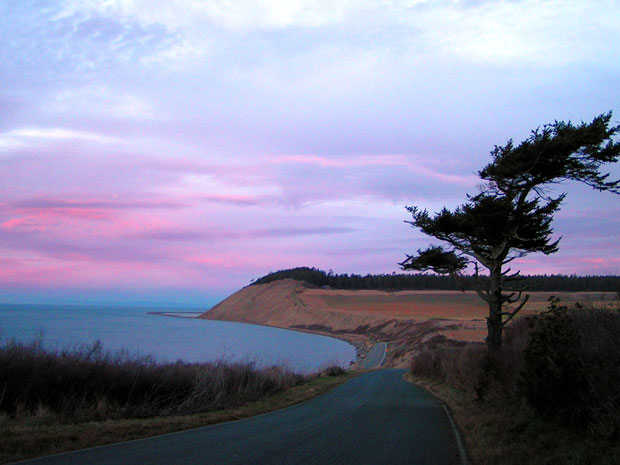 uest Post
By Jeanne Murray Walker
I’m up at 5:30 in the morning, packing, then gazing out the window at Whidbey Island as I wait for a pick-up. Wind rattles the cold panes. Behind me, a fire flares in the fireplace. This weekend I have been staying at Camp Casey, a WWII military base, now home to birds and a herd of black-tailed deer.
A gathering of painters, composers, theologians, environmentalists, and poets from all over the country has spent the last two days, meeting here around the clock. We have shared our art with one another and considered, in this wild place, the predicament we have in common as citizens of the earth. We know beyond any doubt that we humans have damaged the planet. Polar ice is melting. The earth’s climate zones are suddenly shifting. Weather is veering toward violence. Sea levels are rising.
This is a scandal. It has happened on our watch.
We have spent hours talking about the central questions. After all, how was this planet created? Evolution and the tenets of our faith, we agreed, are entirely compatible. We weighed the facts. Scientists and theologians, both, have written powerfully about their amazement at the record of the universe, about life on this planet. They see no conflict between their faith in God and the evidence for evolution.
We moved on to think about how, as people of faith, we are meant to be the custodians of nature. After all, in one of the earliest stories in Genesis, God commanded our parents, Adam and Eve, to husband the earth. Consider the countless different shapes of leaves, the ingenious lives of animals, the endless hues and sounds of water.
This is what we are destroying, we realized: God’s creation.
To examine the creation more closely, we pulled on our jackets and traipsed outside. In the gray November drizzle we hiked, partly to get some exercise, partly to discover “nature” on Whidbey Island. We picked up twigs. We examined animal tracks. We marveled at the flight of birds.
Meanwhile, I couldn’t help but think how strange the idea—that nature needs us to save it. After all, nature can be utterly intractable to us as individuals. It can kill. “Man against Nature,” as my ninth grade teacher used to say, is one of the three great overarching plots in fiction. I myself have faced rampaging rivers, alarming droughts, and the savage, beardy snowstorms of northern Minnesota.
Now, on the final day of the conference, the morning we are leaving, I am pondering what to make of our weekend. Outside, the streetlights have not yet flicked off. Pines loom black against the salmon-colored sky. On this island, just off Puget Sound, the sun is rising. I watch as the colors of the landscape modulate slowly, tantalizingly, relentlessly. A fiery ball finally emerges.
What a relief. The sun has come up. Again. Watching sunrise makes me feel complicit with God, who is figuring out how to create yet another day on earth.
And then—like a gift—I think about Gerard Manley Hopkins, a young teacher of Latin and Greek, who sat down a hundred years ago to write about this, perhaps more brilliantly than anyone else before or since. Long before modern science had nailed the evidence that we are destroying the planet, he set out the problem: “All is bleared,” he wrote, “all is smeared.”
And he formulated a tentative solution. Maybe there’s hope, he suggested, because the Holy Spirit endlessly regenerates life. Although light fades in the west, “Morning at the brown brink eastward springs.”
I stood at the window, watching it happen. God’s creation is not finished. It goes on. Every morning it is renewed.
For all we humans do to degrade nature, Hopkins wrote, “nature is never spent.” He ends his poem: “the Holy Ghost over the bent/ World broods with warm breast and with ah! Bright wings.”
To put it simply, if we are willing to halt our damage, God can heal what we have already destroyed. There is hope, but the outcome depends on us.
Here’s Hopkins’s sonnet “God’s Grandeur”:
The world is charged with the grandeur of God.
It will flame out, like shining from shook foil;
It gathers to a greatness, like the ooze of oil
Crushed. Why do men then now not reck his rod?
Generations have trod, have trod, have trod;
And all is seared with trade; bleared, smeared with toil;
And wears man’s smudge and shares man’s smell: the soil
Is bare now, nor can foot feel, being shod.
And for all this, nature is never spent;
There lives the dearest freshness deep down things;
And though the last lights off the black West went
Oh, morning, at the brown brink eastward, springs —
Because the Holy Ghost over the bent
World broods with warm breast and with ah! bright wings.
Gerard Manley Hopkins, who so brilliantly predicted our contemporary dilemma, died before any of us were born. He spent his life as a Jesuit, tutoring early university students. He published very little during his lifetime, but his poetry is now considered among the most significant of his era. It is easy to see why.
Thinking about his sonnet as we drive toward the SeaTac Airport, I renew my commitment to restore and nurture God’s creation in whatever way I can.
Jeanne Murray Walker’s most recent book is The Geography of Memory. She heads the Creative Writing concentration at The University of Delaware and serves as a Poetry Mentor in Seattle Pacific University’s MFA Program.
This post was made possible through the support of a grant from The BioLogos Foundation’s Evolution and Christian Faith program. The opinions expressed are those of the author and do not necessarily reflect the views of BioLogos.
Previous Post

February 11, 2014
A Blaze of Holy Unease, Part 2
Next Post
February 13, 2014 The Contemporary Literature & Faith Debate: Weblinks
Browse Our Archives
Select a Category A. G. Harmon Alissa Wilkinson Allison Backous Art Authors Brad Fruhauff Bradford Winters Bryan Bliss Caroline Langston Chad Thomas Johnston Chris Hoke Christiana N. Peterson Culture D.G. Myers D.L. Mayfield Daniel Bowman Jr. David Griffith Elizabeth Duffy Faith Film Greg Wolfe Guest Contributor Interview Jan Vallone Jeffrey Overstreet Jessica Eddings-Roeser Jessica Mesman Griffith Kelly Foster Lindsey Crittenden Morgan Meis music Natalie Vestin Nick Olson Peggy Rosenthal Personal Reflection Poetry Friday Reflection Relationships Review Richard Chess Richard Cole Sara Zarr Shannon Huffman Polson Sonya Bilocerkowycz Tania Runyan Tony Woodlief Topical Categories Uncategorized Vic Sizemore Writing
Select a Month October 2018 September 2018 August 2018 July 2018 June 2018 May 2018 April 2018 March 2018 February 2018 January 2018 December 2017 November 2017 October 2017 September 2017 August 2017 July 2017 June 2017 May 2017 April 2017 March 2017 February 2017 January 2017 December 2016 November 2016 October 2016 September 2016 August 2016 July 2016 June 2016 May 2016 April 2016 March 2016 February 2016 January 2016 December 2015 November 2015 October 2015 September 2015 August 2015 July 2015 June 2015 May 2015 April 2015 March 2015 February 2015 January 2015 December 2014 November 2014 October 2014 September 2014 August 2014 July 2014 June 2014 May 2014 April 2014 March 2014 February 2014 January 2014 December 2013 November 2013 October 2013 September 2013 August 2013 July 2013 June 2013 May 2013 April 2013 March 2013 February 2013 January 2013 December 2012 November 2012 October 2012 September 2012 August 2012 July 2012 June 2012 May 2012 February 2008
Follow Us!
TAKE THE
Religious Wisdom Quiz
What kind of animal did Jesus ride into Jerusalem?
Select your answer to see how you score.
Donkey Horse Camel Ox
Related posts from Good Letters

The Stars of the Earth Cry Out


Poetry Friday: “The Ordinary Time”
TRENDING AT PATHEOS Catholic

Rejecting Doom: Christian Hope And Human Action
Christianity is a religion of hope. We are to have hope and...

It’s What Comes From Within Which Matters
One of the most difficult things for us to understand is why...

Why I Choose the Eucharist Over the Sermon
Choose the Eucharist, Not the Sermon What are we supposed to get...

5 Design Elements Found in Spiritually Rooted Homes
Putting Spirituality Into Home Decor Our homes are more than our living...

Credo: A Story of God Told with the...
About 10 years ago, I began to imagine a personal "Credo" that...

The Anatomy of Divine Revelation in Catholic Thought
The claim that God has made Himself known to human beings is...
view all Catholic blogs
Ad-Free & Subscriber Log-In Subscription Support
- About Us
- 2026 Calendar
- Videos
- Podcasts
- Library of World Religions
- Faith In Media Tracker
- Advertise With Us
- Write for Us
- Privacy Policy
- Terms of Service
- Do Not Sell My Data
- Contact Us
- Radiant Digital
- Manage Newsletter Subscriptions
- Unsubscribe From Notifications
- Sitemap
Copyright 2008-2026, Patheos. All rights reserved.
Subscription Support Ad-Free & Subscriber Log-In
Follow Patheos