
BuddhistCatholicContemplativeEvangelicalGeneral ChristianHinduJewishLatter-day SaintMuslimNew VisionsProgressive Christian
Beliefs
- Buddhist
- Catholic
- Contemplative
- Evangelical
- General Christian
- Hindu
- Jewish
- Latter-day Saint
- More Voices
- Muslim
- New Visions
- Pagan
- Progressive Christian
Topics
- Religion News
- Food and Religion
- Sports and Religion
- Religious Art
- Religious Music and Entertainment
- Religious Events
- History and Religion
- Style and Religion
- Politics and Religion
- Women in Religion
- Recreation Outdoors and Religion
- Business Finance and Religion
- Careers Workplace and Religion
- Education and Religion
- Family Parenting and Religion
- Health Fitness and Religion
- Home and Religion
- Relationships and Religion
- Technology and Religion
- Travel and Religion
Columnists
- Buddhist Columnists
- Business Finance and Religion Columnists
- Careers Workplace and Religion Columnists
- Catholic Columnists
- Contemplative Columnists
- Education and Religion Columnists
- Evangelists Columnists
- Family Parenting and Religion Columnists
- General Christian Columnists
- Health Fitness and Religion Columnists
- Hindu Columnists
- History and Religion Columnists
- Home and Religion Columnists
- Jewish Columnists
- More Voices Columnists
- Latter Day Columnists
- Muslim Columnists
- New Visions Columnists
- Nonreligious Columnists
- Pagan Columnists
- Politics and Religion Columnists
- Progressive Columnists
- Recreation Outdoors and Religion Columnists
- Relationships and Religion Columnists
- Religion News Columnists
- Religious Art Columnists
- Religious Events Columnists
- Religious Music and Entertainment Columnists
- Sports and Religion Columnists
- Style and Religion Columnists
- Technology and Religion Columnists
- Travel and Religion Columnists
- Women in Religion Columnists
Resource Library
- 2026 Calendar
- Library of World Religions
- The 100 Most Holy Places on Earth
- Patheos Answers
- Podcasts
- Videos
- Faith Leaders Database
- Anglican Episcopalian
- Bahai
- Baptist
- Buddhism
- Christianity
- Confucianism
- Eastern Orthodoxy
- Hinduism
- Holiness and Pentecostal
- ISKCON
- Islam
- Judaism
- Lutheran
- Methodist
- The Church of Jesus Christ of Latter-day Saints
- New Age
- Paganism
- Presbytarian and Reformed
- Protestantism
- Religion Behind the Scenes
- Roman Catholic
- Scientology
- Shia Islam
- Sikhism
- Sufism
- Sunni Islam
- Taoism
- Zen
- See all religions
Research Tools
 Ad-Free & Subscriber Log-In Subscription Support
Ad-Free & Subscriber Log-In Subscription Support
Follow Patheos 

- Trending:
- Forgiveness
- |
- Marriage
- |
- Consciousness
- |
- Death Penalty
- |
- Election
- |
- Halloween
 Good Letters
-
Contributors
- Home
- Catholic
- Walking Toward Forgiveness
Walking Toward Forgiveness
Last updated on: January 24, 2014 at 1:00 am by Allison Backous Troy
Walking Toward Forgiveness 2014-01-23T16:11:33-07:00 Allison Backous Troy
Patheos Explore the world's faith through different perspectives on religion and spirituality! Patheos has the views of the prevalent religions and spiritualities of the world.
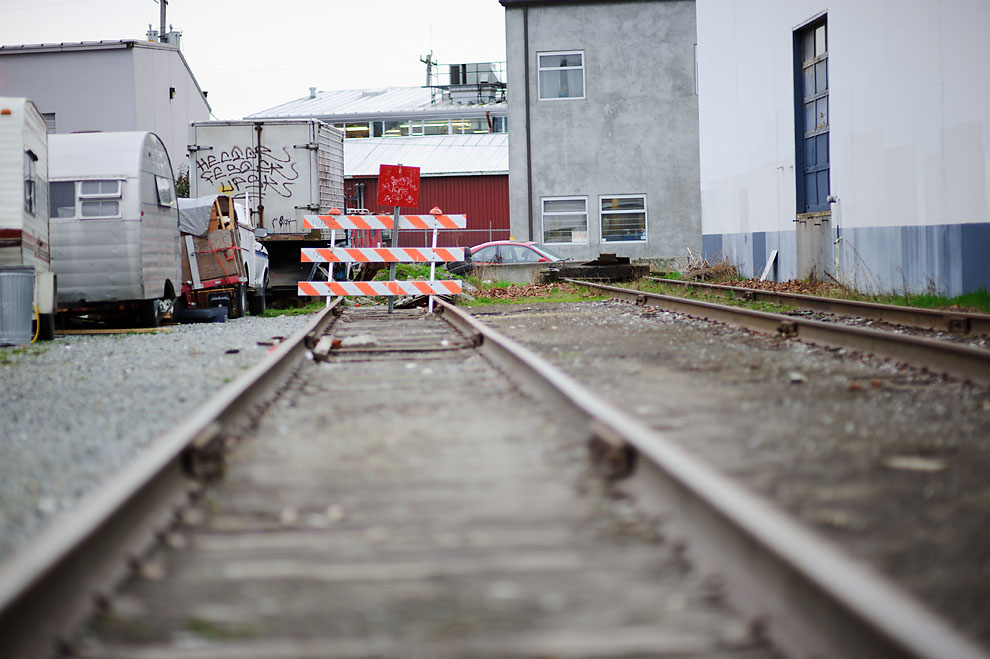 Outside our trailer park, a set of railroad tracks ran from east to west, dividing us from the police station that sat half a mile down the road. When you drove over the tracks, and felt the car pull itself over the split asphalt, it seemed like you were being locked in or released, depending on which way you were driving.
I used to walk along the tracks at dusk, singing and talking to myself, the fields stretching westward behind me as the sun sank behind the Walgreens. I practiced lines for my high school plays; I imagined what it would be like to walk with whichever boy at school I liked at the time. I tried to keep myself occupied as long as I could, tried to fill my mind with anything besides the dull dread that I knew would be waiting for me once I got back home.
What is poignant about this scene is that it is one of the few memories I have where the sensory detail is so vivid—I have bits of images, movements, but it is hard to place whole memories. I know that so much of what happened has been buried deep within me, and when something surfaces, I have to try to catch as much as I can.
What I remember, mostly, is walking: walking to the curb to meet the police officer before my mother’s boyfriend knew I had called; walking my mother to her bed with her lips against my ear, drunk and sorry and heaving sobs so big that I almost lost my grip on her shoulder. Walking in the fiery shafts of light that cut across the tracks, my voice carrying over the cornfields: But it wouldn’t be make believe / if you believed in me.
Memory is, to me, one of the heaviest burdens you carry when you come from a family like mine. Even the good memories are burdens; they always cast a wistful shadow, make you think about what things could have been like, what things might have been.
And what I’ve heard from others, those who come from families like mine, and those who don’t, is that a sure way to release the burden of these memories, is to forgive.
I know that to not forgive is not an option; I am a Christian, and forgiveness is the central tenant, the lynchpin, the way through the eye of the needle.
But there is something in the idea of forgiveness that, at this point in my life, makes me nauseous.
It isn’t that I don’t want to forgive my parents for the things that have happened. I’ve told them that I forgive them, many times over, but the memories remain. Truth be told, the same things keep on happening. New memories emerge. And as I make my way through marriage and parenthood, I find myself locked in a perpetual mode of defense, my gut and throat tightening whenever the topic comes up.
I suppose it’s the finality of it—if I say that I forgive, there are no more grounds for me to be suspicious or wary of the loved ones who have hurt me so deeply. It’s done, over, the past belonging to the past, and the future a blank slate that I somehow owe to the ones that hurt my siblings and me so deeply. “How wonderful it must be,” I’ve heard, “to forgive and leave all that behind you.”
But when the ones I’m supposed to forgive continue to present real and present danger to me and my loved ones—when my mother’s insistence on another visit to our home leaves me breathless and weeping in our armchair—it doesn’t seem right.
And neither does the view of forgiveness as a way to free myself from these memories. “Do it for you,” I’ve also heard, and while I get that letting my mother and father off the hook could create some distance, it also seems to fall short of the ones forgiveness is intended for, both victim and perpetrator.
In Patty Griffin’s song “Forgiveness,” there is a line that catches my throat each time I hear it: We are calling for help tonight / on a thin phone line.
That’s what my whole childhood felt like: a call for help, a repeated dialing of the phone, the police leaving and my mother’s boyfriend staying, my mother walking out the door to get to the bar at its opening, her figure diminishing as I watched from the door. I walked the line of railroad ties and hoped that something would open up to us, let us out, set us free from the terror and ache we knew.
What it comes down to, I think, is that forgiveness is neither altar call nor personal mantra, but a reality to be lived into, something that calls out to us from the edges of what we know and feel and believe. It is the desire and the move to love, and what I know is this: that I love my family fiercely and deeply. There is nothing I want more than the ease other families share, the comfort of trust and the freedom of letting go.
But there is a great gap fixed between that desire and the present reality, the ongoing difficulties that my family presents, the continual unfolding of memories, my parents’ inability to seek forgiveness themselves, their limitations and their own fixations on what was robbed from them too large to shake off.
How will the gap be bridged? I have no idea. I spent my twenties mourning the childhood I had and looking for ways to make my life new. And as my life has turned, the cycle of mourning continues: my siblings’ own memories, splintered as mine, piece themselves together, and we are left sobbing and shaking and unable to sleep at night.
And in the sleeplessness, I nurse my son. He eats and returns to sleep, his body a sturdy weight against my shoulder, a buoy, a promise, the morning light rising in the window, the Wyoming sky stretching over us, wide and open.
Allison Backous Troy teaches at Kuyper College in Grand Rapids, Michigan, and is the creative writing editor for The Other Journal. She graduated from the Seattle Pacific University’s Master of Fine Arts in Creative Writing program in 2009.
This is Allison Backous Troy’s last regular post for “Good Letters.” We thank her for her beautiful writing and wish her well.
Previous Post

January 23, 2014
Media Matrimony for Better for Worse, Part 2
Next Post
January 27, 2014 The Parent State
Browse Our Archives
Select a Category A. G. Harmon Alissa Wilkinson Allison Backous Art Authors Brad Fruhauff Bradford Winters Bryan Bliss Caroline Langston Chad Thomas Johnston Chris Hoke Christiana N. Peterson Culture D.G. Myers D.L. Mayfield Daniel Bowman Jr. David Griffith Elizabeth Duffy Faith Film Greg Wolfe Guest Contributor Interview Jan Vallone Jeffrey Overstreet Jessica Eddings-Roeser Jessica Mesman Griffith Kelly Foster Lindsey Crittenden Morgan Meis music Natalie Vestin Nick Olson Peggy Rosenthal Personal Reflection Poetry Friday Reflection Relationships Review Richard Chess Richard Cole Sara Zarr Shannon Huffman Polson Sonya Bilocerkowycz Tania Runyan Tony Woodlief Topical Categories Uncategorized Vic Sizemore Writing
Select a Month October 2018 September 2018 August 2018 July 2018 June 2018 May 2018 April 2018 March 2018 February 2018 January 2018 December 2017 November 2017 October 2017 September 2017 August 2017 July 2017 June 2017 May 2017 April 2017 March 2017 February 2017 January 2017 December 2016 November 2016 October 2016 September 2016 August 2016 July 2016 June 2016 May 2016 April 2016 March 2016 February 2016 January 2016 December 2015 November 2015 October 2015 September 2015 August 2015 July 2015 June 2015 May 2015 April 2015 March 2015 February 2015 January 2015 December 2014 November 2014 October 2014 September 2014 August 2014 July 2014 June 2014 May 2014 April 2014 March 2014 February 2014 January 2014 December 2013 November 2013 October 2013 September 2013 August 2013 July 2013 June 2013 May 2013 April 2013 March 2013 February 2013 January 2013 December 2012 November 2012 October 2012 September 2012 August 2012 July 2012 June 2012 May 2012 February 2008
Follow Us!
TAKE THE
Religious Wisdom Quiz
What Persian king chose Esther as queen?
Select your answer to see how you score.
Xerxes (Ahasuerus) Darius Cyrus Artaxerxes
Related posts from Good Letters




Maya Angelou’s Caged Bird and Me
TRENDING AT PATHEOS Catholic

Rejecting Doom: Christian Hope And Human Action
Christianity is a religion of hope. We are to have hope and...

It’s What Comes From Within Which Matters
One of the most difficult things for us to understand is why...

Why I Choose the Eucharist Over the Sermon
Choose the Eucharist, Not the Sermon What are we supposed to get...

5 Design Elements Found in Spiritually Rooted Homes
Putting Spirituality Into Home Decor Our homes are more than our living...

Credo: A Story of God Told with the...
About 10 years ago, I began to imagine a personal "Credo" that...

The Anatomy of Divine Revelation in Catholic Thought
The claim that God has made Himself known to human beings is...
view all Catholic blogs
Ad-Free & Subscriber Log-In Subscription Support
- About Us
- 2026 Calendar
- Videos
- Podcasts
- Library of World Religions
- Faith In Media Tracker
- Advertise With Us
- Write for Us
- Privacy Policy
- Terms of Service
- Do Not Sell My Data
- Contact Us
- Radiant Digital
- Manage Newsletter Subscriptions
- Unsubscribe From Notifications
- Sitemap
Copyright 2008-2026, Patheos. All rights reserved.
Subscription Support Ad-Free & Subscriber Log-In
Follow Patheos