
BuddhistCatholicContemplativeEvangelicalGeneral ChristianHinduJewishLatter-day SaintMuslimNew VisionsProgressive Christian
Beliefs
- Buddhist
- Catholic
- Contemplative
- Evangelical
- General Christian
- Hindu
- Jewish
- Latter-day Saint
- More Voices
- Muslim
- New Visions
- Pagan
- Progressive Christian
Topics
- Religion News
- Food and Religion
- Sports and Religion
- Religious Art
- Religious Music and Entertainment
- Religious Events
- History and Religion
- Style and Religion
- Politics and Religion
- Women in Religion
- Recreation Outdoors and Religion
- Business Finance and Religion
- Careers Workplace and Religion
- Education and Religion
- Family Parenting and Religion
- Health Fitness and Religion
- Home and Religion
- Relationships and Religion
- Technology and Religion
- Travel and Religion
Columnists
- Buddhist Columnists
- Business Finance and Religion Columnists
- Careers Workplace and Religion Columnists
- Catholic Columnists
- Contemplative Columnists
- Education and Religion Columnists
- Evangelists Columnists
- Family Parenting and Religion Columnists
- General Christian Columnists
- Health Fitness and Religion Columnists
- Hindu Columnists
- History and Religion Columnists
- Home and Religion Columnists
- Jewish Columnists
- More Voices Columnists
- Latter Day Columnists
- Muslim Columnists
- New Visions Columnists
- Nonreligious Columnists
- Pagan Columnists
- Politics and Religion Columnists
- Progressive Columnists
- Recreation Outdoors and Religion Columnists
- Relationships and Religion Columnists
- Religion News Columnists
- Religious Art Columnists
- Religious Events Columnists
- Religious Music and Entertainment Columnists
- Sports and Religion Columnists
- Style and Religion Columnists
- Technology and Religion Columnists
- Travel and Religion Columnists
- Women in Religion Columnists
Resource Library
- 2026 Calendar
- Library of World Religions
- The 100 Most Holy Places on Earth
- Patheos Answers
- Podcasts
- Videos
- Faith Leaders Database
- Anglican Episcopalian
- Bahai
- Baptist
- Buddhism
- Christianity
- Confucianism
- Eastern Orthodoxy
- Hinduism
- Holiness and Pentecostal
- ISKCON
- Islam
- Judaism
- Lutheran
- Methodist
- The Church of Jesus Christ of Latter-day Saints
- New Age
- Paganism
- Presbytarian and Reformed
- Protestantism
- Religion Behind the Scenes
- Roman Catholic
- Scientology
- Shia Islam
- Sikhism
- Sufism
- Sunni Islam
- Taoism
- Zen
- See all religions
Research Tools
 Ad-Free & Subscriber Log-In Subscription Support
Ad-Free & Subscriber Log-In Subscription Support
Follow Patheos 

- Trending:
- Forgiveness
- |
- Marriage
- |
- Consciousness
- |
- Death Penalty
- |
- Election
- |
- Halloween
 Good Letters
-
Contributors
- Home
- Catholic
- Waking My Mother: Lost and Found
Waking My Mother: Lost and Found
Last updated on: January 15, 2014 at 1:00 am by Peggy Rosenthal
Waking My Mother: Lost and Found 2014-01-10T18:03:01-07:00 Peggy Rosenthal
Patheos Explore the world's faith through different perspectives on religion and spirituality! Patheos has the views of the prevalent religions and spiritualities of the world.
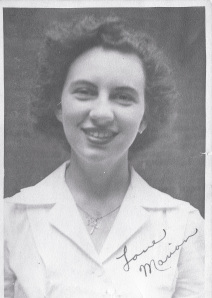 When someone dies, we say to the surviving family members, “I’m sorry for your loss.” And we mean it. But there are other ways than death to lose someone dear—or someone who should be dear.
Angela Alaimo O’Donnell explores these varieties of loss in her latest poetry collection, Waking My Mother. The poems reflect on her mother’s dementia and dying; on her mother’s relation to Angela and her siblings when they were kids; on the emotional complexities of living, after her mother’s death, with memories of a mother she wasn’t loved by.
Yes, this is the tough stuff that O’Donnell takes on in these poems. And she takes it on with grace.
One of the hardest things to take on—perhaps the hardest to read about—is her memory of her mother’s succession of lovers after their father died.
Other girls’ mothers
sold Avon, Bee-line, Tupperware.
My mother took lovers.
Young ones. Dark ones. True ones.
The kind that came back,
parked their cars in the drive,
and slept in our house
night after night after night.
Or this, from the sonnet cycle that opens the book:
Laying claim to what we no longer possessed,
we each performed her offices of love,
while our mother grew more distant and obsessed,
we spent our days and nights trying to prove
we could cure her selfishness by giving.
We learned to live, as people do, by living.
Our mother fell in love with scotch and men.
She kept the bottle on the kitchen counter.
She brought men home with her to be her lovers.
She got so lost in them we never found her.
For me, that last line shrieks with pain. The kids lose their mother’s love because she is lost in her lovers. Isn’t this a type of child abuse? Yet O’Donnell won’t call it that, and she controls the pain within the sonnet form.
These poems are searching rather than cynical. What they keep searching for is a way to honor her mother’s life. A way to “wake my mother” (as the book’s title puts it)—wake her into a truer motherhood.
And so, in the opening sonnet, O’Donnell is at the bedside of her dying mother, making the sign of the cross on her mother’s forehead. And recalling her own choice in adulthood to place her own children above her care for her mother:
that I have made a choice that means the loss
I claimed so long ago is mine forever,
all sealed by this Distant Daughter’s cross.
Rhyming “loss” with “cross.” I sense that all the emotional complexities of this volume are captured in that simple rhyme.
For all our losses are crosses, aren’t they? The loss of love, of hope, of health, of dignity, of a life. We say of someone dear “he lost his job”—and all the pain emanating from that loss is surely his cross. I say of a period of my life “I lost my bearings”—and the cross of psychic breakdown reverberates in the phrase. The bank forecloses and my friend “loses her house”: the words look as simple as “she lost her gloves” or “she lost her car keys,” but what a cross in that loss of a home. Yet another typhoon strikes the Philippines, and people “lose everything.”
O’Donnell is exploring varieties of loss. But her book is also a lost and found. Poetry can find something in our losses. The creative act itself, Elie Wiesel once said, is a gesture against despair.
Here is “Losing My Mother”:
I’ve lost my mother,
careless daughter,
mislaid her,
left her behind.
I’ve let them take her
to a place I cannot find…
I’ve lost my mother.
Like a sheep,
but number one,
not ninety-nine.
Like a coin.
But the most valuable and fine.
Like the pearl I owned
but is no more mine.
Like my mind.
The poet has “lost her mind.” And yet of course she hasn’t—not when she can create a sharp, crisp poem like this one. In the poem, she “finds” at least as much as she has lost: she finds just the right rhymes to tie all together, just the right gospel parables to expand the poem’s referent way beyond personal loss. She finds, in these parables, the kingdom of God.
If loss is a cross, then finding is the resurrection. What’s found in the creative crafting of poems is a new sort of life.
Peggy Rosenthal is director of Poetry Retreats and writes widely on poetry as a spiritual resource. Her books include Praying through Poetry: Hope for Violent Times (Franciscan Media), and The Poets’ Jesus (Oxford). See Amazon for full list. She also teaches an online course, “Poetry as a Spiritual Practice,” through Image’s Glen Online program*.*
Previous Post

January 14, 2014
Zeal for Thy House
Next Post
January 16, 2014 Pleasure Milker
Browse Our Archives
Select a Category A. G. Harmon Alissa Wilkinson Allison Backous Art Authors Brad Fruhauff Bradford Winters Bryan Bliss Caroline Langston Chad Thomas Johnston Chris Hoke Christiana N. Peterson Culture D.G. Myers D.L. Mayfield Daniel Bowman Jr. David Griffith Elizabeth Duffy Faith Film Greg Wolfe Guest Contributor Interview Jan Vallone Jeffrey Overstreet Jessica Eddings-Roeser Jessica Mesman Griffith Kelly Foster Lindsey Crittenden Morgan Meis music Natalie Vestin Nick Olson Peggy Rosenthal Personal Reflection Poetry Friday Reflection Relationships Review Richard Chess Richard Cole Sara Zarr Shannon Huffman Polson Sonya Bilocerkowycz Tania Runyan Tony Woodlief Topical Categories Uncategorized Vic Sizemore Writing
Select a Month October 2018 September 2018 August 2018 July 2018 June 2018 May 2018 April 2018 March 2018 February 2018 January 2018 December 2017 November 2017 October 2017 September 2017 August 2017 July 2017 June 2017 May 2017 April 2017 March 2017 February 2017 January 2017 December 2016 November 2016 October 2016 September 2016 August 2016 July 2016 June 2016 May 2016 April 2016 March 2016 February 2016 January 2016 December 2015 November 2015 October 2015 September 2015 August 2015 July 2015 June 2015 May 2015 April 2015 March 2015 February 2015 January 2015 December 2014 November 2014 October 2014 September 2014 August 2014 July 2014 June 2014 May 2014 April 2014 March 2014 February 2014 January 2014 December 2013 November 2013 October 2013 September 2013 August 2013 July 2013 June 2013 May 2013 April 2013 March 2013 February 2013 January 2013 December 2012 November 2012 October 2012 September 2012 August 2012 July 2012 June 2012 May 2012 February 2008
Follow Us!
TAKE THE
Religious Wisdom Quiz
What animal is commonly associated with Jesus?
Select your answer to see how you score.
Lion Fish Lamb Donkey
Related posts from Good Letters

On Writing Odes: Taking Time to Celebrate



TRENDING AT PATHEOS Catholic

Rejecting Doom: Christian Hope And Human Action
Christianity is a religion of hope. We are to have hope and...

It’s What Comes From Within Which Matters
One of the most difficult things for us to understand is why...

Why I Choose the Eucharist Over the Sermon
Choose the Eucharist, Not the Sermon What are we supposed to get...

5 Design Elements Found in Spiritually Rooted Homes
Putting Spirituality Into Home Decor Our homes are more than our living...

Credo: A Story of God Told with the...
About 10 years ago, I began to imagine a personal "Credo" that...

The Anatomy of Divine Revelation in Catholic Thought
The claim that God has made Himself known to human beings is...
view all Catholic blogs
Ad-Free & Subscriber Log-In Subscription Support
- About Us
- 2026 Calendar
- Videos
- Podcasts
- Library of World Religions
- Faith In Media Tracker
- Advertise With Us
- Write for Us
- Privacy Policy
- Terms of Service
- Do Not Sell My Data
- Contact Us
- Radiant Digital
- Manage Newsletter Subscriptions
- Unsubscribe From Notifications
- Sitemap
Copyright 2008-2026, Patheos. All rights reserved.
Subscription Support Ad-Free & Subscriber Log-In
Follow Patheos