
BuddhistCatholicContemplativeEvangelicalGeneral ChristianHinduJewishLatter-day SaintMuslimNew VisionsProgressive Christian
Beliefs
- Buddhist
- Catholic
- Contemplative
- Evangelical
- General Christian
- Hindu
- Jewish
- Latter-day Saint
- More Voices
- Muslim
- New Visions
- Pagan
- Progressive Christian
Topics
- Religion News
- Food and Religion
- Sports and Religion
- Religious Art
- Religious Music and Entertainment
- Religious Events
- History and Religion
- Style and Religion
- Politics and Religion
- Women in Religion
- Recreation Outdoors and Religion
- Business Finance and Religion
- Careers Workplace and Religion
- Education and Religion
- Family Parenting and Religion
- Health Fitness and Religion
- Home and Religion
- Relationships and Religion
- Technology and Religion
- Travel and Religion
Columnists
- Buddhist Columnists
- Business Finance and Religion Columnists
- Careers Workplace and Religion Columnists
- Catholic Columnists
- Contemplative Columnists
- Education and Religion Columnists
- Evangelists Columnists
- Family Parenting and Religion Columnists
- General Christian Columnists
- Health Fitness and Religion Columnists
- Hindu Columnists
- History and Religion Columnists
- Home and Religion Columnists
- Jewish Columnists
- More Voices Columnists
- Latter Day Columnists
- Muslim Columnists
- New Visions Columnists
- Nonreligious Columnists
- Pagan Columnists
- Politics and Religion Columnists
- Progressive Columnists
- Recreation Outdoors and Religion Columnists
- Relationships and Religion Columnists
- Religion News Columnists
- Religious Art Columnists
- Religious Events Columnists
- Religious Music and Entertainment Columnists
- Sports and Religion Columnists
- Style and Religion Columnists
- Technology and Religion Columnists
- Travel and Religion Columnists
- Women in Religion Columnists
Resource Library
- 2026 Calendar
- Library of World Religions
- The 100 Most Holy Places on Earth
- Patheos Answers
- Podcasts
- Videos
- Faith Leaders Database
- Anglican Episcopalian
- Bahai
- Baptist
- Buddhism
- Christianity
- Confucianism
- Eastern Orthodoxy
- Hinduism
- Holiness and Pentecostal
- ISKCON
- Islam
- Judaism
- Lutheran
- Methodist
- The Church of Jesus Christ of Latter-day Saints
- New Age
- Paganism
- Presbytarian and Reformed
- Protestantism
- Religion Behind the Scenes
- Roman Catholic
- Scientology
- Shia Islam
- Sikhism
- Sufism
- Sunni Islam
- Taoism
- Zen
- See all religions
Research Tools
 Ad-Free & Subscriber Log-In Subscription Support
Ad-Free & Subscriber Log-In Subscription Support
Follow Patheos 

- Trending:
- Forgiveness
- |
- Marriage
- |
- Consciousness
- |
- Death Penalty
- |
- Election
- |
- Halloween
 Good Letters
-
Contributors
- Home
- Catholic
- Rose By Any Other Name
Rose By Any Other Name
Last updated on: January 17, 2014 at 1:00 am by Caroline Langston
Rose By Any Other Name 2014-01-10T18:04:36-07:00 Caroline Langston
Patheos Explore the world's faith through different perspectives on religion and spirituality! Patheos has the views of the prevalent religions and spiritualities of the world.
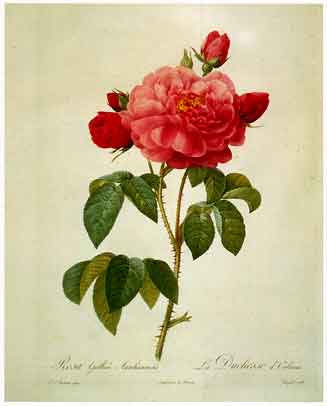 This is a story that is more about what I don’t know than what I do.
On the Friday night after Thanksgiving, the third night of Chanukah, my neighbor Rose, next-door neighbor to St. Linda, died. Just three or four days before, her adult son who lived with her—retirement age himself—had called to tell us that his elderly mother, whom we had seen less and less in the last month or two, was in home hospice care and did not have long to live.
Could I come see her? I asked, for she had been a wonderful neighbor and I had loved her greatly.
His simple reply: She doesn’t want any visitors.
So instead, I kept calling to check in on her, the last time the night of Thanksgiving from my sister’s house, the high shimmer of candles at the edge of my eyes, straining to hear over the sound of wine-soaked merriment. She’s okay, he said. Please let me know if there is anything I can do, I replied.
He called Saturday morning to say that Rose had died. She was ninety-three years old.
“Rose” was not her name, but my neighbor was greatly reticent and would not have wanted, I imagine, her real name to appear in print. The name Rose is the closest analogue I can think of to the delicate, flowery German name that she actually had.
Even now, I pull this name out of my mind periodically, say it to myself like a sweet in the mouth, and wish for a moment, however illogically, that we could have given it to my daughter. Perhaps, I now think, I can talk Anna Maria into using it for one of her dolls, or her own daughter someday—for the name, and the memory of “Rose” herself, who only had sons and grandsons, are too beautiful to be forever lost.
And yet so much is lost, so many pieces of her story that it was not granted for me—or most others, I’d wager—to know. She was German, she was Jewish, a heritage with its inescapable implications. A wall in her dining room was hung with black-and-white photographs of staid relatives with grave expressions, but she was not interested in talking about who they were, or where they were from.
Somehow, she had married her husband who worked for the State Department, gotten out of Europe, and come to the United States and settled down in 1947 in the red brick colonial house she lived in continuously until just weeks ago. She had a sister who lived in Paris, whom she knew she would never see again, and that was the only sibling she ever mentioned.
She lived modestly, but immaculately. Her kitchen, tiny and unrenovated, decorated in faded and dreary 40s colors, was cleaner than mine could ever hope to be. In the early years we lived here, she would walk out of the house on a summer afternoon in a crisp cotton skirt and sandals, her lips touched with bright red lipstick. In the afternoons, she would ritually nap on the chaise lounge on the sun-porch at the back of the house, her legs stretched out luxuriantly. (I learned the hard way to curb how I spoke to my children in the backyard, for we knew that she was always paying attention to what was going on around her.)
She woke every day around three o’clock in the morning, when my husband was typically getting ready for work, and I learned to mark the day by the appearance of her yellow living room light burning in the dark.
But she could also fix an imperious stare on you if she felt you were falling down on caring for your house or yard, and many times over the years she’d call—Just to let you know—that she thought our trees needed trimming because she was afraid a branch would fall and hit the power line.
I took over a bouquet of flowers to her on Rosh Hashanah once, which she loved, but exclaimed, “You know, I’m not very religious.” She complained once about having to go to the Bar Mitzvah in Baltimore of her Orthodox Jewish cousins, “who fought all the time.” But another time she also mentioned to me the quiet sharing of a new year’s honey cake with her son—simply and at home, the way she did everything.
When I was blowsily and unexpectedly pregnant at forty, she appeared one day at the door with a handmade baby blanket, with bright images from nursery rhymes carefully cross-stitched on the cotton. (She was eighty-nine then; think of those arthritic fingers!) After Anna Maria was born, she appeared at the door with a dish of rich, hot chicken salad that I ate over the sink in a nursing-starved mania. She later gave me the recipe, carefully printed in pencil on a lined notepad page.
Everything was immanent for her; she would not yield up her secrets. She would not “tell me about her life,” or let me record her memories, and I felt bad even asking. (“Writers are always trying to sell somebody out,” writes Joan Didion.)
She resolutely refused to join the great self-revelatory, confessional zeitgeist that marks our time, the first-person narrative avalanche of Facebook and StoryCorps right on down to my own blog posts on “Good Letters.”
The confessional impulse, despite its religious literary origins with Augustine, is today, I think, largely the effort of a secular society seeking to find its own godless religion: We all become our own religious texts.
Rose would not play that game. The canon was closed. Instead there was the sunlit morning, the goings-on of neighbors through the parted blinds, and the gift of her German plum tart that could only be made in the briefest summer season (the recipe for which I found, as part of the Lost Recipes series, on nothing less than NPR.)
L’Shana Tova. May it be sweet for you, now and always, Rose.
A native of Yazoo City, Mississippi, Caroline Langston is a convert to the Eastern Orthodox Church. She is a widely published writer and essayist, a winner of the Pushcart Prize, and a commentator for NPR’s “All Things Considered.”
Previous Post

January 16, 2014
Pleasure Milker
Next Post
January 21, 2014 My Personal History of U.S. Race Relations
Browse Our Archives
Select a Category A. G. Harmon Alissa Wilkinson Allison Backous Art Authors Brad Fruhauff Bradford Winters Bryan Bliss Caroline Langston Chad Thomas Johnston Chris Hoke Christiana N. Peterson Culture D.G. Myers D.L. Mayfield Daniel Bowman Jr. David Griffith Elizabeth Duffy Faith Film Greg Wolfe Guest Contributor Interview Jan Vallone Jeffrey Overstreet Jessica Eddings-Roeser Jessica Mesman Griffith Kelly Foster Lindsey Crittenden Morgan Meis music Natalie Vestin Nick Olson Peggy Rosenthal Personal Reflection Poetry Friday Reflection Relationships Review Richard Chess Richard Cole Sara Zarr Shannon Huffman Polson Sonya Bilocerkowycz Tania Runyan Tony Woodlief Topical Categories Uncategorized Vic Sizemore Writing
Select a Month October 2018 September 2018 August 2018 July 2018 June 2018 May 2018 April 2018 March 2018 February 2018 January 2018 December 2017 November 2017 October 2017 September 2017 August 2017 July 2017 June 2017 May 2017 April 2017 March 2017 February 2017 January 2017 December 2016 November 2016 October 2016 September 2016 August 2016 July 2016 June 2016 May 2016 April 2016 March 2016 February 2016 January 2016 December 2015 November 2015 October 2015 September 2015 August 2015 July 2015 June 2015 May 2015 April 2015 March 2015 February 2015 January 2015 December 2014 November 2014 October 2014 September 2014 August 2014 July 2014 June 2014 May 2014 April 2014 March 2014 February 2014 January 2014 December 2013 November 2013 October 2013 September 2013 August 2013 July 2013 June 2013 May 2013 April 2013 March 2013 February 2013 January 2013 December 2012 November 2012 October 2012 September 2012 August 2012 July 2012 June 2012 May 2012 February 2008
Follow Us!
TAKE THE
Religious Wisdom Quiz
Who was Boaz's kinsman-redeemer?
Select your answer to see how you score.
Ruth Unnamed relative Elimelech Naomi
Related posts from Good Letters




Meditations of a Library Assistant in the BS...
TRENDING AT PATHEOS Catholic

Rejecting Doom: Christian Hope And Human Action
Christianity is a religion of hope. We are to have hope and...

It’s What Comes From Within Which Matters
One of the most difficult things for us to understand is why...

Why I Choose the Eucharist Over the Sermon
Choose the Eucharist, Not the Sermon What are we supposed to get...

5 Design Elements Found in Spiritually Rooted Homes
Putting Spirituality Into Home Decor Our homes are more than our living...

Credo: A Story of God Told with the...
About 10 years ago, I began to imagine a personal "Credo" that...

The Anatomy of Divine Revelation in Catholic Thought
The claim that God has made Himself known to human beings is...
view all Catholic blogs
Ad-Free & Subscriber Log-In Subscription Support
- About Us
- 2026 Calendar
- Videos
- Podcasts
- Library of World Religions
- Faith In Media Tracker
- Advertise With Us
- Write for Us
- Privacy Policy
- Terms of Service
- Do Not Sell My Data
- Contact Us
- Radiant Digital
- Manage Newsletter Subscriptions
- Unsubscribe From Notifications
- Sitemap
Copyright 2008-2026, Patheos. All rights reserved.
Subscription Support Ad-Free & Subscriber Log-In
Follow Patheos