
BuddhistCatholicContemplativeEvangelicalGeneral ChristianHinduJewishLatter-day SaintMuslimNew VisionsProgressive Christian
Beliefs
- Buddhist
- Catholic
- Contemplative
- Evangelical
- General Christian
- Hindu
- Jewish
- Latter-day Saint
- More Voices
- Muslim
- New Visions
- Pagan
- Progressive Christian
Topics
- Religion News
- Food and Religion
- Sports and Religion
- Religious Art
- Religious Music and Entertainment
- Religious Events
- History and Religion
- Style and Religion
- Politics and Religion
- Women in Religion
- Recreation Outdoors and Religion
- Business Finance and Religion
- Careers Workplace and Religion
- Education and Religion
- Family Parenting and Religion
- Health Fitness and Religion
- Home and Religion
- Relationships and Religion
- Technology and Religion
- Travel and Religion
Columnists
- Buddhist Columnists
- Business Finance and Religion Columnists
- Careers Workplace and Religion Columnists
- Catholic Columnists
- Contemplative Columnists
- Education and Religion Columnists
- Evangelists Columnists
- Family Parenting and Religion Columnists
- General Christian Columnists
- Health Fitness and Religion Columnists
- Hindu Columnists
- History and Religion Columnists
- Home and Religion Columnists
- Jewish Columnists
- More Voices Columnists
- Latter Day Columnists
- Muslim Columnists
- New Visions Columnists
- Nonreligious Columnists
- Pagan Columnists
- Politics and Religion Columnists
- Progressive Columnists
- Recreation Outdoors and Religion Columnists
- Relationships and Religion Columnists
- Religion News Columnists
- Religious Art Columnists
- Religious Events Columnists
- Religious Music and Entertainment Columnists
- Sports and Religion Columnists
- Style and Religion Columnists
- Technology and Religion Columnists
- Travel and Religion Columnists
- Women in Religion Columnists
Resource Library
- 2026 Calendar
- Library of World Religions
- The 100 Most Holy Places on Earth
- Patheos Answers
- Podcasts
- Videos
- Faith Leaders Database
- Anglican Episcopalian
- Bahai
- Baptist
- Buddhism
- Christianity
- Confucianism
- Eastern Orthodoxy
- Hinduism
- Holiness and Pentecostal
- ISKCON
- Islam
- Judaism
- Lutheran
- Methodist
- The Church of Jesus Christ of Latter-day Saints
- New Age
- Paganism
- Presbytarian and Reformed
- Protestantism
- Religion Behind the Scenes
- Roman Catholic
- Scientology
- Shia Islam
- Sikhism
- Sufism
- Sunni Islam
- Taoism
- Zen
- See all religions
Research Tools
 Ad-Free & Subscriber Log-In Subscription Support
Ad-Free & Subscriber Log-In Subscription Support
Follow Patheos 

- Trending:
- Forgiveness
- |
- Marriage
- |
- Consciousness
- |
- Death Penalty
- |
- Election
- |
- Halloween
 Good Letters
-
Contributors
- Home
- Catholic
- A Baby and a Book Burning
A Baby and a Book Burning
Last updated on: January 3, 2014 at 1:00 am by Richard Chess
A Baby and a Book Burning 2014-01-02T13:13:17-07:00 Richard Chess
Patheos Explore the world's faith through different perspectives on religion and spirituality! Patheos has the views of the prevalent religions and spiritualities of the world.
 I’ve always wanted to have class by the fireplace, she said.
Great, let’s do that. We can burn our books in the fire, I said. We can decorate the room with swastikas, I said.
It was the last day of classes.
It was a week past my stepdaughter’s due date.
The class was droopy. Then I suggested we burn books and adorn the hallowed walls of the Laurel Forum, home of the honors program, with banners bearing swastikas. Surprised, shocked—entertained—they perked up. Was that my Sarah Silverman moment?
You’re Jewish, she said. You can get away with saying that.
*
Later the same day:
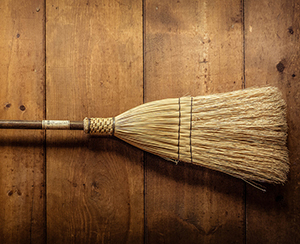
A janitor waltzing with his broom as if it were a woman he’d have to live “another life to meet.” That’s how Cornelius Eady’s poem “Victims of the Latest Dance Craze,” ends—with a vision of a janitor and a broom, spinning out the side door, “avoiding the cracks in the sidewalk / grinning as if he’d just received / the deepest kiss in the world.” By mid-afternoon, when my class called “Readings in Poetry” met, I knew that I was not quite there, in Karpen Hall 221, among students with whom I’d been working for fifteen weeks, inside Eady’s poem.
(After class, I would rush home to finish straightening the house and pack. In a few hours I would be on my way to the birth of a grandchild, my first. But I was worried about the forecast: an ice storm expected overnight. What if I couldn’t make it, at 5:30 a.m., down the steep hill out of my neighborhood to the airport for my early morning flight? Before class, after class, I checked, re-loaded, re-loaded, and re-loaded weather.com: my dance.)
Because I was cognitively adrift, I had to rely on their intelligence—the students, I hoped, had gotten better at close reading over the semester.
I read Eady’s poem aloud:
“The streamers choking the main arteries
Of downtown.
The brass band led by a child
From the home for the handicapped.
The old men . . .”
(The old men: my birthday, my sixtieth birthday, was a mere five days away.)
The poem offers a prophetic vision of “the world (what’s left of it) / In brilliant motion”, “a world where no one has the right to stumble.”
When I finished reading “Victims of the Latest Dance Craze” aloud, we went around the circle, each student offering one observation about it.
The first few comments were vague, disappointing. Nothing for me to build on there.
Then she, a shy young woman, said in words more precise, concise, and eloquent than these, “the lame lead, the bus is free, ‘the drinks are on the house,’ the shy girls twirl their skirts, but the arteries are choked and the dance, they explain to the cop, is called ‘scalding the air,’ the dance is called ‘dying with your shoes on.’ And the children call their game ‘dust in the mouth.’ Sure, they’re dancing, maybe they are even redeemed, but their suffering, their mortality dances with them.”
Nothing more needed to be said, but we were only a quarter way round the circle.
*
This baby, this not-quite-delivered-unto-us boy we, especially his mother-to-be, were anxious to receive—what has the world to offer him, what has love already done to whatever he was before he was conceived? I didn’t know to ask this that Monday, the last class before finals, four days before his birth.
Today, weeks later, I ask, what is love doing to us, his complex family of families, a potent mix of religions, nations, languages, distances, dreams, jealousies, secrets, fears, drawn as we are from Teheran and Asheville, San Diego and Chapel Hill and Cherry Hill and Brooklyn to his opening and closing and opening eyes?
*
But at the end of that day, end of another semester, end of a personal decade, I stood in the center of a circle of students, wanting this, only this: to be loved.
They said what they said. Then it was my turn.
I led with an observation about their comments on the poem, hoping to validate each student’s comment, even though most were useless, only a few brilliant. Every comment, I said, if carefully considered, could lead to insight. I lied.
I closed with this: the deepest kiss in the world: that’s what poetry gives me and why I cannot live a day without it, without that kiss. But these words, too, were not the whole truth. They lacked gravity, and without gravity for them to affirm by defying, they would lift and awaken no one, not a single dull student, not even the bright few on a gray Monday afternoon after all the work to be graded had already been turned in.
On the plane to Newark, I realized what I should have said.
What’s the deepest kiss in the world? The kiss that holds all the disappointment, impatience, superstition, injustice, and loneliness in the world—along with all its beauty, honesty, promise and love: what a poem is.
*
Snow erased the final meeting of the Sabbath class. My flight back to Asheville was cancelled because of a storm. We would not feed The Sabbath World, The Sabbath, and A Timbered Choir to the flames. We would not eat pancakes by the fire, its glow illuminating the absence of banners bearing swastikas in the room. No closure.
And I could not call the poetry students back for truth.
But there is a baby. We gaze at him and wonder. What does he see? What does he see in us? What truth, what love has he been born to bring into this family, this world? We gaze at him in wonder.
Richard Chess is the author of three books of poetry,Tekiah, Chair in the Desert, and Third Temple. Poems of his have appeared in Telling and Remembering: A Century of American Jewish Poetry, Bearing the Mystery: Twenty Years of IMAGE, and Best Spiritual Writing 2005. He is the Roy Carroll Professor of Honors Arts and Sciences at the University of North Carolina at Asheville. He is also the director of UNC Asheville’s Center for Jewish Studies.
You can make your tax-deductible gift to the Image “Making It New” campaign here.
Previous Post

January 2, 2014
Look at the Light: Thirteen Songs for 2013
Next Post
January 6, 2014 The Problem with Waiting, Part 1
Browse Our Archives
Select a Category A. G. Harmon Alissa Wilkinson Allison Backous Art Authors Brad Fruhauff Bradford Winters Bryan Bliss Caroline Langston Chad Thomas Johnston Chris Hoke Christiana N. Peterson Culture D.G. Myers D.L. Mayfield Daniel Bowman Jr. David Griffith Elizabeth Duffy Faith Film Greg Wolfe Guest Contributor Interview Jan Vallone Jeffrey Overstreet Jessica Eddings-Roeser Jessica Mesman Griffith Kelly Foster Lindsey Crittenden Morgan Meis music Natalie Vestin Nick Olson Peggy Rosenthal Personal Reflection Poetry Friday Reflection Relationships Review Richard Chess Richard Cole Sara Zarr Shannon Huffman Polson Sonya Bilocerkowycz Tania Runyan Tony Woodlief Topical Categories Uncategorized Vic Sizemore Writing
Select a Month October 2018 September 2018 August 2018 July 2018 June 2018 May 2018 April 2018 March 2018 February 2018 January 2018 December 2017 November 2017 October 2017 September 2017 August 2017 July 2017 June 2017 May 2017 April 2017 March 2017 February 2017 January 2017 December 2016 November 2016 October 2016 September 2016 August 2016 July 2016 June 2016 May 2016 April 2016 March 2016 February 2016 January 2016 December 2015 November 2015 October 2015 September 2015 August 2015 July 2015 June 2015 May 2015 April 2015 March 2015 February 2015 January 2015 December 2014 November 2014 October 2014 September 2014 August 2014 July 2014 June 2014 May 2014 April 2014 March 2014 February 2014 January 2014 December 2013 November 2013 October 2013 September 2013 August 2013 July 2013 June 2013 May 2013 April 2013 March 2013 February 2013 January 2013 December 2012 November 2012 October 2012 September 2012 August 2012 July 2012 June 2012 May 2012 February 2008
Follow Us!
TAKE THE
Religious Wisdom Quiz
Who was Boaz's kinsman-redeemer?
Select your answer to see how you score.
Ruth Unnamed relative Elimelech Naomi
Related posts from Good Letters


On Writing Odes: Taking Time to Celebrate

Poetry Friday: "The Burned Butterfly"

A Conversation with Alicia Ostriker: Part 1
TRENDING AT PATHEOS Catholic

Rejecting Doom: Christian Hope And Human Action
Christianity is a religion of hope. We are to have hope and...

It’s What Comes From Within Which Matters
One of the most difficult things for us to understand is why...

Why I Choose the Eucharist Over the Sermon
Choose the Eucharist, Not the Sermon What are we supposed to get...

5 Design Elements Found in Spiritually Rooted Homes
Putting Spirituality Into Home Decor Our homes are more than our living...

Credo: A Story of God Told with the...
About 10 years ago, I began to imagine a personal "Credo" that...

The Anatomy of Divine Revelation in Catholic Thought
The claim that God has made Himself known to human beings is...
view all Catholic blogs
Ad-Free & Subscriber Log-In Subscription Support
- About Us
- 2026 Calendar
- Videos
- Podcasts
- Library of World Religions
- Faith In Media Tracker
- Advertise With Us
- Write for Us
- Privacy Policy
- Terms of Service
- Do Not Sell My Data
- Contact Us
- Radiant Digital
- Manage Newsletter Subscriptions
- Unsubscribe From Notifications
- Sitemap
Copyright 2008-2026, Patheos. All rights reserved.
Subscription Support Ad-Free & Subscriber Log-In
Follow Patheos