
BuddhistCatholicContemplativeEvangelicalGeneral ChristianHinduJewishLatter-day SaintMuslimNew VisionsProgressive Christian
Beliefs
- Buddhist
- Catholic
- Contemplative
- Evangelical
- General Christian
- Hindu
- Jewish
- Latter-day Saint
- More Voices
- Muslim
- New Visions
- Pagan
- Progressive Christian
Topics
- Religion News
- Food and Religion
- Sports and Religion
- Religious Art
- Religious Music and Entertainment
- Religious Events
- History and Religion
- Style and Religion
- Politics and Religion
- Women in Religion
- Recreation Outdoors and Religion
- Business Finance and Religion
- Careers Workplace and Religion
- Education and Religion
- Family Parenting and Religion
- Health Fitness and Religion
- Home and Religion
- Relationships and Religion
- Technology and Religion
- Travel and Religion
Columnists
- Buddhist Columnists
- Business Finance and Religion Columnists
- Careers Workplace and Religion Columnists
- Catholic Columnists
- Contemplative Columnists
- Education and Religion Columnists
- Evangelists Columnists
- Family Parenting and Religion Columnists
- General Christian Columnists
- Health Fitness and Religion Columnists
- Hindu Columnists
- History and Religion Columnists
- Home and Religion Columnists
- Jewish Columnists
- More Voices Columnists
- Latter Day Columnists
- Muslim Columnists
- New Visions Columnists
- Nonreligious Columnists
- Pagan Columnists
- Politics and Religion Columnists
- Progressive Columnists
- Recreation Outdoors and Religion Columnists
- Relationships and Religion Columnists
- Religion News Columnists
- Religious Art Columnists
- Religious Events Columnists
- Religious Music and Entertainment Columnists
- Sports and Religion Columnists
- Style and Religion Columnists
- Technology and Religion Columnists
- Travel and Religion Columnists
- Women in Religion Columnists
Resource Library
- 2026 Calendar
- Library of World Religions
- The 100 Most Holy Places on Earth
- Patheos Answers
- Podcasts
- Videos
- Faith Leaders Database
- Anglican Episcopalian
- Bahai
- Baptist
- Buddhism
- Christianity
- Confucianism
- Eastern Orthodoxy
- Hinduism
- Holiness and Pentecostal
- ISKCON
- Islam
- Judaism
- Lutheran
- Methodist
- The Church of Jesus Christ of Latter-day Saints
- New Age
- Paganism
- Presbytarian and Reformed
- Protestantism
- Religion Behind the Scenes
- Roman Catholic
- Scientology
- Shia Islam
- Sikhism
- Sufism
- Sunni Islam
- Taoism
- Zen
- See all religions
Research Tools
 Ad-Free & Subscriber Log-In Subscription Support
Ad-Free & Subscriber Log-In Subscription Support
Follow Patheos 

- Trending:
- Forgiveness
- |
- Marriage
- |
- Consciousness
- |
- Death Penalty
- |
- Election
- |
- Halloween
 Good Letters
-
Contributors
- Home
- Catholic
- Living Advent
Living Advent
Last updated on: December 2, 2013 at 1:00 am by Peggy Rosenthal
Living Advent 2013-11-27T16:20:27-07:00 Peggy Rosenthal
Patheos Explore the world's faith through different perspectives on religion and spirituality! Patheos has the views of the prevalent religions and spiritualities of the world.
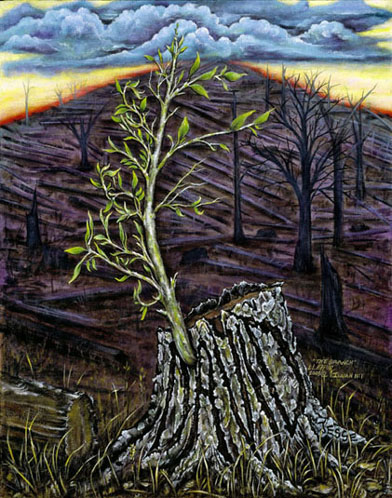 “What should I do for Advent this year, Bill?”
The year was 1993. Bill had been my spiritual director since 1985. He was Fr. William Shannon, retired theology professor and Merton scholar…but soon after our monthly meetings began, he was urging me (as he did all his friends) to call him Bill.
On his retirement from teaching, Bill had become chaplain of the Sisters of St. Joseph in our hometown, and he lived at their Motherhouse. In response to my question, he suggested, “Why not do what we’re doing here—paying special attention to the insertion in the Lord’s Prayer.”
It was the insertion at Mass that he was referring to, where the priest adds after “Deliver us from evil”:
Deliver us, Lord from every evil
And grant us peace in our day.
In your mercy, keep us free from sin,
And protect us from all anxiety,
As we wait in joyful hope
For the coming of our Savior, Jesus Christ.
At daily Mass at the Motherhouse during Advent, all the Sisters were saying these lines along with Bill as presider. My husband and I don’t go to daily Mass, but for Advent that year—and for many years thereafter—we said these lines at the start of our meals together.
“But what else, Bill?”
I persisted. Just saying that prayer daily didn’t seem enough to live Advent’s spirit. So Bill began talking about his sense of parousia. It’s the Greek word for “being next to,” translated in the Latin Vulgate Bible into adventum (coming). “It sounds like a contradiction,” he said, “being next to the Lord who is coming. But it’s not really a contradiction, because the Lord who comes to save us is already within each of us.”
Bill delighted in this core paradox of Advent, which he returned to often during the twenty-five years of Advents that I went to him for spiritual direction, until his death last year.
“But how to live this paradox, Bill?”
“Attentiveness,” he’d say.
To explain, he talked about the difference between Advent’s and Lent’s penance:
Here at the Motherhouse, our Penance Service, at the start of Advent, is gentler than Lenten penance. Lent’s is repentance for sins we’ve committed; Advent’s is preparation for the mystery of the Incarnation: waiting, watching, standing straight before the Lord, as Luke’s Gospel for the first Sunday of Advent (Luke 21:28) puts it.
All of which means, Bill and I agreed, resisting distractedness. The reading from Luke’s Gospel continues: “Be on guard lest your spirits become bloated…with worldly cares.”
“But, Bill, how to resist distractedness?” I asked, knowing I was sounding a bit like the broken record of the four-year-old who keeps asking “Why?…Why?…Why?”
One year when I asked this, Bill’s answer was to tell me about the discipline he himself was incorporating into each day of Advent: pausing between each activity of the day to say a transitional prayer—a simple “Come, Lord Jesus.”
This is harder than it sounds, since we’re all used to rushing (or at best flowing) from one activity to the next. But try this:
Before getting out of bed in the morning, “Come, Lord Jesus.”
Before eating breakfast, “Come, Lord Jesus.”
Before getting up from breakfast, “Come, Lord Jesus.”
Before opening your computer and closing it each time all day, “Come, Lord Jesus.”
Before checking your Smartphone each time all day, “Come, Lord Jesus.”
After chatting on the phone, “Come, Lord Jesus.”
Before going out for a walk, “Come, Lord Jesus.”
On returning from a walk, “Come, Lord Jesus.”
Before checking to see if the mail has come, “Come, Lord Jesus.”
Before…well, you get the idea.
When I’ve tried to practice this Advent discipline, by dinnertime I’m astounded by how many transitional pauses I’ve missed during the day. One year when I told Bill of my sloppiness, he admitted that he had as much trouble remembering the prayer-pause as I did. But that doesn’t mean it isn’t worth trying.
As our years of Advent’s went by together (picture those calendar pages rapidly flipping over in old films), Bill would often animatedly mention his favorite Advent prayer—“the profound alternative Opening Prayer for Mass of the first Sunday of Advent.” He liked especially its formulation of that Advent paradox that he treasured: our being already in the Lord’s presence at the dawn of his coming.
Father in heaven,
our hearts desire the warmth of your love
and our minds are searching for the light of your Word.
Increase our longing for Christ our Savior
and give us the strength to grow in love,
that the dawn of his coming
may find us rejoicing in his presence
and welcoming the light of his truth.
We ask this in the name of Jesus the Lord.
Amen.
Peggy Rosenthal is director of Poetry Retreats and writes widely on poetry as a spiritual resource. Her books include Praying through Poetry: Hope for Violent Times (Franciscan Media), and The Poets’ Jesus (Oxford). See Amazon for full list. She also teaches an online course, “Poetry as a Spiritual Practice,” through Image’s Glen Online program*.*
Previous Post

November 29, 2013
He Loves Me Anyway: Black Nativity
Next Post
December 3, 2013 The World Is a Fine Place Worth Fighting For
Browse Our Archives
Select a Category A. G. Harmon Alissa Wilkinson Allison Backous Art Authors Brad Fruhauff Bradford Winters Bryan Bliss Caroline Langston Chad Thomas Johnston Chris Hoke Christiana N. Peterson Culture D.G. Myers D.L. Mayfield Daniel Bowman Jr. David Griffith Elizabeth Duffy Faith Film Greg Wolfe Guest Contributor Interview Jan Vallone Jeffrey Overstreet Jessica Eddings-Roeser Jessica Mesman Griffith Kelly Foster Lindsey Crittenden Morgan Meis music Natalie Vestin Nick Olson Peggy Rosenthal Personal Reflection Poetry Friday Reflection Relationships Review Richard Chess Richard Cole Sara Zarr Shannon Huffman Polson Sonya Bilocerkowycz Tania Runyan Tony Woodlief Topical Categories Uncategorized Vic Sizemore Writing
Select a Month October 2018 September 2018 August 2018 July 2018 June 2018 May 2018 April 2018 March 2018 February 2018 January 2018 December 2017 November 2017 October 2017 September 2017 August 2017 July 2017 June 2017 May 2017 April 2017 March 2017 February 2017 January 2017 December 2016 November 2016 October 2016 September 2016 August 2016 July 2016 June 2016 May 2016 April 2016 March 2016 February 2016 January 2016 December 2015 November 2015 October 2015 September 2015 August 2015 July 2015 June 2015 May 2015 April 2015 March 2015 February 2015 January 2015 December 2014 November 2014 October 2014 September 2014 August 2014 July 2014 June 2014 May 2014 April 2014 March 2014 February 2014 January 2014 December 2013 November 2013 October 2013 September 2013 August 2013 July 2013 June 2013 May 2013 April 2013 March 2013 February 2013 January 2013 December 2012 November 2012 October 2012 September 2012 August 2012 July 2012 June 2012 May 2012 February 2008
Follow Us!
TAKE THE
Religious Wisdom Quiz
What animal did Balaam's donkey see that Balaam could not?
Select your answer to see how you score.
A lion A snake A storm An angel
Related posts from Good Letters

Poetry Friday: "The Burned Butterfly"


Leonard Cohen’s Holy and Broken Hallelujah

Ready or Not for the Days of Awe
TRENDING AT PATHEOS Catholic

Rejecting Doom: Christian Hope And Human Action
Christianity is a religion of hope. We are to have hope and...

It’s What Comes From Within Which Matters
One of the most difficult things for us to understand is why...

Why I Choose the Eucharist Over the Sermon
Choose the Eucharist, Not the Sermon What are we supposed to get...

5 Design Elements Found in Spiritually Rooted Homes
Putting Spirituality Into Home Decor Our homes are more than our living...

Credo: A Story of God Told with the...
About 10 years ago, I began to imagine a personal "Credo" that...

The Anatomy of Divine Revelation in Catholic Thought
The claim that God has made Himself known to human beings is...
view all Catholic blogs
Ad-Free & Subscriber Log-In Subscription Support
- About Us
- 2026 Calendar
- Videos
- Podcasts
- Library of World Religions
- Faith In Media Tracker
- Advertise With Us
- Write for Us
- Privacy Policy
- Terms of Service
- Do Not Sell My Data
- Contact Us
- Radiant Digital
- Manage Newsletter Subscriptions
- Unsubscribe From Notifications
- Sitemap
Copyright 2008-2026, Patheos. All rights reserved.
Subscription Support Ad-Free & Subscriber Log-In
Follow Patheos