
BuddhistCatholicContemplativeEvangelicalGeneral ChristianHinduJewishLatter-day SaintMuslimNew VisionsProgressive Christian
Beliefs
- Buddhist
- Catholic
- Contemplative
- Evangelical
- General Christian
- Hindu
- Jewish
- Latter-day Saint
- More Voices
- Muslim
- New Visions
- Pagan
- Progressive Christian
Topics
- Religion News
- Food and Religion
- Sports and Religion
- Religious Art
- Religious Music and Entertainment
- Religious Events
- History and Religion
- Style and Religion
- Politics and Religion
- Women in Religion
- Recreation Outdoors and Religion
- Business Finance and Religion
- Careers Workplace and Religion
- Education and Religion
- Family Parenting and Religion
- Health Fitness and Religion
- Home and Religion
- Relationships and Religion
- Technology and Religion
- Travel and Religion
Columnists
- Buddhist Columnists
- Business Finance and Religion Columnists
- Careers Workplace and Religion Columnists
- Catholic Columnists
- Contemplative Columnists
- Education and Religion Columnists
- Evangelists Columnists
- Family Parenting and Religion Columnists
- General Christian Columnists
- Health Fitness and Religion Columnists
- Hindu Columnists
- History and Religion Columnists
- Home and Religion Columnists
- Jewish Columnists
- More Voices Columnists
- Latter Day Columnists
- Muslim Columnists
- New Visions Columnists
- Nonreligious Columnists
- Pagan Columnists
- Politics and Religion Columnists
- Progressive Columnists
- Recreation Outdoors and Religion Columnists
- Relationships and Religion Columnists
- Religion News Columnists
- Religious Art Columnists
- Religious Events Columnists
- Religious Music and Entertainment Columnists
- Sports and Religion Columnists
- Style and Religion Columnists
- Technology and Religion Columnists
- Travel and Religion Columnists
- Women in Religion Columnists
Resource Library
- 2026 Calendar
- Library of World Religions
- The 100 Most Holy Places on Earth
- Patheos Answers
- Podcasts
- Videos
- Faith Leaders Database
- Anglican Episcopalian
- Bahai
- Baptist
- Buddhism
- Christianity
- Confucianism
- Eastern Orthodoxy
- Hinduism
- Holiness and Pentecostal
- ISKCON
- Islam
- Judaism
- Lutheran
- Methodist
- The Church of Jesus Christ of Latter-day Saints
- New Age
- Paganism
- Presbytarian and Reformed
- Protestantism
- Religion Behind the Scenes
- Roman Catholic
- Scientology
- Shia Islam
- Sikhism
- Sufism
- Sunni Islam
- Taoism
- Zen
- See all religions
Research Tools
 Ad-Free & Subscriber Log-In Subscription Support
Ad-Free & Subscriber Log-In Subscription Support
Follow Patheos 

- Trending:
- Forgiveness
- |
- Marriage
- |
- Consciousness
- |
- Death Penalty
- |
- Election
- |
- Halloween
 Good Letters
-
Contributors
- Home
- Catholic
- Christmas Past
Christmas Past
Last updated on: December 23, 2013 at 1:00 am by Vic Sizemore
Christmas Past 2013-12-22T19:26:28-07:00 Vic Sizemore
Patheos Explore the world's faith through different perspectives on religion and spirituality! Patheos has the views of the prevalent religions and spiritualities of the world.
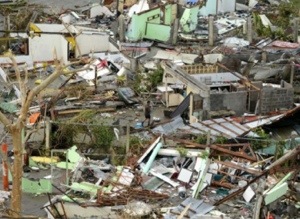 I once watched a boy steal all my Christmas presents. I lay on my stomach and stared through a sweaty blur as he grabbed my box-full of gifts and scampered into the woods. I did not chase him; propped on one elbow staring as he ran, I did not even rise from my stomach. The presents were gone.
When Saddam Hussein invaded Kuwait on August 2, 1990, I was camped out with my Marine unit in the woods at Cheat Lake, West Virginia, where we were setting 300 pounds of C-4 to blow a bridge. Four months later, I was camped off Green Beach, near Subic Bay, Philippines, training for desert warfare in the dense jungle—by Marine Corps logic it makes sense—on our way to Iraq.
Those woods were full of locals. We humped past homes whose walls were built from our own garbage—heavy cardboard MRE boxes, hammered-flat gas and water cans, cinderblocks, a battered hummer door with the window glass intact.
One day as we were making our way with packs and rifles along a trail, a barefoot girl came the other way with a fruit bat the size of a small housecat slung over her shoulder. She smiled at me as we passed.
“She’s taking that bat home for dinner,” our gunnery sergeant told us. He’d been here before a number of times. He’d served in Vietnam.
“They have to eat bats?” a marine asked.
“They eat better than we do,” the gunny said. “They have fruit trees everywhere.”
Where we stopped and set up camp, locals immediately emerged from the surrounding jungle, carrying bottles of booze, candy bars, knives, whatever they could sell. One marine said he wanted a cold Coke, and a man ran off into the woods and came back a few minutes later carrying one. He traded it to the Marine for two MREs.
Another Marine sneaked out into the woods with a hooker one night, and upon his return caught hell because, “These woods are crawling with communist rebels.” Gunny told us they were watching our every move. This was before the collapse of the Soviet Union—not long before, but before. We were only at the very beginning of our transition from the Cold War, to the War on Terror; our boogeyman was still Ivan the evil Russian, not yet Achmed the evil Arab.
This was my first experience of another culture. I was astonished by how little they had, by how resourceful they were—they scrambled and bartered and wheedled what they could get out of us, who had precious little according to standards back home—in their daily struggle to get by.
I spent Christmas of 1990 in that jungle. On Christmas Eve, a helicopter dropped off mail. In it was a box for me with peanut brittle, cookies, beef jerky, letters from home, pictures, a stack of magazines, and a plastic Christmas tree about as tall as an ink pen.
On Christmas Day, we humped to a range, staged our gear, and set two Lance Corporals to walking fire watch while we sighted in our rifles. That is where I was when I heard someone shout at the fire watch, who were both standing watching us instead of the gear. Two boys ran out and grabbed what they could and scrambled back into the dense foliage.
I’ve thought about that kid occasionally over the years, wondered about him. I’ve wondered about the barefoot girl with the big bright smile, fruit bat slung over her shoulder. After Mount Pinatubo erupted the next year, 1991, the U.S. closed the base at Subic Bay. All the American goods and money to the region dried up. What did they do after that? What kind of lives have they had?
I thought of them most recently when I heard about typhoon Haiyan hitting the Philippines with such force. There’s no way for me to know. I did hear the staggering number of casualties though, and saw the destruction.
Just a couple of days before the typhoon, our family had gone to the dollar theater to see the movie Elysium. It wasn’t a great movie, but the premise had potential. It wasn’t trying to do anything new. One of the very first science fiction movies ever made, Fritz Lang’s Metropolis, was about class struggle. Elysium is a human-made utopia where the wealthy live, and the unwashed poor languish on earth without access to proper nutrition and healthcare. Some are desperate enough to risk death to get to this land of prosperity.
In my composition classes this semester, we read Ursula Le Guin’s Hugo Award winning short story “The Ones Who Walk Away from Omelas.” It is a parable of a utopia that can only maintain its peaceful perfection by keeping a single child in misery. Most of the children are disturbed when they learn of the child, but most eventually learn to live with it. What can they do?
Watching Elysium, I noticed that when the poor manage to get past the border patrol into this paradise, there are no regular people. A scattered few here and there, but for the most part, civilian residents of Elysium are absent. The poor break into houses to get medical treatment for themselves and their loved ones. No one is ever home. Not one anywhere. Where are the residents of Elysium?
Then I realized. These people are so well off that they have palatial homes full of every imaginable kind of entertainment, which they abandon out of boredom to take their leisure somewhere else. They are out at the movies eating Twizzlers and popcorn.
Vic Sizemore earned his MFA in fiction from Seattle Pacific University in 2009. His fiction and nonfiction are published or forthcoming in Story Quarterly, Southern Humanities Review, PANK Magazine, Pembroke, Saint Katherine Review, Rock & Sling and elsewhere. An excerpt from his novel The Calling was a finalist for the Sherwood Anderson Award; other excerpts from The Calling are published in Portland Review and are forthcoming serially in Connecticut Review. His short story “Hush Little Baby” won the 28th New Millennium Writings Award for Fiction. Sizemore teaches at Central Virginia Community College.
Previous Post

December 20, 2013
Blue Christmas
Next Post
December 24, 2013 The Cave of the Heart
Browse Our Archives
Select a Category A. G. Harmon Alissa Wilkinson Allison Backous Art Authors Brad Fruhauff Bradford Winters Bryan Bliss Caroline Langston Chad Thomas Johnston Chris Hoke Christiana N. Peterson Culture D.G. Myers D.L. Mayfield Daniel Bowman Jr. David Griffith Elizabeth Duffy Faith Film Greg Wolfe Guest Contributor Interview Jan Vallone Jeffrey Overstreet Jessica Eddings-Roeser Jessica Mesman Griffith Kelly Foster Lindsey Crittenden Morgan Meis music Natalie Vestin Nick Olson Peggy Rosenthal Personal Reflection Poetry Friday Reflection Relationships Review Richard Chess Richard Cole Sara Zarr Shannon Huffman Polson Sonya Bilocerkowycz Tania Runyan Tony Woodlief Topical Categories Uncategorized Vic Sizemore Writing
Select a Month October 2018 September 2018 August 2018 July 2018 June 2018 May 2018 April 2018 March 2018 February 2018 January 2018 December 2017 November 2017 October 2017 September 2017 August 2017 July 2017 June 2017 May 2017 April 2017 March 2017 February 2017 January 2017 December 2016 November 2016 October 2016 September 2016 August 2016 July 2016 June 2016 May 2016 April 2016 March 2016 February 2016 January 2016 December 2015 November 2015 October 2015 September 2015 August 2015 July 2015 June 2015 May 2015 April 2015 March 2015 February 2015 January 2015 December 2014 November 2014 October 2014 September 2014 August 2014 July 2014 June 2014 May 2014 April 2014 March 2014 February 2014 January 2014 December 2013 November 2013 October 2013 September 2013 August 2013 July 2013 June 2013 May 2013 April 2013 March 2013 February 2013 January 2013 December 2012 November 2012 October 2012 September 2012 August 2012 July 2012 June 2012 May 2012 February 2008
Follow Us!
TAKE THE
Religious Wisdom Quiz
Which Psalm is the longest chapter in the Bible?
Select your answer to see how you score.
Psalm 23 Psalm 50 Psalm 119 Psalm 1
Related posts from Good Letters


Emmy Watch: The Marvelous Mrs. Maisel
TRENDING AT PATHEOS Catholic

Rejecting Doom: Christian Hope And Human Action
Christianity is a religion of hope. We are to have hope and...

It’s What Comes From Within Which Matters
One of the most difficult things for us to understand is why...

Why I Choose the Eucharist Over the Sermon
Choose the Eucharist, Not the Sermon What are we supposed to get...

5 Design Elements Found in Spiritually Rooted Homes
Putting Spirituality Into Home Decor Our homes are more than our living...

Credo: A Story of God Told with the...
About 10 years ago, I began to imagine a personal "Credo" that...

The Anatomy of Divine Revelation in Catholic Thought
The claim that God has made Himself known to human beings is...
view all Catholic blogs
Ad-Free & Subscriber Log-In Subscription Support
- About Us
- 2026 Calendar
- Videos
- Podcasts
- Library of World Religions
- Faith In Media Tracker
- Advertise With Us
- Write for Us
- Privacy Policy
- Terms of Service
- Do Not Sell My Data
- Contact Us
- Radiant Digital
- Manage Newsletter Subscriptions
- Unsubscribe From Notifications
- Sitemap
Copyright 2008-2026, Patheos. All rights reserved.
Subscription Support Ad-Free & Subscriber Log-In
Follow Patheos