
BuddhistCatholicContemplativeEvangelicalGeneral ChristianHinduJewishLatter-day SaintMuslimNew VisionsProgressive Christian
Beliefs
- Buddhist
- Catholic
- Contemplative
- Evangelical
- General Christian
- Hindu
- Jewish
- Latter-day Saint
- More Voices
- Muslim
- New Visions
- Pagan
- Progressive Christian
Topics
- Religion News
- Food and Religion
- Sports and Religion
- Religious Art
- Religious Music and Entertainment
- Religious Events
- History and Religion
- Style and Religion
- Politics and Religion
- Women in Religion
- Recreation Outdoors and Religion
- Business Finance and Religion
- Careers Workplace and Religion
- Education and Religion
- Family Parenting and Religion
- Health Fitness and Religion
- Home and Religion
- Relationships and Religion
- Technology and Religion
- Travel and Religion
Columnists
- Buddhist Columnists
- Business Finance and Religion Columnists
- Careers Workplace and Religion Columnists
- Catholic Columnists
- Contemplative Columnists
- Education and Religion Columnists
- Evangelists Columnists
- Family Parenting and Religion Columnists
- General Christian Columnists
- Health Fitness and Religion Columnists
- Hindu Columnists
- History and Religion Columnists
- Home and Religion Columnists
- Jewish Columnists
- More Voices Columnists
- Latter Day Columnists
- Muslim Columnists
- New Visions Columnists
- Nonreligious Columnists
- Pagan Columnists
- Politics and Religion Columnists
- Progressive Columnists
- Recreation Outdoors and Religion Columnists
- Relationships and Religion Columnists
- Religion News Columnists
- Religious Art Columnists
- Religious Events Columnists
- Religious Music and Entertainment Columnists
- Sports and Religion Columnists
- Style and Religion Columnists
- Technology and Religion Columnists
- Travel and Religion Columnists
- Women in Religion Columnists
Resource Library
- 2026 Calendar
- Library of World Religions
- The 100 Most Holy Places on Earth
- Patheos Answers
- Podcasts
- Videos
- Faith Leaders Database
- Anglican Episcopalian
- Bahai
- Baptist
- Buddhism
- Christianity
- Confucianism
- Eastern Orthodoxy
- Hinduism
- Holiness and Pentecostal
- ISKCON
- Islam
- Judaism
- Lutheran
- Methodist
- The Church of Jesus Christ of Latter-day Saints
- New Age
- Paganism
- Presbytarian and Reformed
- Protestantism
- Religion Behind the Scenes
- Roman Catholic
- Scientology
- Shia Islam
- Sikhism
- Sufism
- Sunni Islam
- Taoism
- Zen
- See all religions
Research Tools
 Ad-Free & Subscriber Log-In Subscription Support
Ad-Free & Subscriber Log-In Subscription Support
Follow Patheos 

- Trending:
- Forgiveness
- |
- Marriage
- |
- Consciousness
- |
- Death Penalty
- |
- Election
- |
- Halloween
 Good Letters
-
Contributors
- Home
- Catholic
- An Almost Human Happiness
An Almost Human Happiness
Last updated on: December 13, 2013 at 1:00 am by A. G. Harmon
An Almost Human Happiness 2013-12-12T18:35:33-07:00 A. G. Harmon
Patheos Explore the world's faith through different perspectives on religion and spirituality! Patheos has the views of the prevalent religions and spiritualities of the world.
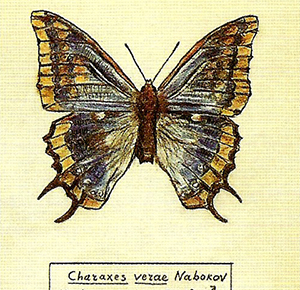 A typical plot complication on reality shows involves the unexpected twist, a challenge that the credulous competitors never saw coming: The next leg of the race will occur underwater, in an eel-ridden cove, says the host; the next round of the bake-off will require the incorporation of mountain oysters in a rendition of Crepes Suzette. The idea is simple: the greater the skill, the greater the capacity to overcome.
If there were a reality show writing competition (imagine that), the curve might come by way of a forced employment of cloying conceits: “Write a profound story using a waterfall, a widowed grandfather, a daisy—aaaaaannnnnd a basset hound puppy. You have thirty minutes. Break my heart.”
Then the topper would require that it be set around Christmastime. For if anything can lose flavor faster than cheap Christmas candy, it’s a maudlin Christmas story.
Unless you’re a master, that is.
Because if you’re a master, not only can you set the tale at Christmas, but you can also revolve it around a young boy’s death, and for extra measure include—wait now—wait for it: a moth emerging from a cocoon.
I never tire of telling people about Nabokov’s short story, entitled—audaciously—Christmas. Few have read it. Most are put off by the name. But once they’ve looked it up, they always remember.
The short narrative involves a Russian estate holder returning home to entomb the body of his recently deceased son.
As the story opens, Sleptsov (“blindness” in Russian), is sitting in a corner of his great manor’s annex, a cozy branch attached to the main structure, now closed tight for the winter. He cannot remember having been there before, and finds it comforting, akin to the kind of unlooked for solace that might be offered by a perfect stranger, whose words can somehow ease a mortal pain even better than those of a brother.
But there is much in store for Sleptsov on this cold Christmas Eve night, one in which he claws at the corners of his sorrow. For grief is like that unvisited annex of the house; when it comes, it is always a condition in which you have never been before, a place that you never meant to go. It traps you, leaves you swallowing and blinking wildly at a reality that presses close with a poker’s heat.
Still, that is the very place, of all places, where the inversion occurred—where what Eliot calls “the birth that seemed like a death” took place, and where the death, that is in fact a birth, took place.
Sleptsov moves through the dazzling brightness of a snow-filled world, amazed to be alive after what has transpired. How can he still see and hear? How can he breathe? The worst has happened—worse than his own death or any fear of it: the death of his child; but the world carries on regardless, and he in it.
Alone, with only a kindly servant, Sleptsov has the great house opened. He walks through its somber halls, the furnishings wrapped with the drapes of the summer’s closing. The sepulchral shadows are barely disturbed by the flicker of his candle, and memories of the boy he has lost rise about him in pale flames. From his son’s study, he takes the butterfly net that still smells of summer, a notebook in which he had catalogued his conquests, and a chrysalis inside a tin box, one of his last purchases.
Back in the annex, the servant has placed a small green Christmas tree on the table. But the very sight of it hurts Sleptsov; he wants it taken away so that he can be alone with his sorrow. Then, turning through the pages of the notebook, he finds something that pushes his heart to its limits. His boy wrote not just of the butterflies that he loved to capture, but also of a secret love that he had for a girl—something Sleptsov had no idea about, and now will never know.
The grief of learning too late is one thing, but learning that there were aspects of the beloved he had no inkling of—that there was a universe of depths unplumbed? These things can bring the heart to bursting. For is grief not the pain of having nowhere for the love to go? There it swells, stifles, and chokes in the throat, dammed forever.
“I—can’t—bear—it any longer,” Sleptsov cries.
And with the unendurable pain comes the curious conviction that he will die this very night. Yes. Death. How simple it will soon be. He closes his eyes, and a miracle-bereft life stretches emptily before him.
Then—at the breach of agony—it happens.
It happens “because a man overcome with grief had transferred a tin box to his warm room, and the warmth had penetrated its taut leaf-and-silk envelope; it had awaited this moment so long, had collected its strength so tensely, and now, having broken out, it was slowly and miraculously expanding” to the point that it takes “a full breath under the impulse of tender, ravishing, almost human happiness.”
And isn’t that Christmas? Isn’t that love? Isn’t that testament to what is greater than nature? It would burst the grave’s ground, wouldn’t it? Wouldn’t it explode the barren chasms of space and shame the quasars with its radiance?
Because there is nothing vaster than this. The synonym for vastness is love, a power exclusive to the human soul.
In death, we grieve, like fresh cracks in dry skin, like picked scabs, blossoming with blood’s roses. But in grieving, we love, and thereby love lives—sore and longing—yet vital and unendable and rich, so rich, of promise. For in this rock-ribbed, hoary night, it spreads its cry like sun-warmed wings, like the sons of David, born of dawn.
Previous Post

December 12, 2013
Writing My Mother’s Icon
Next Post
December 16, 2013 God For Us: An Interview with Scott Cairns
Browse Our Archives
Select a Category A. G. Harmon Alissa Wilkinson Allison Backous Art Authors Brad Fruhauff Bradford Winters Bryan Bliss Caroline Langston Chad Thomas Johnston Chris Hoke Christiana N. Peterson Culture D.G. Myers D.L. Mayfield Daniel Bowman Jr. David Griffith Elizabeth Duffy Faith Film Greg Wolfe Guest Contributor Interview Jan Vallone Jeffrey Overstreet Jessica Eddings-Roeser Jessica Mesman Griffith Kelly Foster Lindsey Crittenden Morgan Meis music Natalie Vestin Nick Olson Peggy Rosenthal Personal Reflection Poetry Friday Reflection Relationships Review Richard Chess Richard Cole Sara Zarr Shannon Huffman Polson Sonya Bilocerkowycz Tania Runyan Tony Woodlief Topical Categories Uncategorized Vic Sizemore Writing
Select a Month October 2018 September 2018 August 2018 July 2018 June 2018 May 2018 April 2018 March 2018 February 2018 January 2018 December 2017 November 2017 October 2017 September 2017 August 2017 July 2017 June 2017 May 2017 April 2017 March 2017 February 2017 January 2017 December 2016 November 2016 October 2016 September 2016 August 2016 July 2016 June 2016 May 2016 April 2016 March 2016 February 2016 January 2016 December 2015 November 2015 October 2015 September 2015 August 2015 July 2015 June 2015 May 2015 April 2015 March 2015 February 2015 January 2015 December 2014 November 2014 October 2014 September 2014 August 2014 July 2014 June 2014 May 2014 April 2014 March 2014 February 2014 January 2014 December 2013 November 2013 October 2013 September 2013 August 2013 July 2013 June 2013 May 2013 April 2013 March 2013 February 2013 January 2013 December 2012 November 2012 October 2012 September 2012 August 2012 July 2012 June 2012 May 2012 February 2008
Follow Us!
TAKE THE
Religious Wisdom Quiz
What happened three days after Jesus was crucified?
Select your answer to see how you score.
A giant earthquake The temple was destroyed He rose from the dead The sea split
Related posts from Good Letters



Poetry Friday: A Quick Interpretation of the Sixth...
TRENDING AT PATHEOS Catholic

Rejecting Doom: Christian Hope And Human Action
Christianity is a religion of hope. We are to have hope and...

It’s What Comes From Within Which Matters
One of the most difficult things for us to understand is why...

Why I Choose the Eucharist Over the Sermon
Choose the Eucharist, Not the Sermon What are we supposed to get...

5 Design Elements Found in Spiritually Rooted Homes
Putting Spirituality Into Home Decor Our homes are more than our living...

Credo: A Story of God Told with the...
About 10 years ago, I began to imagine a personal "Credo" that...

The Anatomy of Divine Revelation in Catholic Thought
The claim that God has made Himself known to human beings is...
view all Catholic blogs
Ad-Free & Subscriber Log-In Subscription Support
- About Us
- 2026 Calendar
- Videos
- Podcasts
- Library of World Religions
- Faith In Media Tracker
- Advertise With Us
- Write for Us
- Privacy Policy
- Terms of Service
- Do Not Sell My Data
- Contact Us
- Radiant Digital
- Manage Newsletter Subscriptions
- Unsubscribe From Notifications
- Sitemap
Copyright 2008-2026, Patheos. All rights reserved.
Subscription Support Ad-Free & Subscriber Log-In
Follow Patheos