
BuddhistCatholicContemplativeEvangelicalGeneral ChristianHinduJewishLatter-day SaintMuslimNew VisionsProgressive Christian
Beliefs
- Buddhist
- Catholic
- Contemplative
- Evangelical
- General Christian
- Hindu
- Jewish
- Latter-day Saint
- More Voices
- Muslim
- New Visions
- Pagan
- Progressive Christian
Topics
- Religion News
- Food and Religion
- Sports and Religion
- Religious Art
- Religious Music and Entertainment
- Religious Events
- History and Religion
- Style and Religion
- Politics and Religion
- Women in Religion
- Recreation Outdoors and Religion
- Business Finance and Religion
- Careers Workplace and Religion
- Education and Religion
- Family Parenting and Religion
- Health Fitness and Religion
- Home and Religion
- Relationships and Religion
- Technology and Religion
- Travel and Religion
Columnists
- Buddhist Columnists
- Business Finance and Religion Columnists
- Careers Workplace and Religion Columnists
- Catholic Columnists
- Contemplative Columnists
- Education and Religion Columnists
- Evangelists Columnists
- Family Parenting and Religion Columnists
- General Christian Columnists
- Health Fitness and Religion Columnists
- Hindu Columnists
- History and Religion Columnists
- Home and Religion Columnists
- Jewish Columnists
- More Voices Columnists
- Latter Day Columnists
- Muslim Columnists
- New Visions Columnists
- Nonreligious Columnists
- Pagan Columnists
- Politics and Religion Columnists
- Progressive Columnists
- Recreation Outdoors and Religion Columnists
- Relationships and Religion Columnists
- Religion News Columnists
- Religious Art Columnists
- Religious Events Columnists
- Religious Music and Entertainment Columnists
- Sports and Religion Columnists
- Style and Religion Columnists
- Technology and Religion Columnists
- Travel and Religion Columnists
- Women in Religion Columnists
Resource Library
- 2026 Calendar
- Library of World Religions
- The 100 Most Holy Places on Earth
- Patheos Answers
- Podcasts
- Videos
- Faith Leaders Database
- Anglican Episcopalian
- Bahai
- Baptist
- Buddhism
- Christianity
- Confucianism
- Eastern Orthodoxy
- Hinduism
- Holiness and Pentecostal
- ISKCON
- Islam
- Judaism
- Lutheran
- Methodist
- The Church of Jesus Christ of Latter-day Saints
- New Age
- Paganism
- Presbytarian and Reformed
- Protestantism
- Religion Behind the Scenes
- Roman Catholic
- Scientology
- Shia Islam
- Sikhism
- Sufism
- Sunni Islam
- Taoism
- Zen
- See all religions
Research Tools
 Ad-Free & Subscriber Log-In Subscription Support
Ad-Free & Subscriber Log-In Subscription Support
Follow Patheos 

- Trending:
- Forgiveness
- |
- Marriage
- |
- Consciousness
- |
- Death Penalty
- |
- Election
- |
- Halloween
 Good Letters
-
Contributors
- Home
- Catholic
- The Way of Saint James
The Way of Saint James
Last updated on: May 27, 2014 at 3:30 pm by Jan Vallone
The Way of Saint James 2014-05-27T15:30:25-07:00 Jan Vallone
Patheos Explore the world's faith through different perspectives on religion and spirituality! Patheos has the views of the prevalent religions and spiritualities of the world.
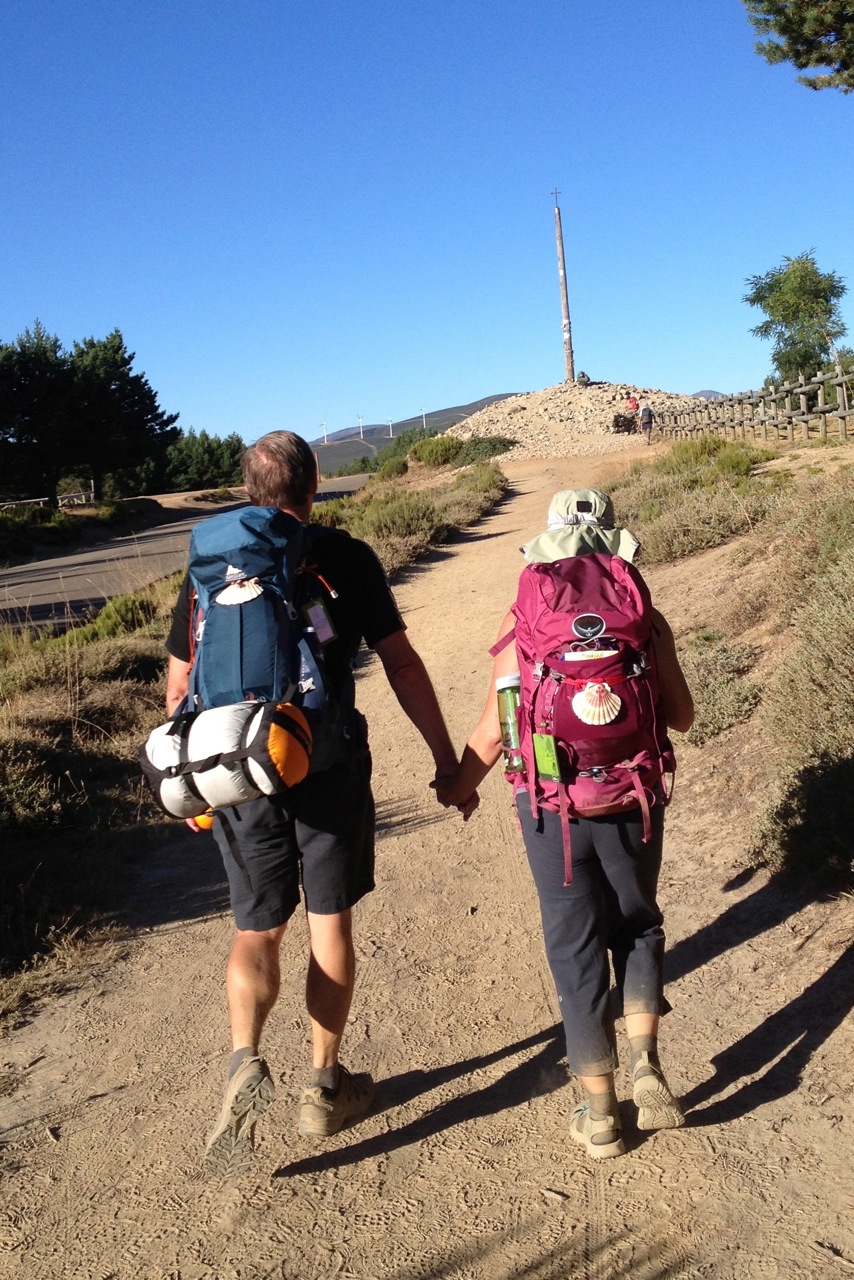
My Uncle Jimmy died this fall at the age of ninety. Born in Sicily, he immigrated to New York when young and served in the U.S. Army during World War II. He was married to my aunt for sixty-one years, the frolicsome father of my two cousins, a regular part of my life until I married and moved away.
I can still see my uncle clearly as he was in January 1994. The way his brown eyes sparkled. The way his thick hair swept back from his forehead. The way he arm-wrestled my four-year-old son to laughter, easing tears caused by my father’s death.
That was the last time I saw my Uncle Jimmy. Almost twenty years ago.
On the day my Uncle Jimmy died, I didn’t even know that he was ill. He’d lived in Florida for two decades and I in Seattle for three. Throughout those years our correspondence was limited, consisting only of Christmas and Easter cards with a few scribbled pleasantries. Some years, even cards were lacking.
No, on the day my uncle died, I wasn’t at his bedside hugging him. Instead, I was in a Spanish cathedral embracing a very different Jimmy, not one of flesh and bones, but of gold-plate and jewels, the bust of Saint James, apostle of Jesus, whom Spaniards call Santiago.
According to Christian tradition, after Jesus’ resurrection, James traveled to the Iberian Peninsula to spread the Gospel. Upon returning to Jerusalem, he was beheaded, becoming the first Christian martyr. His acolytes carried his corpse to Palestine’s coast and placed it on an unpiloted boat that miraculously crossed the Mediterranean, passed through the Strait of Gibraltar, and landed on the shore of Spain among the fjord-like rías of Galicia.
In Galicia, the body was buried in a small shrine and the town of Santiago grew around it. By the twelfth century, an immense Romanesque cathedral had been built over James’ tomb and was attracting half a million pilgrims each year. People walked there from all over Europe, hundreds and hundreds of miles, crossing mountains, valleys, plains, and rivers, risking starvation, dehydration, injury, raids by bandits, death. For them, the pilgrimage was an enactment of the spiritual journey to God and the hardships were tests of faith.
Today, hundreds of thousands of pilgrims annually walk El Camino de Santiago, The Way of Saint James. Heads swathed from blazing sun, blisters bursting in boots, backs bent under packs dangling emblematic scallop shells, they now come from all around the world and include believers and non-believers alike. During the last two weeks of my Uncle Jimmy’s life, my husband and I were two of them.
Walking The Way is very much like leapfrog. Though the most traveled route is 500 miles long and starts five miles from the Spanish border in the Pyrenean foothills of Saint-Jean-Pied-de-Port, France, some pilgrims walk from farther points—Rome, Zagreb, Warsaw—others from spots nearer Santiago—Pamplona, Leon, Sarria.
All along The Way, pilgrims encounter each other, walk together for a distance, talk in spontaneous pidgins of English-Spanish-French-German-Italian. They lose each other at rest stops or to slow or quicken their pace, then rediscover each other at intervals of minutes, hours, days. On the road, in restaurants, and in refugios, they bond through a cycle of challenges, triumphs, chow, and chats.
We spied our first fellow peregrinos in an otherwise empty hotel breakfast room on the morning we set out from Leon. They were sitting at another table, a chic Spanish-speaking couple in brand new hiking gear. Finishing our pastries and coffees, the four of us stood, heaved our packs, smiled—neither my husband nor I speak Spanish—went outside and found the route. We walked neck and neck for hours. When the road split, we turned left and they turned right.
Two days later we recognized them in a restaurant in Rabanal, heard them speaking English to another couple, introduced ourselves. By the end of our conversation, we’d come to know them as Miguel and Liliana from Colombia. By Villafranca, we were dining with them, sharing insights on how to deal with blisters, manage backpacks, parent children, face midlife.
Likewise, in bits and pieces on The Way, we came to know Kyung Mi from Seoul, who clicked her walking sticks on gravel, offering me a parasol when the sun grew hot. We met the group of students from the Catholic Newman Center at University of Washington, who in the early mornings shared the glow of their headlamps and their song-filled sunrise prayers. And Matteo from Genoa, who climbed a mountain pass with me, insisting I practice my Italian to distract me from my bleeding feet.
When pilgrims reach Santiago, they embrace in front of the cathedral. Strangers only weeks before, they now regard themselves as friends. Together they enter the cathedral and walk their last steps together up stairs that lead behind the altar. There they hug the gilded statue of Saint James, then descend to the Pilgrims’ Mass.
At Mass I gazed around me at hundreds of peregrinos, many now dear. People who had walked into my life, touched my heart, and would soon depart. People like so many others—my parents and grandparents, lost neighbors, colleagues, friends—who had once been marvelously present but had vanished due to distance, distractions, death.
People like my Uncle Jimmy.
I wanted to put my arms around them, all the people of my life. Those I’d known well and those I wished I’d known better. Those here and now. Those there and then. I wanted to hold them forever in a way that Facebook can’t.
Towards the end of the Pilgrim’s Mass, eight red-robed attendants launched the botafumeiro, a massive silver incense dispenser hung by a sturdy rope that swings an enormous arc across the church transept. At the first oscillation, the organ began to boom as every eye in the cathedral lifted to heaven with the fragrant smoke.
Then I understood. The Way doesn’t end in Santiago. And if we continue on it, loving those who cross our path, we can hope to be united with each other in God’s realm.
Jan Vallone is the author of Pieces of Someday: One Woman’s Search for Meaning in Lawyering Family, Italy, Church, and a Tiny Jewish High School which was released in November, 2013 and won the Reader Views Reviewers’ Choice Award. Her stories have appeared in The Seattle Times, Catholic Digest, Guideposts Magazine, English Journal, Chicken Soup for the Soul, Writing it Real, and Curriculum in Context. She teaches writing and literature at Seattle Pacific University.
Photo credit: Vincent Samudovsky.
Previous Post

November 20, 2013
Complaint to a Profligate God
Next Post
November 22, 2013 Opting for Paradox: 25 Years of Image
Browse Our Archives
Select a Category A. G. Harmon Alissa Wilkinson Allison Backous Art Authors Brad Fruhauff Bradford Winters Bryan Bliss Caroline Langston Chad Thomas Johnston Chris Hoke Christiana N. Peterson Culture D.G. Myers D.L. Mayfield Daniel Bowman Jr. David Griffith Elizabeth Duffy Faith Film Greg Wolfe Guest Contributor Interview Jan Vallone Jeffrey Overstreet Jessica Eddings-Roeser Jessica Mesman Griffith Kelly Foster Lindsey Crittenden Morgan Meis music Natalie Vestin Nick Olson Peggy Rosenthal Personal Reflection Poetry Friday Reflection Relationships Review Richard Chess Richard Cole Sara Zarr Shannon Huffman Polson Sonya Bilocerkowycz Tania Runyan Tony Woodlief Topical Categories Uncategorized Vic Sizemore Writing
Select a Month October 2018 September 2018 August 2018 July 2018 June 2018 May 2018 April 2018 March 2018 February 2018 January 2018 December 2017 November 2017 October 2017 September 2017 August 2017 July 2017 June 2017 May 2017 April 2017 March 2017 February 2017 January 2017 December 2016 November 2016 October 2016 September 2016 August 2016 July 2016 June 2016 May 2016 April 2016 March 2016 February 2016 January 2016 December 2015 November 2015 October 2015 September 2015 August 2015 July 2015 June 2015 May 2015 April 2015 March 2015 February 2015 January 2015 December 2014 November 2014 October 2014 September 2014 August 2014 July 2014 June 2014 May 2014 April 2014 March 2014 February 2014 January 2014 December 2013 November 2013 October 2013 September 2013 August 2013 July 2013 June 2013 May 2013 April 2013 March 2013 February 2013 January 2013 December 2012 November 2012 October 2012 September 2012 August 2012 July 2012 June 2012 May 2012 February 2008
Follow Us!
TAKE THE
Religious Wisdom Quiz
I was lifted up on a pole that healed those who looked at me. What am I?
Select your answer to see how you score.
The bronze serpent A healing statue The Golden Calf The Stone Tablets
Related posts from Good Letters
TRENDING AT PATHEOS Catholic

Rejecting Doom: Christian Hope And Human Action
Christianity is a religion of hope. We are to have hope and...

It’s What Comes From Within Which Matters
One of the most difficult things for us to understand is why...

Why I Choose the Eucharist Over the Sermon
Choose the Eucharist, Not the Sermon What are we supposed to get...

5 Design Elements Found in Spiritually Rooted Homes
Putting Spirituality Into Home Decor Our homes are more than our living...

Credo: A Story of God Told with the...
About 10 years ago, I began to imagine a personal "Credo" that...

The Anatomy of Divine Revelation in Catholic Thought
The claim that God has made Himself known to human beings is...
view all Catholic blogs
Ad-Free & Subscriber Log-In Subscription Support
- About Us
- 2026 Calendar
- Videos
- Podcasts
- Library of World Religions
- Faith In Media Tracker
- Advertise With Us
- Write for Us
- Privacy Policy
- Terms of Service
- Do Not Sell My Data
- Contact Us
- Radiant Digital
- Manage Newsletter Subscriptions
- Unsubscribe From Notifications
- Sitemap
Copyright 2008-2026, Patheos. All rights reserved.
Subscription Support Ad-Free & Subscriber Log-In
Follow Patheos