
BuddhistCatholicContemplativeEvangelicalGeneral ChristianHinduJewishLatter-day SaintMuslimNew VisionsProgressive Christian
Beliefs
- Buddhist
- Catholic
- Contemplative
- Evangelical
- General Christian
- Hindu
- Jewish
- Latter-day Saint
- More Voices
- Muslim
- New Visions
- Pagan
- Progressive Christian
Topics
- Religion News
- Food and Religion
- Sports and Religion
- Religious Art
- Religious Music and Entertainment
- Religious Events
- History and Religion
- Style and Religion
- Politics and Religion
- Women in Religion
- Recreation Outdoors and Religion
- Business Finance and Religion
- Careers Workplace and Religion
- Education and Religion
- Family Parenting and Religion
- Health Fitness and Religion
- Home and Religion
- Relationships and Religion
- Technology and Religion
- Travel and Religion
Columnists
- Buddhist Columnists
- Business Finance and Religion Columnists
- Careers Workplace and Religion Columnists
- Catholic Columnists
- Contemplative Columnists
- Education and Religion Columnists
- Evangelists Columnists
- Family Parenting and Religion Columnists
- General Christian Columnists
- Health Fitness and Religion Columnists
- Hindu Columnists
- History and Religion Columnists
- Home and Religion Columnists
- Jewish Columnists
- More Voices Columnists
- Latter Day Columnists
- Muslim Columnists
- New Visions Columnists
- Nonreligious Columnists
- Pagan Columnists
- Politics and Religion Columnists
- Progressive Columnists
- Recreation Outdoors and Religion Columnists
- Relationships and Religion Columnists
- Religion News Columnists
- Religious Art Columnists
- Religious Events Columnists
- Religious Music and Entertainment Columnists
- Sports and Religion Columnists
- Style and Religion Columnists
- Technology and Religion Columnists
- Travel and Religion Columnists
- Women in Religion Columnists
Resource Library
- 2026 Calendar
- Library of World Religions
- The 100 Most Holy Places on Earth
- Patheos Answers
- Podcasts
- Videos
- Faith Leaders Database
- Anglican Episcopalian
- Bahai
- Baptist
- Buddhism
- Christianity
- Confucianism
- Eastern Orthodoxy
- Hinduism
- Holiness and Pentecostal
- ISKCON
- Islam
- Judaism
- Lutheran
- Methodist
- The Church of Jesus Christ of Latter-day Saints
- New Age
- Paganism
- Presbytarian and Reformed
- Protestantism
- Religion Behind the Scenes
- Roman Catholic
- Scientology
- Shia Islam
- Sikhism
- Sufism
- Sunni Islam
- Taoism
- Zen
- See all religions
Research Tools
 Ad-Free & Subscriber Log-In Subscription Support
Ad-Free & Subscriber Log-In Subscription Support
Follow Patheos 

- Trending:
- Forgiveness
- |
- Marriage
- |
- Consciousness
- |
- Death Penalty
- |
- Election
- |
- Halloween
 Good Letters
-
Contributors
- Home
- Catholic
- Daniel Amos’s “Dig Here Said the Angel”
Daniel Amos’s “Dig Here Said the Angel”
Last updated on: November 14, 2013 at 1:17 pm by Chad Thomas Johnston
Daniel Amos’s “Dig Here Said the Angel” 2013-11-14T13:17:55-07:00 Chad Thomas Johnston
Patheos Explore the world's faith through different perspectives on religion and spirituality! Patheos has the views of the prevalent religions and spiritualities of the world.
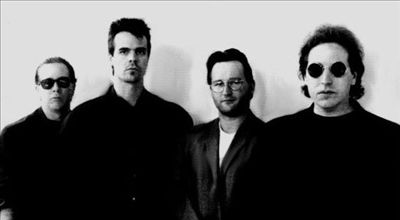 Dedicated to Billy Corgan, who challenged Christians to “make better music” and branch out beyond U2’s musical blueprints in an interview with CNN in September. I challenge you to buy and bury yourself in this album, Billy; it sounds nothing like U2—in fact, Daniel Amos influenced U2!
Just as the films Sunset Boulevard and American Beauty are narrated by dead men, so too is the Daniel Amos song “Now That I’ve Died.” Unlike these undead narrators, however, the protagonist of the song is literally better off dead.
“I lost my stiff, stiff neck and my hard, hard heart / my self-respect is off the charts,” he sings. “Just hanging out here on the Other Side / dead to my pride, now that I’ve died.”
The song simmers for most of its duration and ultimately reaches a boil. In five minutes, the band reimagines the resurrection life, and succeeds in clearing the clouds of harpists who spend all of eternity bored out of their God-fearing gourds.
“Now That I’ve Died” is one of many highlights on Dig Here Said the Angel, Daniel Amos’s fourteenth proper studio recording in a career that spans almost forty years. To fund the record, the band launched a Kickstarter campaign in 2012, hoping to raise $14,000; fans donated over $32,000.
The result is my favorite album of 2013 thus far.
Dig Here Said the Angel finds sixty-three-year-old frontman and lyricist Terry Scott Taylor exploring aging in relation to faith as one who knows he’s no longer the spry, spring chicken who sang on Daniel Amos’s self-titled debut in 1976. At the same time, he knows he isn’t dead yet either—and even when he does die, he apparently plans to live quite triumphantly.
Fans of Daniel Amos’s Eagles-influenced ’70s albums, the band’s featherless, New Wave incarnation on the Alarma Chronicles quadrilogy in the ’80s, and 1993’s Sgt. Pepper-esque Motor Cycle know that the band reinvents itself with each record. While Dig Here Said the Angel finds Taylor and Co. evolving once again, it retains the essence of Daniel Amos. Ambitious, mischievous, at times menacing, and mercilessly melodic, the album calls to mind the works of The Beatles, Talking Heads, Elvis Costello, and Nick Cave, all while sounding exactly like none of those artists.
I find myself attracted to the gravity of this record—not so much a heaviness as a sense of something dense and substantial. Each song deals with life, death, and life after death. Take, for example, “The Ruthless Hum of Dread.” “In a pauper’s field of dreams / I’m walking in between open-mouthed graves / anxious to be fed,” Taylor sings. “And all my buried intentions are groaning for transition / in the raising of the dead.”
But a joy comes with this thematic heaviness, and reminds me of when rainfall and sunshine coexist. Consider the effortless, effervescent “Jesus Wept.” “I found my masterpiece in the discount bin,” Taylor sings. “I pound against the wall of my ancient skin / crying ‘Let me out!’ / ‘Let me out!’”
God’s response to this request? “No, not yet.”
But suffering does not have the final word in “Jesus Wept.” The lyric continues: “There’s not a holy man who doesn’t know grief well / or think the road to Heaven doesn’t pass through Hell / they’ve cried ‘Let me out’ / they’ve heard ‘No, not yet’ / they know before he danced, Jesus wept.” In Daniel Amos’s capable hands, suffering becomes a dark bend in life’s road en route to the New Jerusalem—an inevitable, but finite stretch of hellish highway.
Another album highlight, “The Uses of Adversity,” features a wonderfully wobbly bass line by Tim Chandler that onomatopoetically recalls the words of James 1:6, in which “one who doubts is like a wave of the sea.” Instead of attempting to oust doubt from its perch, Taylor embraces uncertainty in the song’s lyric.
“Don’t send me rain if I bloom in drought,” he sings. “No, don’t send me certainty / if somehow it’s best for me to doubt.” For Taylor to write such a lyric—or pray such a prayer, really—is an act of trust; a vote of confidence in God’s unorthodox methods.
In the song “We’ll All Know Soon Enough,” Taylor defines doubt as temporary—another form of suffering that has a shelf life, expiring when we do. He sings the verses from the perspective of those who believe, but reconsider when other explanations for their circumstances seem easier to swallow.
As the band uncorks a combustible chorus, Taylor issues a response to these people: “There may be no Heaven, no, no, no / There may be no Hell, no / There may be no place to go / but we’ll all know soon enough.” He continues, “If what your mother said was true / though Old Testament and cruel / did she serve you one too many drinks of the hard, hard stuff? / Well, we’ll all know soon enough.”
When the world continually serves us slugs of the “hard, hard stuff”—the sort of suffering that sets us reeling—belief in a benevolent God seems like an absurd proposition. Even Taylor cannot help but question the nature of God in “The Use of Adversity”: “My God, my God, have you forsaken me / or is this grace disguised as adversity?”
Although he initially echoes Christ’s words on the cross, a part of him still trusts God, and wonders if his suffering might serve as a sacrament, drawing him nearer to his Maker. How many times, after all, do curses reveal themselves as blessings in hindsight?
“We’ll all know soon enough,” the song says. In the meantime, we will settle for the perspective of an undead narrator who can tell us what the view looks like from the Other Side. “I’m never cynical, but still a little sarcastic / by the way the cuisine here is pretty fantastic,” Taylor sings on “Now That I’ve Died”—more like “Now That I’ve Lived” if you ask me.
Chad Thomas Johnston is a slayer of word dragons who resides in Lawrence, Kansas, with his wife Rebekah, their daughter Evangeline, and five felines. He is a regular contributor to Image Journal’s “Good Letters” blog at Patheos.com. His writings have also appeared in The Baylor Lariat and at CollapseBoard.com, home to ex-Melody Maker critic/Nirvana-biographer Everett True. In May of 2013, eLectio Publishing released Johnston’s writing debut, a whimsical memoir titled Nightmarriage.
Previous Post

November 6, 2013
Set the Captive Free
Next Post
November 8, 2013 I Am Not a Mother: I Am a Human Being
Browse Our Archives
Select a Category A. G. Harmon Alissa Wilkinson Allison Backous Art Authors Brad Fruhauff Bradford Winters Bryan Bliss Caroline Langston Chad Thomas Johnston Chris Hoke Christiana N. Peterson Culture D.G. Myers D.L. Mayfield Daniel Bowman Jr. David Griffith Elizabeth Duffy Faith Film Greg Wolfe Guest Contributor Interview Jan Vallone Jeffrey Overstreet Jessica Eddings-Roeser Jessica Mesman Griffith Kelly Foster Lindsey Crittenden Morgan Meis music Natalie Vestin Nick Olson Peggy Rosenthal Personal Reflection Poetry Friday Reflection Relationships Review Richard Chess Richard Cole Sara Zarr Shannon Huffman Polson Sonya Bilocerkowycz Tania Runyan Tony Woodlief Topical Categories Uncategorized Vic Sizemore Writing
Select a Month October 2018 September 2018 August 2018 July 2018 June 2018 May 2018 April 2018 March 2018 February 2018 January 2018 December 2017 November 2017 October 2017 September 2017 August 2017 July 2017 June 2017 May 2017 April 2017 March 2017 February 2017 January 2017 December 2016 November 2016 October 2016 September 2016 August 2016 July 2016 June 2016 May 2016 April 2016 March 2016 February 2016 January 2016 December 2015 November 2015 October 2015 September 2015 August 2015 July 2015 June 2015 May 2015 April 2015 March 2015 February 2015 January 2015 December 2014 November 2014 October 2014 September 2014 August 2014 July 2014 June 2014 May 2014 April 2014 March 2014 February 2014 January 2014 December 2013 November 2013 October 2013 September 2013 August 2013 July 2013 June 2013 May 2013 April 2013 March 2013 February 2013 January 2013 December 2012 November 2012 October 2012 September 2012 August 2012 July 2012 June 2012 May 2012 February 2008
Follow Us!
TAKE THE
Religious Wisdom Quiz
What does Jesus say about storing up treasures on earth?
Select your answer to see how you score.
Treasure is godliness Store as much as possible Only store in banks Do not, because they are temporary
Related posts from Good Letters


Leonard Cohen’s Holy and Broken Hallelujah

Poetry Friday: A Quick Interpretation of the Sixth...
TRENDING AT PATHEOS Catholic

Rejecting Doom: Christian Hope And Human Action
Christianity is a religion of hope. We are to have hope and...

It’s What Comes From Within Which Matters
One of the most difficult things for us to understand is why...

Why I Choose the Eucharist Over the Sermon
Choose the Eucharist, Not the Sermon What are we supposed to get...

5 Design Elements Found in Spiritually Rooted Homes
Putting Spirituality Into Home Decor Our homes are more than our living...

Credo: A Story of God Told with the...
About 10 years ago, I began to imagine a personal "Credo" that...

The Anatomy of Divine Revelation in Catholic Thought
The claim that God has made Himself known to human beings is...
view all Catholic blogs
Ad-Free & Subscriber Log-In Subscription Support
- About Us
- 2026 Calendar
- Videos
- Podcasts
- Library of World Religions
- Faith In Media Tracker
- Advertise With Us
- Write for Us
- Privacy Policy
- Terms of Service
- Do Not Sell My Data
- Contact Us
- Radiant Digital
- Manage Newsletter Subscriptions
- Unsubscribe From Notifications
- Sitemap
Copyright 2008-2026, Patheos. All rights reserved.
Subscription Support Ad-Free & Subscriber Log-In
Follow Patheos