
BuddhistCatholicContemplativeEvangelicalGeneral ChristianHinduJewishLatter-day SaintMuslimNew VisionsProgressive Christian
Beliefs
- Buddhist
- Catholic
- Contemplative
- Evangelical
- General Christian
- Hindu
- Jewish
- Latter-day Saint
- More Voices
- Muslim
- New Visions
- Pagan
- Progressive Christian
Topics
- Religion News
- Food and Religion
- Sports and Religion
- Religious Art
- Religious Music and Entertainment
- Religious Events
- History and Religion
- Style and Religion
- Politics and Religion
- Women in Religion
- Recreation Outdoors and Religion
- Business Finance and Religion
- Careers Workplace and Religion
- Education and Religion
- Family Parenting and Religion
- Health Fitness and Religion
- Home and Religion
- Relationships and Religion
- Technology and Religion
- Travel and Religion
Columnists
- Buddhist Columnists
- Business Finance and Religion Columnists
- Careers Workplace and Religion Columnists
- Catholic Columnists
- Contemplative Columnists
- Education and Religion Columnists
- Evangelists Columnists
- Family Parenting and Religion Columnists
- General Christian Columnists
- Health Fitness and Religion Columnists
- Hindu Columnists
- History and Religion Columnists
- Home and Religion Columnists
- Jewish Columnists
- More Voices Columnists
- Latter Day Columnists
- Muslim Columnists
- New Visions Columnists
- Nonreligious Columnists
- Pagan Columnists
- Politics and Religion Columnists
- Progressive Columnists
- Recreation Outdoors and Religion Columnists
- Relationships and Religion Columnists
- Religion News Columnists
- Religious Art Columnists
- Religious Events Columnists
- Religious Music and Entertainment Columnists
- Sports and Religion Columnists
- Style and Religion Columnists
- Technology and Religion Columnists
- Travel and Religion Columnists
- Women in Religion Columnists
Resource Library
- 2026 Calendar
- Library of World Religions
- The 100 Most Holy Places on Earth
- Patheos Answers
- Podcasts
- Videos
- Faith Leaders Database
- Anglican Episcopalian
- Bahai
- Baptist
- Buddhism
- Christianity
- Confucianism
- Eastern Orthodoxy
- Hinduism
- Holiness and Pentecostal
- ISKCON
- Islam
- Judaism
- Lutheran
- Methodist
- The Church of Jesus Christ of Latter-day Saints
- New Age
- Paganism
- Presbytarian and Reformed
- Protestantism
- Religion Behind the Scenes
- Roman Catholic
- Scientology
- Shia Islam
- Sikhism
- Sufism
- Sunni Islam
- Taoism
- Zen
- See all religions
Research Tools
 Ad-Free & Subscriber Log-In Subscription Support
Ad-Free & Subscriber Log-In Subscription Support
Follow Patheos 

- Trending:
- Forgiveness
- |
- Marriage
- |
- Consciousness
- |
- Death Penalty
- |
- Election
- |
- Halloween
 Good Letters
-
Contributors
- Home
- Catholic
- Leaving the Edges Wild: An Interview with Over the Rhine, Part 2
Leaving the Edges Wild: An Interview with Over the Rhine, Part 2
Last updated on: December 4, 2013 at 12:20 pm by Guest Contributor
Leaving the Edges Wild: An Interview with Over the Rhine, Part 2 2013-12-04T12:20:04-07:00 Guest Contributor
Patheos Explore the world's faith through different perspectives on religion and spirituality! Patheos has the views of the prevalent religions and spiritualities of the world.
 By Meredith Holladay
Guest Post
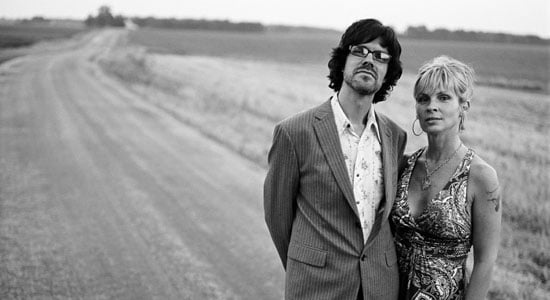
Today I continue yesterday’s conversation with Linford Detweiler about place, songwriting, the sacred, and what’s next for him, his wife Karin, and their band Over the Rhine.
Meredith Holladay: What’s the hardest part about making music as a married couple?
Linford Detweiler: Probably just the incessant nature of sharing a common dream, being an entrepreneurial couple: Your gig never really goes away completely. You carry it with you always. But I should counter by saying that it hasn’t always been a difficult road either. Karin and I had a musical chemistry that was apparent and immediate. That was, and remains, a gift.
But yes, taking care of the gifts we are given sooner or later requires some hard work. We try to tend both gardens: the garden of our relationship, and the garden of our music.
MH: In writing about the song, “Meet Me at the Edge of the World,” you say one of the things you felt pulled to do after moving to Nowhere Farm was to learn the names of the plants, trees, and birds on the farm. Can you speak to the importance of naming for you, particularly as the practice is tied to place?
LD: One of the first things we realized when we left the city, [was] we didn’t know the names of much of anything. It felt like an act of respect to slowly begin calling trees, songbirds, and wildflowers by name. It also felt like learning a new poetic language: tupelo, sassafras, staghorn sumac, indigo bunting, house finch, bobwhite, ironweed, dogbane, aster.
And once we started calling things by name, they began appearing in our songs. (And it’s endless: this summer we’ve been trying to name the crazy-beautiful butterflies that float in: zebra swallowtails, etc.)
Karin likes to walk the dogs on a path along the edge of our woods and there is a lone tupelo along the path that turns the most vivid color of red in the fall—a red that can’t be described; it’s so wine and blood-soaked. It’s become a bit of a sacred spot for her and often she receives a signal of some kind when she arrives there—a few words, a melody to hum, a few tears, or something like a prayer. One day most of the words to the song you mentioned poured out.
MH: You often write about spiritual things in your music. What kinds of theological ideas captivate you or keep you up at night?
LD: Well, I think most interesting art bumps up against the big questions sooner or later. Maybe all good art is a yearning toward something that can’t be fully articulated. Both Karin and I were raised in…churches, and we were surrounded as children by gospel music and old hymns. Once those old hymns get into your bones, they are there forever. And I’ve been known to argue that there could have been no Elvis Presley or Johnny Cash without the songs they encountered as children in their mothers’ hymnals.
And I’ve come to believe that there are only three subjects available to the writer: God, love and death. We try to write about all three.
As far as staying up at night: I’m a nightwalker. I wish I were a morning person like Mary Oliver, one of my poet-heroes. There are seasons when I force myself to get up early and down some dark coffee and leave the house to witness the miracle of the birth of any given day, but I can’t sustain that early rising. I was born a night owl, which is partly why I can be a touring musician for a living.
And when I’m out walking beneath the stars, I feel that yearning toward something that can’t be fully articulated. I call that prayer. Jane Siberry once told me, “All songs are prayers.” I’ve been haunted by her idea from time to time.
MH: For musicians and artists who wrestle with matters of faith but don’t find themselves wrapped up in the Christian subculture, there can certainly be a tension between sacred and secular. Can you speak to what experience you have of wrestling with those realms?
LD: We always wanted to take our music to the general marketplace and join the larger conversation of American music. We wanted our songs and records to be worthy of that conversation, and still do. We love the diversity of our audience, and it is all over the map—as it should be.
I think if the writing rings true and has conviction, and if people feel something on their skin when they hear the music, it will speak for itself and find its way where it will. Hopefully anyone can lay the transparency of their lives on a good song and find points of intersection that spark and hum. And I am not interested in making a distinction between secular and sacred. It’s all sacred.
MH: Much of your writing seems haunted by the tension between this life and what comes after. How do you wrestle with this mystery?
LD: Both Karin and I have been called upon to lay loved ones to rest. Some days the veil between the living and those who have crossed over feels so thin. Other days the chasm seems vast and utterly impassable.
When my father died suddenly, it shocked me. I no longer saw my life as something that unfurls indefinitely. Rather, I began to process my life in terms of how much time I had left. This can be freeing and can bring clarity. And it can also at times flood me with a sense of futility. So I wrestle with the angel of my impending death. There are times when it’s an embrace. And there are times when it’s a cat fight with a lot of clawing and pissing.
MH: Much of your music is infused with melancholy—though it might still be a hopeful melancholy. Where do you find hope when you look around the world?
LD: We feel the rhythm of the changing seasons more deeply on the farm, and there is something comforting about that cycle of birth, life, death, and resurrection that plays out at its own pace year after year. Gazing upon the things of God gives me hope. I look at the sky a lot, and the trees on our land, and the weeds and wildflowers too. Planting a garden is a hopeful thing.
Young people give me hope. I’m pretty sure many of them are going to be smarter than our generation. I hope so.
Rev. Dr. Meredith Holladay is a proud Louisvillian (Go Cards!) transplanted to Kansas by way of both New Jersey and Texas. She serves as Associate Pastor of Spiritual Formation at First Baptist Church, Lawrence, Kansas. She spent her Texas years studying religion and society at Baylor University, where she wrote a dissertation on theology and popular music, focusing on the music and work of Over the Rhine and the Indigo Girls.
Previous Post

October 10, 2013
Leaving the Edges Wild: An Interview with Over the Rhine, Part 1
Next Post
October 14, 2013 Nothing Can Stay, Gold or Not
Browse Our Archives
Select a Category A. G. Harmon Alissa Wilkinson Allison Backous Art Authors Brad Fruhauff Bradford Winters Bryan Bliss Caroline Langston Chad Thomas Johnston Chris Hoke Christiana N. Peterson Culture D.G. Myers D.L. Mayfield Daniel Bowman Jr. David Griffith Elizabeth Duffy Faith Film Greg Wolfe Guest Contributor Interview Jan Vallone Jeffrey Overstreet Jessica Eddings-Roeser Jessica Mesman Griffith Kelly Foster Lindsey Crittenden Morgan Meis music Natalie Vestin Nick Olson Peggy Rosenthal Personal Reflection Poetry Friday Reflection Relationships Review Richard Chess Richard Cole Sara Zarr Shannon Huffman Polson Sonya Bilocerkowycz Tania Runyan Tony Woodlief Topical Categories Uncategorized Vic Sizemore Writing
Select a Month October 2018 September 2018 August 2018 July 2018 June 2018 May 2018 April 2018 March 2018 February 2018 January 2018 December 2017 November 2017 October 2017 September 2017 August 2017 July 2017 June 2017 May 2017 April 2017 March 2017 February 2017 January 2017 December 2016 November 2016 October 2016 September 2016 August 2016 July 2016 June 2016 May 2016 April 2016 March 2016 February 2016 January 2016 December 2015 November 2015 October 2015 September 2015 August 2015 July 2015 June 2015 May 2015 April 2015 March 2015 February 2015 January 2015 December 2014 November 2014 October 2014 September 2014 August 2014 July 2014 June 2014 May 2014 April 2014 March 2014 February 2014 January 2014 December 2013 November 2013 October 2013 September 2013 August 2013 July 2013 June 2013 May 2013 April 2013 March 2013 February 2013 January 2013 December 2012 November 2012 October 2012 September 2012 August 2012 July 2012 June 2012 May 2012 February 2008
Follow Us!
TAKE THE
Religious Wisdom Quiz
Who said, "As for me, I know that my redeemer lives"?
Select your answer to see how you score.
Moses Joseph Abraham Job
Related posts from Good Letters

On Writing Odes: Taking Time to Celebrate

A Conversation with Alicia Ostriker: Part 1

A Conversation with Alicia Ostriker: Part 2

TRENDING AT PATHEOS Catholic

The Parable Of The Sower And The Word...
One of Christ’s most famous parables is that of the sower who...

Rejecting Doom: Christian Hope And Human Action
Christianity is a religion of hope. We are to have hope and...

Why I Choose the Eucharist Over the Sermon
Choose the Eucharist, Not the Sermon What are we supposed to get...

5 Design Elements Found in Spiritually Rooted Homes
Putting Spirituality Into Home Decor Our homes are more than our living...

Credo: A Story of God Told with the...
About 10 years ago, I began to imagine a personal "Credo" that...

The Anatomy of Divine Revelation in Catholic Thought
The claim that God has made Himself known to human beings is...
view all Catholic blogs
Ad-Free & Subscriber Log-In Subscription Support
- About Us
- 2026 Calendar
- Videos
- Podcasts
- Library of World Religions
- Faith In Media Tracker
- Advertise With Us
- Write for Us
- Privacy Policy
- Terms of Service
- Do Not Sell My Data
- Contact Us
- Radiant Digital
- Manage Newsletter Subscriptions
- Unsubscribe From Notifications
- Sitemap
Copyright 2008-2026, Patheos. All rights reserved.
Subscription Support Ad-Free & Subscriber Log-In
Follow Patheos