
BuddhistCatholicContemplativeEvangelicalGeneral ChristianHinduJewishLatter-day SaintMuslimNew VisionsProgressive Christian
Beliefs
- Buddhist
- Catholic
- Contemplative
- Evangelical
- General Christian
- Hindu
- Jewish
- Latter-day Saint
- More Voices
- Muslim
- New Visions
- Pagan
- Progressive Christian
Topics
- Religion News
- Food and Religion
- Sports and Religion
- Religious Art
- Religious Music and Entertainment
- Religious Events
- History and Religion
- Style and Religion
- Politics and Religion
- Women in Religion
- Recreation Outdoors and Religion
- Business Finance and Religion
- Careers Workplace and Religion
- Education and Religion
- Family Parenting and Religion
- Health Fitness and Religion
- Home and Religion
- Relationships and Religion
- Technology and Religion
- Travel and Religion
Columnists
- Buddhist Columnists
- Business Finance and Religion Columnists
- Careers Workplace and Religion Columnists
- Catholic Columnists
- Contemplative Columnists
- Education and Religion Columnists
- Evangelists Columnists
- Family Parenting and Religion Columnists
- General Christian Columnists
- Health Fitness and Religion Columnists
- Hindu Columnists
- History and Religion Columnists
- Home and Religion Columnists
- Jewish Columnists
- More Voices Columnists
- Latter Day Columnists
- Muslim Columnists
- New Visions Columnists
- Nonreligious Columnists
- Pagan Columnists
- Politics and Religion Columnists
- Progressive Columnists
- Recreation Outdoors and Religion Columnists
- Relationships and Religion Columnists
- Religion News Columnists
- Religious Art Columnists
- Religious Events Columnists
- Religious Music and Entertainment Columnists
- Sports and Religion Columnists
- Style and Religion Columnists
- Technology and Religion Columnists
- Travel and Religion Columnists
- Women in Religion Columnists
Resource Library
- 2026 Calendar
- Library of World Religions
- The 100 Most Holy Places on Earth
- Patheos Answers
- Podcasts
- Videos
- Faith Leaders Database
- Anglican Episcopalian
- Bahai
- Baptist
- Buddhism
- Christianity
- Confucianism
- Eastern Orthodoxy
- Hinduism
- Holiness and Pentecostal
- ISKCON
- Islam
- Judaism
- Lutheran
- Methodist
- The Church of Jesus Christ of Latter-day Saints
- New Age
- Paganism
- Presbytarian and Reformed
- Protestantism
- Religion Behind the Scenes
- Roman Catholic
- Scientology
- Shia Islam
- Sikhism
- Sufism
- Sunni Islam
- Taoism
- Zen
- See all religions
Research Tools
 Ad-Free & Subscriber Log-In Subscription Support
Ad-Free & Subscriber Log-In Subscription Support
Follow Patheos 

- Trending:
- Forgiveness
- |
- Marriage
- |
- Consciousness
- |
- Death Penalty
- |
- Election
- |
- Halloween
 Good Letters
-
Contributors
- Home
- Catholic
- How to Write in a Sick Person’s Body
How to Write in a Sick Person’s Body
Last updated on: December 4, 2013 at 12:28 pm by Guest Contributor
How to Write in a Sick Person’s Body 2013-12-04T12:28:49-07:00 Guest Contributor
Patheos Explore the world's faith through different perspectives on religion and spirituality! Patheos has the views of the prevalent religions and spiritualities of the world.
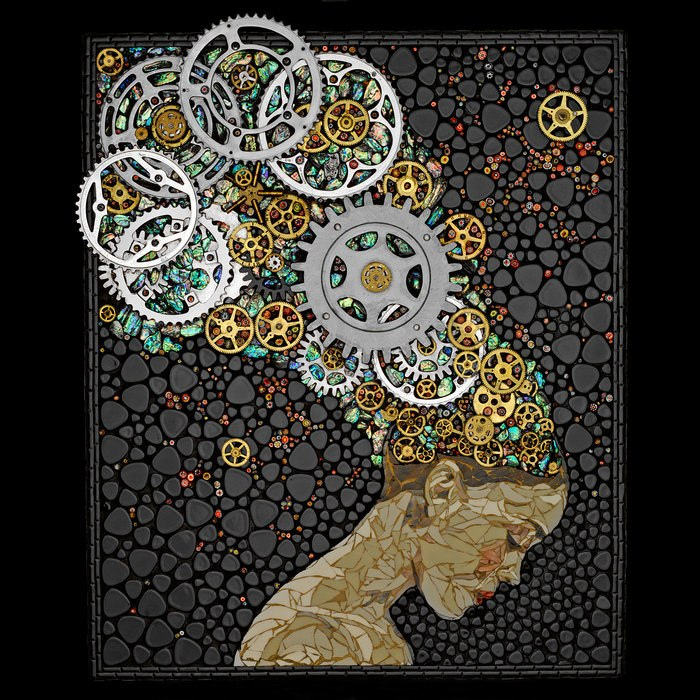 Guest Post by Paige Eve Chant
Not too long ago, just as spring was turning over into summer, I awoke with a slight numbness in the fingers of my right hand. The morning was early yet, the sky outside still dark, and as I wrote, my fingers were a little slower than usual to find their keys. By the end of the day, I was fumbling in the most ordinary of tasks, like opening a jar of peanut butter or reaching for a doorknob.
The next morning, I dropped my toothbrush; days later, I could no longer sign my name, which struck me as somewhat scandalous. I could not brush my hair (a secret vanity of mine), or unbutton my husband’s shirt (a secret pleasure of an altogether different kind).
Before the end of the week, I found myself in the radiology unit of our local hospital. As the technician pushed me into the MRI machine, I thought of medieval monks with their halos of hair and the coffins they climbed into each night to sleep.
Time is an altogether other force in the tube—it operates by a different set of rules—but inside, holding myself stiller than still as each scan sounded its blaring alarm, I did not worry so much as wonder at this swift betrayal of my body. Even then, in those early days, my body did not seem unkind to me.
By the time the diagnosis was confirmed, nearly two weeks after the onset of my first symptoms, it seemed oddly anti-climactic, almost beside the point. Time passes and time does not pass. And so already, even then, when I heard the words multiple sclerosis, what interested me most was not the disease so much as the disability, because if my hand failed me once, falling away from me like so many strings of a marionette, it could fail me again, and how could I write if I could not feel the keys beneath my fingertips, hear the rhythm of my words as they made their first noisy appearance in my early-morning world?
At first, I thought I might keep it a secret, this new disease, because privacy is a long-lost treasure in this world. I was eager to set something apart, to call something mine and mine alone. It made me feel powerful, toting around this secret knowledge, harboring this (mostly) invisible disease in a body that is, if you are the kind to trust appearances, young and healthy and able.
So I made a private resolution to tell no one. But, of course, it did not last. It turned out to be a perverse and misguided effort, far too exhausting to maintain. Secret ills, after all, are quite different than secret pleasures.
So here I am, much to my own chagrin, writing about it, not because I want to (I do not, in fact), nor because I feel the need to “come out” with it or to “identify” with it or even to “process” it—no, nothing so noble as any of that. I am writing about it simply because it happens to be in my way, this disease.
Before my diagnosis, I woke up at five to write for two hours before heading to my day job. I sacrificed sleep, exercise, and, on more than one occasion, meals, so that I could tap out my fanciful stories on this ancient laptop of mine.
Sometimes, as the saying goes, there is no way out except to go through, so here I am, doing it the only way I know how to do anything, which is to write my way through it, trying to navigate the gnarled, foreign landscape that my body has become, with words as my unsteady compass.
There is a whole trove of literature about sickness, I know—a rich tradition of “illness memoirs”; by writers who are also doctors, scribbling story ideas on prescription pads in between appointments with patients who may also be writers themselves, like me.
But to be honest I am not all that interested in reading about the experience I now find myself to be living. I am too restless; I do not have the patience for it. Once is enough (and too much, at that).
What interests me, rather, is how to be in this new body of mine that seems to demand so much more time and attention and, yes, feeling, than ever before. When I most want to escape my body, with its sudden, myriad betrayals and petty idiosyncrasies, how might I manage to burrow still deeper into myself, to take up refuge in this body of mine that has disappointed me so, and therein find the monk’s cell where I can write?
After earning her Master of Fine Arts in Creative Writing at the University of Washington, Paige Eve Chant was awarded the 2010-2011 Milton Center Postgraduate Fellowship. She is currently at work on her first novel. Read more of her work online at www.paigeevechant.com.
Art Pictured: Laura Harris. Ashima-Endless, Limitless, without boundaries.
Previous Post

October 15, 2013
Why Should Darkness Seem Truer Than Light?
Next Post
October 17, 2013 Honor Thy Mother
Browse Our Archives
Select a Category A. G. Harmon Alissa Wilkinson Allison Backous Art Authors Brad Fruhauff Bradford Winters Bryan Bliss Caroline Langston Chad Thomas Johnston Chris Hoke Christiana N. Peterson Culture D.G. Myers D.L. Mayfield Daniel Bowman Jr. David Griffith Elizabeth Duffy Faith Film Greg Wolfe Guest Contributor Interview Jan Vallone Jeffrey Overstreet Jessica Eddings-Roeser Jessica Mesman Griffith Kelly Foster Lindsey Crittenden Morgan Meis music Natalie Vestin Nick Olson Peggy Rosenthal Personal Reflection Poetry Friday Reflection Relationships Review Richard Chess Richard Cole Sara Zarr Shannon Huffman Polson Sonya Bilocerkowycz Tania Runyan Tony Woodlief Topical Categories Uncategorized Vic Sizemore Writing
Select a Month October 2018 September 2018 August 2018 July 2018 June 2018 May 2018 April 2018 March 2018 February 2018 January 2018 December 2017 November 2017 October 2017 September 2017 August 2017 July 2017 June 2017 May 2017 April 2017 March 2017 February 2017 January 2017 December 2016 November 2016 October 2016 September 2016 August 2016 July 2016 June 2016 May 2016 April 2016 March 2016 February 2016 January 2016 December 2015 November 2015 October 2015 September 2015 August 2015 July 2015 June 2015 May 2015 April 2015 March 2015 February 2015 January 2015 December 2014 November 2014 October 2014 September 2014 August 2014 July 2014 June 2014 May 2014 April 2014 March 2014 February 2014 January 2014 December 2013 November 2013 October 2013 September 2013 August 2013 July 2013 June 2013 May 2013 April 2013 March 2013 February 2013 January 2013 December 2012 November 2012 October 2012 September 2012 August 2012 July 2012 June 2012 May 2012 February 2008
Follow Us!
TAKE THE
Religious Wisdom Quiz
For what occasion were unleavened breads eaten?
Select your answer to see how you score.
Feast of Dedication Passover Day of Atonement Sabbath
Related posts from Good Letters

On Writing Odes: Taking Time to Celebrate


The Stars of the Earth Cry Out

TRENDING AT PATHEOS Catholic

Rejecting Doom: Christian Hope And Human Action
Christianity is a religion of hope. We are to have hope and...

It’s What Comes From Within Which Matters
One of the most difficult things for us to understand is why...

Why I Choose the Eucharist Over the Sermon
Choose the Eucharist, Not the Sermon What are we supposed to get...

5 Design Elements Found in Spiritually Rooted Homes
Putting Spirituality Into Home Decor Our homes are more than our living...

Credo: A Story of God Told with the...
About 10 years ago, I began to imagine a personal "Credo" that...

The Anatomy of Divine Revelation in Catholic Thought
The claim that God has made Himself known to human beings is...
view all Catholic blogs
Ad-Free & Subscriber Log-In Subscription Support
- About Us
- 2026 Calendar
- Videos
- Podcasts
- Library of World Religions
- Faith In Media Tracker
- Advertise With Us
- Write for Us
- Privacy Policy
- Terms of Service
- Do Not Sell My Data
- Contact Us
- Radiant Digital
- Manage Newsletter Subscriptions
- Unsubscribe From Notifications
- Sitemap
Copyright 2008-2026, Patheos. All rights reserved.
Subscription Support Ad-Free & Subscriber Log-In
Follow Patheos