
BuddhistCatholicContemplativeEvangelicalGeneral ChristianHinduJewishLatter-day SaintMuslimNew VisionsProgressive Christian
Beliefs
- Buddhist
- Catholic
- Contemplative
- Evangelical
- General Christian
- Hindu
- Jewish
- Latter-day Saint
- More Voices
- Muslim
- New Visions
- Pagan
- Progressive Christian
Topics
- Religion News
- Food and Religion
- Sports and Religion
- Religious Art
- Religious Music and Entertainment
- Religious Events
- History and Religion
- Style and Religion
- Politics and Religion
- Women in Religion
- Recreation Outdoors and Religion
- Business Finance and Religion
- Careers Workplace and Religion
- Education and Religion
- Family Parenting and Religion
- Health Fitness and Religion
- Home and Religion
- Relationships and Religion
- Technology and Religion
- Travel and Religion
Columnists
- Buddhist Columnists
- Business Finance and Religion Columnists
- Careers Workplace and Religion Columnists
- Catholic Columnists
- Contemplative Columnists
- Education and Religion Columnists
- Evangelists Columnists
- Family Parenting and Religion Columnists
- General Christian Columnists
- Health Fitness and Religion Columnists
- Hindu Columnists
- History and Religion Columnists
- Home and Religion Columnists
- Jewish Columnists
- More Voices Columnists
- Latter Day Columnists
- Muslim Columnists
- New Visions Columnists
- Nonreligious Columnists
- Pagan Columnists
- Politics and Religion Columnists
- Progressive Columnists
- Recreation Outdoors and Religion Columnists
- Relationships and Religion Columnists
- Religion News Columnists
- Religious Art Columnists
- Religious Events Columnists
- Religious Music and Entertainment Columnists
- Sports and Religion Columnists
- Style and Religion Columnists
- Technology and Religion Columnists
- Travel and Religion Columnists
- Women in Religion Columnists
Resource Library
- 2026 Calendar
- Library of World Religions
- The 100 Most Holy Places on Earth
- Patheos Answers
- Podcasts
- Videos
- Faith Leaders Database
- Anglican Episcopalian
- Bahai
- Baptist
- Buddhism
- Christianity
- Confucianism
- Eastern Orthodoxy
- Hinduism
- Holiness and Pentecostal
- ISKCON
- Islam
- Judaism
- Lutheran
- Methodist
- The Church of Jesus Christ of Latter-day Saints
- New Age
- Paganism
- Presbytarian and Reformed
- Protestantism
- Religion Behind the Scenes
- Roman Catholic
- Scientology
- Shia Islam
- Sikhism
- Sufism
- Sunni Islam
- Taoism
- Zen
- See all religions
Research Tools
 Ad-Free & Subscriber Log-In Subscription Support
Ad-Free & Subscriber Log-In Subscription Support
Follow Patheos 

- Trending:
- Forgiveness
- |
- Marriage
- |
- Consciousness
- |
- Death Penalty
- |
- Election
- |
- Halloween
 Good Letters
-
Contributors
- Home
- Catholic
- A Good War Is Hard To Find
A Good War Is Hard To Find
Last updated on: October 2, 2013 at 3:21 pm by David Griffith
A Good War Is Hard To Find 2013-10-02T15:21:19-07:00 David Griffith
Patheos Explore the world's faith through different perspectives on religion and spirituality! Patheos has the views of the prevalent religions and spiritualities of the world.
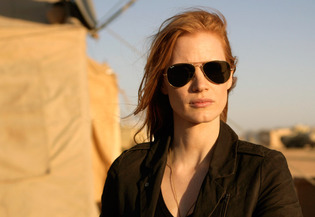 A few nights ago, after Jess and the kids were in bed, I finally bit the bullet and watched Kathryn Bigelow’s film Zero Dark Thirty. I’ve been dreading it. Avoiding it.
As I settled into the couch and pressed play on the DVD remote, metallic thunder began rolling and echoing through the woods around our house. The cats bolted from the couch where they had been sleeping into the basement and the living room windows rattled—perfect foreshadowing for my mood, a leaden feeling borne of the understanding that watching Zero Dark Thirty would likely dredge up a lot of feelings and thoughts that I have been working hard to repress.
My book A Good War is Hard to Find: The Art of Violence in America meditates on American attitudes toward violence in the aftermath of 9/11 and the Abu Ghraib prison scandal. The occasion for the book is the photos of abuse taken by military police and shared via the web, photos that tipped us off that something larger and more coordinated than a few sadistic individuals satisfying their dark needs was happening outside the photos’ frames.
In all, I spent about eighteen months immersing myself in the research and literature on violence, torture, and photography. I have never and may never again read so much in such a short period of time. Time was of the essence. The publisher wanted it immediately, so I devoured histories, sociological and psychological case studies, Marxist intellections on the inexpressibility of pain—how torture can “unmake” the world around us. I read prison narratives, and novels, I watched documentaries, and read journalistic accounts of war and atrocity from the Peloponnesian War to the on-going War on Terror.
The thread running through all of those depictions was how violence meted out on another person or people becomes a source of pride and power for the aggressor and shame and impotence for the victim. Violence begets violence. Shame begets more shame.
Setting aside the very real and pressing issue of balancing national security and trying to occupy the moral high ground, the problem that I perceived even through the joy and pride I felt at the publication of the book was that nothing was likely to change; it would not interrupt the cycle of violence that I was witnessing.
I wanted to achieve change. That’s what those first writers who fired my imagination had done. Writers like Flannery O’Connor, James Baldwin, Richard Wright, and Ralph Ellison taught me that depicting bigotry and violence performed a kind of exorcism—called it out, named it, showed its destructive, self-perpetuating legacy.
And yet I believe that art is not magic, it alone can do nothing. “Art is,” as Oscar Wilde writes in the preface of The Picture of Dorian Gray, “quite useless.” But that doesn’t mean art is ineffectual. Though it fulfills no biological need, at least that we know of, it often aids our understanding and appreciation of the world by presenting us with a copy that is different, enlarged usually, in some key way. When a singer suddenly erupts in an aria at the tragic climax of the opera she, if she is good, has likely caused us to feel that pain more deeply, more exquisitely.
There are surprisingly few exquisite moments in Zero Dark Thirty. There is a lot of yelling and cursing. A lot of f-bombs are dropped to convey the toughness of our tough folks who work behind the scenes to keep us safe. Maya (Jessica Chastain) must shout at a superior to get the resources she needs to capture bin Laden. What’s weird is that when all the yelling dies down, you realize that what you’ve witnessed isn’t all that fraught with high stakes moral ambiguity. Maya is no longer the reticent by-the-book agent; she is now a feisty, redheaded Ahab whose whale is bin Laden (known by the snappy acronym “OBL”).
There’s no discussion of OBL’s strategic value, or of any end game other than let’s kill this bastard. And who’s going to stand in the way of a hot chick with a bad case of bloodlust? What red-blooded patriot isn’t going to say, “Uh, yes, please. Do you mind if I watch?”
And what do you know? We do get to watch. And even though we know what happens next—OBL is found by members of Seal Team 6 in an upper-room of his compound and shot through the head—the suspense is agonizing. Screaming women (the wives of OBL’s henchman?) are killed trying to save their husbands from being shot. The crisp thwup of assault rifles is followed by the mewing cries of horrified children. The soldiers try to calm them in that reassuring way that only Americans have: “It’s OK. It’s OK. It’s OK.”
As the credits rolled, I felt a strange and deep need to read my own book. It feels icky admitting this, but the yearning was not vanity as much as a sudden need to be reunited with a part of myself that I had become estranged from. After several minutes of scanning the bookshelves, I realized I didn’t even have a copy in the house; the few I have left are in my new office, yet to be unpacked.
Staring into the glowing screen of my laptop, I began trying to recapture that original sense of outrage, putting down little notes-to-self that I had stored while I watched the film. No female CIA operative has ever shown up to assist in the brutal interrogation of a terrorist inside a sweltering corrugated metal shed wearing a tailored crushed-velvet blazer. On and on I wrote, angrily jabbing at the keyboard until I had filled most of a page.
Then the strangest thing happened: this literary shadow boxing hadn’t made me feel any better. Archly and self-righteously complaining about the film’s gender issues and failure to critique and analyze the moral complexities of an endless, clandestine war against a caricaturized enemy was only making me feel worse.
The anger and sadness that I had (or thought I had) successfully channeled into the writing of my first book seemed to have taken root in me and was now garishly blooming. Sitting there in the dark, the storm flashing and booming all around me, I felt consumed by the thought that the violence would never stop; it would continue ad nauseam. My soul felt darkened, tainted.
In the days that have followed, I’ve been wondering whether I might have done some permanent damage. Part of me wants to un-see, un-read, un-know; throw back up all that I ingested during those eighteen months.
Nonstop I’ve been praying the psalm, O Lord, give me a blank slate. Create in me a clean heart.
No word yet, though I think I know what I’ve been doing wrong. I haven’t been singing it.
David Griffith is the author of A Good War is Hard to Find: The Art of Violence in America (Soft Skull). He teaches creative writing at Sweet Briar College in Virginia where he lives with his wife Jessica Mesman Griffith and children, Charlotte and Alexander. His essays and reviews have appeared in Image, Utne Reader, The Normal School and online at killingthebuddha.com. He blogs at Pyramid Scheme.
Previous Post

October 1, 2013
New World
Next Post
October 3, 2013 Sarah Masen: The Trying Mark, Part 1
Browse Our Archives
Select a Category A. G. Harmon Alissa Wilkinson Allison Backous Art Authors Brad Fruhauff Bradford Winters Bryan Bliss Caroline Langston Chad Thomas Johnston Chris Hoke Christiana N. Peterson Culture D.G. Myers D.L. Mayfield Daniel Bowman Jr. David Griffith Elizabeth Duffy Faith Film Greg Wolfe Guest Contributor Interview Jan Vallone Jeffrey Overstreet Jessica Eddings-Roeser Jessica Mesman Griffith Kelly Foster Lindsey Crittenden Morgan Meis music Natalie Vestin Nick Olson Peggy Rosenthal Personal Reflection Poetry Friday Reflection Relationships Review Richard Chess Richard Cole Sara Zarr Shannon Huffman Polson Sonya Bilocerkowycz Tania Runyan Tony Woodlief Topical Categories Uncategorized Vic Sizemore Writing
Select a Month October 2018 September 2018 August 2018 July 2018 June 2018 May 2018 April 2018 March 2018 February 2018 January 2018 December 2017 November 2017 October 2017 September 2017 August 2017 July 2017 June 2017 May 2017 April 2017 March 2017 February 2017 January 2017 December 2016 November 2016 October 2016 September 2016 August 2016 July 2016 June 2016 May 2016 April 2016 March 2016 February 2016 January 2016 December 2015 November 2015 October 2015 September 2015 August 2015 July 2015 June 2015 May 2015 April 2015 March 2015 February 2015 January 2015 December 2014 November 2014 October 2014 September 2014 August 2014 July 2014 June 2014 May 2014 April 2014 March 2014 February 2014 January 2014 December 2013 November 2013 October 2013 September 2013 August 2013 July 2013 June 2013 May 2013 April 2013 March 2013 February 2013 January 2013 December 2012 November 2012 October 2012 September 2012 August 2012 July 2012 June 2012 May 2012 February 2008
Follow Us!
TAKE THE
Religious Wisdom Quiz
What does "Paraclete," as used for the Holy Spirit, mean?
Select your answer to see how you score.
King Friend Sacrifice Helper or advocate
Related posts from Good Letters

On Writing Odes: Taking Time to Celebrate



TRENDING AT PATHEOS Catholic

Rejecting Doom: Christian Hope And Human Action
Christianity is a religion of hope. We are to have hope and...

It’s What Comes From Within Which Matters
One of the most difficult things for us to understand is why...

Why I Choose the Eucharist Over the Sermon
Choose the Eucharist, Not the Sermon What are we supposed to get...

5 Design Elements Found in Spiritually Rooted Homes
Putting Spirituality Into Home Decor Our homes are more than our living...

Credo: A Story of God Told with the...
About 10 years ago, I began to imagine a personal "Credo" that...

The Anatomy of Divine Revelation in Catholic Thought
The claim that God has made Himself known to human beings is...
view all Catholic blogs
Ad-Free & Subscriber Log-In Subscription Support
- About Us
- 2026 Calendar
- Videos
- Podcasts
- Library of World Religions
- Faith In Media Tracker
- Advertise With Us
- Write for Us
- Privacy Policy
- Terms of Service
- Do Not Sell My Data
- Contact Us
- Radiant Digital
- Manage Newsletter Subscriptions
- Unsubscribe From Notifications
- Sitemap
Copyright 2008-2026, Patheos. All rights reserved.
Subscription Support Ad-Free & Subscriber Log-In
Follow Patheos