
BuddhistCatholicContemplativeEvangelicalGeneral ChristianHinduJewishLatter-day SaintMuslimNew VisionsProgressive Christian
Beliefs
- Buddhist
- Catholic
- Contemplative
- Evangelical
- General Christian
- Hindu
- Jewish
- Latter-day Saint
- More Voices
- Muslim
- New Visions
- Pagan
- Progressive Christian
Topics
- Religion News
- Food and Religion
- Sports and Religion
- Religious Art
- Religious Music and Entertainment
- Religious Events
- History and Religion
- Style and Religion
- Politics and Religion
- Women in Religion
- Recreation Outdoors and Religion
- Business Finance and Religion
- Careers Workplace and Religion
- Education and Religion
- Family Parenting and Religion
- Health Fitness and Religion
- Home and Religion
- Relationships and Religion
- Technology and Religion
- Travel and Religion
Columnists
- Buddhist Columnists
- Business Finance and Religion Columnists
- Careers Workplace and Religion Columnists
- Catholic Columnists
- Contemplative Columnists
- Education and Religion Columnists
- Evangelists Columnists
- Family Parenting and Religion Columnists
- General Christian Columnists
- Health Fitness and Religion Columnists
- Hindu Columnists
- History and Religion Columnists
- Home and Religion Columnists
- Jewish Columnists
- More Voices Columnists
- Latter Day Columnists
- Muslim Columnists
- New Visions Columnists
- Nonreligious Columnists
- Pagan Columnists
- Politics and Religion Columnists
- Progressive Columnists
- Recreation Outdoors and Religion Columnists
- Relationships and Religion Columnists
- Religion News Columnists
- Religious Art Columnists
- Religious Events Columnists
- Religious Music and Entertainment Columnists
- Sports and Religion Columnists
- Style and Religion Columnists
- Technology and Religion Columnists
- Travel and Religion Columnists
- Women in Religion Columnists
Resource Library
- 2026 Calendar
- Library of World Religions
- The 100 Most Holy Places on Earth
- Patheos Answers
- Podcasts
- Videos
- Faith Leaders Database
- Anglican Episcopalian
- Bahai
- Baptist
- Buddhism
- Christianity
- Confucianism
- Eastern Orthodoxy
- Hinduism
- Holiness and Pentecostal
- ISKCON
- Islam
- Judaism
- Lutheran
- Methodist
- The Church of Jesus Christ of Latter-day Saints
- New Age
- Paganism
- Presbytarian and Reformed
- Protestantism
- Religion Behind the Scenes
- Roman Catholic
- Scientology
- Shia Islam
- Sikhism
- Sufism
- Sunni Islam
- Taoism
- Zen
- See all religions
Research Tools
 Ad-Free & Subscriber Log-In Subscription Support
Ad-Free & Subscriber Log-In Subscription Support
Follow Patheos 

- Trending:
- Forgiveness
- |
- Marriage
- |
- Consciousness
- |
- Death Penalty
- |
- Election
- |
- Halloween
 Good Letters
-
Contributors
- Home
- Catholic
- Can I See You?
Can I See You?
Last updated on: August 18, 2013 at 9:21 pm by Shannon Huffman Polson
Can I See You? 2013-08-18T21:21:57-07:00 Shannon Huffman Polson
Patheos Explore the world's faith through different perspectives on religion and spirituality! Patheos has the views of the prevalent religions and spiritualities of the world.
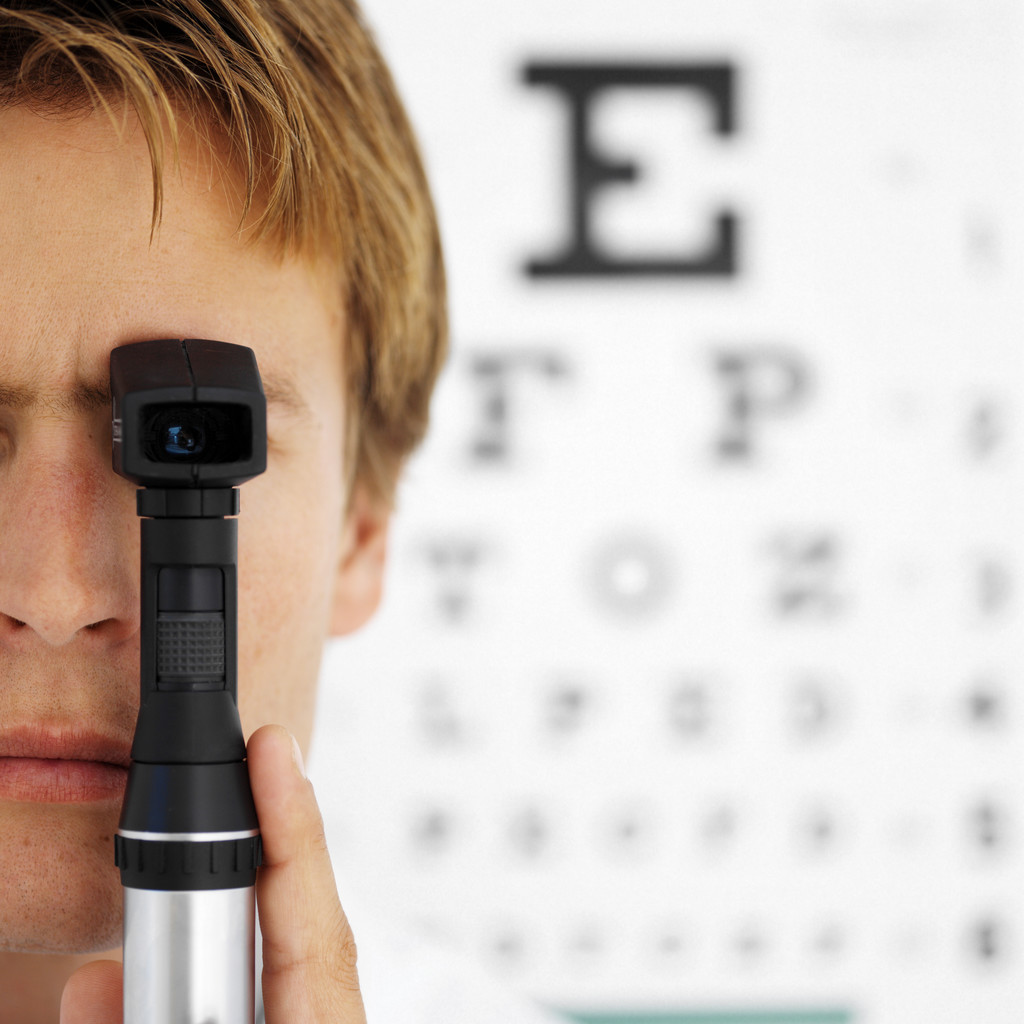 The vision test for the Army aviation pilot school application caused great angst among my classmates and me. One failed the requirement for depth perception by a tiny margin, and worked to have her senior-ranking father help to find a way to override it; she was unsuccessful. Vision was critical.
The year I graduated college, I entered flight school with the required 20/20 uncorrected vision.
In flight school, we studied all aspects of aeromedicine, including the anatomy of the eye. We protected our eyes with gold-wire rimmed Ray-Bans. We learned to fly wearing night-vision goggles to enhance our vision at night. Training on the Apache, we learned the tricky skill of flying with an infra-red monocle over the right eye, giving a picture based on infrared signature as well as a full complement of graphical information on position and navigation and weaponry.
Seeing was all-important. If you could see at night, you had the advantage over enemies who could not.
Business school after the military pulled me into endless hours of work on the computer using Excel, staring into glaring spreadsheets. Jobs after business school did the same. I squinted at the white board in classes and meetings, but refused to get glasses. I took breaks to go outside and focused on the New Hampshire hillsides, trying to pick out the details of trees, training my eyes for distance again. My sight was too important to let go.
“Watch me, mama, watch me!” my three-year old demands, looking over his shoulder with wide eyes as he prepares to launch himself from the couch to a beanbag. I take a deep breath, because we are thirty minutes in to these same requests, to watch. I’m making dinner, or watering plants, or doing something where I’m hopeful he’s entertaining himself and keeping himself and maybe the lamps in one piece. I’m trying to get something done, and the demand comes again “Watch me, mama, watch me!”
The hardest part is that I can’t discount this incessant request by assigning it to toddlerhood; what do I do when I write? Ask to be seen, beg to be read?
And what does this mean when we ask this, at three or at thirty-three? That we need with every part of us to be known? It’s a desperate kind of longing, the kind that is borne by some bedrock knowledge that all is fleeting, that we want our existence to matter, that we know somehow, as one of seven billion people on a tiny planet in an endless universe, that it does matter.
Despite this need, eye contact during the day is fleeting; we rarely allow ourselves time to observe, to really see others, to allow ourselves to be seen. The average length of direct eye contact is two to three seconds.
Meeting Terry Tempest Williams at an event, I was both charmed and unnerved by her focus on me as we spoke. When she talks to you, it is as if there is no one else in the room, despite those lining up for a quick word. In a sustained gaze, she cut through the facade of daily life.
That facade is of our own making; it is the image we project, the busyness on which we bob about, rarely allowing ourselves to sink into the meaning of things. I am embarrassed that I sometimes have to remind myself to slow down to sit and hold the gaze of my son or even my husband, to give them the gift of being seen as best I can.
“We see through a glass, darkly,” says Paul in 1 Corinthians. This seeing darkly, however self-imposed, is yet unacceptable.
Seeing is in part a matter of our vision, but it is even more a matter of what we know.
In Atul Gawande’s disturbing but fascinating New Yorker article “The Itch,” he cites Richard Gregory, a prominent British neuropsychologist, who estimates that visual perception is ninety percent memory and less than ten percent visual nerve signals. It seems there is more to seeing than what optics allows.
Saying grace before meals, or with our toddler before bedtime, we close our eyes.
“The only thing worse than being blind is having sight but no vision,” said Helen Keller, and she should know.
Sight is important when you fly helicopters. But in life, perhaps what we’re after is less about being seen, and instead about being known.
“You have searched my ways and know me,” says David in Psalm 139. “You are familiar with all my ways.” This is the intimacy craved and delivered, and the psalmist seems astonished and grateful. Later Luke’s Gospel will assure us that not only are all parts of creation valued, but that even our hairs are numbered, assuring not only breadth in creation, but an exquisite familiarity, depths we do not ourselves know.
“Such knowledge is too wonderful for me, too lofty to attain.”
Paul assures us that we will one day see “face to face; now I know in part, but then shall I know even as I am known.”
Renewing my driver’s license this year, I passed the vision test easily; I still don’t need glasses, though I’m starting to hold a package at arm’s length to read ingredients. One day I will need glasses. Later still, sight will be replaced with vision. One day we will know as we are known.
Previous Post

August 16, 2013
Fast-Food Funeral Procession
Next Post
August 20, 2013 Yeshua Ha’Mashiach
Browse Our Archives
Select a Category A. G. Harmon Alissa Wilkinson Allison Backous Art Authors Brad Fruhauff Bradford Winters Bryan Bliss Caroline Langston Chad Thomas Johnston Chris Hoke Christiana N. Peterson Culture D.G. Myers D.L. Mayfield Daniel Bowman Jr. David Griffith Elizabeth Duffy Faith Film Greg Wolfe Guest Contributor Interview Jan Vallone Jeffrey Overstreet Jessica Eddings-Roeser Jessica Mesman Griffith Kelly Foster Lindsey Crittenden Morgan Meis music Natalie Vestin Nick Olson Peggy Rosenthal Personal Reflection Poetry Friday Reflection Relationships Review Richard Chess Richard Cole Sara Zarr Shannon Huffman Polson Sonya Bilocerkowycz Tania Runyan Tony Woodlief Topical Categories Uncategorized Vic Sizemore Writing
Select a Month October 2018 September 2018 August 2018 July 2018 June 2018 May 2018 April 2018 March 2018 February 2018 January 2018 December 2017 November 2017 October 2017 September 2017 August 2017 July 2017 June 2017 May 2017 April 2017 March 2017 February 2017 January 2017 December 2016 November 2016 October 2016 September 2016 August 2016 July 2016 June 2016 May 2016 April 2016 March 2016 February 2016 January 2016 December 2015 November 2015 October 2015 September 2015 August 2015 July 2015 June 2015 May 2015 April 2015 March 2015 February 2015 January 2015 December 2014 November 2014 October 2014 September 2014 August 2014 July 2014 June 2014 May 2014 April 2014 March 2014 February 2014 January 2014 December 2013 November 2013 October 2013 September 2013 August 2013 July 2013 June 2013 May 2013 April 2013 March 2013 February 2013 January 2013 December 2012 November 2012 October 2012 September 2012 August 2012 July 2012 June 2012 May 2012 February 2008
Follow Us!
TAKE THE
Religious Wisdom Quiz
Your eyes are compared to these gentle birds, and your temples behind your veil are like the halves of a fruit. What is the fruit?
Select your answer to see how you score.
A grape A fig A pomegranate An apple
Related posts from Good Letters

Leonard Cohen’s Holy and Broken Hallelujah

Ready or Not for the Days of Awe


TRENDING AT PATHEOS Catholic

Rejecting Doom: Christian Hope And Human Action
Christianity is a religion of hope. We are to have hope and...

It’s What Comes From Within Which Matters
One of the most difficult things for us to understand is why...

Why I Choose the Eucharist Over the Sermon
Choose the Eucharist, Not the Sermon What are we supposed to get...

5 Design Elements Found in Spiritually Rooted Homes
Putting Spirituality Into Home Decor Our homes are more than our living...

Credo: A Story of God Told with the...
About 10 years ago, I began to imagine a personal "Credo" that...

The Anatomy of Divine Revelation in Catholic Thought
The claim that God has made Himself known to human beings is...
view all Catholic blogs
Ad-Free & Subscriber Log-In Subscription Support
- About Us
- 2026 Calendar
- Videos
- Podcasts
- Library of World Religions
- Faith In Media Tracker
- Advertise With Us
- Write for Us
- Privacy Policy
- Terms of Service
- Do Not Sell My Data
- Contact Us
- Radiant Digital
- Manage Newsletter Subscriptions
- Unsubscribe From Notifications
- Sitemap
Copyright 2008-2026, Patheos. All rights reserved.
Subscription Support Ad-Free & Subscriber Log-In
Follow Patheos