
BuddhistCatholicContemplativeEvangelicalGeneral ChristianHinduJewishLatter-day SaintMuslimNew VisionsProgressive Christian
Beliefs
- Buddhist
- Catholic
- Contemplative
- Evangelical
- General Christian
- Hindu
- Jewish
- Latter-day Saint
- More Voices
- Muslim
- New Visions
- Pagan
- Progressive Christian
Topics
- Religion News
- Food and Religion
- Sports and Religion
- Religious Art
- Religious Music and Entertainment
- Religious Events
- History and Religion
- Style and Religion
- Politics and Religion
- Women in Religion
- Recreation Outdoors and Religion
- Business Finance and Religion
- Careers Workplace and Religion
- Education and Religion
- Family Parenting and Religion
- Health Fitness and Religion
- Home and Religion
- Relationships and Religion
- Technology and Religion
- Travel and Religion
Columnists
- Buddhist Columnists
- Business Finance and Religion Columnists
- Careers Workplace and Religion Columnists
- Catholic Columnists
- Contemplative Columnists
- Education and Religion Columnists
- Evangelists Columnists
- Family Parenting and Religion Columnists
- General Christian Columnists
- Health Fitness and Religion Columnists
- Hindu Columnists
- History and Religion Columnists
- Home and Religion Columnists
- Jewish Columnists
- More Voices Columnists
- Latter Day Columnists
- Muslim Columnists
- New Visions Columnists
- Nonreligious Columnists
- Pagan Columnists
- Politics and Religion Columnists
- Progressive Columnists
- Recreation Outdoors and Religion Columnists
- Relationships and Religion Columnists
- Religion News Columnists
- Religious Art Columnists
- Religious Events Columnists
- Religious Music and Entertainment Columnists
- Sports and Religion Columnists
- Style and Religion Columnists
- Technology and Religion Columnists
- Travel and Religion Columnists
- Women in Religion Columnists
Resource Library
- 2026 Calendar
- Library of World Religions
- The 100 Most Holy Places on Earth
- Patheos Answers
- Podcasts
- Videos
- Faith Leaders Database
- Anglican Episcopalian
- Bahai
- Baptist
- Buddhism
- Christianity
- Confucianism
- Eastern Orthodoxy
- Hinduism
- Holiness and Pentecostal
- ISKCON
- Islam
- Judaism
- Lutheran
- Methodist
- The Church of Jesus Christ of Latter-day Saints
- New Age
- Paganism
- Presbytarian and Reformed
- Protestantism
- Religion Behind the Scenes
- Roman Catholic
- Scientology
- Shia Islam
- Sikhism
- Sufism
- Sunni Islam
- Taoism
- Zen
- See all religions
Research Tools
 Ad-Free & Subscriber Log-In Subscription Support
Ad-Free & Subscriber Log-In Subscription Support
Follow Patheos 

- Trending:
- Forgiveness
- |
- Marriage
- |
- Consciousness
- |
- Death Penalty
- |
- Election
- |
- Halloween
 Good Letters
-
Contributors
- Home
- Catholic
- What Came Before Numbering Our Days?
What Came Before Numbering Our Days?
Last updated on: July 19, 2013 at 1:00 am by Richard Chess
What Came Before Numbering Our Days? 2013-07-17T10:21:45-07:00 Richard Chess
Patheos Explore the world's faith through different perspectives on religion and spirituality! Patheos has the views of the prevalent religions and spiritualities of the world.
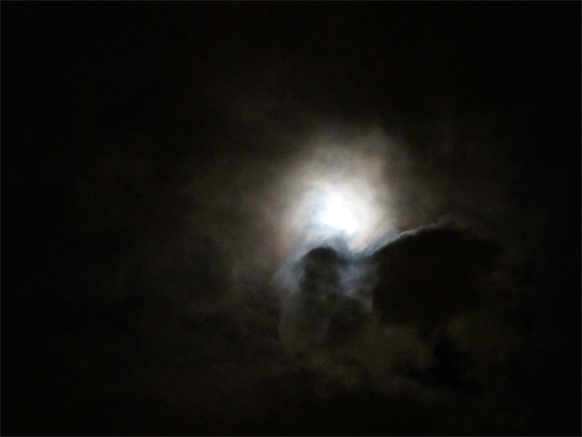 What came before “there was evening and there was morning, a first day,” and “there was evening and there was morning, a second day,” and “there was evening and there was morning, a third day,” and so on until “the heaven and earth were finished” and God “ceased on the seventh day from all the work that He had done,” and “God blessed the seventh day and declared it holy”?
In other words, what came before numbering our days, one through seven?
Before light, darkness. Before light, no colors. Before light, no vast distances. In darkness, I reach out cautiously and touch this dark shape and it’s smooth, that dark shape and it’s sharp, and I cry into the darkness and the darkness replies with darkness. Before light, the name of the box turtle and the eucalyptus and the harp-shaped lake and the ibis and the cave are one: Darkness. Before light, no before. Darkness is.
And then it dissolves. Like a black aspirin in water. So much water that the blackness gradually gives way, black to murky gray to clear.
Now light is. Light is silver and plum, light is feathered and furrowed, light is the frosted wave washing ashore and the ragged border where sea meets land, land meets sea, and all the way to the horizon where day meets day meets night meets day.
And light is: memory. The first memory: There was darkness.
And light is: question. The first question: Will darkness return?
Again. Before light, darkness. In that darkness—all there was—no question, no yearning.
Then there was light. And any creatures stunned by light, any form of life that favored darkness, created this: yearning. Yearning for darkness.
And there was evening, and there was morning, and there was evening. And those creatures that came to light in light, who favored light, yearned for light.
And there was evening, and there was vanishing. And there was morning, and there was vanishing.
And there was evening, and there was morning, and we were born into this: vanishing.
And we were born into this: yearning.
Soul mates: vanishing/yearning.
No, not mates: not two souls
joined/separated
by a thin forward slash.
One Soul.
From Oneness we come. To Oneness we return.
Hear, O Israel, Y-H-V-H is Our God, Y-H-V-H is VanishingYearning (VY) (One).
Sometime after the cycle repeated itself (evening morning evening morning), there was this: numbering. The days were numbered: first, second, third, and so on until sixth. Then counting stopped. But the days were not over. After counting stopped, this: Shabbat. And creation was complete.
Six + one.
Six days + Shabbat.
And + And.
Addition. But…
Addition never travels alone. Subtraction is its constant companion. The one does not exist without the other. Thus, AdditionSubstraction are One. Here, O Israel, here, right here.
Evening and morning, a day is given. Then that day is taken away.
Each day, in Jewish tradition, is a psalm, its own psalm.
The psalm of the first day, Psalm 24, is given: The earth and the world, nature and culture, all belong to Y-H-V-H. There is evening, and there is morning, then Psalm 24 is taken away.
The psalm of the second day, Psalm 48, is given: Adonai is great in God’s city, on God’s mountain in God’s city, in God’s Temple on God’s mountain in God’s city. From earth to mountain, and from world to city and city to Temple in that city: how much is taken away!
But this, too, is given: memory of the first day, when all the earth and world were God’s. As God’s domain shrunk, God’s power became concentrated in one place on earth. The psalmist who was given to see this, was also given this: the power to see where this story is heading: to the loss even of Zion.
That’s why the psalmist instructs his people to “walk all about Zion, encircle her.” Not to protect and defend her, at least not in a military sense, but to “count her towers, review her ramparts, scan her citadels” so as to be able to “tell her story to later generations.” Haunted by loss and the inevitability of future losses, the psalmist (or the rabbis who chose each of the daily psalms and arranged them in this order) imagines what cannot be lost: story. Story: the best defense against vanishing.
There is evening and morning, and evening and morning, and evening and morning, and the psalms of the third, fourth, and fifth days. A psalm of God’s weakness—God’s misjudging of others (lesser gods who pervert justice by favoring the wicked over the weak)—then clear seeing: “I thought you were Godlike…but you will die like mortals” (Psalm 82). A cry to the God of vengeance from God’s people who are being crushed and oppressed by evildoers (Psalm 94). A warning by God: “There shall be no strange god in your midst…. I am Adonai your God who brought you up out of Egypt.” But Israel does not listen (Psalm 81).
The fourth day is linked to the third with an emphasis on justice, the fifth day to the fourth with an emphasis on listening and the failure to listen. Against vanishing, the psalm of one day extends the vision of the psalm of the day that has just vanished.
And there is evening and there is morning, and the psalm of the sixth day is given.
Your kingdom stands from earliest time.
You are eternal.
From earliest time: from the beginning of numbering our days. Our finite, vanishing days. Eternal: a concept imaginable only by those whose days are numbered. Eternal: from God’s point of view? Who knows? One day, we may know. Perhaps on the day when, at the conclusion of our daily and Sabbath prayers, quoting Zachariah, we sing, God is One and God’s Name is One.
Richard Chess is the author of three books of poetry, Tekiah, Chair in the Desert, and Third Temple. Poems of his have appeared in Telling and Remembering: A Century of American Jewish Poetry, Bearing the Mystery: Twenty Years of IMAGE, and Best Spiritual Writing 2005. He is the Roy Carroll Professor of Honors Arts and Sciences at the University of North Carolina at Asheville. He is also the director of UNC Asheville’s Center for Jewish Studies.
Previous Post

July 18, 2013
Camping with God
Next Post
July 22, 2013 Saint Linda
Browse Our Archives
Select a Category A. G. Harmon Alissa Wilkinson Allison Backous Art Authors Brad Fruhauff Bradford Winters Bryan Bliss Caroline Langston Chad Thomas Johnston Chris Hoke Christiana N. Peterson Culture D.G. Myers D.L. Mayfield Daniel Bowman Jr. David Griffith Elizabeth Duffy Faith Film Greg Wolfe Guest Contributor Interview Jan Vallone Jeffrey Overstreet Jessica Eddings-Roeser Jessica Mesman Griffith Kelly Foster Lindsey Crittenden Morgan Meis music Natalie Vestin Nick Olson Peggy Rosenthal Personal Reflection Poetry Friday Reflection Relationships Review Richard Chess Richard Cole Sara Zarr Shannon Huffman Polson Sonya Bilocerkowycz Tania Runyan Tony Woodlief Topical Categories Uncategorized Vic Sizemore Writing
Select a Month October 2018 September 2018 August 2018 July 2018 June 2018 May 2018 April 2018 March 2018 February 2018 January 2018 December 2017 November 2017 October 2017 September 2017 August 2017 July 2017 June 2017 May 2017 April 2017 March 2017 February 2017 January 2017 December 2016 November 2016 October 2016 September 2016 August 2016 July 2016 June 2016 May 2016 April 2016 March 2016 February 2016 January 2016 December 2015 November 2015 October 2015 September 2015 August 2015 July 2015 June 2015 May 2015 April 2015 March 2015 February 2015 January 2015 December 2014 November 2014 October 2014 September 2014 August 2014 July 2014 June 2014 May 2014 April 2014 March 2014 February 2014 January 2014 December 2013 November 2013 October 2013 September 2013 August 2013 July 2013 June 2013 May 2013 April 2013 March 2013 February 2013 January 2013 December 2012 November 2012 October 2012 September 2012 August 2012 July 2012 June 2012 May 2012 February 2008
Follow Us!
TAKE THE
Religious Wisdom Quiz
I destroyed the world but saved eight people and many animals in a floating vessel. What am I?
Select your answer to see how you score.
The deluge God's judgment The flood A great storm
Related posts from Good Letters

Leonard Cohen’s Holy and Broken Hallelujah

Ready or Not for the Days of Awe


TRENDING AT PATHEOS Catholic

Rejecting Doom: Christian Hope And Human Action
Christianity is a religion of hope. We are to have hope and...

It’s What Comes From Within Which Matters
One of the most difficult things for us to understand is why...

Why I Choose the Eucharist Over the Sermon
Choose the Eucharist, Not the Sermon What are we supposed to get...

5 Design Elements Found in Spiritually Rooted Homes
Putting Spirituality Into Home Decor Our homes are more than our living...

Credo: A Story of God Told with the...
About 10 years ago, I began to imagine a personal "Credo" that...

The Anatomy of Divine Revelation in Catholic Thought
The claim that God has made Himself known to human beings is...
view all Catholic blogs
Ad-Free & Subscriber Log-In Subscription Support
- About Us
- 2026 Calendar
- Videos
- Podcasts
- Library of World Religions
- Faith In Media Tracker
- Advertise With Us
- Write for Us
- Privacy Policy
- Terms of Service
- Do Not Sell My Data
- Contact Us
- Radiant Digital
- Manage Newsletter Subscriptions
- Unsubscribe From Notifications
- Sitemap
Copyright 2008-2026, Patheos. All rights reserved.
Subscription Support Ad-Free & Subscriber Log-In
Follow Patheos